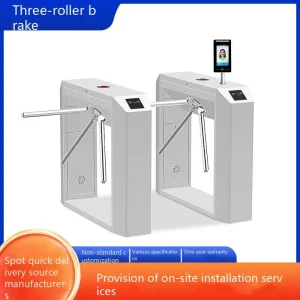
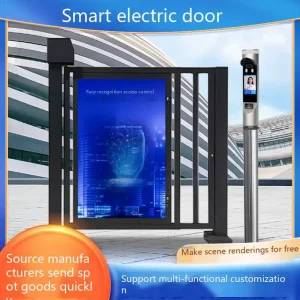
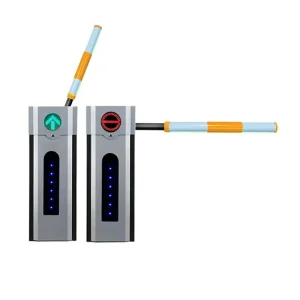
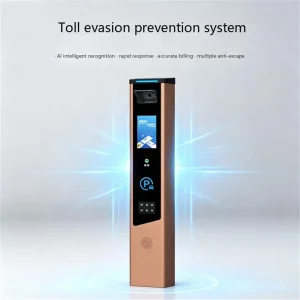
Standard Access & Perimeter Hardware Portfolio
Explore production-tested entry units, bollards, speed gates, and smart automated barriers designed to seamlessly synchronize with centralized buzzer entry panels.
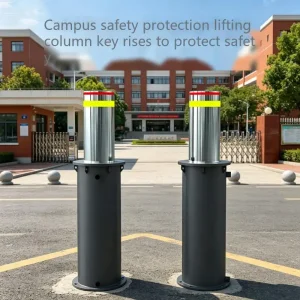
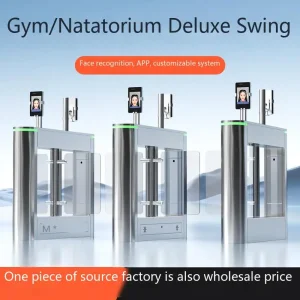
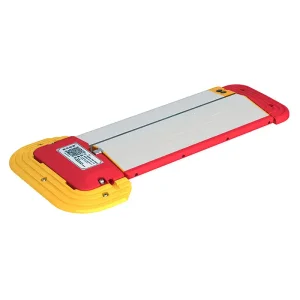
Commercial & Industrial Status of Buzzer Door Entry Systems
Analyzing the paradigm shift from electro-mechanical dry-contact buzzers to encrypted AIoT perimeter gate platforms.
Legacy Transformation
Traditional multi-tenant housing historically depended on low-voltage AC/DC solenoids triggered by simple conductive wall buttons. In the current global industrial landscape, rising multi-family dwelling densities and stringent compliance policies demand cryptographic identity authentication and IP-based relay boards before striking the electronic release.
Edge-Device Integration
Modern entry stations now merge two-way SIP (Session Initiation Protocol) intercom audio, wide-angle 1080p/4K HDR optics, and embedded piezoelectric buzzers. Modern entrance hardware is not merely a sounding beacon; it serves as an edge node that links physical turnstiles, rising bollards, and magnetic strikes to building management systems (BMS).
Supply Chain Resilience
Shenzhen OEM manufacturing nodes provide direct turnkey fabrication—combining surface mount technology (SMT), aluminum die-casting, and ISO9001-certified cleanroom optical assembly. Distributors obtain factory-direct economies of scale while securing CE, FCC, RoHS, and UL294-certified door buzzer assemblies for rapid local deployment.
Field acoustic testing dictates that audible confirmation in industrial ambient noise environments (e.g., manufacturing loading docks, high-traffic commercial sidewalks) must produce a minimum of 85 dBA at 1 meter. Shenzhen Anrui designs proprietary resonant acoustic chambers integrated directly onto our PCB mainboards, avoiding the distorted frequencies common in off-the-shelf buzzer components.
Next-Generation Technological Paradigms
How edge microcontrollers, open API communication, and zero-trust cybersecurity frameworks redefine door buzzer entries.
VoIP & Cloud Relays
Traditional hardwired twisted-pair risers are giving way to cloud-provisioned WebRTC and SIP architectures. When a visitor pushes the primary call-entry button, audio signals and high-decibel audible feedback trigger both locally and via real-time mobile app push notifications.
AES-256 Encryption
Modern commercial specifications forbid plaintext Wiegand transmissions that can be tapped with simple inline sniffers. Contemporary OEM door entries adopt OSDP (Open Supervised Device Protocol) v2.2 with secure channel AES-128/256 to stop replay attacks.
Multi-Factor Credentialing
Physical buzzer panels are no longer standalone intercom units; they feature multi-spectral biometrics, MIFARE DESFire EV3 smart card readers, Bluetooth Low Energy (BLE), dynamic time-sensitive QR code validation, and secondary tactile keypads for pin-code override.
Rugged Industrial Design
Sub-zero, coastal, and harsh urban environments require enclosures meeting IK10 mechanical impact protection and IP66/IP68 ingress sealing. Our CNC-milled 304/316 marine-grade stainless steel housings resist both deliberate vandalism and extreme weather corrosion.
Deployment Blueprints Across Diverse Environments
Engineered hardware and wiring topologies adapted to real-world structural layouts and operational regulations.
Multi-Tenant Residential Complex
Deploying high-rise buzzer stations requires distributed RS-485 bus loops or CAT6 PoE homerun wiring back to network switches. Integrating localized buzzer alerts with indoor video monitors ensures elderly occupants and smartphone users alike receive instantaneous entry announcements without latency or voice dropouts.
Corporate Office Towers & Coworking
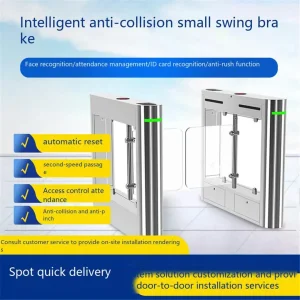
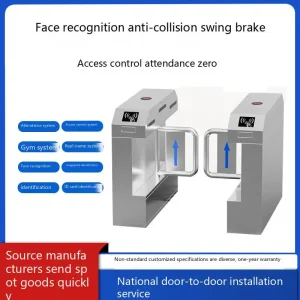
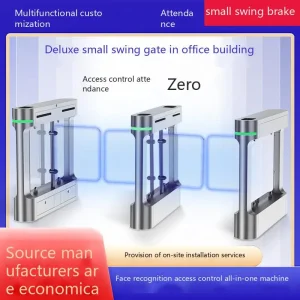
Corporate lobbies connect our buzzer entry interfaces directly into swing barrier turnstiles and elevator dispatch systems. An employee badge tap sounds an affirmative low-latency chime while flashing green status LEDs, whereas a delivery visitor triggers a visual and acoustic buzzer directed to reception.
Industrial Parks & Logistics Hubs
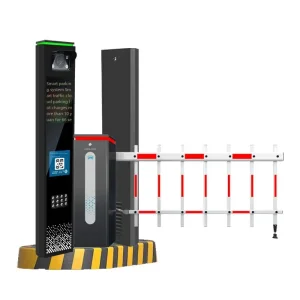
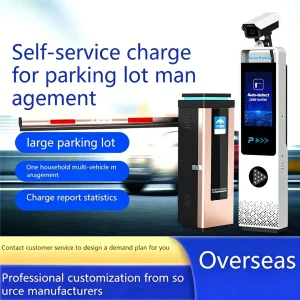
Heavy logistics perimeters combine entry buzzer intercoms with automated articulated barrier arms and license plate recognition cameras. Drivers press high-visibility, oversized stainless steel buzzer buttons from truck cabin height, bridging gate operators directly to control dispatchers.
OEM Technical Roadmap & Architectural Evolution
Our Shenzhen engineering labs follow a systematic hardware revision lifecycle to maintain world-class field stability.
SoC Edge Unification
Consolidated ARM Cortex-A53 dual-core compute architectures running real-time Linux, uniting audio buzzer generation, echo-cancellation DSP, and OSDP relay outputs onto a single monolithic PCB.
Dual-Frequency Acoustic Feedback
Piezoelectric buzzer arrays with dynamic variable frequency (1.5 kHz – 3.2 kHz) and software-controlled pulse modulation, guaranteeing maximum human audibility through glass partitions and noisy streets.
Matter & Thread Smart Interlock
Rolling out Thread-over-802.15.4 mesh low-power connectivity, allowing standalone buzzer entry sub-units to communicate with perimeter rising bollards and door locks without intrusive trenching.
Vision-Language Biometric Gateways
Next-generation on-device NPU processing (4+ TOPS) executing real-time anti-spoofing facial recognition, natural-language audio interactions, and automated vehicle dispatch all managed through one front panel.
End-to-End OEM Integration Architecture
How Shenzhen Anrui Intelligent Equipment Co., Ltd. coordinates every subsystem into unified site perimeters.
Mechanical & Enclosure Tooling
Precision stamping, automated CNC milling, continuous robotic seam welding, and multi-stage anti-oxidation powder coating produce outer housings that resist salt fog, UV embrittlement, and brute-force prying attempts.
Firmware Customization (OEM/ODM)
Full control over low-level firmware allows bespoke customization: modify ring cadences, configure specialized Wiegand/OSDP bit lengths, personalize screen graphics, or introduce client-specific secure HTTPS handshake protocols.
Factory Direct QA & Validation
Every single board passes automated optical inspection (AOI), in-circuit probe testing, 72-hour thermal cycling (-30°C to +75°C), and 100,000 continuous relay-trip cycles before batch packaging for international container freight.
Frequently Asked Questions: Door Entry Systems & OEM Sourcing
Comprehensive engineering clarifications for security integrators, property engineers, and procurement teams.
How does an electric door buzzer system differ from an intercom panel?
A basic buzzer simply completes a low-voltage circuit to vibrate an electromagnetic solenoid or ring a mechanical strike. A modern integrated buzzer door entry station fuses this acoustic indicator with two-way voice communication, digital keypad inputs, card/biometric credentialing, and network-supervised relay releases.
Can Anrui buzzer panels integrate with third-party magnetic locks and strikes?
Yes. Our controller boards deliver dry relay contacts (Normally Open / Normally Closed) rated up to 30V DC / 5A, making them fully compatible with standard fail-safe maglocks, fail-secure electric strikes, crash bars, automatic sliding doors, and boom barrier trigger inputs.
What is the maximum cable distance supported for analogue vs. IP buzzer wiring?
Traditional 2-wire / 4-wire copper connections can reliably drive relays and low-frequency buzzers up to 100–150 meters with 18 AWG wiring. IP-based PoE entry stations follow IEEE 802.3af standards up to 100 meters, which can be extended indefinitely using PoE repeaters, managed network switches, or fiber media converters.
What OEM/ODM customization services does Shenzhen Anrui offer?
We provide full white-label hardware support, including laser-etched stainless steel faceplates, custom button configurations, localized tone frequencies, customized mobile application branding, and embedded Linux firmware configured to customer cloud server endpoints.
How is door buzzer tamper prevention guaranteed in public areas?
Our enclosures incorporate hidden optical or spring-loaded micro-switch tampers. If the unit is pried from its mounting bracket, it immediately engages an audible 105 dB local alarm horn and transmits an OSDP / network tamper interrupt signal to central monitoring software.
What certifications support bulk shipping to Europe and North America?
Anrui production equipment carries full CE (EMC & LVD), FCC Part 15 Class B compliance, RoHS environmental certification, and adherence to international ingress protection (IP65/IP66) and mechanical impact tests (IK08/IK10).
Turnstile, Barrier & ANPR Control Catalog
Explore speed turnstiles, billboard security gates, and machine-vision LPR equipment built for unified enterprise installation.