
Primary Deployments
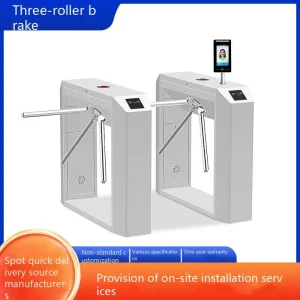
Standard OEM Turnstile & Access Infrastructure
Pre-configured mechanical enclosures, variable arm configurations, and multi-protocol vehicle access interfaces ready for rapid containerized shipment.
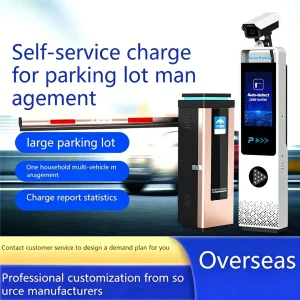
High-def License Plate Recognition Machine Dolphin I Model Exporters, In Sales
Request Quotation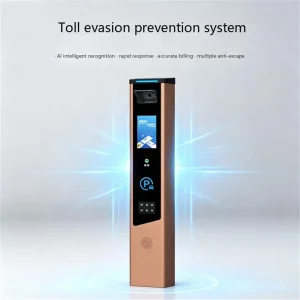
High Definition License Plate Recognition Integrated - AnRuitong II Manufacturer
Request Quotation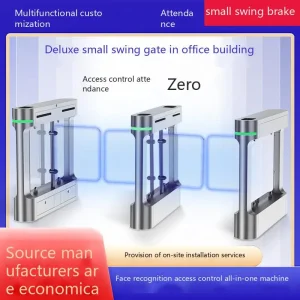
Commercial Swing Gate Image Reference Series Access Platform
Request Quotation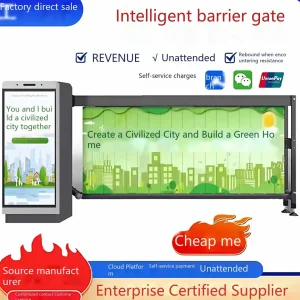
Intelligent High-Frequency Barrier Gate Model D03 Exporters
Request Quotation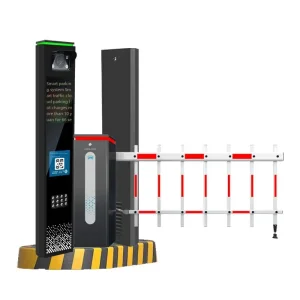
Automatic Articulated DC Parking Boom Barrier Gate with RFID Reader
Request Quotation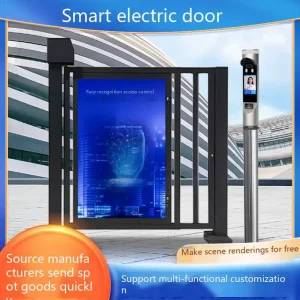
Intelligent Pedestrian Advertising Gate System for Commercial Portals
Request Quotation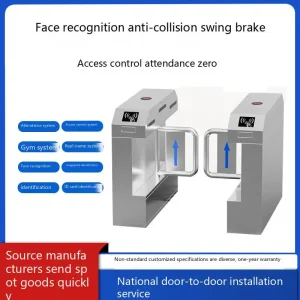
Heavy-Duty Bridge-Type Sloped Swing Turnstile Gate Unit
Request Quotation
Industrial Core Competence
Engineering Superiority: The Shenzhen Hardware Ecosystem Advantage
Deploying resilient, high-speed barrier gates requires combining heavy-load mechanical actuation with precision edge-computing logic. China’s consolidated supply chain delivers distinct advantages for global OEMs.
Planetary Gear & BLDC Drive
Unlike traditional AC induction motors that suffer from high heat dissipation and clutch wear, our systems deploy 24V/48V Brushless DC motors coupled to sealed planetary reduction gearboxes. This provides continuous 100% duty cycles without thermal throttling during peak rush-hour transit.
- Eliminates mechanical limit switches via digital encoder feedback
- Soft-start and dynamic deceleration profiles prevent boom bounce
- Zero-maintenance sealed lubrication system rated for -30°C to +75°C
Edge-AI LPR Integration
Complete multi-lane deployments require real-time license plate parsing directly at the physical perimeter. Our integrated systems combine high-definition neural-network capture units with internal whitelist/blacklist processing to trigger barrier arm movement in milliseconds.
- Support for non-standard, reflective, and multi-line international plates
- Direct TCP/IP, RS485, and Wiegand protocol handshakes
- Integrated supplementary white/IR light strobes for variable weather
Extruded Housing Metallurgy
Chassis corrosion is the primary failure mode of roadside parking infrastructure. Our cabinets are fabricated from 2.0mm cold-rolled steel or structural marine-grade aluminum alloy, followed by phosphating, electrostatic powder coating, and UV-resistant curing.
- IP54 to IP65 structural ingress certification against blowing sand
- Anti-condensation thermal management for humid tropical zones
- Breakaway arm adaptors prevent costly internal gear shear on impact
Procurement Specifications
Engineering Evaluation: Critical Decision Vectors for Global Buyers
B2B system integrators and government procurement engineers evaluate parking lot barriers based on lifecycle cost rather than initial hardware quote. Review the essential operational parameters below.
| Evaluation Parameter | Legacy AC Motor Systems | Anrui Industrial OEM BLDC Gate Series | Operational Impact |
|---|---|---|---|
| Operating Duty Cycle | 40% to 60% (Suffers thermal lockout) | 100% Continuous (No duty limitation) | Prevents lane closures during commercial rush hours. |
| Actuation Speed (Adjustable) | Fixed 3.0s to 6.0s mechanical stroke | Software calibrated 0.6s to 6.0s dynamic | Adapts flexibly to high-speed tolling or long commercial boom arms. |
| Anti-Smash Protection | Relies solely on external induction loops | Dual: Hall encoder bounce-back + Radar/Loop interface | Minimizes structural liability from vehicle or pedestrian strikes. |
| Power Outage Redundancy | Requires tedious manual crank turn | Auto-arm lift via spring release or 24V backup battery | Guarantees rapid fail-safe egress during regional fire alarms. |
| Housing Surface Treatment | Single-layer spray paint (Corrodes in 24 mos) | Electrophoresis primer + Outdoor fluorocarbon bake | Withstands salt-spray environments and coastal infrastructure zones. |
Localized Compliance, Electrical Safety, and Global Certifications
Procuring gate barriers across North America, the European Economic Area, and the GCC region requires compliance with localized electrical safety codes and radio emissions profiles. Barrier systems must feature full CE certification matching Low Voltage Directive (LVD) 2014/35/EU and Electromagnetic Compatibility (EMC) 2014/30/EU. In addition, systems interacting with automated ticket terminals or induction loop detectors must comply with FCC Part 15 subpart B standards to prevent parasitic RF feedback from corrupting municipal access networks.
Emergency fire codes represent another non-negotiable procurement standard. In both municipal garages and private industrial facilities, gate systems must feature dry-contact relays directly coupled to regional building safety loops. In the event of building alarm trip or comprehensive power termination, internal fail-safe solenoids automatically unlock the balancing spring mechanism, forcing the barrier arm to pivot fully vertical without manual technician intervention.
Deployment Topologies
Localized Engineering Architecture by Application Scenario
Entry and exit requirements vary considerably depending on traffic dynamics, spatial head clearance, and authentication methods. Discover our specialized site configurations.
Underground Garages & Low Ceilings
Restricted vertical clearance prevents the installation of standard straight barrier arms. Our 90-degree and 180-degree articulated folding boom barriers resolve vertical constraint issues without compromising structural rigidity.
- Joint bearings equipped with wear-resistant Teflon sleeves
- Integrated soft rubber impact cushion strips along boom underside
- Customized boom section lengths matched to precise basement profiles
Commercial Hubs & Louver Advertising
Transform standard vehicle control checkpoints into revenue-generating dynamic marketing displays. Advertising barrier gates feature coordinated louver slats that rotate seamlessly during open/close cycles.
- LED panel illumination with integrated twilight light-sensing relays
- Wind-tunnel verified louver profiles to mitigate structural crosswind stress
- Synchronized mechanical link structure ensures zero jam operation
High-Security Perimeter Interlocks
For sensitive government compounds, financial data centers, and customs ports, automatic barrier gates serve as initial access filters integrated with automated hydraulic rising bollards or tyre killers.
- Dual-channel vehicle presence interlock logic
- Integrated anti-tamper optical sensors inside the enclosure chassis
- Compatible with long-range active RFID and biometric facial recognition
Technological Foresight
Industry Trends: The Transition to Cloud-Managed Ticketless Parking
The global access control sector is rapidly evolving from physical tokens and paper tickets toward frictionless, vision-based digital ecosystems.
MQTT & HTTP Restful Cloud Communication
Traditional parking gates relied exclusively on localized PLCs or direct PC serial loop interfaces. Next-generation systems incorporate internal IoT gateway controllers that interface directly with AWS, Microsoft Azure, or localized municipal cloud servers using encrypted MQTT/HTTPS protocols. Gate operational telemetry—including cycle counts, motor temperature, spring tension balance status, and error diagnostic logs—is streamed in real time to facilitate predictive maintenance before physical failure occurs.
Microwave Radar Detection Replacing Ground Loops
Cutting asphalt to install inductive copper ground loops increases project installation cost, extends civil engineering timelines, and compromises road surface integrity over time. Advanced installations now replace inductive loops with 77GHz millimeter-wave spatial tracking radars mounted directly onto the barrier cabinet. These radars distinguish between passing vehicles and pedestrians with millimeter precision, eliminating accidental closure accidents without requiring road trenching.
Extended Catalog
Intelligent Parking Locks, Speed Gates & Specialty Hardware
Complete your facility access control architecture with secondary space protection, rising bollards, and rapid-throughput pedestrian corridors.
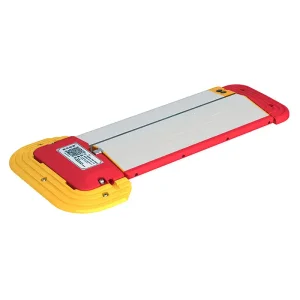
Scan to Pay Charging Space Automatic Parking Lock System
Request Quotation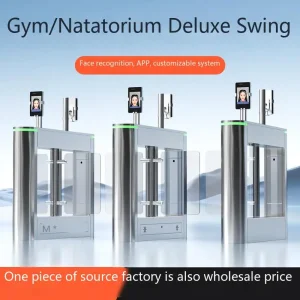
Office Building Attendance Access Control Speed Gate Turnstile
Request Quotation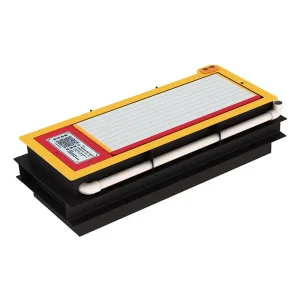
Municipal Rapid Maintenance Smart City Parking Control Subsystem
Request Quotation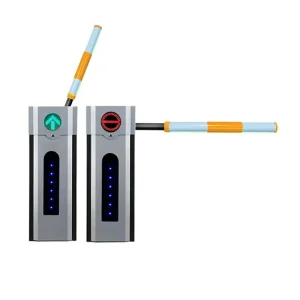
High-Efficiency Intelligent Barrier Gate Model D11S Series
Request Quotation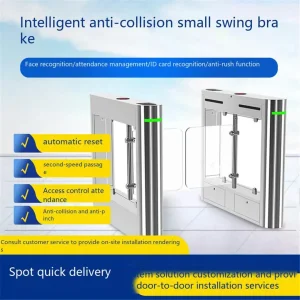
Commercial Modular OEM Pedestrian Swing Barrier Hardware
Request Quotation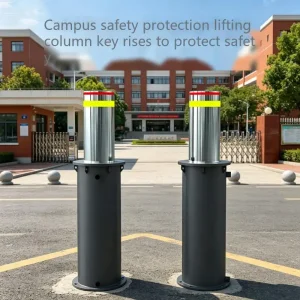
High-Impact Hydraulic Rising Crash Bollard Architecture
Request Quotation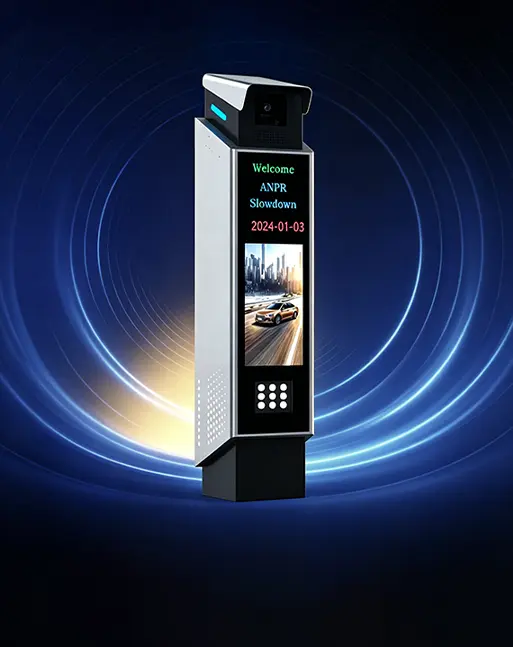
AI Flagship License Plate Recognition Multi-Lane System
Request Quotation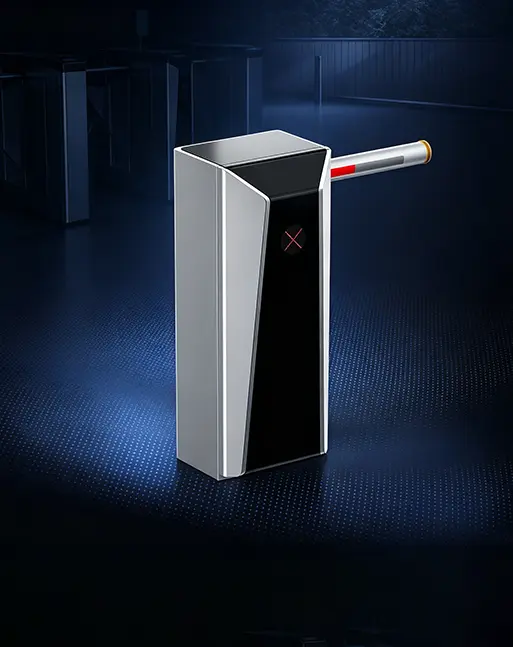
Industrial Rapid-Cycle Straight Arm Barrier Mechanism
Request Quotation
Technical Verification
Engineering & Commercial FAQs for Procurement Managers
Clear, direct technical answers regarding OEM manufacturing tolerances, interface compatibility, shipment terms, and lifecycle maintenance.
How does your Shenzhen manufacturing facility maintain OEM quality control during volume production?
Every barrier gate unit undergoes a comprehensive 72-hour automated burn-in dynamic cycle test prior to crating. This includes continuous thermal monitoring of the BLDC motor coils, digital oscilloscope testing of the balance spring deflection curve, and dynamic load testing matching the exact ordered boom arm weight. Enclosures undergo high-pressure salt-spray corrosion analysis and optical alignment validation for all edge-mount brackets.
Can your barrier gate mainboards integrate directly with third-party parking software?
Yes. Our barrier gate controllers support versatile dry-contact trigger loops, standard Wiegand 26/34/66 interfaces, RS485 Modbus RTU communication, and optional TCP/IP network modules. We provide complete developer SDK documentation, command dictionary libraries, and schematic wiring diagrams to facilitate smooth integration with systems like SKIDATA, Designa, TIBA, or custom Android/Linux management platforms.
What is the typical lead time for custom OEM color, branding, and boom arm lengths?
Standard production runs for unbranded or catalog units require 7 to 10 business days for container batches. For custom RAL electro-powder coating colors, laser silk-screened distributor branding, or specific telescopic boom specifications (from 1.5m up to 6.0m), lead times range from 14 to 21 calendar days depending on raw material extrusion availability and volume commitments.
How do the gates operate during extreme thermal conditions (-30°C or +55°C ambient)?
Our systems utilize fully synthetic low-temperature planetary gear lubricants rated down to -40°C, preventing the mechanical fluid stiffening commonly seen in low-cost gear units. For sub-zero arctic environments, internal thermostatically controlled PTC heating elements are installed within the chassis. For desert deployments in the Middle East, our cabinets feature integrated cross-flow heat dissipation channels, double-layer heat shields, and industrial-rated controllers capable of reliable operation in environments up to +75°C.
What container export packaging standards do you implement for intermodal ocean freight?
Chassis units are vacuum-sealed within heavy-gauge polyethylene anti-moisture bags containing silica gel desiccant packs, wrapped in multi-layer pearl foam padding, and encased in heat-treated export-grade non-coniferous plywood crates compliant with ISPM-15 fumigation standards. Booms are packed separately in reinforced honeycombed industrial cartons with corner edge protectors to eliminate bending or crushing during ocean transport.