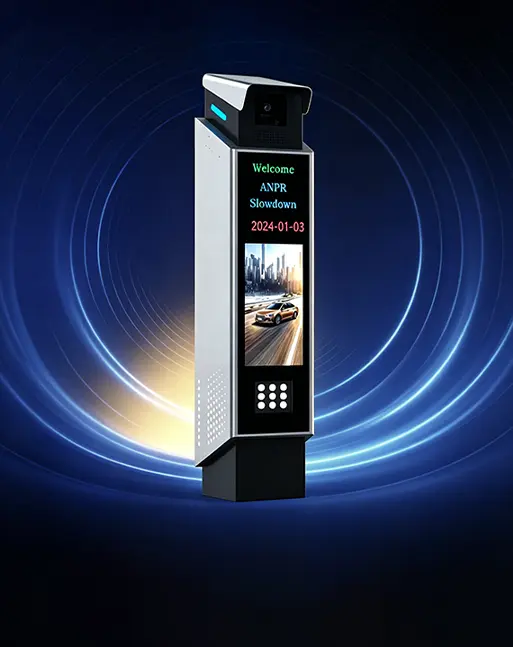
Industrial Entrance Portals & Precision Sliding Systems
Factory-calibrated hardware combining high-cycle durability, intelligent sensor integration, and industrial-grade corrosion protection for high-frequency infrastructure.
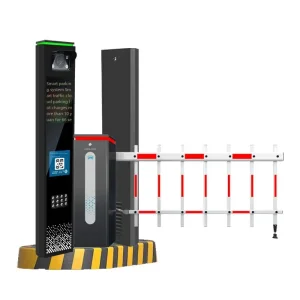
Cost-Effective Car Parking And Toll Access Control Automatic Articulated DC Parking Boom Barrier Gate With Long Range Rfid Reader
View Technical Specs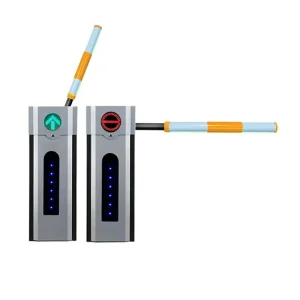
Easy-Maintainable Intelligent Barrier Gate Model D11S Commercial Vehicle Portal
View Technical Specs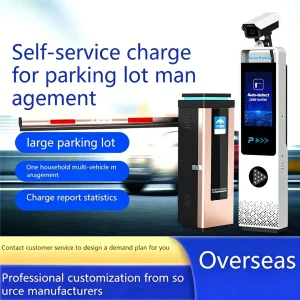
Buy Discount High-Def License Plate Recognition Machine Dolphin I Model Unattended Portal
View Technical Specs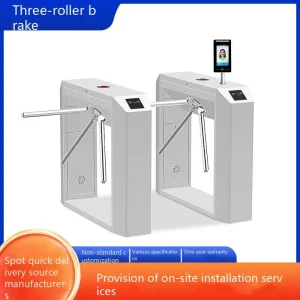
Advanced Factory OEM/ODM Durable Smart Fast Speed Swing Automatic Industrial Gym Turnstile Gate
View Technical Specs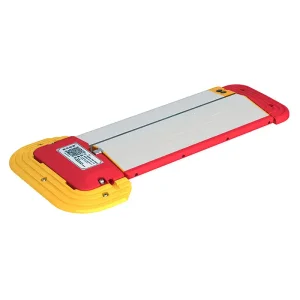
Cheap Scan to Pay Charging Pile Community Parking Lock Automatic Sensing Anti-Occupying Space
View Technical Specs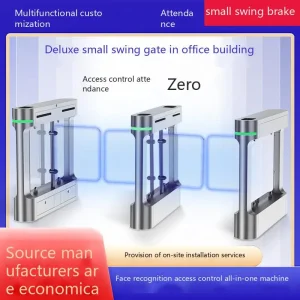
Buy Discount Swing Gate Image Reference High Throughput Commercial Passage
View Technical Specs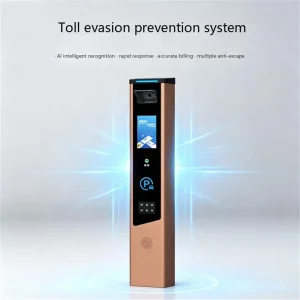
Cheap High Definition License Plate Recognition Integrated - AnRuitong II Manufacturer
View Technical Specs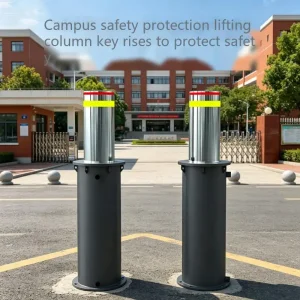
High-Quality Hydraulic Rising Bollard Heavy-Duty Perimeter Anti-Ram Security Barrier
View Technical SpecsThe Evolution of Modern Fenestration: From Static Glazing to Mechatronic Sliding Portals
The global construction, architectural fenestration, and physical perimeter management markets are undergoing an unprecedented structural convergence. Today's commercial architects, institutional planners, and high-density residential developers no longer treat sliding doors and windows as isolated, passive building envelopes. Modern fenestration has evolved into an active, mechatronically automated portal system that combines thermal insulation, micro-climatic sealing, automated brushless DC actuation, and intelligent edge-computing access controls.
For international supply chain directors, sourcing from elite sliding doors and windows factories & exporters requires looking beyond mere profile thickness or extruded aluminum alloys. The competitive baseline now centers on structural thermal integrity (polyamide PA66 GF25 thermal breaks), acoustic attenuation ratings exceeding 42 dB, motor-driven sliding automation (BLDC drives with MTBF surpassing 3,000,000 continuous cycles), and seamless integration into Building Management Systems (BMS) through open Modbus, BACnet, and encrypted wireless protocols.
Information Gain: Multi-Vector Building Envelope Engineering
Our direct manufacturing facility in Shenzhen, spanning an 8,000+ m² modernized plant, operates at the absolute frontier of this technical intersection. We bridge the engineering divide between structural architectural fenestration (heavy sliding glazed patio panels, automated sliding windows, curtain-wall slide configurations) and perimeter automated kinetic barriers (high-speed boom gates, license plate recognition terminals, hydraulic rising bollards, and pedestrian swing turnstiles).
Technical Innovations Shaping Next-Generation Sliding Enclosures
Evaluating the engineering parameters, metallurgical breakthroughs, and mechatronic advancements dominating architectural specifications across Europe, North America, and the Middle East.
Ultra-Narrow Sightlines & Structural Glazing
Modern architectural design prioritizes daylight transmission and minimal structural footprints. The newest sliding window and door extrusions utilize high-tensile 6063-T6 or 6061-T6 aluminum alloys engineered with multi-chamber internal ribs. This architecture accommodates massive triple-glazed insulated glass units (IGU) up to 52 mm in thickness, with individual panel weights exceeding 450 kg, while maintaining interlock profile widths under 20 mm.
By recessing perimeter frames into structural walls and ceilings, modern sliding systems achieve flush thresholds compliant with international accessibility codes (such as ADA regulations) without compromising water-tightness under severe cyclonic conditions.
Extreme Thermal Insulation & U-Value Optimization
With tightening international energy mandates (including ASHRAE 90.1, Title 24, and the EU Energy Performance of Buildings Directive), export-grade sliding fenestrations must achieve overall U-values ($U_w$) lower than 1.1 W/(m²·K). Leading Chinese manufacturing facilities incorporate multi-cavity poly-amide thermal break bars (PA66 reinforced with 25% glass fiber) alongside continuous EPDM co-extruded dual-density gaskets.
Furthermore, warm-edge silicone structural spacer bars, combined with 90% Argon gas fills and double low-emissivity (Low-E) coatings, minimize radiant and convective thermal losses in desert heat or sub-zero climates.
Mechatronic Actuation & Magnetic Levitation (Maglev)
The historical limitation of sliding fenestrations has been frictional resistance over prolonged operation. Modern sliding factories deploy magnetic levitation (Maglev) linear motors and ultra-quiet 24V/36V brushless DC servomotors integrated directly into header transoms. Frictional contact is eliminated or mitigated via self-lubricating POM polymer multi-wheel carriage assemblies resting on hardened 316 stainless steel tracks.
This mechatronic architecture guarantees operating noise under 35 dB, automated obstacle detection, soft-start/soft-stop acceleration damping, and emergency mechanical disengagement during municipal power failures.
B2B Procurement Matrix: Sourcing from Tier-1 Chinese Exporters
Procurement teams and project engineers require rigorous, verifiable metrics before approving suppliers for multi-million-dollar developments. Below is an engineering comparison matrix designed for technical specification vetting.
| Performance Vector | Commercial Grade Baseline | Anrui Industrial / Export Standard | Compliance & Verification Protocol |
|---|---|---|---|
| Alloy Composition & Temper | Standard Recycled 6063 Aluminum | Virgin Billet 6063-T6 / 6061-T6 Structural Profile | Spectrometric chemical analysis; ASTM B221 / EN 755 |
| Surface Finish & Weathering | Standard Anodized / Standard Powder (40µm) | PVDF (3-Coat, >75µm) / Fluorocarbon or Marine-Grade AAMA 2605 | Qualicoat Class 2/3; 1,000–3,000 hr Neutral Salt Spray (ASTM B117) |
| Structural Wind Load Resistance | Class 3 (1200 Pa) | Class 5+ (Design Pressure ≥ 3600 Pa to 5000 Pa Typhoon Grade) | ASTM E330 / EN 12210 static & cyclic deflection testing |
| Air Infiltration & Water Tightness | Air: Class 2; Water: 300 Pa | Air: ≤ 0.1 m³/(h·m²); Water Tightness ≥ 900–1200 Pa | ASTM E283, ASTM E331, EN 1026, EN 1027 chamber verification |
| Drive Mechanism MTBF | 500,000 cycles (Brushed Motor) | 3,500,000+ continuous cycles (Industrial Brushless DC Servomotor) | ISO 9001 factory accelerated continuous load-cycling rig |
| IoT & BMS Interfacing | Proprietary local dry-contact only | RS485, CAN bus, Wiegand, TCP/IP, Modbus, MQTT cloud protocols | Full lane integration with ANPR, RFID, and facial recognition |
North American Compliance
Our export lines meet or exceed NFRC 100/200 thermal simulation requirements, AAMA/WDMA/CSA 101/I.S.2/A440 structural ratings, and ADA barrier-free threshold specifications for public transit and hospitality developments.
European Union Directives
Rigorous CE marking adherence covering EN 14351-1 (Windows & External Doorsets) and EN 16005 (Safety in Use for Power-Operated Pedestrian Doorsets) with integrated fail-safe dual-beam optical sensors and breakaway emergency escape wings.
Middle East & Gulf Standards
Engineered for hyper-arid climates featuring specialized fine-dust double-lip brush seals, high-temperature lubricant reservoirs (-20°C to +85°C), and electrostatic powder finishes resistant to aggressive desert UV radiation and maritime salt aerosol.
End-to-End Solutions: Harmonizing Building Facades and Access Automation
Real-world implementations where precision sliding fenestrations integrate directly with perimeter barriers, biometric gate arrays, and smart parking automation.
Tier-A Commercial Towers & Corporate HQs
High-occupancy headquarters require aerodynamic external kinetic sliding vestibules synchronized with interior high-speed swing turnstile speed gates. The automated sliding glass portal maintains lobby HVAC equilibrium while internal turnstiles process up to 45 pedestrians per minute per lane using contactless facial recognition and QR visitor credentials.
By connecting sliding door automation to central fire alarm networks (NFPA 101 compliant), portals automatically default to full lateral clear-width egress upon smoke alarm trigger, ensuring uncompromised life safety.
Industrial Logistics Hubs & Intermodal Freight Terminals
Heavy freight intermodal depots demand massive industrial motorized sliding gate structures spanning clear openings up to 24 meters, paired with articulated DC boom barriers and high-definition license plate recognition (LPR) cameras like the AnRuitong II.
In this ecosystem, incoming freight vehicles trigger long-range RFID reading or LPR capture. Once authorized, the high-speed boom gate raises in 1.2 to 2.5 seconds, while heavy industrial sliding perimeter gates maintain lock state unless heavy articulated flatbeds require oversized corridor passage. Unattended throughput reduces truck idling times by over 60%.
Gated Luxury Communities & Mixed-Use Developments
Residential master developments combine ultra-slim panoramic sliding glass facades on multi-story villas with perimeter security rings featuring hydraulic anti-ram rising bollards and app-controlled solar-ready parking space locks.
Residents experience frictionless mobility: license-plate recognition grants vehicle entry at perimeter portals without requiring window roll-downs, while shared parking bay locks drop via Bluetooth/4G mobile commands upon EV charging detection. Inside the residence, acoustic sliding terrace doors provide quiet, energy-efficient living.
8,000 m² Advanced Manufacturing Facility & Strict Quality Control Systems
Located in Guangming District, Shenzhen—China’s global hardware and innovation capital—our state-of-the-art facility integrates aluminum profile extrusion precision processing, laser cutting, automated five-axis CNC profile milling, mechatronic robotic assembly, and simulated climate endurance testing.
Unlike trading intermediaries, our factory maintains full vertical integration: from structural extrusion tempering and mechanical gearbox machining to surface electrostatic coating and proprietary printed circuit board assembly (PCBA) for digital controllers.
Every batch of sliding hardware, barrier gates, and electronic access turnstiles undergoes rigorous quality gating:
- Laser Dimensional Verification: Profile cut-lengths and corner joints verified within ±0.2 mm tolerances to guarantee water-tight mitering.
- Accelerated Life Testing: Automated test rigs simulate 500,000 continuous door and barrier sliding cycles under fully loaded operating weights.
- Thermal Gradient Chambers: Testing mechatronic drives across extreme thermal ranges from -30°C to +80°C.
- 100% Function & Safety Audit: Optical obstacle reversal, anti-pinch sensor calibration, and ground loop sensitivity checks conducted before container staging.
Global Logistics, Packaging & Cross-Border Settlement
Exporting heavy sliding assemblies and delicate mechatronic control units across transoceanic routes demands tailored export engineering. We solve shipping risks through heavy-duty export packaging standards:
1. Multi-Layer Protective Packaging: High-density EPE foam corner guards, vacuum shrink moisture-barrier film, and fumigated solid-timber plywood crates reinforced with steel corner brackets, certified under ISPM 15 standards.
2. Knock-Down (KD) & Semi-Knock-Down (SKD) Kits: Engineered for maximum 40ft High Cube container volumetric efficiency, reducing per-unit freight costs by up to 35% for regional distribution centers.
3. Multi-Currency Global Payment Rail: Streamlined commercial transactions accepting wire settlements from 100+ countries, with standard FOB, CIF, DDU, and DDP Incoterms supported.
Technology Roadmap: The Next Decade in Intelligent Sliding Facades
Forecasting the technological convergences that will define building envelopes, automated sliding gates, and physical perimeter management through 2035.
Building-Integrated Photovoltaic (BIPV) Sliding Glass
By 2028, commercial sliding fenestration will increasingly integrate transparent cadmium telluride (CdTe) or perovskite photovoltaic layers within double-glazed units. Sliding glass panels will capture solar energy with up to 12% conversion efficiency, generating localized power to drive kinetic motor tracks and feed surplus energy back into microgrids.
Edge-AI Predictive Diagnostics & Micro-Telemetry
Next-generation sliding door and gate controllers are embedding neural processing microcontrollers (MCU). By continuously monitoring motor current draw, track vibration harmonics, and thermal resistance cycles, edge algorithms anticipate roller bearing wear, belt stretch, or seal deterioration up to 90 days before failure, eliminating emergency downtime.
Bio-Dynamic Acoustic Glazing & Active Noise Cancellation
Combining acoustic polyvinyl butyral (PVB) acoustic interlayers with piezo-electric micro-actuators embedded within perimeter sliding window jambs. By emitting anti-phase vibrational frequencies countering ambient urban traffic roar, sliding assemblies will achieve effective perceived sound reductions up to 52 dB across dense metropolitan cores.
Expert Engineering FAQ: Technical, Procurement & Export Verification
Detailed technical answers to common questions asked by system integrators, facade contractors, project engineers, and international wholesale buyers.
What metallurgical and alloy standards do your sliding doors and architectural window frames utilize?
How do your automated sliding entrance portals integrate with security barriers and vehicle LPR systems?
What thermal break technology is employed to prevent condensation and meet international energy codes?
Can you manufacture custom curved, oversized panoramic, or multi-panel telescoping configurations?
What documentation and testing certifications are provided for overseas customs clearance and building approvals?
What is your typical production lead time and minimum order quantity (MOQ) for international projects?
How does your company guarantee long-term technical support and spare parts availability overseas?
Commercial Entrance Portals, Barrier Automation & Speed Gates
Engineered for direct export across 80+ international markets with universal power inputs (110V/220V), modular field assembly, and ruggedized construction.
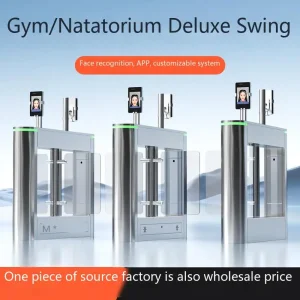
Buy Discount Office Building Entrance Attendance Security Access Control Turnstiles Gate Swing Barrier Speed Gate
View Technical Specs
Buy Discount Intelligent Barrier Gate Model D03 Suppliers High-Cycle Parking Entrance
View Technical Specs
Easy-Maintainable City Parking Product Factories Heavy-Duty Urban Vehicle Barrier
View Technical Specs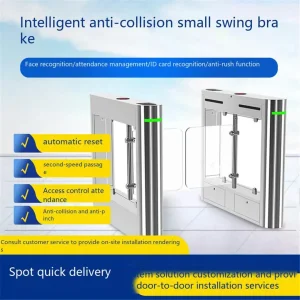
OEM Swing Gate Suppliers High Security Brushless Pedestrian Portal Mechanism
View Technical Specs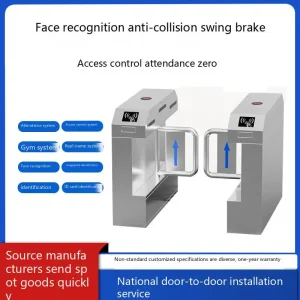
China Bridge Type Sloped Swing Gate Supplier Architectural Pedestrian Passage
View Technical Specs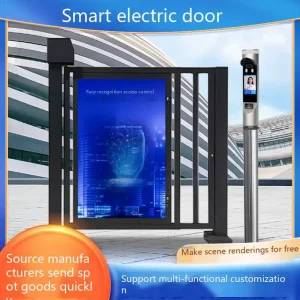
Buy Discount Intelligent Pedestrian Advertising Gate Commercial Entrance Display
View Technical Specs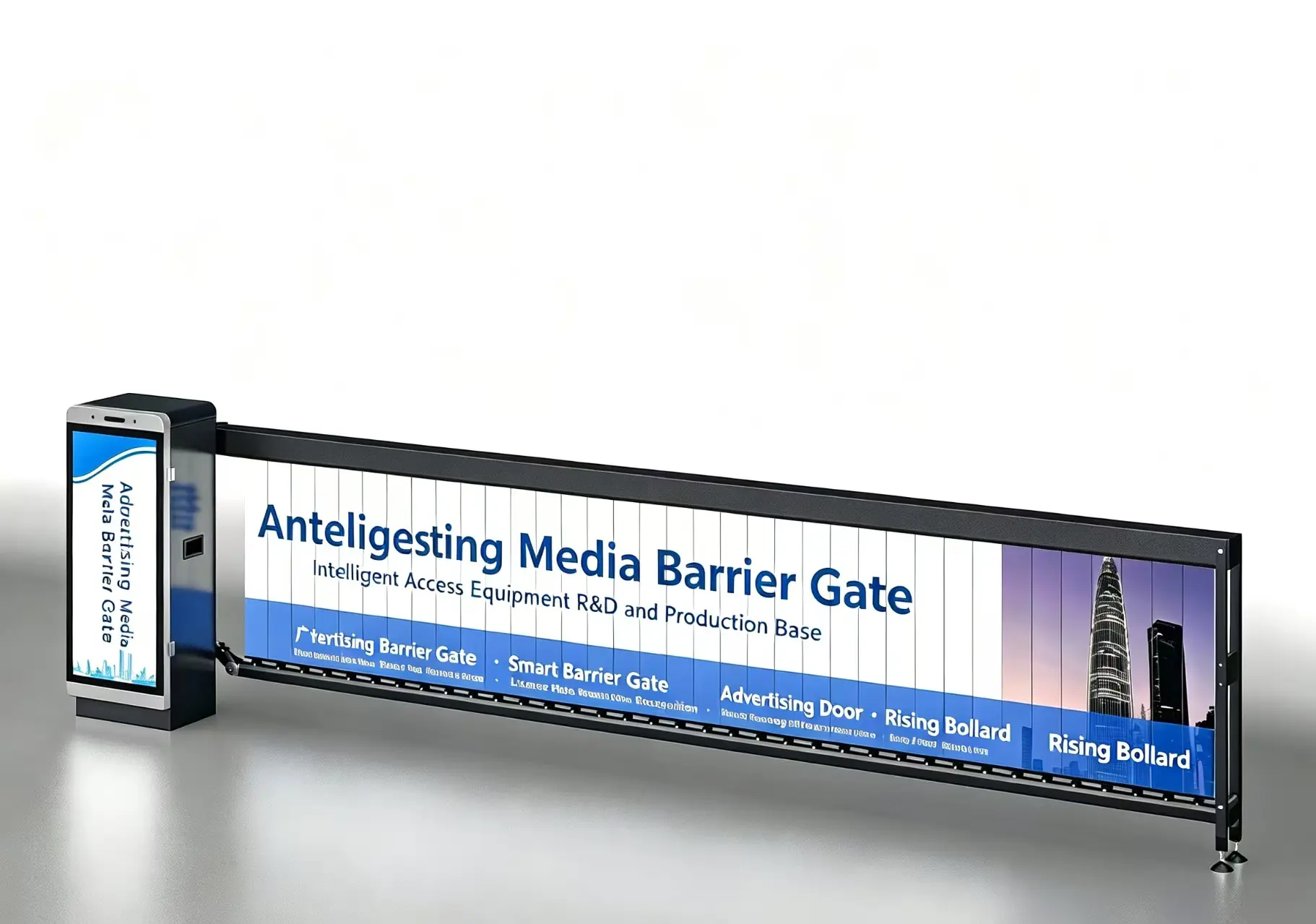
Louver Commercial Advertising Barrier Gate Multi-Revenue Vehicle Portal System
View Technical Specs