
Featured Logical-Physical Boundary Controllers & Turnstiles
Industrial-grade edge terminals engineered for direct cryptographic handshakes between digital identity providers (IdP) and physical barrier hardware.
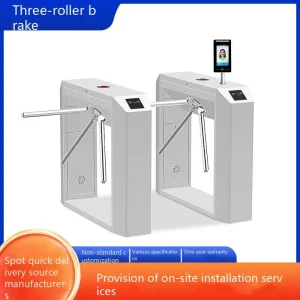
Advanced Factoryoem/ODM Durable Smart Fast Speed Swing Automatic Used Industrial Gym Turnstile Gate Supplier, Factory
Inspect Model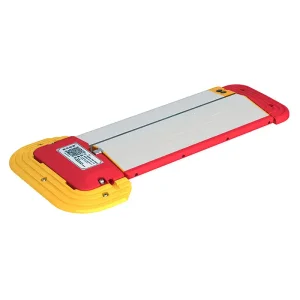
Cheap Scan to pay charging pilecommunity parking lock automatic sensing,electric shared scanning paymentanti-oil car occupying parking space Exporter, Pricelist
Inspect Model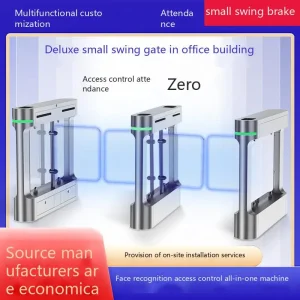
Buy Discount Swing Gate Image Reference Suppliers, In Sales
Inspect Model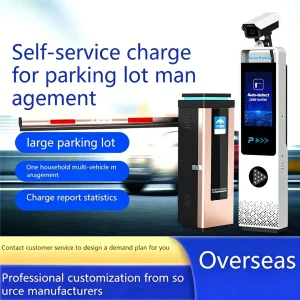
Buy Discount High-def license plate recognition machine Dolphin I model Exporters, In Sales
Inspect Model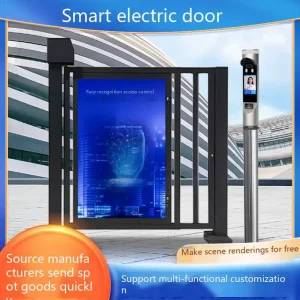
Buy Discount Intelligent pedestrian advertising gate Suppliers, Exporter
Inspect Model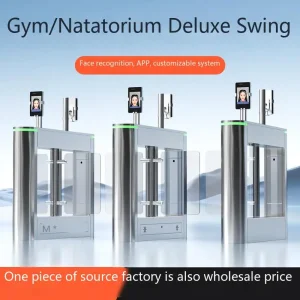
Buy Discount Office Building Entrance Attendance Security Access Control Turnstiles Gate Swing Barrier Speed Gate Manufacturers, Price
Inspect Model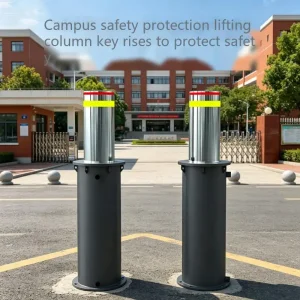
High-Quality Rising Bollard Instruction Manual In Sales, Price
Inspect Model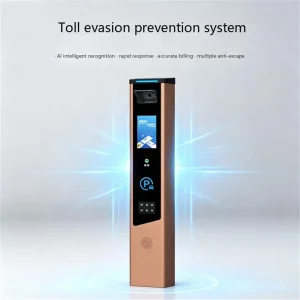
Cheap High definition license plate recognition integrated - AnRuitong II Manufacturer, Factories
Inspect ModelThe Architectural Convergence of Logical & Physical Access Control
Understanding why modern enterprise security mandates the unification of digital identity governance, edge compute validation, and physical barrier kinematics.
For decades, physical security and information technology operates in siloed vacuums. Traditional Physical Access Control Systems (PACS) governed turnstiles, rising bollards, and parking barrier arms via unencrypted Wiegand protocol lines and low-frequency 125 kHz proximity credentials. Concurrently, Logical Access Control Systems (LACS) regulated directory services, VPNs, operational networks, and mission-critical cloud databases using Kerberos, OAuth 2.0, SAML, and Multi-Factor Authentication (MFA). This operational dichotomy created an acute enterprise vulnerability: an individual could be suspended or decommissioned in the human resource directory or enterprise identity provider (IdP) while their physical credential continued granting unrestricted access to corporate server rooms, research laboratories, and perimeter gates.
As elite logical access control manufacturers and engineering innovators, modern hardware architects now bridge this systemic vulnerability. The contemporary paradigm operates on Physical Identity and Access Management (PIAM) and zero-trust perimeter logic. Today, when a vehicle approaches a barrier gate or an executive taps their smartphone at an optical swing speed gate, the hardware does not simply match an unencrypted integer against an isolated local database. Instead, an edge cryptographic module executes an encrypted mutual authentication handshake via OSDP v2.2 (Open Supervised Device Protocol) with Secure Channel Protocol (SCP), referencing tokenized zero-trust network policies via secure RESTful APIs and lightweight MQTT brokers.
Zero Trust Edge Attestation
Eliminates static trust across ingress points. Every actuation event triggered by an ANPR camera, turnstile gate, or automated bollard demands cryptographic verification of identity attributes, context, and time-bound authorization tickets.
PKI & FIDO2 Hardware Integration
Direct onboarding of Public Key Infrastructure (PKI) certificates, cryptographic smartcards (Mifare DESFire EV3, PIV, Seos), and FIDO2 biometric authentication directly within turnstile validator terminals and pedestrian gates.
Continuous Behavioral Telemetry
Dual-direction sensor kinematics feed machine learning monitoring engines. Ingress/egress time stamps, tailgating detection metrics, and vehicle plate correlations feed logical SIEM dashboards in real time.
Enterprise Procurement Criteria for Logical & Physical Systems
Technical specifications, cryptographic standards, and reliability benchmarks that system integrators and EPC contractors must evaluate before vendor sign-off.
Selecting a competent logical access control manufacturer requires moving beyond surface aesthetics and raw mechanical torque. Procurement committees in multinational banking institutions, critical energy infrastructures, and tier-4 data centers must evaluate equipment through a rigorous three-tier prism: Hardware Ruggedness, Cryptographic Protocol Integrity, and API Interoperability.
| Evaluation Dimension | Legacy / Deficient Systems | Anrui Enterprise-Grade Standard | Impact on Logical Security Integrity |
|---|---|---|---|
| Reader-to-Controller Comms | Wiegand 26/34-bit (Cleartext transmission, highly vulnerable to man-in-the-middle sniffing) | OSDP v2.2 with AES-128/256 Secure Channel Protocol (SCP) | Prevents physical hardware tapping from injecting unauthorized logical credentials into network backbones. |
| Identity Token Protocols | 125 kHz Proximity Cards (EM4100), static QR codes, unencrypted Mifare Classic | Mifare DESFire EV3, PIV, BLE 5.2, Dynamic Encrypted QR, Edge AI Facial Vector Matching | Guarantees non-clonability of identity tokens; aligns physical gate access with ISO/IEC 27001 zero trust frameworks. |
| Edge Processing & Resilience | Dumb gate controller relying entirely on continuous central server connectivity | Dual-Core Edge AI SoC with local caching of 200,000 whitelist cryptographic hashes & offline event queueing | Maintains millisecond passage times and unbroken physical perimeter isolation during WAN disruptions. |
| Motor Kinematics & Durability | AC induction motors with high thermal decay, mechanical micro-switches, <2M cycles | Brushless DC (BLDC) Servo Motors with digital optical encoders, 10,000,000 Mean Cycles Between Failures (MCBF) | Eliminates lane downtime, provides sub-second swing speeds, and supports dynamic anti-tailgating algorithms. |
| Software Interface Architecture | Closed proprietary software, licensed per-seat SDKs, no direct cloud webhook hooks | Open OpenAPI 3.0 specs, native RESTful endpoints, MQTT publish-subscribe, BACnet/IP building automation hooks | Allows logical identity platforms (Microsoft Entra ID, Okta, Ping Identity) to provision physical access instantly. |
Macro Industry Solutions: Engineering Scalable Perimeter Defenses
Tailored access architectures integrating vehicle barriers, speed gates, and smart bollards across high-compliance international sectors.
Tier-4 Data Centers & Financial Campuses
Deploying dual-authentication mantrap airlocks combining Anrui brushless optical speed gates with FIDO2 palm vein and Mifare DESFire validation. Integrated hydraulic rising bollards (K4/K12 impact rated) defend against forced vehicle penetration, automatically interlocked with logical intrusion alarms.
Multimodal Logistics & Freight Ports
Autonomous multi-lane freight corridors driven by Dolphin-series AI License Plate Recognition (LPR) cameras and high-speed DC articulated boom barriers. Automated optical character recognition cross-references container codes and tractor plates against international logistics manifests via cloud API.
Smart Commercial Real Estate & Transit
High-throughput bridge swing gates and pedestrian advertising turnstiles providing 45-person-per-minute flow capacity. Integrated dynamic digital displays serve context-aware announcements while background telemetry monitors lobby floor population density for building safety protocols.
Municipal Smart Parking & Urban Mobility Grids
Unattended municipal curb-space and off-street multi-story garages leveraging scan-to-pay intelligent parking locks, auto ticket stations, and electric vehicle charging protection gates. Real-time ultrasonic and video sensing units report bay occupancy to municipal open-data mobility APIs, reducing urban cruising emissions by up to 34%.
Localized Support, Cyber Governance & Regulatory Assurance
Adhering to strict international data privacy regimes and safety directives to ensure zero friction during EPC acceptance and cybersecurity audits.
GDPR & ISO/IEC 27701
All ANPR cameras and biometric turnstile nodes support cryptographic irreversible facial template hashing and on-premise plate blurring to guarantee full compliance with European privacy standards.
CE, FCC & UL 294 Safety
Rigorous electromagnetic compatibility (EMC) testing guarantees zero interference with medical or avionics equipment. Impact sensing and optical infrared safety beams prevent physical entrapment.
Extreme Environment IP67
Engineered with 304/316 austenitic stainless steel and fluorocarbon exterior coatings to survive maritime salinity, Middle Eastern sandstorms (+70°C), and sub-zero Nordic winters (-40°C).
7×24 Tier-3 Field Support
Direct remote terminal firmware diagnostics, field-level wiring diagrams, multilingual technical support, and rapid spare-part replenishment across 80+ countries worldwide.
Technology Roadmap: The Future of Logical Access Infrastructure
Pioneering the next horizon of cryptographic access control, post-quantum resilience, and decentralized identity verification.
OSDP v2 & Edge Neural LPR
Broad commercialization of self-contained Deep Learning NPU units within barrier arms and turnstile columns, eliminating dependence on external server inference for vehicle/pedestrian passage.
Decentralized ID & W3C Verifiable Credentials
Enabling users to hold cryptographically sovereign credentials on mobile devices (Apple/Google Wallet), presented to turnstiles via zero-knowledge proofs (ZKP) without leaking identity records.
Post-Quantum Cryptography (PQC)
Upgrading controller-level root-of-trust chips to support NIST-standardized lattice-based algorithms (Kyber, Dilithium), protecting long-lifecycle infrastructure against future quantum decryption.
Autonomous Edge Orchestration
Self-optimizing traffic and pedestrian corridors. Swarms of turnstiles, bollards, and gates dynamically reallocate lane directionality in response to predictive algorithmic transit telemetry.
Frequently Asked Questions from System Integrators & Buyers
In-depth technical answers addressing software integration, cryptographic compatibility, and international logistics.
What distinguishes a true logical access control manufacturer from a traditional mechanical gate factory?
How does Anrui hardware prevent physical and logical credential sniffing attacks?
Can Anrui LPR cameras and barrier gates integrate with third-party parking billing platforms?
What happens during power loss or network connection failure?
What are the lead times, packaging standards, and payment terms for overseas buyers?
High-Security Gates, Automated Barriers & Space Locks
Deploy field-proven entrance security mechanisms configured with factory direct warranties and global life-cycle engineering support.
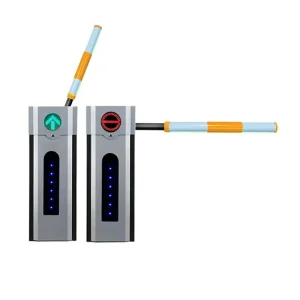
Easy-maintainable Intelligent Barrier Gate Model D11S Supplier, Quotation
Inspect Model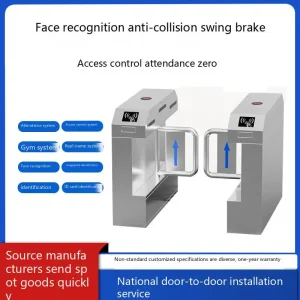
China Bridge Type Sloped Swing Gate Supplier, In Sales
Inspect Model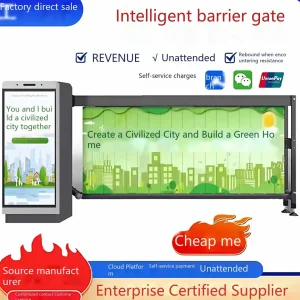
Buy Discount Intelligent Barrier Gate Model D03 Suppliers, Exporters
Inspect Model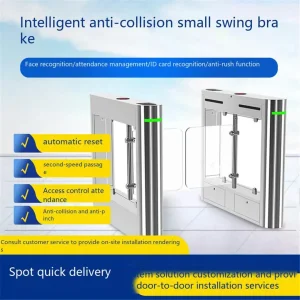
OEM Swing Gate Suppliers, Pricelist
Inspect Model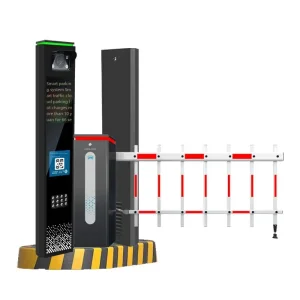
Cost-Effective Car Parking And Toll Access Control Automatic Articulated DC Parking Boom Barrier Gate With Long Range Rfid Reader Suppliers, Factory
Inspect Model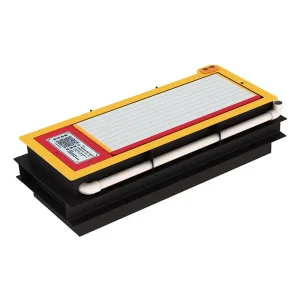
Easy-maintainable City Parking Product Factories, Price
Inspect Model
Advanced Factoryoem/ODM Durable Smart Fast Speed Swing Automatic Used Industrial Gym Turnstile Gate Supplier, Factory
Inspect Model