
Engineered Perimeter & Access Equipment
Pre-configured and rigorously tested access hardware engineered in Shenzhen for unified vehicle and pedestrian flow management.
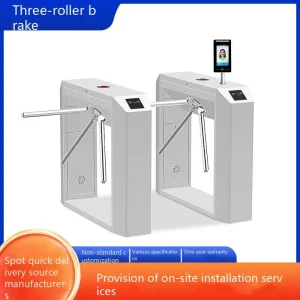
Advanced Factory OEM/ODM Durable Smart Fast Speed Swing Automatic Industrial Gym Turnstile Gate
View Details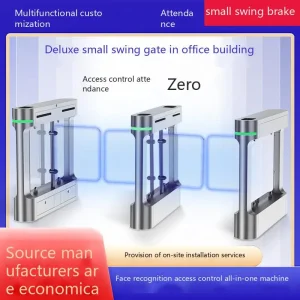
Buy Discount Swing Gate Image Reference Suppliers, In Sales
View Details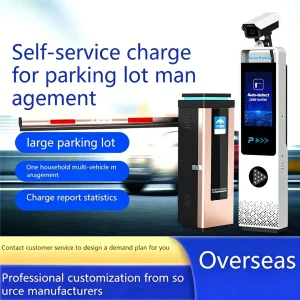
High-Def License Plate Recognition Machine Dolphin I Model Exporters
View Details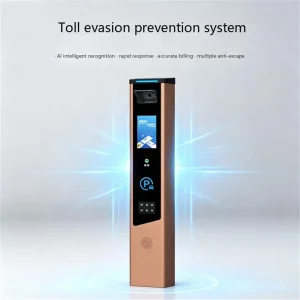
High Definition License Plate Recognition Integrated - AnRuitong II Manufacturer
View Details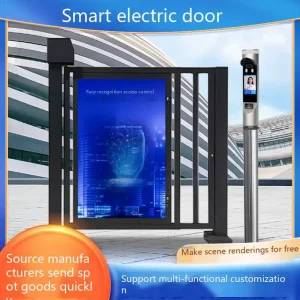
Buy Discount Intelligent Pedestrian Advertising Gate Suppliers, Exporter
View Details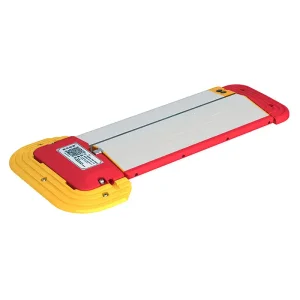
Scan To Pay Charging Pile Community Parking Lock Automatic Sensing Space Exporter
View Details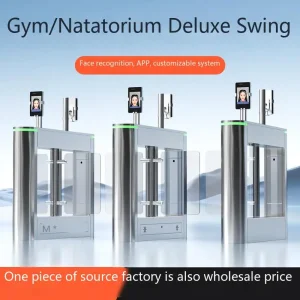
Office Building Attendance Security Access Control Turnstiles Speed Gate
View Details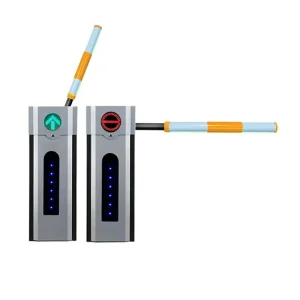
Easy-Maintainable Intelligent Barrier Gate Model D11S Supplier, Quotation
View DetailsEmerging Paradigms in License Plate Capture Architecture
The transition from legacy video surveillance cameras to dedicated, edge-inferencing AI optical systems has redefined vehicular access velocity, operational uptime, and automated revenue collection.
Edge AI Acceleration & Neural OCR
Traditional server-reliant ANPR architectures introduce packet transmission latency and bandwidth vulnerability. Next-generation systems feature on-sensor neural compute units (NPU) running deep convolutional networks, extracting plate strings, state codes, and vehicle profiles within 12 milliseconds at the physical gateway.
- Sub-20ms localized plate character parsing
- Zero central bandwidth congestion during peak surges
- Operational autonomous offline fallback logic
High Dynamic Range & Anti-Glare Optics
Overcoming direct high-beam headlight glare, retro-reflective plate blooms, and profound midnight shadows requires multi-exposure staggered HDR image sensors paired with stroboscopic 850nm IR auxiliary illuminators that dynamically harmonize lux level outputs per approach.
- 120dB–140dB True Optical Dynamic Range
- Synchronized polarized illumination pulsing
- Active suppression of chromatic vehicle paint reflections
Converged Barrier & Vision Mechatronics
Disparate installations where third-party cameras trigger discrete boom controllers via unreliable dry contacts are being displaced by mechatronically integrated terminals. CAN bus telemetry couples real-time vision algorithms directly with high-torque brushless DC barrier actuators.
- Single-point IP telemetry with unified terminal wiring
- Instant microsecond barrier trigger on authorized plate match
- Coordinated anti-tailgating radar and loop sensing
Capture Accuracy Under Multi-Angle Approaches
Total Lane Transaction Time (Detection to Gate Open)
Global Vehicle Plate Formats Natively Supported
Mean Cycles Between Failures (MCBF) on Servo Barriers
Enterprise Procurement Criteria & Engineering Demands
System integrators, governmental EPC contractors, and multinational parking operators require precision manufacturing tolerances, software open-standards, and extreme environmental ruggedization.
Industrial Ingress & Environmental Resilience
Enterprise tenders demand equipment rated at IP66 to IP67 with operating thresholds between -35°C and +70°C. Robust cold-rolled or SUS304/SUS316 stainless steel enclosures with fluorocarbon anti-corrosion finishes guarantee long-term field stability in high-salinity coastal ports and arid desert zones.
- Electrostatic powder-coated housings resistant to UV degradation
- Integrated thermostatic heaters and cooling air channels
- Lightning and surge protection up to 6kV (IEC 61000-4-5)
Open API & Interoperable Cloud SDKs
Global procurement teams prioritize vendor independence. Modern capture units must support standard protocol streams such as RESTful JSON APIs, ONVIF Profile M/S, MQTT, and Webhooks, facilitating low-friction integration into regional payment engines, municipal smart city grids, and building management systems (BMS).
- Native Webhook dispatch for instant event notification
- Embedded database for local storage up to 50,000 whitelist entries
- Wiegand / OSDP legacy access system cross-compatibility
OEM/ODM Factory Customization Scalability
Contractors require agile design-to-build pathways. As direct Shenzhen manufacturers, our 8,000 m² plant supplies turnkey customization, from custom mechanical mounting arms and customer-branded front bezels to custom country-specific optical font modeling libraries.
- Structural chassis redesign for specific booth dimensions
- Localized firmware with custom regulatory plate recognition
- Private-label silkscreening, customized packaging, and UI skins
Macro-Sector Architectural Matrix
Context-aware deployment methodologies designed to resolve complex access bottlenecks, high traffic loads, and elevated security protocols.
| Deployment Environment | Primary Technical Challenges | Hardware Topology | Vision Engine Parameters | Typical Integration Result |
|---|---|---|---|---|
| Unattended Commercial Hubs | Extreme throughput peaks, lost tickets, revenue evasion | Dual-Angle LPR + Brushless Fast Barrier + LED Display | Front & rear plate parsing, speed calculation up to 40 km/h | 90% reduction in entry queuing, ticketless cashless payment |
| High-Security Industrial Parks | Heavy commercial transport, dangerous vehicle tracking, tailgating | Motorized High-Speed ANPR + Hydraulic Anti-Ram Bollards | Chassis recognition, dangerous goods placard capture, blacklist alarm | Instant zero-penetration perimeter lockdown on unauthorized breach |
| Residential Gated Communities | Night glare, low lighting, resident vs. visitor friction | Integrated All-in-One Compact ANPR Gate + Intercom Link | High-definition color night vision, low-noise shutter control | Completely touch-free resident access with cloud visitor QR ticketing |
| Logistics Ports & Freight Terminals | Container text interference, non-standard plate positions, dirt/mud | Extended Focal ANPR Camera + Overhead Supplemental Strobes | Multi-line character segmentation, deep contrast recovery filters | Automated scale weighbridge dispatch with 100% manifest tracking |
Localized Engineering & International Compliance
Deploying vision automation worldwide requires compliance with personal privacy mandates, wireless frequency allocations, and strict structural safety standards.
GDPR & Privacy Compliance
Configurable dynamic driver face masking and non-essential surround blurring ensure alignment with European Union GDPR Article 25 (Data Protection by Design) and ISO/IEC 27001 data retention policies.
Country Plate Character Libraries
Pre-trained neural weights encompass Arabic script, Cyrillic typography, dual-line Japanese Kanji formats, North American reflective tags, and European Union blue-strip dimensional layouts.
Electromagnetic & Electrical Safety
Fully compliant with international CE, FCC Part 15 Class A, and RoHS standards. Designed to eliminate electromagnetic interference with sensitive surrounding RF equipment and emergency radio channels.
Worldwide Field Engineering Support
With systems deployed across 80+ countries and cross-border settlement channels in over 100 nations, our Shenzhen engineering depot delivers 7x24 remote telemetry, video calibration support, and fast spare-part dispatch.
Technical Roadmap & Engineering Trajectory
Anticipating the technological convergence of vehicular AIoT, smart charging protocols, and federated edge networks for the next generation of parking infrastructure.
Federated Zero-Shot Model Updates
Transitioning from centralized offline neural updates to distributed federated edge fine-tuning. New regional plate templates and damaged font recognition profiles propagate across connected gateways while keeping camera edge telemetry and imagery localized for complete customer privacy.
Unified EV Charging Bay Integration
Converging vehicle license capture with automated EV parking bay flaps and dynamic load-balancing power piles. Optical identification initiates reservation verification, drops ground anti-parking bay locks, and correlates charging kilowatt tariffs straight to the vehicle registration.
Multi-Modal V2X Telemetry Sensor Fusion
Pairing high-resolution optical video pipelines with 77GHz millimeter-wave spatial radar and C-V2X direct radio handshakes. This eliminates false loops triggered by pedestrians or metallic road debris and provides millisecond lane trajectory tracking under dense fog and downpours.
Frequently Addressed Engineering Questions
Actionable technical answers for system integrators, EPC engineers, and international procurement managers specifying vehicular recognition hardware.
QHow does the optical hardware handle acute entry angles and extreme sunlight backlighting?
Our dedicated LPR units utilize an embedded wide-angle varifocal lens (typically 2.8–12mm or 6–22mm motorized auto-focus) combined with a 1/2.8" progressive scan low-illumination CMOS sensor. When acute capture angles exceed 30°, the integrated neural algorithm applies perspective distortion correction prior to character extraction. For severe backlighting, multi-exposure True WDR (120dB) balances illumination discrepancies between the shadowed license plate and direct background glare.
QWhat occurs if network communication between the lane camera and local server fails?
The system is engineered with complete decentralized edge autonomy. The camera unit contains an onboard flash memory cache storing up to 50,000 authorized vehicle whitelist/blacklist records along with off-line transaction logs. If local network connection drops, the edge camera continues recognizing plates, evaluates access rights, directly energizes the barrier gate via relay or RS485 dry contact, and reconciles all transaction payloads once connectivity restores.
QCan your factory supply matched lane hardware to avoid multi-vendor integration conflicts?
Yes. That is a hallmark of our Shenzhen manufacturing model. Rather than providing unverified third-party hardware combinations, we engineer, produce, and pre-commission complete lane packages consisting of the LPR terminal, variable-speed servo barrier gate, safety loop/radar detector, and outdoor LED fare displays. This guarantees calibrated mechatronic timing, uniform IP addressing, and zero pinout troubleshooting on the job site.
QWhat protocols are available for third-party parking software and cloud platforms?
Our units offer extensive software interoperability. We provide native RESTful APIs, real-time HTTP/HTTPS POST Webhooks, MQTT publishing for IoT brokers, standard ONVIF Profile M metadata streams, and localized C++, C#, Java, and Python SDKs. Furthermore, physical Wiegand (26/34-bit) output interfaces enable straightforward retrofit compatibility with traditional building access control panels.
QHow are custom license plate formats trained for emerging regional markets?
Our deep learning team operates an in-house synthetic optical modeling pipeline. Integrators or distributors in regions with newly introduced plate syntaxes supply a dataset of 300 to 500 tagged field images. We generate varied augmentations (simulating rain, tilt, occlusion, and varied lux levels), retrain the deep neural network model, and deploy a bespoke firmware update within 10 to 15 business days.
QWhat physical maintenance cycles are required for industrial outdoor deployment?
Thanks to brushless DC/servo barrier motor assemblies with planetary gear mechanisms, mechanical gearboxes are lubricated for life and require no fluid changes (MCBF rated over 10 million cycles). For the optical capture units, regular preventive maintenance involves wiping the optical-grade front glass panel periodically with an anti-static cloth to remove road dust and verifying enclosure rubber gasket seating during annual audits.
Certified Industrial Automation & Gate Systems
Explore our heavy-duty vehicular barrier mechanisms, rising bollards, and intelligent access systems ready for worldwide export.
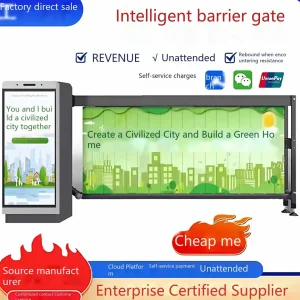
Buy Discount Intelligent Barrier Gate Model D03 Suppliers, Exporters
View Details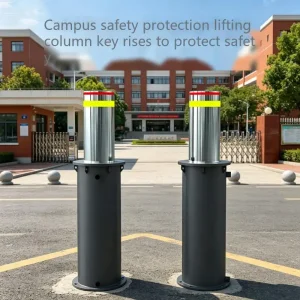
High-Quality Rising Bollard Instruction Manual In Sales, Price
View Details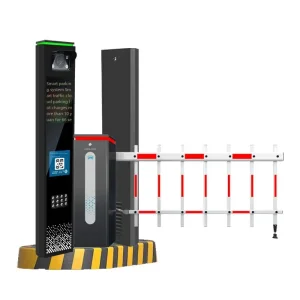
Automatic Articulated DC Parking Boom Barrier Gate With Long Range RFID Reader
View Details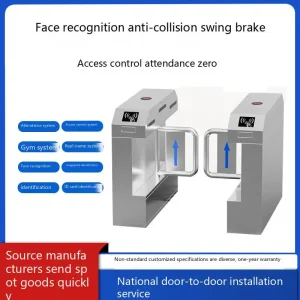
China Bridge Type Sloped Swing Gate Supplier In Sales
View Details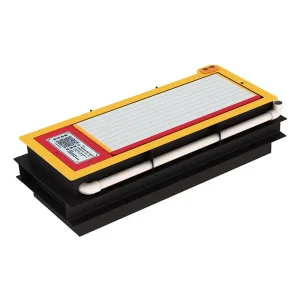
Easy-Maintainable City Parking Product Factories, Price
View Details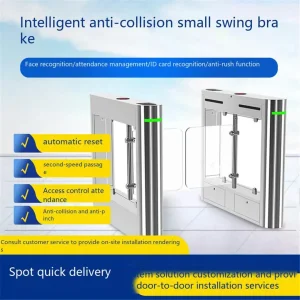
OEM Swing Gate Suppliers, Pricelist & Technical Specification
View Details
Buy Discount High-Def License Plate Recognition Machine Dolphin I Model
View Details