
Featured Industrial Gateways & License Plate Recognition Equipment
Factory-calibrated automated barrier gates, optical recognition systems, and turnstile mechanisms configured for instant cross-border deployment and continuous heavy-duty cycles.
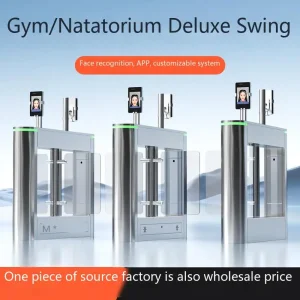
Office Building Entrance Attendance Security Access Control Turnstiles Gate Swing Barrier Speed Gate
Explore Product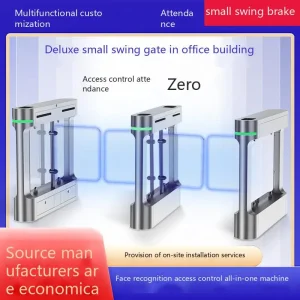
Commercial Pedestrian Swing Gate Barrier System with Optical Sensors
Explore Product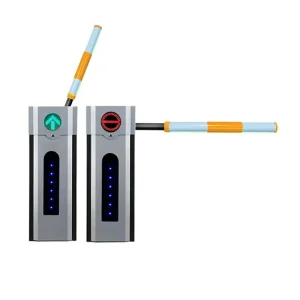
Easy-maintainable Intelligent Barrier Gate Model D11S High-Duty Motor
Explore Product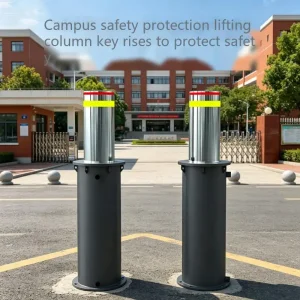
High-Quality Hydraulic Rising Bollard Perimeter Defense Anti-Ram System
Explore Product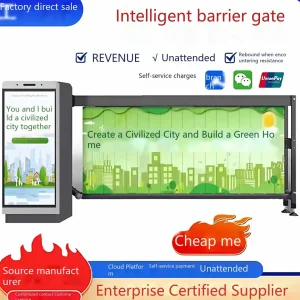
High Performance Intelligent Barrier Gate Model D03 Direct Drive Core
Explore Product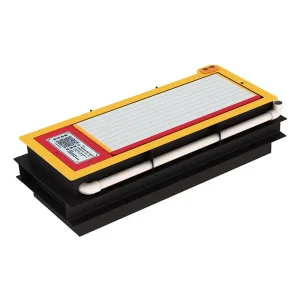
Easy-maintainable City Smart Parking Product System for Urban Enclosures
Explore Product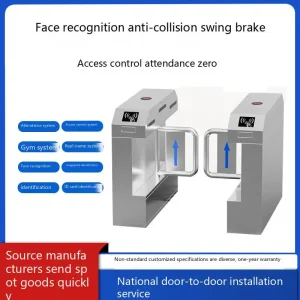
Bridge Type Sloped Swing Gate Architectural Stainless Access Control Barrier
Explore Product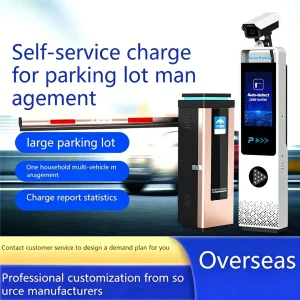
High-Definition License Plate Recognition Machine Dolphin I Intelligent NPU
Explore ProductIndustrial Engineering & Optical Architecture of License Plate Cameras
Why Tier-1 global integrators transition away from generic security IP cameras toward purpose-engineered ALPR edge computing appliances.
In high-throughput vehicle transit environments, the distinction between a commercial surveillance camera and an industrial License Plate Recognition (LPR / ANPR) camera system is dictated by physics, exposure control latency, and edge compute capacity. Commercial surveillance models optimize for balanced, pleasing color contrast across a broad scene, which inherently introduces optical motion blur, rolling shutter skew, and severe dynamic range clipping under high-intensity headlamp glare. Conversely, dedicated license plate camera systems manufactured within specialized production facilities utilize CMOS global shutter or progressive scanning sensors tuned specifically to narrow optical spectrums.
A true factory-engineered LPR vision terminal integrates pulsed stroboscopic infrared (850nm / 940nm) or white-light LED illuminators synchronized down to the microsecond with the sensor’s electronic exposure windows. By locking shutter speeds between 1/1,000s and 1/10,000s, the system suppresses specular reflection from ambient headlamps and sunlight glare, illuminating only the retro-reflective glass bead or micro-prismatic sheeting ubiquitous in international license plates. Coupled with motorized varifocal lenses (ranging from 2.8-12mm for standard entry choke points to 6-22mm and 5-50mm for long-range, high-speed multi-lane highways), the optoelectronic subsystem delivers an uncompromised raw image directly to the on-board neural processing unit (NPU).
Optical & ISP Synchronization
Factory-calibrated Image Signal Processors (ISP) feature specialized Tone Mapping and Wide Dynamic Range (WDR > 120-140dB) algorithms to eliminate retro-reflective washout and severe backlighting simultaneously.
- Microsecond strobe-to-shutter sync
- True Starlight 0.001 Lux color capture
- Motorized P-Iris & auto-focus control
Edge Deep Learning Inference
High-tier Chinese manufacturing incorporates 1.5 to 4.0 TOPS INT8 embedded neural inference engines. Character segmentation, plate localization, and OCR operate locally inside the edge camera enclosure.
- < 150ms end-to-end edge inference
- Dual-crop vehicle & plate metadata
- Local offline whitelist / blacklist storage
Subsystem Hardening & MTBF
Encased in die-cast aluminum alloys rated IP66/IP67 with integrated thermo-electric coolers (TEC) and internal heating elements, designed for a Mean Time Between Failures (MTBF) exceeding 50,000 hours.
- -35°C to +75°C industrial temperature rating
- 6KV surge and lightning suppression
- Hydrophobic optical front window
Global Landscape: Free-Flow Tolling, Smart Parking, and Logistics Automation
Cross-border market dynamics are shifting rapidly toward ticketless, friction-free urban mobility and automated logistical traceability.
Across Europe, the Middle East, Southeast Asia, and North America, urban transit planners and private operators are accelerating the retirement of mechanical paper-ticket dispensers and magnetic-stripe validation units. Ticketed infrastructure suffers from relentless operational liabilities: recurring mechanical jams, thermal paper roll depletion, ticket fraud, and protracted vehicle dwell times that compound carbon emissions at ingress bottlenecks. The global smart parking and intelligent transport system (ITS) sector is undergoing structural unification under high-precision optical recognition.
In modern high-density mixed developments, the license plate functions as a cryptographic digital credential. Once verified by the camera's local deep neural model, an integrated lane controller delivers dry-contact trigger signals directly to brushless DC (BLDC) barrier gates within 200 milliseconds, facilitating true "barrier-free" free-flow ingress. Simultaneously, inter-modal logistics hubs—including bonded sea terminals, freight staging areas, and cross-docking warehouses—demand dual-perspective ANPR units integrated with automated container code recognition (ACCR) to accelerate turnaround and prevent bill-of-lading discrepancies.
Localized Application Scenarios & Environmental Customization
From Middle Eastern sandstorm belts to Nordic sub-zero winters, field-tested performance demands specialized mechanical and optical adaptations.
Desert & High-Heat Environments
In GCC projects across Saudi Arabia, the UAE, and Qatar, ambient temperatures routinely exceed +50°C with severe fine-grain sand ingress. Systems incorporate double-walled sunshields, internal active fans, and IP67 sealed optical chambers to resist sand scouring.
- Dual-layered UV reflection coatings
- Arabic & Latin dual-font neural weights
- Pressurized nitrogen-sealed chambers
Sub-Zero & High Humidity Climates
In Eastern European and Nordic regions, condensation, icing, and frost render standard camera lenses opaque. Intelligent PID-controlled heating elements clear optical glass without creating thermal turbulence or image distortion.
- Instant front-element resistive de-icer
- Low-temperature cold-start circuitry (-40°C)
- European alphanumeric serif/sans-serif OCR
Complex Multi-Jurisdictional Plates
Southeast Asia presents multi-line registration plates, non-reflective civilian backgrounds, contrasting font hierarchies (e.g., Malaysia, Indonesia, Thailand), and ubiquitous two-wheelers. Factory algorithms deploy layered attention networks.
- Dual-line and stacked plate parsing
- Motorcycle front & rear capture support
- Multi-color background classification
China's Supply Chain Velocity: From Shenzhen SMT to Scaled Delivery
Analyzing the architectural cost and delivery efficiencies of clustered hardware engineering, vertically integrated SMT, and automated stress screening.
Shenzhen's Greater Bay Area electronics industrial cluster offers an unmatched structural advantage in industrial IoT and automated security manufacturing. Within a 30-kilometer radius of our Guangming District facility, our engineering teams interface directly with Tier-1 precision optical casting plants, precision multi-layer high-speed PCB fabrication facilities, and automated robotic surface mount technology (SMT) lines. This geographic consolidation compresses prototyping, mechanical tooling iterations, and engineering design modifications from months to mere days.
Production reliability is governed by rigid automotive-grade protocols. Every assembled LPR camera PCB undergoes Automated Optical Inspection (AOI) and functional in-circuit testing, followed by an intensive 72-hour elevated-temperature burn-in cycle (at +60°C under full computational NPU load). Lens mounts are active-aligned via collimator instrumentation to ensure uniform focus across the entire sensor surface. In parallel, barrier gate drive units undergo continuous mechanical torque testing, verifying brushless DC motor stator performance across millions of actuations prior to export staging.
Full Component Traceability
Every capacitor, image sensor, and microcontroller is barcoded and tracked across the MES pipeline, assuring batch consistency and lifecycle component availability.
Rapid OEM/ODM Tooling
In-house CNC machinery and modular chassis designs empower overseas project buyers to customize housing aesthetics, optical mounts, and branding in under two weeks.
Multi-Axis Vibration Rig
Assembled units undergo multi-axis harmonic vibration simulating long-distance ocean freight transit and extreme roadside vehicle shock loading without calibration drift.
Optimized Lead Times
Strategic buffer inventories of sensor silicon and motor actuators ensure high-volume enterprise orders of 500+ lanes ship within 10 to 15 operational business days.
Technology Roadmap: Vision Transformers, Sensor Fusion, and 5G V2X
How next-generation edge vision systems are evolving from character recognition into autonomous, holistic traffic intelligence nodes.
Edge Vision Transformers (ViT)
Traditional Convolutional Neural Networks (CNNs) process images through localized filters. Our next-generation edge firmware integrates quantized Vision Transformers capable of modeling global contextual dependencies.
- Zero-shot multi-country plate generalization
- Superior OCR recovery on heavily damaged plates
- Vehicle make, model, and color categorization
LiDAR & Dual-Optical Fusion
Fusing solid-state 3D time-of-flight (ToF) LiDAR arrays with high-resolution RGB/IR cameras eliminates the need for physical in-ground inductive ground loops. The camera accurately tracks 3D vehicle position, trajectory, and volume.
- Elimination of ground-loop cutting costs
- Advanced anti-tailgating sub-centimeter detection
- Pedestrian-in-lane anti-crush safety triggering
Cellular 5G & C-V2X Telematics
Integration of ultra-reliable low-latency (URLLC) 5G and C-V2X modems allows direct machine-to-machine coordination between incoming autonomous vehicles, roadside intelligent units (RSUs), and barrier controllers.
- Sub-10ms latency lane pre-authorization
- Edge-to-Cloud zero-trust certificate authentication
- Direct integration with connected car e-wallets
Edge Privacy Sovereignty, GDPR Masking, and System Interoperability
Rigorous compliance with worldwide data protection laws and seamless interconnectivity across international building management systems.
As biometric and vehicular tracking regulations expand under European Union GDPR (General Data Protection Regulation), California's CCPA, and analogous global frameworks, physical security hardware must embody "Privacy by Design." Dedicated LPR cameras from advanced factories feature dynamic hardware-level blurring engines. Upon plate identification, the system can automatically anonymize windshields, vehicle occupants, and surrounding pedestrians directly within the hardware stream before video data is stored or transmitted across IP uplinks.
Integrators avoid platform lock-in through expansive, standardized protocol stacks. Anrui systems support native ONVIF Profile S, Profile G, and Profile T compliance, facilitating direct ingest into enterprise Video Management Systems (Milestone, Genetec, Avigilon). For access control synchronization, edge camera controllers feature native Wiegand (26/34-bit), OSDP v2, and RS485 hardware outputs, alongside bi-directional MQTT, WebSocket, and RESTful JSON APIs for direct, frictionless cloud ingestion.
| Interface / Standard | Protocol Level | Primary Industrial Application | Compliance Benefit |
|---|---|---|---|
| ONVIF Profile T | Video & Analytics IP Layer | Enterprise VMS video management ingestion | Guaranteed multi-vendor streaming & metadata compliance |
| Wiegand 26 / 34 / 66 Bit | Physical Dry Wire Interface | Legacy access control panel direct connection | Emulates card swipe; zero backend programming required |
| OSDP v2 (SIA Standard) | RS-485 Encrypted Serial | High-security government & financial installations | AES-128 bidirectional encryption against wire-tapping |
| RESTful JSON / Webhook | HTTP/HTTPS Network API | Cloud smart parking platforms & mobile payment apps | Sub-second event notification with base64 plate snapshot |
| MQTT / WebSockets | Lightweight IoT Messaging | Smart City edge-to-cloud telemetry & central monitoring | Ultra-low bandwidth consumption over 4G/5G cellular arrays |
Industrial Selection Matrix: Matching Camera Class to Project Topology
A comprehensive procurement comparison guide for engineering consultants, EPC contractors, and solutions architects.
| Deployment Tier | Sensor & Shutter Architecture | Target Speed Range | Illumination Architecture | Typical Application Enclosure |
|---|---|---|---|---|
| Tier 1: Access Gate Entry | 1/2.8" Progressive CMOS, Rolling / Soft Shutter | 0 - 40 km/h (Stop-and-Go) | Integrated White/IR LED Array (850nm) | All-in-one column with integrated LED lane display |
| Tier 2: Free-Flow Express Lane | 1/1.8" Starlight CMOS, Electronic Global Shutter | 40 - 120 km/h (Non-Stop) | External High-Power Pulse Xenon / LED Strobe | Overhead gantry mount, IP67 weatherproof housing |
| Tier 3: Highway ETC & Tolling | 1" Industrial True Global Shutter Sensor | 120 - 240 km/h (Multi-Lane Free-Flow) | Microsecond Stroboscopic Matrix with Dual Polarizer | Anti-vibration industrial enclosure with TEC cooling |
| Tier 4: Off-Grid & Remote Bays | Ultra-Low-Power Edge CMOS with Sleep-Awake Radar | 0 - 30 km/h (Periodic Access) | Pulsed Low-Current Invisible IR (940nm) | Solar-battery integrated pole unit with 4G/NB-IoT |
Frequently Asked Technical Questions (FAQ)
Clear, engineering-driven answers regarding installation geometry, algorithm accuracy, software integration, and factory logistics.
What optical capture angle tolerances are required for reliable recognition?
For optimal character segmentation, the horizontal capture angle should remain within ±30 degrees from the vehicle's driving vector, and the vertical angle should not exceed 25 degrees. While deep neural models can normalize keystoning up to 40 degrees, maintaining lower angles minimizes retro-reflective distortion, headlight flare, and character occlusion caused by towing hitches or front bumpers.
Can the system operate completely offline without active server or internet links?
Yes. Anrui factory-engineered LPR camera units feature onboard non-volatile eMMC storage supporting up to 50,000 whitelist/blacklist records. Ingress authorization, time-based shift rules, and relay barrier triggers execute locally inside the camera enclosure in under 150ms. When network connectivity is restored, cached logs and snapshot buffers sync automatically via MQTT or REST API.
How does the camera prevent tailgating and multiple vehicle passage errors?
Tailgating prevention relies on a synchronized tripartite feedback loop combining edge video motion vector tracking, dual inductive ground loop detectors (presence and barrier closure loops), and radar sensors. If a secondary vehicle follows within 0.8 meters, the camera maintains continuous tracking, registers a distinct vehicle event, and alerts the lane controller to halt or lower the gate immediately.
How do Chinese factories handle local font and plate syntax customization?
Our Shenzhen factory maintains an expansive synthetic dataset pipeline. By supplying 500 to 1,000 real-world sample images of your region's unique vehicle registration plates, our computer vision engineers train, quantize, and validate a custom neural model within 10 to 14 business days. The updated model is deployed seamlessly over-the-air (OTA) to edge devices.
What is the typical lifecycle and Mean Time Between Failures (MTBF) of the hardware?
Our industrial ANPR camera systems feature an engineered MTBF exceeding 50,000 operational hours. Solid-state brushless DC barrier gate mechanisms tested in our facilities achieve a rating of 5,000,000 to 10,000,000 continuous cycles. All enclosures use passivated electrophoretic primer and outdoor-grade architectural thermoset powder coatings rated for 1,000 hours of continuous salt-spray exposure.
How do you guarantee integration compatibility with existing legacy access control systems?
The system provides multi-tier fallback interfaces. For older door or gate controllers, the camera's Wiegand 26/34 output converts parsed alphanumeric plate strings directly into standard card-credential bitstreams. For modern IT deployments, our open RESTful JSON API and WebSocket event listeners allow web and software developers to receive instant webhook payloads in their preferred programming language.
Integrated Perimeter, Parking Lock & Lane Access Equipment
Expand your installation with matched perimeter barriers, high-speed turnstiles, advertising road gates, and individual bay occupancy locks.
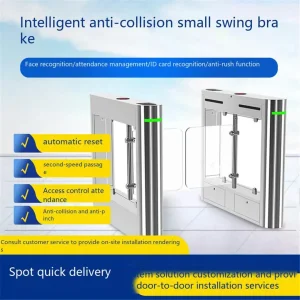
High Traffic Architectural OEM Swing Gate Pedestrian Access Barrier
Explore Product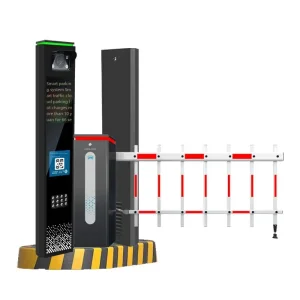
Cost-Effective Car Parking & Toll DC Articulated Boom Barrier Gate with RFID
Explore Product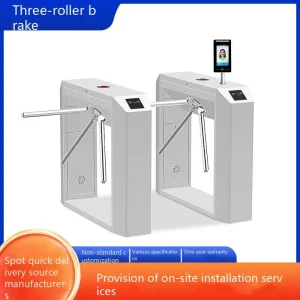
Advanced Durable Smart Fast Speed Swing Automatic Industrial Gym Turnstile
Explore Product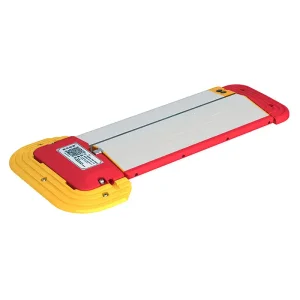
Shared Automatic Sensing Electric Anti-Occupying Smart Parking Space Lock
Explore Product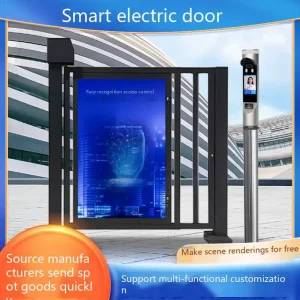
Intelligent Pedestrian Commercial Advertising Barrier Access Gate System
Explore Product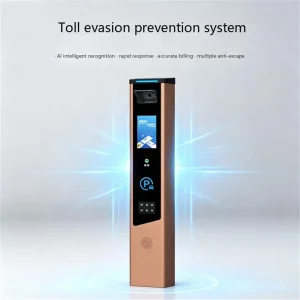
High Definition License Plate Recognition Integrated Terminal AnRuitong II
Explore Product
High-Definition License Plate Recognition Machine Dolphin I Intelligent NPU
Explore Product