Featured Lane Hardware & Vehicle Access Controls
Engineered for seamless entry-exit synchronization, rigorous daily duty cycles, and real-time ANPR edge trigger handshakes.
The Global Commercial Landscape of License Plate Recognition
From ticketed bottlenecks to sub-second free-flow automation: An authoritative analysis of intelligent perimeter engineering and smart city mobility.
The global intelligent vehicle access ecosystem has undergone a monumental structural pivot. In traditional urban logistics and perimeter installations, physical ticketing, inductive magnetic loop triggers, and proximity RFID badges dictated vehicular flow. However, mounting operational overhead, ticketing consumable degradation, and the systemic throughput limits of physical transactions created intolerable friction in high-density facilities. Today, the global License Plate Recognition (LPR)—frequently classified as Automatic Number Plate Recognition (ANPR)—industry has matured into a multi-billion-dollar enterprise asset class governed by neural edge computing, sub-second latency optical inference, and interconnected cloud-native management matrices.
Across metropolitan commercial towers, industrial logistics distribution centers, municipal congestion pricing boundaries, and mission-critical government compounds, edge-AI LPR systems act as the primary authentication node. Driven by rapid advancements in embedded deep learning processors, high-performance optical sensors, and computer vision algorithmic models, modern recognition architectures operate at the edge directly inside the camera housing rather than depending on centralized, latency-vulnerable back-end servers.
Frictionless Free-Flow Logistics
High-volume distribution centers processing over 10,000 trucks daily eliminate gate queuing by deploying dual-angle ANPR arrays that capture alphanumeric data at speeds up to 40 km/h, linking bill-of-lading data straight to terminal management systems.
Perimeter Security & Blacklisting
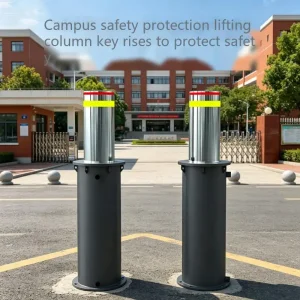
Commercial compounds and military infrastructures utilize edge-embedded white-list/black-list rule evaluation to trigger high-speed rising bollards and barrier gates in under 200ms when unauthorized or suspect vehicles breach optical virtual triggers.
Unattended Ticketless Revenue
Modern parking operators in North America, Western Europe, and Southeast Asia have transitioned fully to scan-to-pay and auto-debit accounts. The license plate serves as the definitive digital credential, slashes labor budgets by 70%, and eradicates lost-ticket fraud.
Shenzhen Hardware Clustering & Direct Factory Advantages
Why the Guangming District manufacturing corridor delivers unbeatable value, rigorous quality control, and unparalleled hardware-software co-design.
Shenzhen, China stands as the global capital of advanced optoelectronic design and embedded precision electronics. Within our specialized Guangming District manufacturing facility, our production lines benefit from an immediate 15-kilometer industrial supply radius. Optical glass grinding, precision high-pressure aluminum die casting, surface mount technology (SMT) PCBA assembly, and brushless DC (BLDC) motor winding are completely synchronized. This concentrated industrial clustering delivers structural efficiency advantages that Western assemblers and decentralized producers simply cannot match.
Rather than functioning merely as third-party device re-sellers, our factory operates an end-to-end design, tooling, firmware flashing, and environmental validation facility. From precision salt-spray testing chambers (verifying anti-corrosion finishes for coastal deployments) to high-temperature thermal cycling chambers (-35°C to +75°C), every LPR camera terminal and synchronized barrier gate is stress-tested to survive continuous operational abuse.
Radical Cost-Efficiency
Bypassing multi-tier distributors and procurement middlemen saves integrators 35% to 55% on unit costs, allowing razor-sharp bidding margins for municipal and enterprise tenders.
In-House Firmware Customization
Direct access to our core embedded algorithms allows rapid retraining of neural weights for esoteric national character sets, special vanity plates, and customized camera-to-gate relay protocols.
Single-Source Lane Matching
We eliminate on-site finger-pointing. Camera sensors, LED variable messaging boards, voice prompt speakers, and high-cycle barrier gate arms are factory-paired and pre-commissioned before container loading.
Agile Rapid Prototyping
From initial CAD concept to functional CNC aluminum chassis prototype in under 14 days, offering tailored OEM chassis colors, laser-engraved client branding, and custom mounting brackets.
Factory Reliability Guarantee: Every ANPR integrated terminal exiting our Shenzhen Guangming production line undergoes a non-stop 72-hour burn-in stress test, including continuous optical stroboscopic firing and neural processor thermal indexing, ensuring out-of-the-box reliability for remote international project deployments.
Edge-AI Optical Engine & Deep-Learning OCR Architecture
Engineered to master extreme headlight glare, high-speed vehicle approaches, torrential weather, and retro-reflective optical distortion.
A true commercial-grade LPR system cannot rely on generic surveillance IP camera optics. General surveillance sensors prioritize balanced scenic exposure, which inevitably blurs high-velocity reflective metallic plates or results in severe blooming when confronted by high-intensity modern LED headlights. Our dedicated ANPR integrated machines employ a tri-factor optical architecture specifically engineered for character isolation and contrast extraction.
| Engineering Parameter | Standard Commercial Grade | Anrui Industrial Flagship Tier | Operational Impact & Site Benefit |
|---|---|---|---|
| Optical Sensor Element | 1/2.9" Generic CMOS | 1/1.8" Sony STARVIS™ Back-Illuminated CMOS | Superior low-light sensitivity; captures sharp plate contrast without grain in zero-lux environments. |
| Shutter Range & WDR | 1/50 - 1/1,000s; 80dB WDR | 1/25 - 1/100,000s; 120dB True Optical Dual-Exposure WDR | Completely eliminates headlight glare, retro-reflective blooming, and harsh afternoon shadows. |
| Inference Processing Unit | Host Server-dependent (Cloud/PC) | Integrated Dedicated 2.0+ TOPS Edge Neural NPU | Real-time vehicle detection and plate OCR within 120ms directly on-board; independent of network status. |
| Lens & Capture Depth | Fixed 4mm / 6mm Lens | Motorized 2.8–12mm / 6–22mm Varifocal Auto-Focus | Software-adjustable lane focal depth from 3.0 to 25.0 meters without requiring physical manual disassembly. |
| Auxiliary Lighting | Continuous White LED Array | Synchronized Intelligent Pulsed Strobe (White/IR) | High-intensity synchronized pulse illuminates only the plate during shutter exposure, avoiding driver blindness. |
| Ingress & Thermal Protection | IP65 Enclosure; Passive Vent | IP67 Sealed Housing with Internal Fan & De-fog Heater | Resistant to coastal salt air, desert sandstorms, monsoons, and ambient temperatures up to 65°C. |
Worldwide Engineering Case Studies & Localized Edge Scenarios
Proven hardware performance tailored to the distinct legal frameworks, plate geometries, and extreme micro-climates of over 80 countries.
Middle East (GCC Region)
Conditions: Extreme 50°C+ ambient heat, severe sandstorms, dual-script (Arabic & Latin) license plates with complex regional emirate badges.
Engineering Solution: IP67 housings with sunshields, internal dual circulation fans, and specialized multi-line Arabic character segmentation algorithms deployed widely across Dubai, Qatar, and Saudi Arabia.
European Union & UK
Conditions: Strict GDPR privacy mandates, standardized long-plate form factors, multi-state EU cross-border transit, and Low Emission Zone (LEZ) enforcement.
Engineering Solution: Edge-based cryptographic hashing of plate data, selective character masking for non-infringing traffic, and rapid country-code identifier detection deployed across logistics parks in Poland and Germany.
Southeast Asia (ASEAN)
Conditions: Dense mixed traffic streams of motorcycles and passenger vehicles, high seasonal monsoonal humidity, non-reflective stamped steel plates.
Engineering Solution: Multi-object tracking algorithms capable of separating tightly clustered motorbikes, hydrophobic optical glass coatings, and high-intensity localized fill-light arrays in the Philippines and Vietnam.
The Americas
Conditions: Wide diversity of state/provincial graphic backgrounds, absence of front plates in multiple US states, high-speed arterial perimeter access.
Engineering Solution: Dual-camera master-slave configurations (capturing front vehicle silhouette and rear registration plate simultaneously) integrated directly with standard Wiegand and OSDP access controllers.
Global Integrator RFP & Factory Procurement Blueprint
Crucial technical criteria that chief procurement officers and systems engineers must mandate when evaluating industrial ANPR factory bids.
Procuring industrial LPR hardware for large-scale infrastructure projects involves significant capital expenditure and reputational liability. Integrators often suffer crippling field maintenance losses when lured by cheap consumer-grade cameras repurposed as vehicle access devices. When vetting factory suppliers or compiling government tender documents, enforce the following five non-negotiable procurement benchmarks:
Protocol Agnostic SDKs
Ensure the hardware provides open, fully documented RESTful APIs, ONVIF Profile M compatibility, MQTT payloads, and native WebSocket feeds rather than proprietary closed middleware.
Opto-Isolated Relays
Mandate on-board optical isolation on all digital I/O trigger ports. This safeguards the internal processor against voltage back-spikes originating from aging barrier gate solenoids and external loop detectors.
Offline Standalone Whitelist
The device must retain an onboard non-volatile database storing at least 50,000 whitelist credentials, preserving entry authentication during enterprise network drops.
IK10 Mechanical Impact
Enclosures deployed in unattended lanes must boast certified IK10 vandalism resistance ratings and lockable chassis panels to protect internal electronics against unauthorized tampering.
Brushless DC Motor Parity
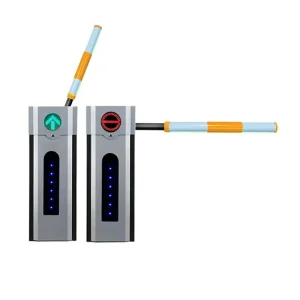
Paired barrier gates must deploy brushless DC (BLDC) motors guaranteeing a minimum of 5,000,000 to 10,000,000 Mean Cycles Between Failures (MCBF) with electronic soft-start and soft-stop damping.
Understanding Factory Cost Drivers & Direct Quotation Models
Transparent, factory-direct cost modeling based on volume tiers, customization requirements, and project engineering specifications.
When requesting an industrial quotation for high-quality license plate recognition hardware from Shenzhen Anrui Intelligent Equipment Co., Ltd., procurement parameters are structured into three distinct tiers: Prototype & Proof-of-Concept (1–5 Lanes), Project Integration Tier (10–50 Lanes), and Direct Container Distribution OEM/ODM (100+ Lanes).
Unlike software vendors who charge crippling annual recurring license fees per optical channel, our industrial business model delivers fully unlocked edge-licensed hardware. Once purchased, the onboard OCR algorithms run perpetually without subscription penalties, drastically reducing the client's Total Cost of Ownership (TCO) across a 5-to-10-year facility lifecycle.
| Procurement Tier | Typical Hardware Configuration | Factory Cost Drivers | Ideal Procurement Objective |
|---|---|---|---|
| Sample / Evaluation (1–5 Units) | Dolphin I / AnRuitong II Integrated Machine + Test Stand | Standard firmware; quick-ship air cargo packing; individual unit testing. | Local optical character verification, software API integration validation. |
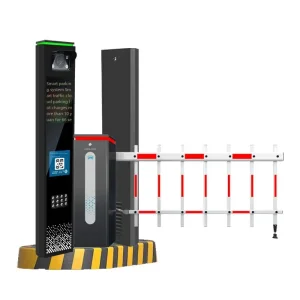
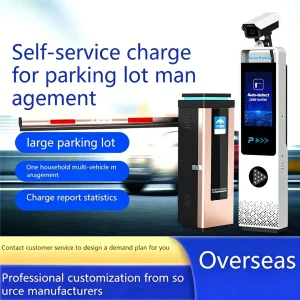
| Project Integrator (10–50 Lanes) | Matched LPR Column + High-Speed BLDC Barrier Gate (D11S/D03) | Customized localized plate neural weight flashing; custom paint RAL codes. | Turnkey commercial development, municipal hospital, or airport parking tender. |
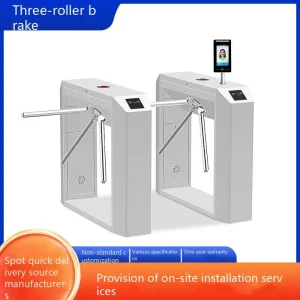
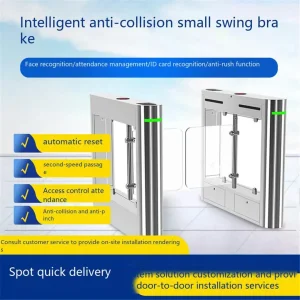
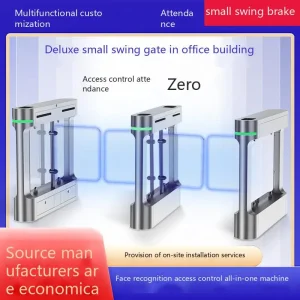
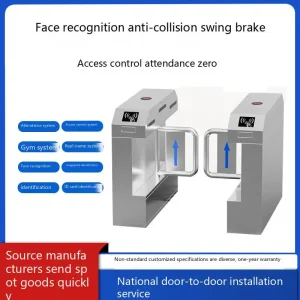
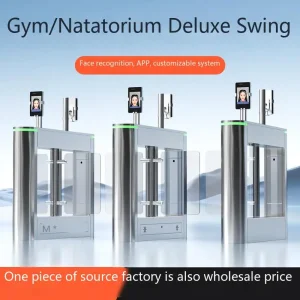
| OEM / Global Distributor (Full Container) | Full Matrix: ANPR Columns, Swing Turnstiles, Hydraulic Bollards | Laser-cut client branding; exclusive geographic housing molds; palletized sea freight. | Regional distributor stock holding with proprietary localized brand identity. |
Request an Authoritative Project Quotation & Lane Layout
Provide your target country, lane count, approach geometry, and motor cycle requirements. Our Shenzhen engineering team delivers an itemized FOB/CIF quotation within 24 hours.
Frequently Asked Technical & Procurement Questions
Direct answers to the most rigorous architectural inquiries submitted by global system integrators and EPC contractors.
How does the system maintain high recognition accuracy under direct high-beam headlight glare at night?
Can the edge ANPR camera trigger the barrier gate autonomously if the central network goes offline?
What are the exact networking protocols supported for third-party parking software integration?
How does Anrui accommodate non-standard, custom, or multi-line license plate characters from emerging markets?
What makes Brushless DC (BLDC) barrier gates superior to traditional AC torque motor gates in LPR lanes?
What are the lead times, packaging standards, and payment terms for overseas container orders?
Perimeter Automation, Turnstiles & Bollard Solutions
Expand your security perimeter: High-speed turnstiles, heavy-duty hydraulic anti-ram bollards, and articulated parking barriers.