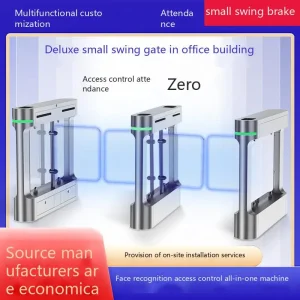
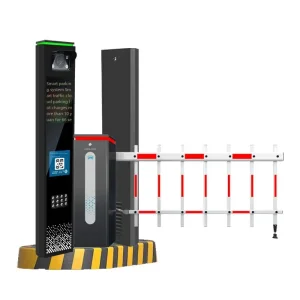
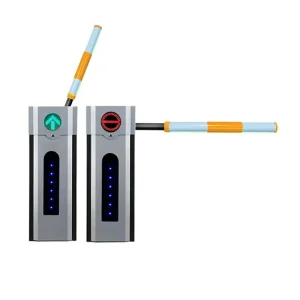
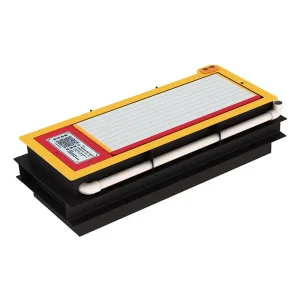
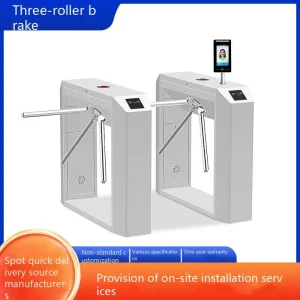
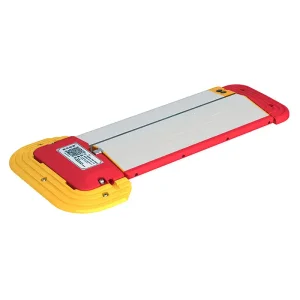
Integrated Vehicle & Pedestrian Access Modules (Lineup Part I)
Pre-engineered hardware components factory-calibrated for unified operation with Automatic License Plate Reader (ALPR) lane controllers.
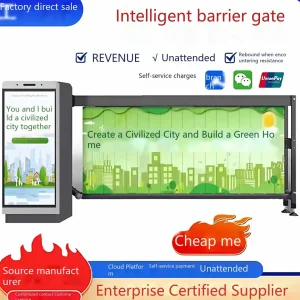
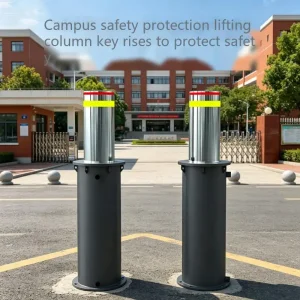
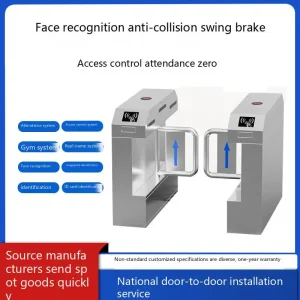
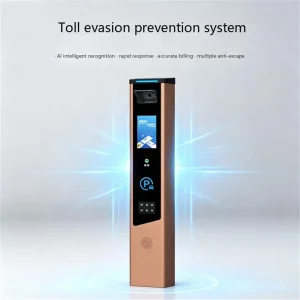
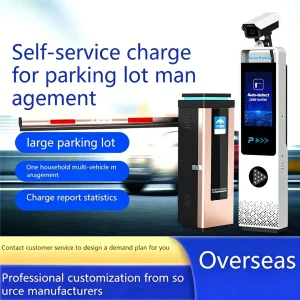
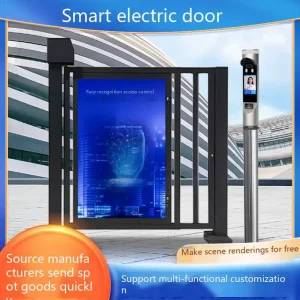
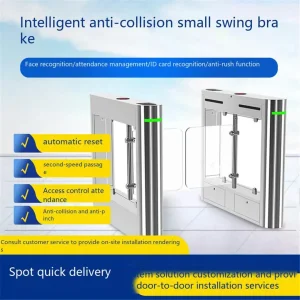
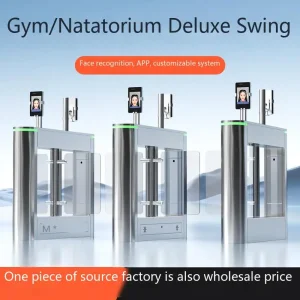
Industrial Hardware Performance & Manufacturing Benchmarks
Operational data validated across international transit terminals, municipal car parks, and high-security installations.
Engineering Whitepaper: The Strategic Edge of Shenzhen ALPR Manufacturing
In-depth technical architecture, hardware-software convergence, and supply chain efficiencies driving global vehicle access control.
Automatic License Plate Reader (ALPR / ANPR) systems have migrated from basic optical character recognition (OCR) sensors to sophisticated Edge-AI neural computation units. Historically, parking control systems operated on fragmented stacks: optical capture devices, separate loop detectors, remote rack-mounted processing servers, and independently wired barrier gates. This fragmented approach invited latency, multi-vendor disputes during downtime, and excessive civil engineering overhead.
Why Global System Integrators Source ALPR Hardware from Shenzhen Factories
Shenzhen, China represents the epicenter of intelligent hardware manufacturing, specifically in the convergence of electro-mechanical access systems and AIoT vision hardware. By procuring directly from certified Shenzhen factories like Shenzhen Anrui Intelligent Equipment Co., Ltd., global enterprises capture critical structural advantages:
1. Complete Supply Chain Proximity: Within a 30-kilometer radius in the Pearl River Delta, raw cold-rolled steel fabrication, high-precision DC brushless motor winding, robotic CNC chassis milling, optical lens assembly, and SMT circuit board manufacturing are seamlessly integrated. This geographic concentration collapses prototyping cycles from months to days and drastically eliminates international component markups.
2. Rigorous Environmental Testing Standards: Shenzhen facilities manufacture for diverse export profiles. ALPR enclosures and optical assemblies undergo rigorous environmental endurance testing, including accelerated thermal shock (-40°C to +85°C), salt spray fog corrosion resistance for coastal toll terminals, and 100% duty-cycle barrier gate MTBF stress tests exceeding 5 million continuous operations.
3. Direct Firmware-to-Kernel Customization: Western distributors often rebrand localized hardware with locked proprietary firmware. Direct OEM/ODM engagement with Chinese engineering factories gives international integrators root-level access to open SDKs, standard ONVIF/RTSP video streaming, MQTT payload customization, and direct TCP/IP command structures tailored to regional parking software stacks.
Industrial Protection Rating
Cabinets constructed with 1.5mm–2.0mm high-grade cold-rolled plate coated with outdoor-grade anti-UV fluorocarbon powder coating, meeting rigorous IP66 to IP67 sealing requirements against tropical typhoons and desert sandstorms.
Edge-AI Multi-Exposure Stacking
Integrated quad-core neural network engines capture triple-exposure frames simultaneously, eliminating glare from high-beam xenon headlights and deep retro-reflective shadows on stamped plates in pitch-black conditions.
Fail-Safe Offline Autonomy
Embedded 64GB solid-state storage preserves an internal whitelist database of up to 100,000 plates. Barriers cycle instantaneously even under catastrophic network drops, synchronizing transaction buffers upon reconnection.
Emerging Trends in Intelligent Vehicle Identification
The transformation of static entry gates into autonomous edge hubs within smart municipal networks.
Migration to Pure Cloud & Hybrid Edge
Traditional on-premise local servers are being replaced by lightweight Edge-AI terminals that communicate directly with cloud management backends via TLS 1.3 encrypted WebSockets, reducing on-site hardware costs by 45%.
Touchless Free-Flow EV Revenue Collection
LPR is now deeply embedded with dynamic toll algorithms and digital payment wallets (Apple Pay, Google Pay, localized QR systems), allowing vehicles to enter, charge, park, and exit without ticketing or human intervention.
Zero-Trust Perimeter Convergence
Physical access control is converging with corporate cybersecurity. Modern ALPR devices operate under zero-trust network architectures, verifying vehicle authorization before issuing dynamic gate-open pulses to high-speed brushless barriers.
Macro Turnkey Solutions: Integrated Field Deployment
End-to-end architectures designed for rapid commissioning, multi-lane throughput, and extreme industrial duty cycles.
Commercial Plazas & Airports
High-density multi-lane entries featuring redundant dual-camera ALPR arrays (master/slave geometry) paired with high-speed 0.9s DC servo barriers. Prevents vehicle tailgating while sustaining peak throughput up to 1,200 vehicles per lane per hour.
Smart Industrial Logistics Parks
Heavy-vehicle access terminals equipped with wide-angle elevated cameras to capture multi-row commercial plates, hazardous freight placards, and container codes, tied directly to ERP/WMS systems for automated weighbridge clearance.
Residential Communities & HOAs
Cost-effective unattended access modules providing frictionless resident entry via verified plate recognition, paired with guest QR-code visitor pre-registration and anti-passback controls to prevent unauthorized bay utilization.
Global Procurement Specifications & Quotation Dynamics
Understanding cost structures, BOM breakdowns, and configuration vectors when requesting factory-direct quotations.
Procuring industrial ALPR hardware directly from China requires understanding the core hardware matrices that dictate wholesale project quotations. Standardizing parameters upfront eliminates costly scope drift and guarantees performance:
1. Optical Sensor & DSP
Sensor quality (e.g., Sony Starlight progressive scan CMOS) and neural processing capacity (2.0 TOPS to 4.0 TOPS NPU) dictate recognition precision in complex lighting, directly affecting base unit cost.
2. Algorithmic Localization
Standard Latin script models offer baseline pricing. Specialized alphabets (Arabic, Cyrillic, Thai, Hebrew) or stacked dual-line commercial plates require custom synthetic dataset training before deployment.
3. Barrier Motor Duty Cycle
Standard AC torque motors suit light-duty parking lots. Heavy-duty 24V brushless DC servo drives are mandatory for high-frequency toll gates, increasing MTBF while lowering overall maintenance overhead.
4. Packaging & Trade Terms
Quotations typically benchmark on FOB Shenzhen or CIF discharge port, including fumigated composite wood crating engineered to resist maritime humidity during 30+ day ocean transit.
Frequently Asked Questions (FAQ) for Engineering & Procurement Teams
Direct technical guidance addressing compatibility, site survey planning, and international export logistics.
What is the effective capture distance and angle tolerance for Anrui ALPR cameras?
Anrui integrated ALPR cameras feature motorized varifocal lenses (typically 2.8–12mm or 6–22mm) supporting an effective recognition distance of 3.5 to 15 meters. The optimal horizontal installation angle is within ±25° and vertical tilt within ±30° relative to the vehicle's approach vector.
Can Anrui ALPR cameras recognize license plates from different countries?
Yes. Our deep-learning OCR algorithm libraries support more than 120 countries and regions across Europe, the Middle East, Southeast Asia, South America, and Africa. Custom dataset training is routinely conducted for unique municipal or diplomatic plates using high-volume customer-provided samples.
How does the system handle vehicle authorization during network outages?
Our ALPR machines feature integrated non-volatile solid-state memory storing white/blacklist databases locally. The camera triggers the barrier gate relay output directly via dry contact upon positive plate identification without needing active server approval.
What protocols and APIs are available for third-party software integration?
Anrui hardware supports comprehensive, well-documented RESTful HTTP/HTTPS APIs, MQTT telemetry publishing, WebSocket real-time event pipelines, TCP/IP socket listeners, RTSP video streams, and standard ONVIF Profile S/G compliance for VMS platforms.
What documentation and technical information are required to issue an accurate project quotation?
To receive a fast, detailed bill of materials (BOM) and quote, please specify: number of entry/exit lanes, lane road width (meters), vehicle approach speeds, specific country license plate format, desired barrier arm style (straight, folding, fence), and local line voltage.
Integrated Vehicle & Pedestrian Access Modules (Lineup Part II)
Precision electro-mechanical barriers, parking locks, and perimeter gates engineered for heavy commercial service.