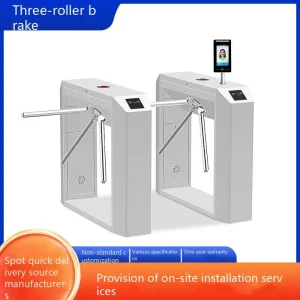
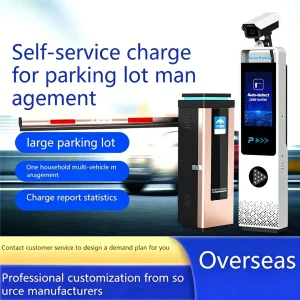
High-Reliability Access Hardware & Entry Lane Components
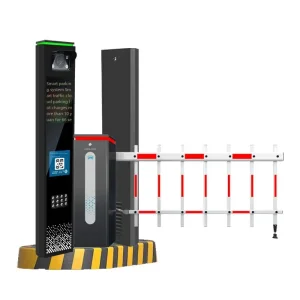
Pre-calibrated, industrial-grade electro-mechanical barrier systems, deep-learning ANPR capture units, and perimeter barriers built for continuous 24/7 duty cycles.
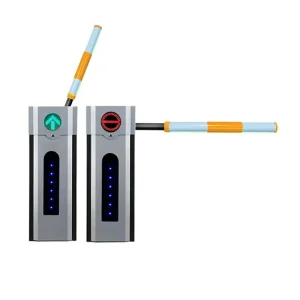
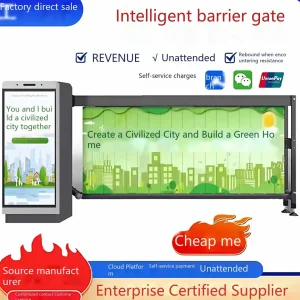
Rethinking Parking Economics: The True Value of Easy Maintainability
Procurement directors and facility managers often fall into the "initial CAPEX trap." In high-throughput parking facilities, unplanned downtime, proprietary parts monopolies, and intensive servicing dictate over 68% of the 10-year lifecycle expenditure.
Mean Time Between Failures (MTBF) > 10M Cycles
Traditional mechanical induction gearboxes rely on wear-prone physical limit switches and friction-heavy linkages that degrade every 500,000 cycles. Modern, easy-maintainable systems incorporate brushless DC (BLDC) planetary digital motors, eliminating carbon brushes, mechanical dampers, and frequent gear lubrication requirements.
Modular Quick-Swap Subsystems (MTTR < 8 Mins)
Mean Time to Repair (MTTR) directly dictates entrance lane availability. Our architectural methodology decouples the core logic board, the motor controller, the power supply unit (PSU), and loop radar detectors into isolated DIN-rail mounted modules, allowing local, non-specialized technicians to replace faulty units in minutes without rewiring.
Open-Protocol Interoperability & No Vendor Lock-In
Proprietary encrypted bus interfaces force operators to purchase inflated OEM spares. An easy-maintainable parking infrastructure leverages standardized communication layers—including TCP/IP, MQTT, RS485 Modbus, and Wiegand/OSDP—ensuring seamless integration with any global parking revenue management system (PARCS).
Legacy Parking Gate Setup
- AC induction motor with oil leaks & thermal trips
- Mechanical micro-switches requiring recalibration
- High 5-year maintenance overhead: ~$4,500/lane
- Average MTTR: 48-72 hours awaiting factory specialists
Anrui Easy-Maintainable VPMS
- 24V/36V BLDC digital servo motor (Zero servicing)
- Hall sensor digital positioning without physical limits
- Low 5-year maintenance overhead: < $650/lane
- Modular plug & play: MTTR under 10 minutes locally
Tier-1 Enterprise Proprietary
- Extreme initial hardware and installation markups
- Rigid SLA contracts with recurring mandatory royalties
- Expensive replacement boards: up to $1,800/part
- Closed software ecosystems that block third-party APIs
Macro Commercial Realities Across Global VPMS Markets
The global vehicle parking management market has accelerated past USD 5.8 billion, trending toward USD 11.2 billion before 2032. However, regional infrastructural maturity, labor expenses, and climatic extremes demand distinctly engineered access configurations.
North America & EMEA
Driven by extreme hourly labor rates ($45-$85/hr), facilities demand completely ticketless, friction-free ingress. Edge-AI ANPR paired with app-based cloud clearing (e.g., Stripe, Apple Pay, NFC) is mandatory. The emphasis centers on remote firmware flashing, over-the-air (OTA) diagnostics, and IP66 marine-grade powder-coated housings to endure sub-zero salinated roads.
Middle East (GCC) & North Africa
Operating under sustained 50°C+ ambient temperatures and abrasive sandstorm ingress, mechanical gearboxes fail without extreme heat dissipation. Easy-maintainable systems incorporate brushless DC servo motors with continuous thermal ratings up to 85°C internal core, dynamic internal cooling vents, and dust-sealed IP55 enclosures.
Asia-Pacific Mega-Density
Cities across East Asia and Southeast Asia face staggering peak-hour volume (up to 900 vehicles/hour per lane). The dominant requirement is extreme response speed (<0.6s boom clearance) and dual-frequency license plate capture tuned to recognize diverse multilingual alphanumeric formats, complex non-reflective motorcycle plates, and dual-script plates.
Latin America & Developing Hubs
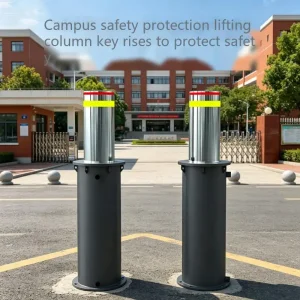
Physical security, anti-tailgating protocols, and vandalism prevention override pure throughput. Operators prefer heavy-gauge 2.0mm cold-rolled steel barrier cabinets, anti-smash pressure wave radar, rising bollards, and hydraulic road blockers integrated with offline redundant memory controllers to survive erratic grid stability.
Commercial Pricing Breakdown & Modular Quotation Matrix
A comprehensive vehicle parking management system quotation consists of field-tested hardware tiers, perimeter sensors, edge inference processors, and central orchestration software. Below is an engineering quotation schedule based on factory direct pricing benchmarks.
| System Module | Component Specification | Maintenance Advantage | Standard FOB Cost | Installation / Setup Scope |
|---|---|---|---|---|
| Barrier Gate Core | Brushless DC (BLDC) Motor, Planetary Reducer, 1.5s-3s Variable Speed | 10M cycles MTBF, no carbon brush change, self-balancing spring linkage | $380 – $850 / Unit | Base concrete pad mount, loop sensor/radar wire conduit |
| High-Speed Toll Barrier | 0.6s–0.9s High-Speed Servo Barrier with Carbon Fiber Boom | Direct drive servo mechanism, zero backlash, dynamic torque monitoring | $750 – $1,400 / Unit | Highway toll lane / high-density commercial entrance |
| Edge ANPR / LPR Camera | 4MP Dual-Sensor WDR, Starlight Low-Light, Neural On-Board OCR Engine | Stand-alone offline whitelist, auto-focus motor, zero PC dependency | $320 – $720 / Unit | Gantry or column mount, 3-6m capture distance, PoE+ power |
| Parking Guidance (PGS) | Dual-Lens AI Space Video Sensor with Multi-Color LED Status Indicator | Covers up to 6 spaces per camera; detects parking violations & reverse car lookups | $45 – $95 / Space Node | Ceiling cable tray routing, RS485/Ethernet multi-drop topology |
| Auto Pay Kiosk (APS) | Outdoor 21.5" Sunlight-Readable Touchscreen, Cash/Coin Validator, EMV NFC Reader | Front-access pull-out drawer mechanism, modular thermal paper roller, remote alerts | $3,200 – $7,500 / Station | Weather-sheltered pad, fiber ethernet, independent surge circuit |
| Smart Parking Locks | Solar + Li-ion Autonomous Floor Lock with Ultrasonic Detection & BLE/ZigBee | 180° Anti-collision self-reset, pressure resistance up to 5 tons, IP68 sealed | $65 – $140 / Space | Anchor bolt floor fix, wireless pairing to sub-gateway |
| Central Controller Hub | Industrial Embedded Linux IPC, 4-Lane Access Gateway, OSDP/MQTT Relays | Fanless solid-state aluminum block, 128GB NVMe buffer, dual hot-swap PSU | $450 – $1,100 / Gateway | Server rack / lane cabinet, manages 4 entrance/exit lanes simultaneously |
Key Cost Drivers in Enterprise Parking Quotations:
1. Vehicle Throughput Frequency: Commercial hubs requiring sub-second entry speeds utilize servo controllers that carry an initial 15-25% hardware premium, but yield massive labor and vehicle idling fuel savings.
2. Regional Plate Heterogeneity: Multi-country sites (e.g., European transit hubs, GCC corridors) require multi-model ANPR neural engines, requiring slightly higher NPU onboard capacity ($50-$120 uplift per camera).
3. Redundancy & Lightning Protection: Tropical and coastal deployments incorporate built-in 10kA surge suppressors, optocoupler-isolated I/O interfaces, and triple-layer anti-corrosion cabinet electroplating.
Engineering Easy Maintainability: Inside the Anrui Core Mechanics
A truly maintainable system is not defined by how easily it can be fixed—it is defined by how intelligently it prevents failures and isolates mechanical fatigue.
Integrated Brushless Servo Drive
Combines a low-voltage high-torque 24V/36V DC brushless motor with a high-precision dual-planetary reduction transmission. It eliminates belt slippage, oil-sealed worm gears, and periodic carbon dust build-up.
Millimeter-Wave Radar Anti-Smash
Replaces traditional buried pavement induction ground loops with dual-spectrum 77GHz FMCW radar. Eliminates expensive road cutting, asphalt degradation, and lightning-induced coil blowouts.
Neural Edge Inference Engine
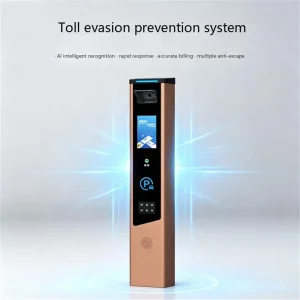
LPR units utilize 2.0 TOPS onboard neural processing units (NPU). Optical character recognition happens on the camera edge in <45ms, eliminating lane closure during central server network outages.
Telemetry & Remote Calibration
Every barrier records spring tension balance, total cycles, motor temperature curves, and deceleration curves. Early-warning alerts are transmitted over MQTT before physical hardware failure occurs.
Customized Architectures for High-Intensity Industrial & Commercial Arenas
Field installations across 80+ countries demonstrate that a generic parking barrier configuration cannot satisfy diverse operating realities. Here is how our modular VPMS adapts across demanding verticals.
International Airports & Multimodal Hubs
Challenge: Uninterrupted passenger drop-off turnover, multi-tier pricing, strict anti-tailgating.
Architecture: Dual-interlocked barrier gates with 0.8s rapid arms. Edge ANPR paired with under-vehicle inspection systems (UVIS). Ticketless mobile validation with automatic license plate logging prevents terminal curb gridlock.
Commercial Megamalls & Retail Plazas
Challenge: Massive weekend rush peaks, complex tenant validation schemes, ad monetization.
Architecture: Digital LED louver advertising barriers generating non-aeronautical advertising revenue. Ultrasonic bay indicators slash search time by 48%. QR code scan-to-pay seamlessly clears exits in under 2 seconds per car.
Smart Logistics Parks & Container Terminals
Challenge: Heavy freight vibrations, non-standard truck plate heights, hazardous perimeter control.
Architecture: Articulated barriers equipped with heavy-duty breakaway boom joints. Dual-angle ANPR cameras capture both low tractor plates and high container ID codes. Fully integrated with automated weight-bridge scales.
Government Facilities & Data Centers
Challenge: Absolute perimeter deterrence, zero-trust visitor clearance, hostile vehicle mitigation.
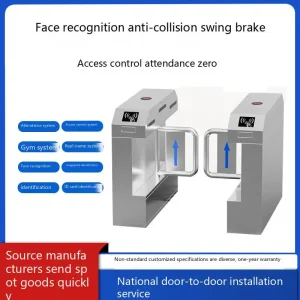
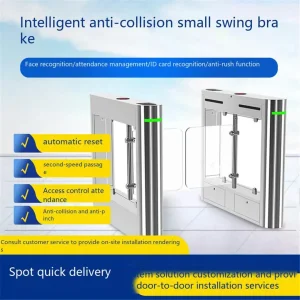
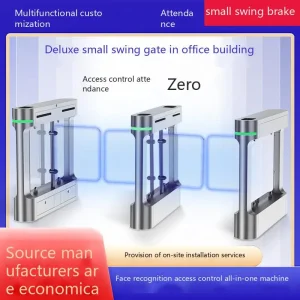
Architecture: Synchronized deployment of hydraulic rising bollards (K4/K12 crash-certified) and automatic barrier gates. Multi-factor verification combining facial biometric pedestrian turnstiles with authorized vehicle ANPR.
Residential Communities & HOA Condos
Challenge: Unauthorized guest parking, space squatting, low operational budgets.
Architecture: Shared cloud parking locks with visitor smartphone authorization. Whitelisted resident hands-free access via ultra-high frequency (UHF) long-range RFID tags or plate recognition. Autonomous, zero-guard maintenance.
Municipal Smart Curbside Grids
Challenge: Wide geographical sprawl, zero grid power availability, high vandalism exposure.
Architecture: Solar-powered IoT parking locks and low-profile curbside video poles running on Narrowband IoT (NB-IoT) or 4G LTE-M. Direct municipal cloud enforcement with geofenced dynamic occupancy pricing.
Technology Roadmap: The Next Decade in Smart Mobility (2026–2035)
The vehicle parking management system is evolving from an isolated physical barrier into an orchestrated mobility node at the intersection of electrification, connected autonomous vehicles (CAV), and smart energy grids.
Unified EV Charging & Space Reservation (ISO 15118)
Traditional setups treat EV chargers and parking spaces as independent silos, leading to "ICE-ing" (combustion engines blocking chargers). Next-gen systems integrate automated floor locks with ISO 15118 Plug & Charge handshake data. The barrier automatically releases when an authenticated EV arrives, billing both parking duration and kilowatt-hour energy in a consolidated micro-transaction.
Ultra-Wideband (UWB) Sub-Centimeter In-Car Payments
While ANPR solves optical identification, adverse blizzards, mud, and obstructed angles can occasionally compromise visual OCR. Ultra-Wideband (UWB) digital car key integration allows vehicles to communicate with parking gantries at sub-decimeter precision. Booms open automatically upon positive cryptographically secured distance confirmation, completely removing optical bottlenecks.
Autonomous Off-Grid Edge AI Nodes
The transition toward zero-carbon facilities demands parking equipment that operates completely independent of trenching and civil grid wiring. Utilizing low-power micro-architectures, deep sleep telemetry cycles, high-efficiency solar harvesting, and 5G RedCap wireless connectivity, entire entry/exit lanes can now be commissioned in hours rather than weeks.
Frequently Asked Questions (FAQ) & Technical Consultation
Straightforward engineering clarity to resolve procurement uncertainties for international contractors, integrators, and distributors.
What specific mechanical features make a barrier gate truly "easy-maintainable"?
How does the system handle license plates in countries with non-standard, Arabic, or multi-script formats?
Can your VPMS operate offline during network or Internet cloud connectivity outages?
What are the typical lead times, shipping requirements, and FOB/CIF payment terms?
What warranty, spare-part kits, and remote technical support are provided to overseas buyers?
Complementary Smart Access, Bollards & Turnstile Systems
Integrate synchronized vehicle barriers, smart curbside space management locks, and secure pedestrian turnstile speed gates into a unified site access mesh.