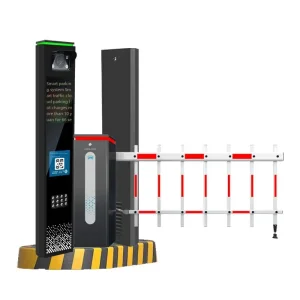
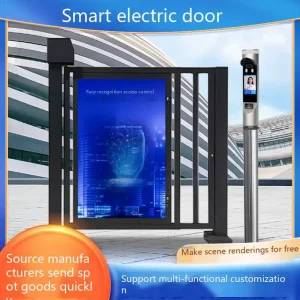
Integrated Vehicle & Access Control Deployments
Field-proven hardware units designed for interoperability with mobile LPR fleets, smart checkpoints, and automated industrial perimeter lanes.


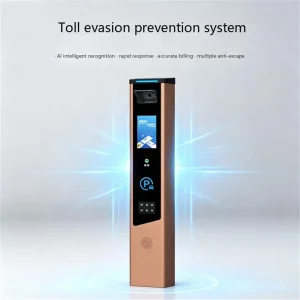
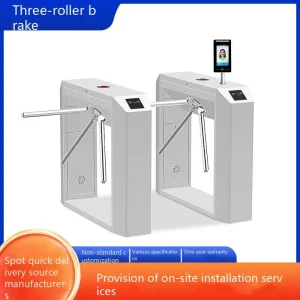
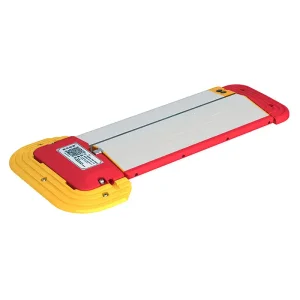
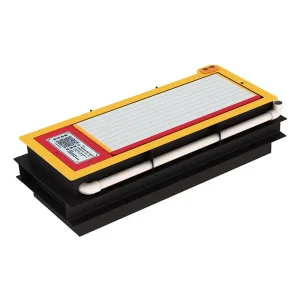
Macro Market Evolution: The Paradigm Shift to Dynamic Edge ALPR
Transitioning from fixed-gantry bottlenecks to omnidirectional, dynamic vehicular intelligence across municipal smart enforcement and security domains.
Fixed License Plate Recognition (LPR) infrastructure has formed the backbone of intelligent transport systems (ITS) for over two decades. However, urban density and distributed parking models have revealed critical systemic bottlenecks: static field-of-view limits, massive civil works expenditure for roadside trenching, and rigid operational blindspots. Modern metropolitan policing, curbside parking governance, and automated access control require mobility. The industry has decisively pivoted toward Vehicle-Mounted LPR Systems—deploying optical edge intelligence on patrol cruisers, commercial enforcement vehicles, and rapid-response assets.
Vehicle-mounted LPR is fundamentally more challenging than stationary gate capture. Cameras operating in dynamic vehicular environments encounter extreme kinetic vibration, continuous angular velocity fluctuations, blinding headlight retro-reflections, severe thermal cycles (-40°C to +85°C), and unpredictable ambient lighting. Addressing these physical variables requires more than raw megapixel counts; it demands specialized optical shutter synchronization, deep learning neural network (NPU) inference on the edge, and crucially, engineering for easy maintainability.
Total Cost of Ownership (TCO) Rebalancing
Traditional mobile installations incurred excessive OPEX due to high cable wear, alignment slippage, and lengthy bench repair cycles. Modern easy-maintainable systems feature quick-release modular locks, cutting vehicle downtime by over 60%.
Real-Time Low-Latency Edge Inferencing
Rather than streaming uncompressed video over volatile 4G/5G connections to remote servers, on-camera NPUs execute plate localization, character segmenting, state jurisdiction classification, and vehicle metadata tagging in under 15 milliseconds.
Multi-Spectral Illumination Control
Synchronized pulsed infrared (850nm/940nm) arrays coupled with high-dynamic-range (HDR) color context sensors eliminate plate washout caused by direct solar glint, Xenon high beams, or severe weather conditions.
Hardware Architecture: Designing for Zero-Downtime Field Serviceability
A structural deconstruction of the mechanical, electrical, and optical innovations that separate industrial vehicle-mounted LPR systems from standard CCTV retrofits.
The core vulnerability of vehicle-mounted cameras has historically been field service friction. When an enforcement cruiser or municipal vehicle experiences optical misalignment, sensor failure, or cable pinching, taking the vehicle off the road translates directly to lost municipal revenue or compromised public safety. Tier-1 manufacturers achieve true "easy-maintainability" through five structural design imperatives:
Quick-Release Self-Indexing Mounts
Kinematic mounting bases equipped with micro-indexing ball-detent mechanisms allow technician replacement in under 90 seconds without requiring optical recalibration or laser re-aiming.
- Vibration damping silicone grommets
- Tool-less thumbscrew tension locks
- Aerodynamic low-drag profile
M12 Industrial Aviation Connectors
Replacing fragile RJ45 and consumer screw terminals with IP67/IP68 rated threaded M12 X-coded connectors. Ensures imperviousness to high-pressure washdowns, salt fog, and continuous road shock.
- Over-molded strain relief polyurethane
- Shielded twisted pairs (STP) against EMI
- Combined Power-over-Ethernet (PoE+) integration
Hydrophobic & De-Icing Sapphire Optics
Front optical ports utilize scratch-resistant sapphire crystal coated with oleophobic and hydrophobic nanolayers. Integrated ceramic PTC heating elements dynamically evaporate frost, ice, and road grime.
- Self-regulating thermal de-icing circuitry
- Zero chemical etching from road salts
- Ultra-low optical refraction distortion
Global Procurement Matrix: Auditing Tier-1 LPR Factories
Essential quality assurance milestones, factory verification metrics, and ISO production standards required when selecting OEM/ODM manufacturing partners.
Procuring vehicle-mounted LPR cameras at scale requires rigorous supplier qualification. Unlike standard stationary IP cameras produced in commercial consumer lines, mobile ALPR devices undergo extreme mechanical stress. Enterprise buyers must verify that manufacturing partners maintain rigorous testing facilities and automated optical inspection workflows:
| Evaluation Vector | Consumer/Generic Factory Baseline | Tier-1 Easy-Maintainable Factory Standard | Procurement Risk Severity |
|---|---|---|---|
| Optical Alignment & Collimation | Manual manual-focus jig alignment; fixed adhesive locking prone to thermal drift. | Automated dual-collimator optical bench alignment with robotic ultraviolet adhesive curing. | Critical: Focus loss under temperature swing |
| Dynamic Vibration Testing | Basic unpowered shake table test (1G, 10-50Hz) for 30 minutes. | MIL-STD-810H Method 514.8 powered testing across 3 axes (up to 20G, 5-2000Hz random vibration). | Catastrophic: Sensor ribbon cable detachment |
| Thermal Shock Cycling | Static chamber run at 0°C to 40°C over 12 hours. | Rapid thermal shock transition (-40°C to +85°C at >10°C/min) with live telemetry logging for 120 hrs. | High: Solder micro-fractures on BGA chips |
| Ingress Protection Validation | Visual spray booth check rated to IP65; standard foam gaskets. | Automated vacuum decay helium leak testing ensuring hermetic IP68/IP69K rating on 100% of units. | Critical: Internal lens condensation & fogging |
| Edge OCR Retraining Support | Hardcoded firmware OCR; model retraining requires full board replacement. | Containerized edge runtimes (Docker/YOLO/TensorRT) with secure remote OTA neural weight updates. | Moderate: Obsolescence as plate formats evolve |
Enterprise Solutions & Strategic Deployment Scenarios
Operational blueprints illustrating how dynamic vehicle-mounted LPR integrates across law enforcement, municipal parking, and industrial logistics.
Law Enforcement & High-Speed Highway Patrol
Roof-bar mounted dual-channel infrared systems capable of scanning across three lanes of traffic simultaneously at relative closure speeds exceeding 240 km/h. Hotlist alerts are flagged to on-board mobile data terminals (MDT) in real-time.
- Instantaneous stolen vehicle database querying
- Expired registration & uninsured motorist sweeps
- Automated GPS coordinate & timestamp stamping
Municipal Curbside Parking & Digital Permitting
Low-profile, angled camera modules deployed on compact municipal electric vehicles for high-efficiency digital chalking, paid parking verification, and time-restricted space monitoring without requiring vehicle stoppage.
- Captures 45° parallel, 90° perpendicular, and diagonal bays
- Cross-references pay-by-phone municipal APIs
- Automates parking violation citation issuance
Industrial Ports, Mining & Depot Logistics
Ultra-ruggedized vehicle-mounted units mounted on yard tugs, reach stackers, and patrol trucks to audit container chassis numbers, hazardous materials placards, and authorized heavy machinery access within perimeter zones.
- Immune to heavy dust, chemical fumes, and salt air
- Integrates with Terminal Operating Systems (TOS)
- Operates reliably in sub-zero and tropical climates
Total Cost of Ownership (TCO) & Factory Price Analysis
A transparent breakdown of component-level manufacturing costs, bill of materials (BOM), and volume procurement price brackets.
Understanding factory cost structures enables procurement directors to negotiate from an informed position. The price of a vehicle-mounted LPR camera is governed by three primary pillars: Optical sensor quality (Global Shutter vs. Rolling Shutter), Edge Processing Compute (FPGA / Neural Processing Unit TOPS), and Mechanical Ingress/Vibration Hardening. A cheap camera utilizing consumer-grade rolling shutter sensors will produce distorted, warped images at speed, resulting in high misread rates and unviable enforcement accuracy.
| Equipment Tier | Core Sensor & Compute Specs | Factory Direct Unit Price (FOB Shenzhen) | Ideal Enterprise Application |
|---|---|---|---|
| Entry-Level Commercial Fleet | 2MP Global Shutter, 2-4 TOPS Edge NPU, Fixed IR Strobe, Plastic/Alloy Hybrid IP66 Enclosure. | $650 – $1,100 USD | Private parking audit, commercial HOA security, localized slow-speed warehouse tracking. |
| Mid-Tier Municipal Enforcement | Dual-Lens (4MP Color + 2MP IR), 8-16 TOPS NPU, Hydrophobic Sapphire Port, M12 Connectors, IP67. | $1,350 – $2,400 USD | On-street municipal parking enforcement, bus-lane monitoring, toll evasion auditing. |
| High-Speed Law Enforcement Grade | Dual/Quad Multi-Spectral Sensors, 32+ TOPS NPU (NVIDIA Jetson / custom SoC), MIL-STD-810H, IP68/IP69K, Quick-Release. | $2,800 – $4,900 USD | Highway police cruisers, national border patrol, high-velocity counter-terrorist dynamic surveillance. |
Lifecycle OPEX Savings: While high-tier easy-maintainable cameras carry a higher initial CAPEX, they eliminate approximately $1,200 to $1,800 USD per vehicle per year in operational costs by reducing recalibration labor, cutting cable harness replacement frequency, and preventing unbilled parking violations caused by optical downtime.
Localized Support, Data Privacy & Regulatory Compliance
Ensuring compliance with GDPR, NDAA, and regional cybersecurity mandates while establishing seamless local maintenance pipelines.
Edge-Level GDPR Face & Plate Redaction
To adhere to European Union GDPR and strict regional privacy mandates, leading edge cameras incorporate automated hardware-accelerated privacy masking, scrubbing pedestrian faces and bystander vehicle plates before data transmission.
NDAA & Cybersecurity Compliance
For procurement within North American, UK, and allied government jurisdictions, Tier-1 factories offer NDAA-compliant chipset architectures (e.g., Ambarella, Hailo, Texas Instruments) backed by zero-trust firmware encryption.
Regional Spare Parts & Hot-Swap Consignment
Reliable global deployment models require regional SLA guarantees. Top manufacturers partner with local distributors to maintain consigned replacement units, guaranteeing replacement dispatch within 24 hours.
Technical Roadmap & Future Outlook (2026–2030)
The convergence of multi-spectral infrared sensing, 5G-V2X telemetry, and neuromorphic edge processors shaping the next generation of mobile ALPR.
Multi-Spectral SWIR Fusion
Short-Wave Infrared (SWIR) sensors operating in tandem with RGB channels will penetrate thick fog, blinding rain, and tinted plate covers, achieving near 100% optical capture regardless of atmospheric degradation.
Direct 5G-V2X Infrastructure Handshake
Future mobile LPR units will broadcast direct Vehicle-to-Everything (V2X) messages to smart street gantries, municipal barrier gates, and automated bollards, triggering dynamic lane clearance and predictive gate unlatching.
Event-Based Neuromorphic Vision
Bio-inspired event sensors transmitting only microsecond-level pixel intensity changes instead of static frames. Eliminates motion blur entirely while reducing system power consumption down to under 5 Watts.
Self-Calibrating IMU Telemetry
Integrated 6-axis inertial measurement units (IMU) coupled with visual odometry algorithms automatically detect roof-rack deflection or vehicle lean, dynamically adjusting optical pitch and yaw parameters in software.
Comprehensive Engineering Q&A: Enterprise Procurement & Maintenance
Addressing the technical, operational, and commercial questions most frequently raised by fleet integrators, municipal buyers, and EPC contractors.
Why is a Global Shutter sensor mandatory for vehicle-mounted LPR instead of a cheaper Rolling Shutter?
Rolling shutter sensors expose pixels sequentially line-by-line. When a patrol vehicle moves at high relative speed or passes a target vehicle, this sequential capture causes the "jello effect"—geometric shearing and character distortion that degrades neural OCR confidence below legal enforcement thresholds. Global shutter sensors expose all pixels simultaneously, freezing motion completely and delivering razor-sharp plate contours at any speed.
How does an easy-maintainable camera reduce regular servicing costs on large vehicle fleets?
Standard vehicle cameras require complex disassembly, desoldering, and manual laser realignment when a single cable, lens element, or sensor degrades. Easy-maintainable units feature modular self-indexing brackets and quick-disconnect M12 industrial cabling. A field technician can swap an entire optical head in under two minutes without requiring optical re-aiming, keeping municipal enforcement vehicles active and productive.
What factory calibration procedures are essential to prevent optical focus drift under vibration?
Tier-1 manufacturing facilities utilize automated robotic collimators that focus lenses under simulated thermal loads while dispensing optical-grade ultraviolet (UV) curable adhesives. This bonds the lens barrel securely to the sensor mount. Units must then undergo three-axis MIL-STD-810H vibration and thermal shock testing before packaging to verify that optical focus never drifts across the product's operational lifespan.
Can vehicle-mounted LPR cameras operate entirely offline without active cellular connectivity?
Yes. Enterprise-grade cameras host onboard Neural Processing Units (NPUs) running optimized quantized neural networks. All plate localization, OCR, vehicle classification, and hotlist matching occur directly on the device within 15 milliseconds. High-capacity local solid-state storage (eMMC / NVMe) safely buffers hundreds of thousands of timestamped records and cryptographic signatures until the vehicle returns to depot Wi-Fi.
How do Tier-1 factories support multinational license plate formats and non-standard alphanumeric characters?
Leading OEM/ODM factories deploy flexible convolutional neural network (CNN) architectures trained on localized global datasets spanning over 100 countries. This accommodates multi-line plates (e.g., UK/European rear plates, Japanese two-row plates), Arabic script, Cyrillic characters, personalized vanity plates, and embossed retro-reflective metallic surfaces. Continuous over-the-air (OTA) model weight updates ensure the system adapts as regional plate standards evolve.
Complete Entrance, Barrier & Physical Access Control Solutions
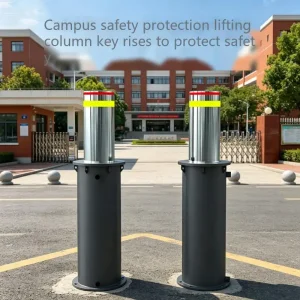
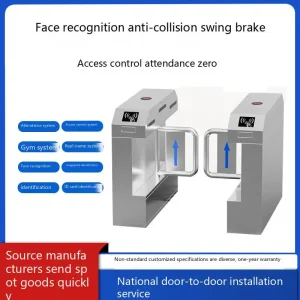
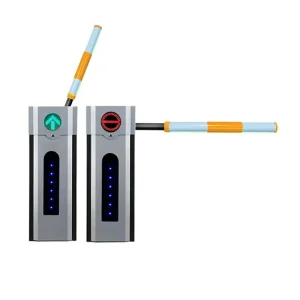
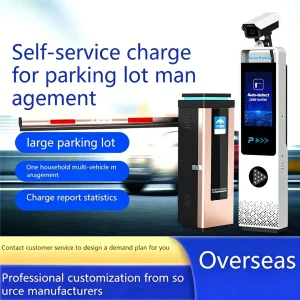
Integrate vehicle-mounted detection fleets with factory-direct automatic boom barriers, security turnstiles, and heavy-duty rising bollards.