
High-Throughput Vision & Access Gate Systems
Field-proven, low-maintenance hardware tested across 80+ international markets for seamless site security.
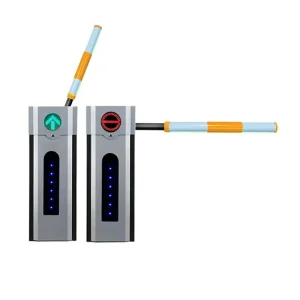
Easy-maintainable Intelligent Barrier Gate Model D11S Supplier, Quotation
Request Quotation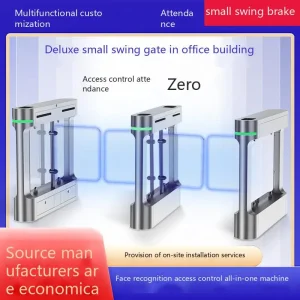
Buy Discount Swing Gate Image Reference Suppliers, In Sales
View Details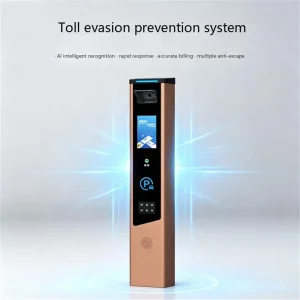
Cheap High definition license plate recognition integrated - AnRuitong II Manufacturer
Get Factory Pricing
Buy Discount Office Building Entrance Security Access Turnstiles Gate
View Specifications
Easy-maintainable City Parking Product Factories, Price
Order Catalog
China Bridge Type Sloped Swing Gate Supplier, In Sales
Explore Hardware
Cost-Effective Car Parking Toll DC Parking Boom Barrier Gate With RFID
View Lane Systems
Buy Discount Intelligent Barrier Gate Model D03 Suppliers, Exporters
Inquire NowThe Global Shift Toward Easy-Maintainable Vision & Physical Access Architectures
Analyzing the transition from disparate CCTV devices to integrated, self-diagnosing, and easily serviceable perimeter vision nodes.
In modern industrial facilities, logistics hubs, smart communities, and commercial districts, physical access control and optical surveillance are no longer separate silos. The global security camera and vehicle monitoring market has experienced an aggressive architectural convergence. Enterprise purchasers, engineering contractors, and system integrators now demand easy-maintainable security camera and barrier gate systems that eliminate unnecessary on-site engineering overhead, minimize Mean Time to Repair (MTTR), and ensure an exceptionally high Mean Time Between Failures (MTBF).
Historically, commercial camera installations suffered from severe lifecycle bottlenecks: water condensation behind non-vented optical domes, thermal throttling in high-ambient Middle Eastern deployments, complicated cabling harnesses prone to ground loops, and proprietary firmware requiring manual on-site flashing. When deployed alongside high-cycle vehicle barrier gates or pedestrian turnstiles, a single component malfunction in an LPR (License Plate Recognition) sensor or boom actuator would bring an entire logistics gateway to a halt, costing logistics operators thousands of dollars per hour in demurrage and clearance delays.
To overcome this operational friction, leading manufacturers in Shenzhen have re-engineered camera housings, edge-computing optical modules, and electromechanical boom gates with modular serviceability at their core. By isolating high-voltage power components from sensitive low-voltage neural processing units (NPUs), implementing toolless quick-disconnect wiring harnesses, and integrating dual-channel IP-rated pressure equalization vents, modern easy-maintainable systems achieve genuine field swappability. Field service technicians can replace optical assemblies or motor control boards within 15 minutes, drastically lowering the Total Cost of Ownership (TCO) across complex enterprise deployments worldwide.
Why Tier-1 Integrators Source Through Shenzhen Manufacturing Hubs
The convergence of precision electronics, optical engineering, and heavy mechanical manufacturing delivers unparalleled time-to-market and cost stability.
Integrated Hardware Ecosystem
Shenzhen's Guangming and Bao'an industrial clusters allow optical lens grinding, CNC housing milling, high-speed SMT PCB fabrication, and brushless DC motor assembly to happen within a 30-kilometer radius. This hyper-dense industrial base reduces prototype iterations from months to mere days.
Extreme Environmental Stress Screening
Modern Shenzhen factories enforce strict Reliability Qualification Testing (RQT). Equipment undergoes 72-hour continuous thermal cycling (-40°C to +85°C), accelerated salt spray fog testing for maritime climates, and rigorous 5-million-cycle mechanical stress tests on barrier gearboxes prior to packaging.
Customized OEM/ODM Scalability
Whether configuring tailored SDKs for local European ONVIF Profiles, adapting neural LPR weight models to multi-lingual Latin/Arabic/Cyrillic license plates, or applying custom powder coating for coastal corrosion protection, factory-direct OEM engineering guarantees complete specification agility.
Engineering Principles of Easy-Maintainable Vision Systems
How modular electromechanical design and remote telemetry eliminate field failures before they escalate.
Modular Optical Cartridges
Lenses, CMOS sensors, and IR/white LED auxiliary arrays are enclosed in sealed sub-assemblies. In the event of optical degradation or vandalism, the entire cartridge detaches via four thumbscrews without exposing the central logic board to dust or moisture.
Isolated Multi-Stage Surge Protection
Integrated 6kV to 10kV lightning and electrostatic discharge (ESD) suppression circuits prevent electrical back-surges through RS-485 and Ethernet ports—protecting sensitive edge AI processors during outdoor storm conditions.
Dual-Partition OTA Firmware Rollback
Eliminate bricked devices during remote updates. Dual flash memory partitions store current and fallback boot images; if a firmware checksum fails or connection drops during remote edge deployment, the system automatically rolls back to stable safe-mode operation.
Self-Calibrating Brushless Motors
DC brushless barrier gate motors utilize integrated digital hall sensors and algorithmic torque feedback. The system automatically recalibrates boom arm deceleration profiles to compensate for wind shear, seasonal grease thickening, or mechanical wear.
Engineered for Critical Real-World Environments
How matched vision and barrier packages solve site-specific operational challenges around the globe.
Automated Logistics Parks & Intermodal Freight
High-volume distribution yards require unyielding 24/7 throughput. Edge LPR camera arrays capture dual-angle vehicle and container codes on the fly, triggering 0.6-second high-speed brushless barrier gates without requiring truck drivers to brake completely, minimizing entrance choke points.
Smart Residential Gated Communities
Unattended vehicle entries require high noise suppression and failsafe anti-crush algorithms. Integrating millimetric-wave radar sensors with intelligent optical cameras prevents barrier drops on pedestrians, bicycles, or low-profile sports vehicles while logging timestamped entries.
Corporate Office Towers & Government Plazas
Pedestrian access lobbies require high aesthetic appeal combined with strict throughput discipline. Fast-swing turnstiles equipped with 3D facial recognition lenses and card-swipe credentials balance architectural beauty with uncompromising tailgating detection.
Procurement Comparison: Standard vs. Easy-Maintainable Systems
A granular engineering breakdown for procurement directors and infrastructure consultants.
| Evaluation Parameter | Conventional Commercial Security | Easy-Maintainable Factory Standard (Anrui) | System Impact on TCO |
|---|---|---|---|
| Optical Module Serviceability | Glued lenses; full disassembly required; requires factory RMA for minor sensor faults. | Modular cartridge design with slide-lock rails and toolless plug-in wiring terminals. | Reduces field technician labor time by up to 75%. |
| Motor & Mechanical Drive | AC induction motors with mechanical limit switches; frequent brush wear and gearback backlash. | Brushless DC (BLDC) servo motors with optical encoder feedback; rated for 5,000,000+ cycles. | Eliminates routine mechanical adjustments; zero preventative lubrication needed. |
| Environmental Protection | IP54 to IP65 ratings; internal condensation buildup in humid or cold climates. | IP67 enclosure with hydrophobic PTFE breathing membranes and anti-fog heating elements. | Prevents lens fogging and moisture-induced PCB corrosion in harsh environments. |
| Firmware & Diagnostic Protocol | Proprietary closed protocol; local RS-232 serial flashing required for system updates. | Standard ONVIF Profile S/G/T, MQTT telemetry, dual-bank OTA rollback, and RESTful API. | Enables remote central fleet health checks and automated fleet-wide security patching. |
| Power Management & Surges | External consumer-grade switching power supply; susceptible to grid voltage fluctuations. | Internal industrial wide-voltage power module (90V-264V AC) with 10kV surge protection. | Resists severe lightning strikes and power surges common in tropical industrial zones. |
Emerging Trends Reshaping Perimeter Security Procurement
Where AI vision, autonomous health monitoring, and edge processing are heading over the next five years.
Edge NPU Intelligence
By migrating deep learning inferencing directly to camera edge chips (4 TOPS to 8 TOPS), license plate parsing, vehicle model classification, and color identification are processed locally in under 50 milliseconds, bypassing central server bandwidth dependencies.
Sensor Fusion: Vision + Radar
Traditional inductive ground loops require tearing up asphalt during installation and maintenance. The future relies on integrated 77GHz FMCW radar and optical camera fusion, providing accurate spatial tracking, vehicle classification, and non-invasive above-ground maintenance.
Predictive Component Health Telemetry
Next-generation access hardware uses onboard thermal, vibration, and motor current telemetry sensors. Systems flag abnormal mechanical friction or bearing wear to operators via MQTT alerts weeks before an actual hardware failure occurs.
Strict Cyber-Physical Security
With tightening international regulations on cybersecurity, physical security cameras and controllers now integrate hardware secure elements (TPM 2.0 / secure boot), encrypted TLS 1.3 video streaming, and authenticated 802.1X network access control.
Frequently Asked Questions on Maintainability & Sourcing
In-depth engineering answers to common procurement, integration, and field deployment queries.
What makes a security camera system genuinely "easy-maintainable"?
How do Shenzhen factories guarantee product reliability in extreme global climates?
Can Anrui edge cameras and barrier gates integrate with third-party software?
What spare parts inventory is typically recommended for international projects?
How does edge LPR compare to server-based license plate recognition?
What certifications are provided for export compliance?
High-Durability Turnstiles, Bollards & Parking Locks
Complementing vision systems with physical access security, robust bollards, and intelligent bay protection.
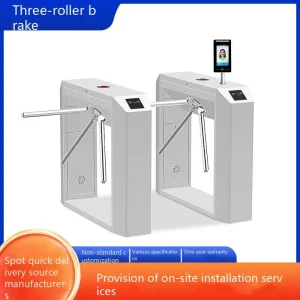
Advanced Factory OEM/ODM Smart Fast Speed Swing Automatic Turnstile Gate
View Details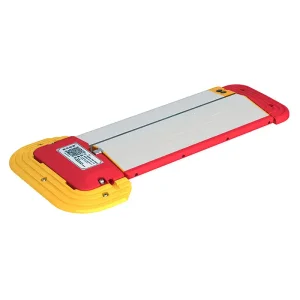
Cheap Scan to pay community parking lock automatic sensing exporter
Get Price List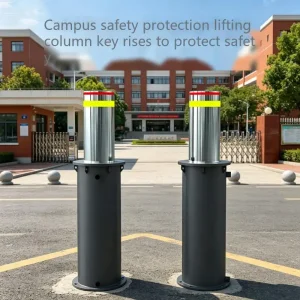
High-Quality Rising Bollard Instruction Manual In Sales, Price
View Specifications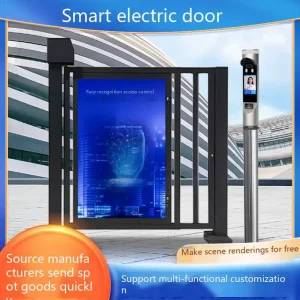
Buy Discount Intelligent pedestrian advertising gate Suppliers, Exporter
Request Quotation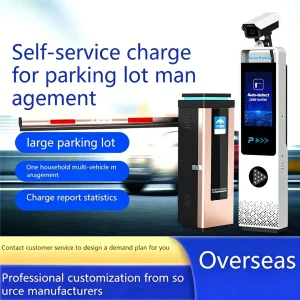
Buy Discount High-def LPR machine Dolphin I model Exporters
Explore LPR Line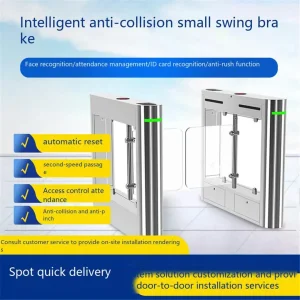
OEM Swing Gate Suppliers, Pricelist
Download Pricelist
Easy-maintainable Intelligent Barrier Gate Model D11S (Bulk OEM)
OEM Options
High Definition LPR Integrated AnRuitong II (Custom SDK)
Consult EngineersConnect Directly with Anrui System Architects
Consult with our Shenzhen R&D engineering division on lane geometry designs, optical focal length calculations, LPR neural engine customization, and containerized export pricing.