
Factory-Direct Turnstile & Barrier Infrastructure Compatible with Mobile LPR
Every mobile ALPR camera deployment requires verified electromechanical actuators. Review our matched, certified vehicle barriers, intelligent speed gates, and automated terminal hardware ready for immediate project quotation.
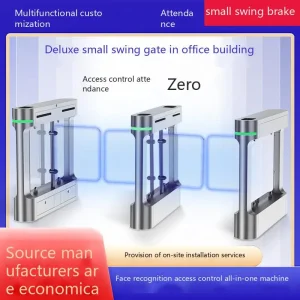
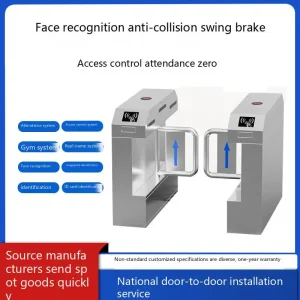
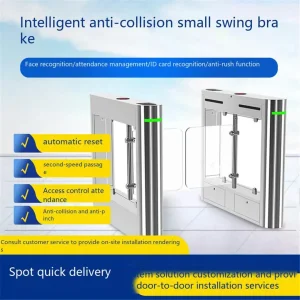
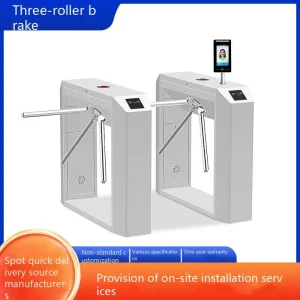
Advanced Factory OEM/ODM Durable Smart Fast Speed Swing Automatic Gym Turnstile Gate
Request Quotation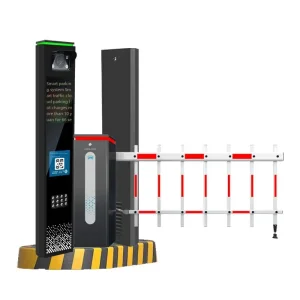
Cost-Effective Car Parking Toll Control Articulated DC Boom Barrier Gate with RFID
Request Quotation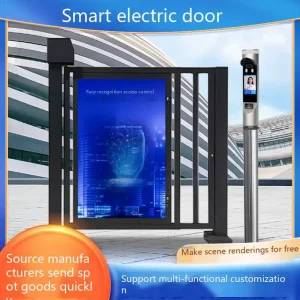
Buy Discount Intelligent Pedestrian Advertising Gate Suppliers, Exporter
Request Quotation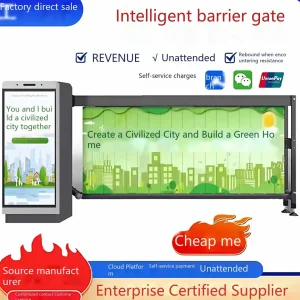
Buy Discount Intelligent Barrier Gate Model D03 Suppliers, Exporters
Request Quotation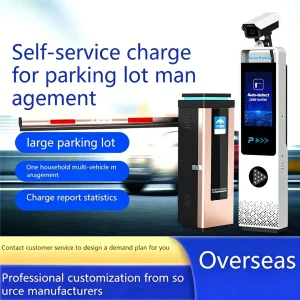
Buy Discount High-def License Plate Recognition Machine Dolphin I Model Exporters
Request QuotationEnterprise Procurement Drivers for Mobile LPR Systems
Why leading EPC contractors, smart parking concessionaires, and public security agencies are transitioning from monolithic fixed poles to modular, rapid-deployment mobile LPR camera architectures.
Radical Reduction in TCO & Civils
Traditional fixed license plate recognition involves intrusive trenching, inductive loop cutting, dedicated conduits, and fixed electrical mains—accounting for over 58% of initial CAPEX.
- Zero trenching with magnetic, trailer, or tripod mounts
- Integrated battery/solar hybrid micro-power compatibility
- Redeployment between temporary access lanes in under 15 min
Field MTTR Under 10 Minutes
When fixed lane cameras fail, specialized engineers must be dispatched, shutting down entry flow. Our easy-maintainable systems feature slide-out modular chassis and self-calibrating optics.
- Tool-free thumb-screw release for lens and processor module
- Pre-loaded calibration profiles stored in baseplate memory
- Plug-and-play IP67 mil-spec multi-pin quick couplings
Edge AI Compute & Standalone Autonomy
Cloud-dependent ALPR fails during 4G/5G signal attenuation in remote logistics yards or high-density urban canyons. Our mobile nodes execute inference entirely on-device via integrated deep-learning NPUs.
- Up to 10 TOPS embedded neural accelerator processing
- 100,000+ local whitelist/blacklist records with zero latency
- Dry-contact trigger for immediate barrier arm activation (<0.2s)
Turnkey Macro Solutions Across Core Global Verticals
Engineered to adapt dynamically across highway traffic interdiction, curbside municipal parking enforcement, and temporary heavy-industrial perimeters without physical site retrofitting.
Law Enforcement & Highway Interdiction
Rapid roadside checkpoint deployment. The mobile LPR unit uses high-intensity pulsed 850nm IR strobe illumination and high dynamic range (HDR) global shutter sensors to suppress high-beam glare and capture reflective registration plates at extreme approach angles.
- Roof-bar magnetic mounting with aerodynamic wind dampening
- Dual motorized varifocal lenses (3.8-16mm and 8-32mm)
- Live automated alert broadcast via encrypted 5G/VPN protocols
Floating Curbside Smart Parking Enforcement
Municipalities eliminating pay-and-display machines use vehicle-mounted mobile LPR arrays to patrol paid on-street parking bays. Edge algorithms correlate GPS telemetry with plate captures to verify active session payment status in real-time.
- Continuous scanning of parallel and 45° angled parking stalls
- Geo-fenced tariff engine synchronizing directly with municipal API
- Reduces city enforcement staff overhead by over 72%
Temporary Mining, Logistics & Mega-Events
Remote resource extraction sites and multi-month infrastructure projects require rapid perimeter entry verification without pouring concrete bases. Our tripod/skid-mounted systems integrate with portable boom barriers to validate truck manifests.
- Ruggedized IP68 enclosure resilient against saline & heavy dust
- Internal hot-swappable 48V LiFePO4 battery pack with 72h uptime
- Direct relay activation to temporary portable barrier gates
Industrial Engineering & Maintainability Matrix
System integrators can review optical specifications, maintainability ratings, and field replacement protocols comparing our modular architecture with standard market fixed units.
| Subsystem Metric | Anrui Modular Mobile LPR Node | Legacy Fixed LPR Cameras | Operational Impact & ROI Advantage |
|---|---|---|---|
| Optical Sensor & Shutter | 1/1.8" Sony Pregius Global Shutter, 60fps, Starlight Color + IR | 1/2.8" Rolling Shutter CMOS, 25-30fps | Eliminates high-speed motion blur; captures plate at 150 km/h under 0.001 Lux. |
| Chassis Architecture | Slide-and-dock tool-less module with internal ribbon-less backplane | Sealed single-piece body; requires complete dismounting | Reduces field technician labor from 2.5 hours to under 8 minutes per service ticket. |
| Edge AI Neural Capacity | Dual NPU (8-16 TOPS) running quantized YOLOv8 + CRNN models | Basic DSP edge or remote PC / cloud server inference | Sub-30ms recognition; uninterrupted lane flow during cellular or network dropouts. |
| I/O & Trigger Interfaces | Wiegand 26/34, RS485, 2x Relay Out, 4G/5G, GPS, Bluetooth BLE 5.2 | RJ45 Ethernet only; external relay boxes required | Direct dry-contact triggering to barrier gates and turnstiles with zero auxiliary controllers. |
| Environmental Ingress | Hermetic IP68 rating, MIL-STD-810H vibration, internal heating ring | Standard IP65 or IP66; external sunshield prone to rust | Guaranteed operating range of -35°C to +70°C in high-humidity and saline environments. |
| Power Consumption | Dynamic throttling (8W idle, 18W full strobe capture), 12V-36V DC wide range | Fixed 35W-60W AC mains requirement | Seamlessly powers from vehicle cigarette lighter, solar battery trailer, or PoE++ 802.3bt. |
Regional Market Analysis & Territory Localization
Vehicle plate dimensions, reflective coatings, typography, and privacy regulations diverge drastically by continent. Here is how our mobile engine is optimized for world markets.
North America (US & Canada)
Compliant with non-NDAA restricted architectures. Optimized for high plate diversity across 50 US states plus Canadian provinces, including vanity backgrounds and stacked alpha characters.
- State-level classification accuracy >98.5%
- Integrated GPS timestamp for court evidence
Europe & UK (EMEA)
Engineered around strict GDPR data governance and UNECE transport standards. Edge-level hashing automatically blurs non-target passenger faces and neighboring vehicles prior to edge storage.
- Instantaneous privacy mask on vehicle windshield
- Multi-font parsing: German DIN, UK Charles Wright
Asia-Pacific (APAC)
Specialized in high-density vehicle and motorcycle identification across Southeast Asia. Identifies double-row characters, non-standardized script, and unembossed plate typography.
- Dual-plate front & rear motorbike tracking
- Monsoon moisture & extreme humidity resistance
Middle East & LATAM
Equipped with thermal dissipation heatsinks capable of surviving 55°C ambient desert sun, paired with bilingual Arabic and Latin character edge OCR recognizers.
- Bilingual Eastern Arabic numeral parsing
- Dust-proof anti-abrasion sapphire optical glass
Edge Security, Open APIs & Compliance Safeguards
Protecting critical vehicle metadata while providing frictionless software handshakes to third-party Parking Management Software (PMS), VMS platforms, and highway toll control.
Native Restful JSON & MQTT Webhooks
Eliminates proprietary black-box barriers. Every plate capture event outputs a lightweight JSON payload containing OCR string, confidence score, plate cropped JPEG, overview vehicle frame, timestamp, and GPS coordinates directly over MQTT or HTTPS POST.
ONVIF Profile S / G / T & RTSP Streams
Seamless dual-streaming. While the internal neural chip captures and analyzes plate regions of interest (ROI) at full resolution, an H.265/H.264 video feed broadcasts to enterprise VMS (Milestone, Genetec, Network Optix) for continuous surveillance audit.
Hardware Cryptography & PII Shield
Integrated TPM 2.0 cryptoprocessor ensures certificate management and encrypted firmware loading. In accordance with global privacy frameworks, plate numbers can be hashed locally using SHA-256 before egress, safeguarding citizen identity.
Technological Roadmap: Edge ANPR Systems (2025–2030)
Anticipating industry disruption across autonomous vehicle sensing, neuromorphic computational imaging, and zero-infrastructure solar micro-generation.
Phase 1: Neuromorphic Event Sensing
Shifting beyond traditional frame-based CMOS chips. Event-based dynamic vision sensors capture pixel-level brightness changes in microsecond intervals, eliminating motion blur entirely up to 300 km/h with 90% less edge compute load.
Phase 2: Federated Edge Learning
Individual mobile units update OCR models decentralized across the fleet. When an obscure plate layout or degraded font pattern is encountered, weights are fine-tuned locally and synced through cryptographic federated pipelines without sharing client video feeds.
Phase 3: Sub-Watt Energy Harvesting
Transitioning edge inference architectures to ultra-low-power silicon capable of cold-start plate triggering in under 15 milliseconds, permitting self-sustaining multi-year field installations powered purely by palm-sized solar cells.
Procurement Quotation Breakdown & RFP Engineering
Standardizing your tender documentation ensures transparent quotation evaluation. Review the mandatory hardware, software, and after-sales service components required for enterprise orders.
Core Hardware Bill of Materials (BOM)
- Integrated Aluminum-Alloy IP68 Housing with sunshield
- Sony Global Shutter Sensor + 850nm Strobe Illuminator
- Dual-NPU Edge AI Core + 64GB Industrial eMMC
- Quick-release mounting kit (Magnetic / Tripod / Pole clamp)
Firmware & Edge Neural Licenses
- Perpetual On-Device ANPR Engine license for target country
- Vehicle make, model, color (MMCR) classification module
- Open RESTful JSON API + WebSocket documentation
- Free OTA firmware & neural weight update cycle (36 Mo.)
Factory Direct Support & SLAs
- 7x24 remote video diagnostic engineering channel
- Factory pre-burn and environmental thermal cycle test reports
- Custom branding (Housing silkscreen, custom UI theme)
- Multi-currency cross-border trade terms (FOB/CIF/DDP)
Frequently Asked Questions: Engineering & Quotations
Direct, authoritative answers addressing integration challenges, shutter timing, ambient lighting thresholds, and OEM customization.
What specific architectural features define this system as "Easy-Maintainable"?
How does the mobile LPR unit handle vehicle headlights, glare, and low ambient lux?
Can this mobile LPR camera actuate barrier gates directly without a central PC server?
What are the power requirements for portable and off-grid rapid-deployment setups?
How does the software integrate with existing municipal or commercial parking platforms?
What information is necessary to receive a precise commercial quotation?
Complementary Actuation, Bollard & Parking Control Products
Integrate your mobile LPR camera fleet with our certified barrier gates, hydraulic rising bollards, and smart parking space reservation locks. Factory direct quotation and global delivery support.
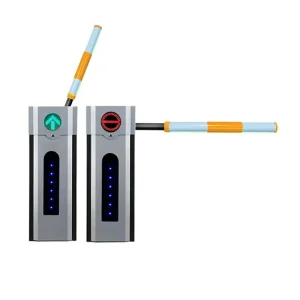
Easy-maintainable Intelligent Barrier Gate Model D11S Supplier, Quotation
Request Quotation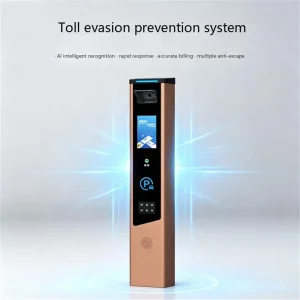
Cheap High Definition License Plate Recognition Integrated - AnRuitong II Manufacturer
Request Quotation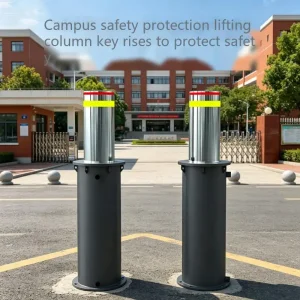
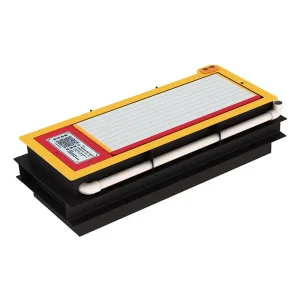
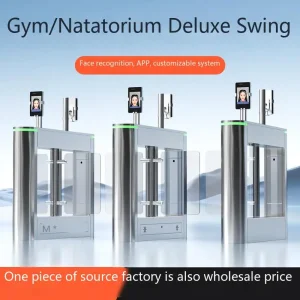
Buy Discount Office Building Entrance Attendance Security Turnstiles Speed Gate
Request Quotation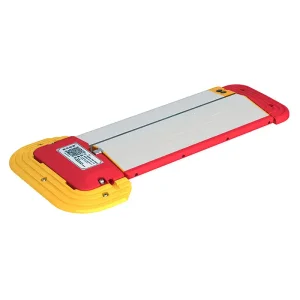
Cheap Scan to Pay Community Parking Lock Automatic Sensing Shared Payment Space
Request Quotation
Intelligent Barrier Gate Model D03 High-Duty Cycle Exporter Package
Request Quotation
High-Definition License Plate Recognition Terminal Dolphin I Model Exporters
Request QuotationNeed a Custom Mobile LPR Tender or OEM Quotation?
Connect directly with Shenzhen Anrui senior systems engineers. We provide lane layout validation, optical angle assessments, and sample evaluation units for global integrators.