
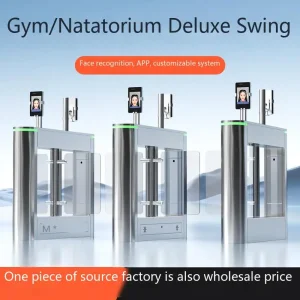
Buy Discount Office Building Entrance Attendance Security Access Control Turnstiles Gate Swing Barrier Speed Gate Manufacturers, Price
Explore Specifications
Modular turnstiles, heavy-duty optical barriers, and integrated vehicle gates tested to rigorous cycle limits and designed for turnkey field deployment.
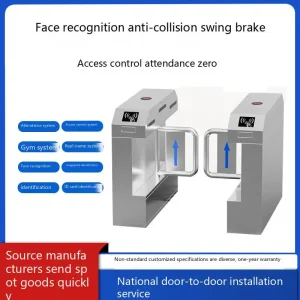
Examining how advanced kinematics, brushless drive topologies, and IoT health monitoring have transformed bi-parting sliding portals from mechanical failure bottlenecks into highly resilient operational assets.
Traditional geared brushed motors suffer rapid brush deterioration and acoustic resonance over heavy commercial duty cycles. Modern bi-parting sliding systems incorporate micro-processor-controlled BLDC servo assemblies that eliminate gear friction, delivering over 3.5 million maintenance-free open/close cycles under varying wind loads.
Bi-parting entrances act as the primary barrier between conditioned interior spaces and harsh ambient weather. Multi-chamber thermal break profiles with reinforced EPDM gasket seals reduce thermal bridging (U-values below 1.4 W/m²K) and deliver class-leading STC sound attenuation for busy transit lobbies and corporate towers.
Deploying native RS-485 and CAN-bus industrial protocols directly to facility Building Management Systems (BMS). Maintenance supervisors obtain real-time visibility into carriage travel resistance, motor temperature signatures, brake deceleration rates, and cycle health indicators before mechanical stoppage occurs.
Corporate infrastructure investors and airport facility engineers no longer evaluate sliding doors purely on acquisition cost. True procurement optimization focuses on Total Cost of Ownership (TCO), Mean Time to Repair (MTTR), and modular field swappability.
| Evaluation Parameter | Legacy Bi-Parting Doors | Next-Gen Easy-Maintainable Systems | Operational Impact |
|---|---|---|---|
| Track Carriage Replacement | Requires full transom disassembly (4–6 hours) | Drop-in self-centering modular trolley (< 20 mins) | 85% Labor Reduction |
| Motor & Controller Swap | Hardwired splice connectors, proprietary flashing | Hot-swappable DIN-rail controller with plug-and-play terminals | Zero Soldering on Site |
| Roller Wear Surface | Nylon wheels on bare aluminum extrusion | Replaceable high-density acoustic rail inserts | Lifetime Extrusion Protection |
| Emergency Egress Compliance | Manual mechanical tension springs requiring monthly calibration | Dual-redundant monitored battery backup with break-out hinges | EN 16005 / ANSI A156.10 Certified |
| Mean Time Between Failures (MTBF) | ~500,000 cycles before major overhauls | > 3,000,000 certified continuous cycles | 6x Lifecycle Extension |
Our 8,000 m² high-precision facility in Guangming, Shenzhen leverages automated extrusion lines, robotic robotic laser welding, and exhaustive environmental burn-in stress testing to deliver uncompromised quality.
Every bi-parting overhead rail is milled from aerospace-grade 6063-T6 aluminum alloys on 5-axis CNC machining centers. Rail surfaces are micro-polished to ensure roller contact deviations remain within ±0.05 mm, minimizing mechanical vibration, eliminating wheel chatter, and extending drive belt longevity under continuous operation.
Unlike assemblers dependent on fragmented third-party supply chains, our factory controls the full bill of materials: SMT printed circuit board assembly for controllers, winding of high-torque brushless DC motors, and molding of anti-static polyurethane wheels. This tight integration translates directly into 3-week export fulfillment lead times.
Tailoring track kinematics, sensor beam geometry, and structural fail-safes to address specific climate challenges, regulatory codes, and human traffic profiles worldwide.
Equipped with dual motion-presence radar sensors preventing ghost triggers from cross-traffic, and anti-panic breakout systems meeting FAA/EASA evacuation guidelines.
Hermetically sealed bi-parting sliding assemblies featuring non-contact proximity radar activation, differential air-pressure retention, and antimicrobial finishes.
Integrated interlock (mantrap) sequencing, high-level cipher protocol interfaces, and bullet-resistant laminated architectural glass framing.
Ultra-wide clear passage width configurations accommodating palletized inventory replenishment, integrated security tagging (EAS) antenna channels, and low-energy night modes.
Direct answers to the fundamental structural, electrical, and international export questions raised by specifiers, EPC contractors, and distributors.
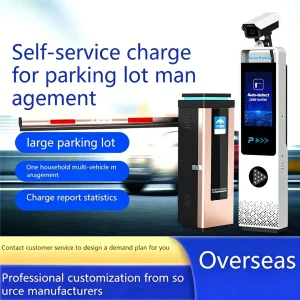
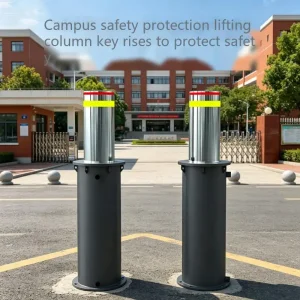
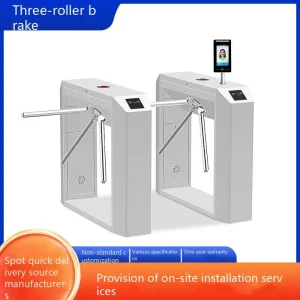
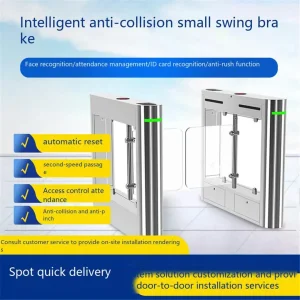
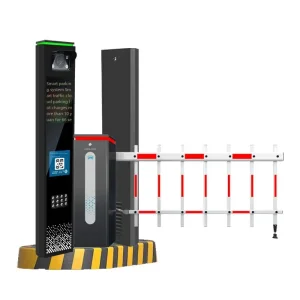
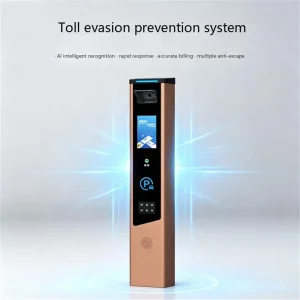
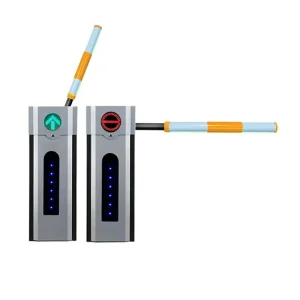
Broaden site security by synchronizing bi-parting pedestrian portals with our intelligent road barriers, LPR recognition units, and perimeter protection bollards.

Connect directly with our Shenzhen engineering headquarters for comprehensive BIM models, electrical wiring schematics, structural load calculations, and tier-1 exporter quotations for your upcoming airport, commercial, or transit infrastructure project.