
Integrated Access Control & Barrier Station Deployments
Factory-direct entrance hardware designed with standardized interconnects, rapid-swap terminal blocks, and universal card reader mounting bays for field installers and integrators worldwide.
Global Commercial & Industrial Landscape of Card Reader Systems
The international market for Physical Access Control Systems (PACS) is navigating a structural transition. Legacy 125 kHz proximity cards and unencrypted Wiegand serial interfaces are being systematically phased out due to critical vulnerability vectors, driving unprecedented demand for resilient, easy-maintainable smart card reader architectures.
The 125kHz to 13.56MHz Cryptographic Migration
Security audits across corporate campuses, banking complexes, and automated parking terminals have identified unencrypted low-frequency (LF) cards as severe liabilities. Modern procurement mandates multi-frequency (125 kHz + 13.56 MHz) dual-chip transceivers running MIFARE DESFire EV2/EV3 with AES-128 cryptographic handshakes.
- Dual-frequency backwards compatibility
- Hardware-level Secure Access Module (SAM) support
- Resilient against replay and cloned credential attacks
OSDP v2.2 Standard Replacing Wiegand
Wiegand's single-direction, unmonitored pulses are unable to support reader diagnostics or biometric feedback. SIA Open Supervised Device Protocol (OSDP) over RS-485 with Secure Channel Protocol (SCP) enables continuous line monitoring, remote firmware updates, and tamper detection directly from the central controller.
- Full bidirectional controller-to-reader telemetry
- AES-128 encrypted RS-485 communication line
- Cuts field wire counts from 6-8 conductors down to 4
Total Cost of Ownership (TCO) & MTTR Focus
Integrators and facility operators report that over 65% of lifecycle costs stem from maintenance callouts, terminal corrosion, lightning surges, and unit-swapping downtime. An "easy-maintainable" card reader factory design cuts Mean Time to Repair (MTTR) from hours to minutes through modular front-plates.
- Snap-in pigtails vs soldered terminal blocks
- Optically isolated transient voltage suppressors (TVS)
- Toolless front plate snap-and-lock serviceability
Anatomy of an Easy-Maintainable Card Reader Architecture
Field failures in perimeter security readers are overwhelmingly triggered by moisture ingress, ground loop noise, mechanical stress, and electrostatic discharge. Our factory designs re-engineer each subsystem around modularity, protection circuits, and field-serviceability.
| Architecture Subsystem | Legacy Industry Standard | Easy-Maintainable Factory Specification | Operational Field Benefit |
|---|---|---|---|
| Wiring Interconnect | Stripped raw wire pigtails with screw terminals inside junction boxes | Pluggable Phoenix-style terminal blocks or sealed multi-pin IP67 quick-disconnect harness | Enables 60-second hot-swap replacement without rewiring errors or wire-stripper field tooling. |
| Environmental Ingress Protection | Partial foam rubber gasket; unsealed rear potting cavity prone to capillary water draw | Solid structural epoxy encapsulation (UL94-V0 flammability rated) with dual O-ring compression seals | Certified IP68 submersion resilience; zero corrosion on SMD components in salty or high-humidity regions. |
| Surge & Over-Voltage Protection | Basic unrated varistors or bare silicon inputs direct to reader microcontrollers | Multi-stage TVS diode arrays on data and power lines (up to 15kV ESD air discharge, 600W lightning surge) | Eliminates reader burnout caused by chassis ground potential differences in outdoor boom gates and turnstiles. |
| Diagnostics & Health Telemetry | Static single-color LED; zero digital diagnostic feedback to head-end software | Tri-color programmable RGB light-bar, audible piezo buzzer, and OSDP line-quality error reporting | Instantly guides technicians to diagnose reversed polarities, ground faults, or baud-rate mismatch visually. |
| Firmware & Cryptographic Lifecycle | EPROM requiring physical disassembly and chip replacement for vulnerability patching | Encrypted Over-The-Air (OTA) via OSDP File Transfer Protocol or NFC configuration configuration card | Allows thousands of readers across an enterprise facility to be patched without taking units off the wall. |
When access control card readers are mounted directly onto stainless steel speed gate turnstile chassis or outdoor parking boom barrier housings, potential ground offsets can generate 50Hz/60Hz AC hum across Wiegand or RS-485 signal ground lines. Our manufacturing standard incorporates optical isolation barrier modules and differential line receivers that prevent ground-loop circulating currents from burning out the reader controller port.
Future Trends: Mobile Credentials, Biometrics & Edge Processing
The intersection of contactless RF interfaces, smartphones, and edge computing is reshaping procurement criteria. Card readers are transforming from passive RF antennas into intelligent edge nodes.
BLE & NFC Mobile Wallet Integration
Physical plastic badge loss generates substantial administrative overhead. Easy-maintainable readers now embed Bluetooth Low Energy 5.3 (BLE) and Near Field Communication (NFC) modules supporting Apple Wallet and Google Wallet digital passes, allowing hands-free "tap-in" or proximity vehicle entrance unlocking without window roll-down.
Ultra-Wideband (UWB) Spatial Verification
Next-generation access turnstiles integrate UWB micro-location chips. Unlike BLE, which estimates distance purely via Received Signal Strength Indication (RSSI) and is susceptible to man-in-the-middle relay attacks, UWB utilizes Time-of-Flight (ToF) calculations with nanosecond precision to verify credentials within exact entry zones.
Edge Biometrics & Zero Trust PACS
Hybrid card readers incorporate edge 3D face verification and QR dynamic token decoders. Physical access shifts toward Zero Trust Physical Access Architecture (ZT-PAAC), where each card read dynamically checks server certificates and identity tokens rather than relying solely on static facility code matches.
Cloud-Native Telemetry & Remote Auditing
Factory integrated readers now host micro-controllers with embedded lightweight MQTT/CoAP telemetry capabilities. Readers continuously report internal operating temperatures, antenna impedance shift, voltage sags, and attempt counters directly to building management IoT platforms.
Localized Deployments: Adapting to Harsh Environments & High Traffic
Access control hardware operates in diverse regional environments. From sub-zero Scandinavian industrial logistics yards to the intense heat and dust storms of the Gulf region, easy-maintainability requires robust environmental adaptability.
Middle East & Equatorial: Extreme Solar & Sand Ingress
Direct sunlight can elevate reader housing surface temperatures above +75°C, degrading standard LCD panels and softening generic ABS enclosures. Factory solutions utilize UV-stabilized Lexan polycarbonate housings paired with automotive-grade silicon potting compounds that operate reliably up to +85°C without RF drift.
- IP68 sealed against fine silica dust (PM2.5)
- Thermally decoupled antenna coil structure
- Reflective, heat-deflecting exterior front plates
Nordic & Alpine: Sub-Zero Ice & Condensation Cycling
Extreme cold causes component embrittlement and rapid condensation cycling that corrodes internal traces when temperatures fluctuate. Easy-maintainable units incorporate integrated PTC micro-heating elements powered over the auxiliary line, maintaining internal ambient air above freezing to prevent frosted lenses.
- Cold-start capability down to -40°C
- Zero micro-fracture flexible silicone cabling
- Pressure-equalizing breathable Gore-Tex membranes
High-Flow Mass Transit & Commercial Hubs
During morning rush hours in metropolitan railway turnstiles or commercial headquarters, reader validation latency must remain under 150 milliseconds to prevent passenger bottlenecks. High-speed hardware cryptographic co-processors handle DESFire authentication in under 80ms while maintaining 100% read accuracy.
- Throughput exceeding 45 pedestrians per minute
- Anti-collision multiple card discrimination
- High-intensity visual LED guidance cues
Enterprise Integrated Solutions: Merging Pedestrian & Vehicle Systems
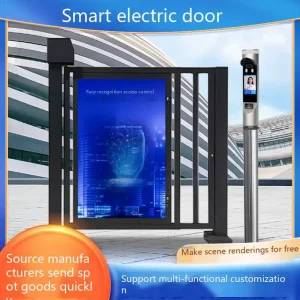
Security integrators require frictionless interoperability across entrance equipment. Our card reader factory standardizes hardware profiles so that a single unified database manages turnstiles, rising bollards, and vehicle barrier lanes simultaneously.
Vehicle Barrier Gate & LPR Convergence
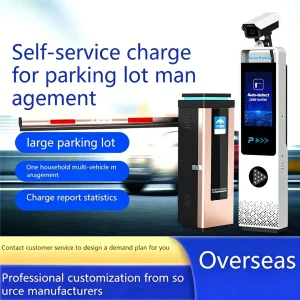
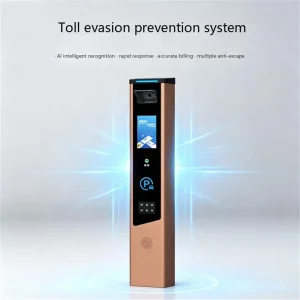
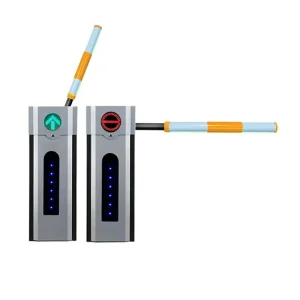
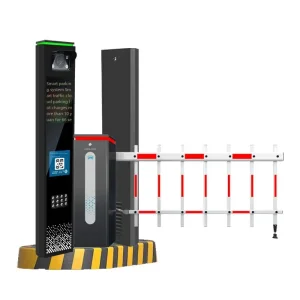
In corporate parks and automated parking lots, multi-technology long-range card readers are deployed on gooseneck pedestals alongside License Plate Recognition (LPR) cameras. When license plates are obscured by mud or heavy downpours, the easy-maintainable 900MHz UHF / 13.56MHz reader automatically serves as the primary failover credential mechanism.
Pedestrian Speed Gate Turnstile Synchronization
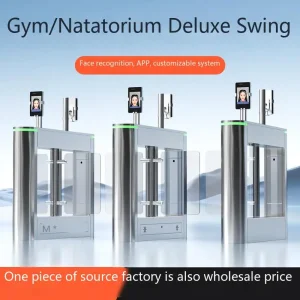
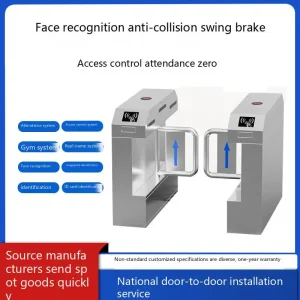
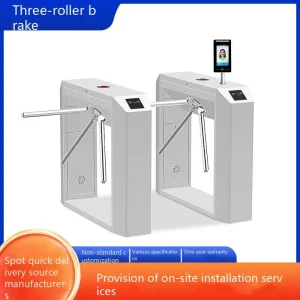
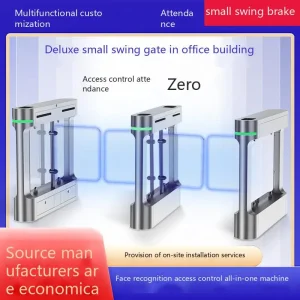
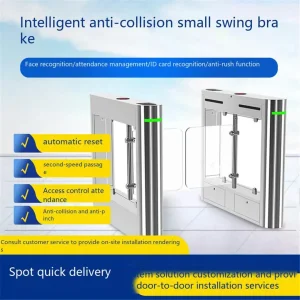
Swing barriers and tripod turnstiles require flush-mount reader integrations that fit narrow architectural footprints without sacrificing read range. Factory OEM customization options include surface-matched brushed SUS304/SUS316 stainless steel faceplates, tempered black glass tops, and integrated barcode scanners for visitor passes.
Hydraulic Rising Bollard Perimeter Interlocking
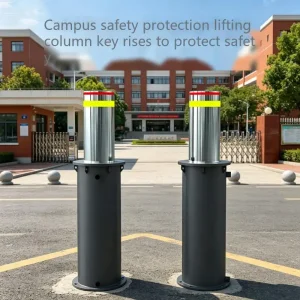
For anti-ram vehicle access control in government, banking, or embassy compounds, card readers integrate into PLC-based hydraulic control cabinets. Emergency Fast Operate (EFO) triggers prioritize physical stopping force while preserving credential audit logging via encrypted RS-485 OSDP protocols.
Industrial Barrier Gates, Speed Turnstiles & Access Controls
Field-proven entrance control systems engineered for factory-direct sales, OEM/ODM branding, and simplified maintenance routines across 80+ international markets.

Frequently Asked Questions: Engineering & Factory Sourcing
Direct technical insights to resolve common integration, cabling, environmental, and protocol questions encountered by access control engineers, procurement officers, and project estimators.