
Primary Access Control & Automated Barrier Systems
Engineered for seamless synchronization with high-cycle telescopic entrances, perimeter road security, and automated vehicular checkpoint infrastructures.
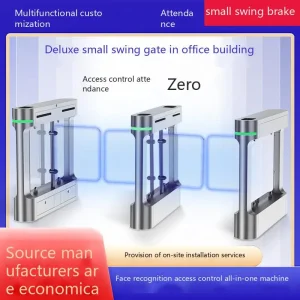
Buy Discount Swing Gate Image Reference Suppliers, In Sales
View Technical Specs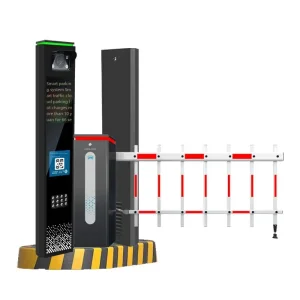
Cost-Effective Car Parking And Toll Access Control Automatic Articulated DC Parking Boom Barrier Gate With Long Range Rfid Reader Suppliers, Factory
View Technical Specs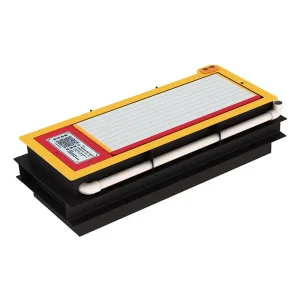
Easy-maintainable City Parking Product Factories, Price
View Technical Specs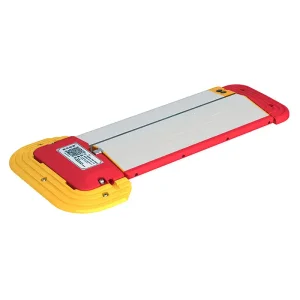
Cheap Scan to pay charging pilecommunity parking lock automatic sensing,electric shared scanning paymentanti-oil car occupying parking space Exporter, Pricelist
View Technical Specs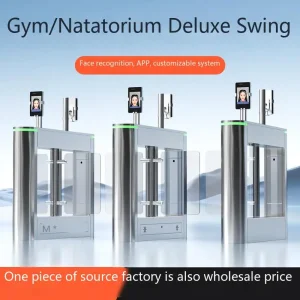
Buy Discount Office Building Entrance Attendance Security Access Control Turnstiles Gate Swing Barrier Speed Gate Manufacturers, Price
View Technical Specs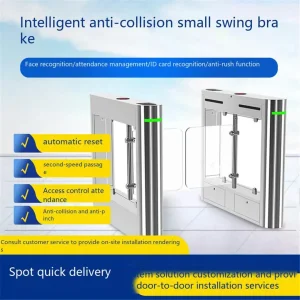
OEM Swing Gate Suppliers, Pricelist
View Technical Specs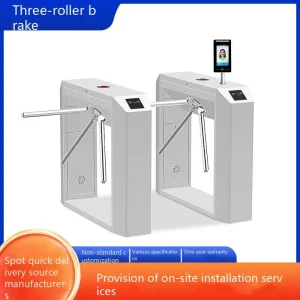
Advanced Factoryoem/ODM Durable Smart Fast Speed Swing Automatic Used Industrial Gym Turnstile Gate Supplier, Factory
View Technical Specs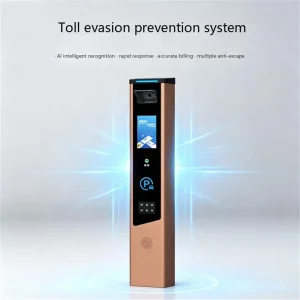
Cheap High definition license plate recognition integrated - AnRuitong II Manufacturer, Factories
View Technical SpecsGlobal Commercial & Industrial Landscape of Telescopic Sliding Door Systems
An authoritative evaluation of kinematic multi-leaf door architecture, structural mechanics, and factory automation trends across tier-1 infrastructure projects.
In contemporary architectural engineering and smart industrial perimeter logistics, the demand for space-optimized, high-load automated physical barriers has driven unprecedented innovation. The global market for durable telescopic sliding doors has transitioned from conventional mechanical entryways to precision-engineered mechatronic assemblies. Characterized by their cascading drive mechanism, telescopic sliding doors allow two, three, or four leaves to slide simultaneously over a narrow lateral parking zone. This structural kinematic principle yields up to a 65% to 70% wider clear passage width compared to traditional bi-parting or single-slide commercial doors occupying the identical structural footprint.
Municipal hubs, automated logistics freight terminals, mega-distribution centers, and pharmaceutical cleanroom complexes increasingly mandate telescopic sliding door configurations to solve acute spatial bottlenecks. As urban square footage costs soar globally, industrial facilities can no longer afford expansive structural lateral clearance for standard sliding gates or intrusive swing radiuses. Factory manufacturing entities operating at ISO 9001 and CE compliance levels, such as Shenzhen Anrui Intelligent Equipment, lead this transformation by pairing cold-rolled aviation-grade aluminum alloys, reinforced stainless-steel tracks, and brushless direct-current (BLDC) servo motors into unified high-cycle entrance platforms.
Kinematic Synchronous Drive
Utilizing high-tensile aramid-fiber synchronous cog belts and dual-axis planetary reduction gears, secondary door leaves travel at proportional velocities (2:1 or 3:1 ratio) relative to the primary motor-driven lead carriage.
Structural Wind-Load Resilience
Extruded multi-cavity aluminum frame profiles combined with interlocking wind-hook anchor brackets resist lateral deflection under positive and negative pressures exceeding 1,200 Pascals (Class 4 Wind Resistance).
Brushless DC Micro-Controller
Integrated 32-bit ARM Cortex processing unit manages Closed-Loop Field-Oriented Control (FOC), delivering microsecond obstacle sensing, reverse anti-pinch safety, and near-silent operation (<48 dB).
Technology Roadmap: Next-Gen Telescopic Automation & Edge Integration
Exploring the critical convergence between mechanical physical access, industrial IoT connectivity, and functional safety standards.
The entrance automation sector is moving past isolated mechanical hardware toward cyber-physical access convergence. Historical pain points in telescopic doors—such as mechanical cable stretching, misalignment of sliding tracks under variable thermal expansion, and slow response to emergency egress commands—have been eradicated through rigorous material science and electronics integration.
State-of-the-art telescopic gate and sliding door factories now engineer assemblies equipped with dual-frequency optical radar sensors, integrated time-of-flight (ToF) LiDAR barriers, and direct BACnet/Modbus IP building management interfaces. Below is the multi-generational technical roadmap guiding leading manufacturing centers:
Phase 1: Mechanical Precision
Transitioning from conventional carbon steel tracks to ultra-high molecular weight polyethylene (UHMWPE) guide inserts and hardened anodized 6063-T6 aluminum extrusion. Ensures zero acoustic friction and galvanic corrosion resistance in humid tropical or coastal industrial installations.
Phase 2: Direct-Drive BLDC
Elimination of traditional carbon brushes and maintenance-heavy oil gearboxes. Permanent Magnet Synchronous Motors (PMSM) paired with magnetic absolute encoders deliver sub-millimeter leaf positioning, dynamic deceleration curve profiling, and 40% reduction in thermal generation.
Phase 3: Edge AIoT Telemetry
Embedded microcontrollers sample current draw, vibration harmonics, and cycle counts at 1,000 Hz. Predictive maintenance algorithms detect roller bearing wear or belt tension decay, broadcasting real-time MQTT diagnostics to cloud infrastructure before operational failures occur.
Phase 4: Functional Safety EN 16005
Full compliance with European safety regulations EN 16005 and DIN 18650. Incorporates redundant dual-circuit microprocessors, monitored fail-safe optical safety curtains, and mechanical emergency counterweight or battery backup breakout configurations.
Specialized Industrial & Commercial Application Scenarios
How durable telescopic sliding door systems solve stringent architectural, sanitary, and physical security parameters worldwide.
High-Volume Logistics Hubs
Logistics cross-docking bays require wide structural apertures to accommodate multi-pallet automated guided vehicles (AGVs) and forklift flows. Telescopic assemblies reduce clearance waste, executing rapid 1.4 m/s cycles that maintain indoor climate conditioning and reduce facility HVAC losses by up to 32%.
Cleanrooms & Healthcare Facilities
Equipped with hermetic perimeter lip seals, antimicrobial finishes, and contact-free radar or infrared sensors. Precision interlocking control modules ensure differential air pressure preservation between ISO Class 5 cleanrooms, surgical suites, and sterile manufacturing corridors.
Data Centers & Financial Vaults
Where high-security compartmentalization is non-negotiable. Telescopic panels engineered with RC3/RC4 burglar resistance ratings, interlocking interlocking mantrap (airlock) firmware, ballistic polycarbonate composite glazing, and instant integration with biometric access credentials.
Corporate Transit & Airports
Airport terminals and high-density corporate lobbies face massive bidirectional pedestrian surges. Telescopic glass sliding entrances maximize the architectural ingress throat while seamlessly orchestrating speed gates, thermal cameras, and building management fire evacuation loops.
Comprehensive Architectural Technical Specification Table
Mechanical and mechatronic parameters utilized by global EPC contractors, systems integrators, and industrial architects for entrance procurement.
| Performance Metric | Commercial Grade 2-Leaf Telescopic | Industrial Heavy-Duty 4-Leaf Telescopic | Critical Cleanroom / Hermetic Series |
|---|---|---|---|
| Maximum Clear Passage Width | Up to 3,000 mm | Up to 6,500 mm | Up to 2,800 mm |
| Maximum Leaf Mass Capacity | 2 × 130 kg (Dual-Leaf) | 4 × 200 kg (Four-Leaf Bi-Parting) | 2 × 160 kg (Gasketed Air-Tight) |
| Drive Motor Architecture | 24V DC Brushless Servo Motor | 36V / 48V High-Torque PMSM Industrial Servo | Closed-Loop Magnetic Induction Drive |
| Opening / Closing Velocity | 150 - 550 mm/s per leaf (Configurable) | 200 - 750 mm/s per leaf (Ramped Accel) | 100 - 450 mm/s (Controlled Pressurization) |
| Profile Material & Treatment | 6063-T6 Aluminum (15μm Anodized) | Reinforced Structural Steel / Heavy Alloy | AISI 304 / 316L Brushed Stainless Steel |
| Safety Sensor Integration | Combined Microwave & Active Infrared | 3D ToF LiDAR + Redundant Safety Edges | Flush Optical Curtains + Emergency Plunge Button |
| Operating Temperature Threshold | -20°C to +55°C | -35°C to +65°C (All-Weather Sealed) | -10°C to +45°C (Humidity Regulated) |
| Mean Cycles To Failure (MCBF) | > 2,000,000 Continuous Cycles | > 3,500,000 High-Duty Cycles | > 1,800,000 Controlled Cycles |
Macro-Industry Turnkey Perimeter & Access Solutions
Bridging vehicular access, perimeter physical barriers, and pedestrian clearance into unified AIoT site governance.
World-class security architecture does not look at an entrance as an isolated sliding door; it treats every perimeter as a coordinated multi-tier security mesh. When procuring equipment from dedicated manufacturing ecosystems like Shenzhen Anrui, enterprise clients achieve holistic synchronicity between external vehicular access, outer physical perimeters, and internal pedestrian zoning.
For instance, an automated entry zone initiates with high-definition License Plate Recognition (LPR) cameras operating at >99% recognition accuracy, matched directly to high-speed torque-controlled DC Articulated Parking Boom Barriers. Once cleared, heavy transport reaches the structural perimeter guarded by high-duty telescopic automated gates and impact-rated hydraulic rising bollards. Pedestrian traffic is concurrently governed through optical speed gate turnstiles and smart parking space reservation locks—delivering an unbreachable, auditable access audit trail for facility management.
Unified Protocol Communication
Hardware modules natively support Wiegand 26/34, OSDP (Open Supervised Device Protocol), TCP/IP, and RS485 interfaces. This enables direct handshake with enterprise platforms such as Honeywell, Johnson Controls, Siemens, and LenelS2.
Emergency Egress Interlock
Certified life-safety logic automatically disengages electronic magnetic locking assemblies upon fire alarm actuation. Doors default to full mechanical open transit via internal stored-energy capacitors or mechanical counterweight reels.
Anti-Tailgating & LPR Correlation
Dense multiple-beam photoelectric arrays mounted within the door jamb work in tandem with overhead video analytics. If an unauthorized entity follows a valid badge swipe, the system issues audible local warnings and decelerates secondary leaves.
Frequently Asked Questions: Industrial Telescopic Sliding Doors & Factory Sourcing
Authoritative answers covering mechanical sizing, structural load calculations, OEM customization, and overseas containerized delivery.
What structural advantage does a telescopic sliding door offer over standard bi-parting sliding doors?
How does the secondary leaf synchronize speed with the primary motor-driven lead leaf?
Can telescopic doors maintain cleanroom pressure seals and climate control efficiency?
What factory customization options are available for overseas EPC engineering contractors?
How does the equipment comply with international safety regulations such as EN 16005?
What packing and quality-assurance measures ensure damage-free maritime export delivery?
Specialized Access Automation & Intelligent Security Systems
Direct-from-factory access equipment engineered to complement telescopic commercial entryways, road barriers, and city-scale parking control networks.
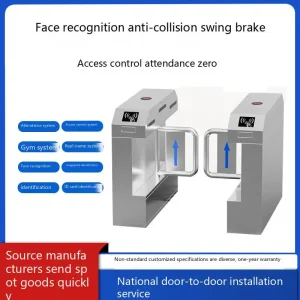
China Bridge Type Sloped Swing Gate Supplier, In Sales
View Technical Specs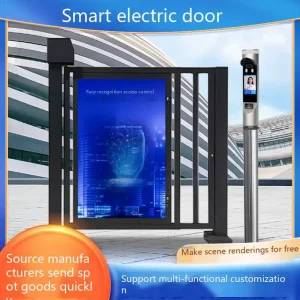
Buy Discount Intelligent Pedestrian Advertising Gate Suppliers, Exporter
View Technical Specs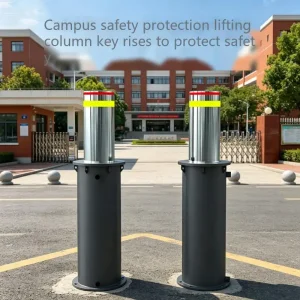
High-Quality Rising Bollard Instruction Manual In Sales, Price
View Technical Specs
Buy Discount Intelligent Barrier Gate Model D03 Suppliers, Exporters
View Technical Specs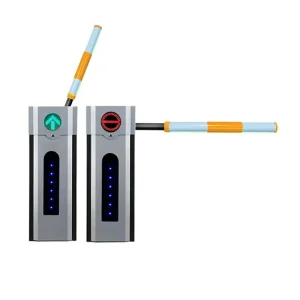
Easy-maintainable Intelligent Barrier Gate Model D11S Supplier, Quotation
View Technical Specs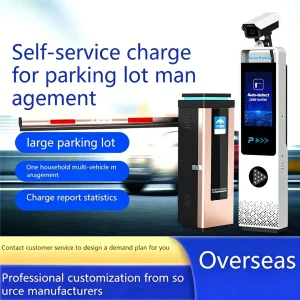
Buy Discount High-def license plate recognition machine Dolphin I model Exporters, In Sales
View Technical Specs
Buy Discount Swing Gate Image Reference Suppliers, In Sales
View Technical Specs