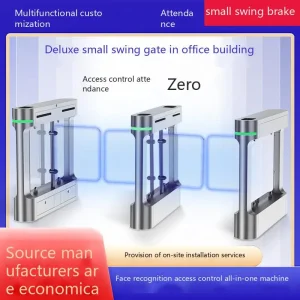
Featured Industrial Gate & Access Control Systems
Field-certified perimeter gate units, automated boom barriers, and license plate recognition terminals engineered for synchronized industrial vehicle & pedestrian safety.
Global Industrial Status of Chain Link Fence Doors
Modern critical infrastructure mandates structural resilience beyond basic wire boundary lines. Chain link fence door systems have shifted from low-cost barrier hardware into highly engineered perimeter containment assets.
Structural Metallurgy & Tensile Standards
Global facilities demand high-tensile core steel with hot-dipped zinc coatings exceeding ASTM A392 specifications (Class 2 / 2.0 oz/ft²). In corrosive coastal environments, polymer coatings such as extruded PVC over galvanized steel ensure zero micro-cracking across multi-decade operational lifecycles.
Perimeter Anti-Intrusion Integration
Modern industrial supply chains cross-reference physical door frames with automated physical barriers. Swing and cantilever chain link gates now interface directly with high-torque brushless DC motors, safety loop detectors, and mechanical interlocks to thwart unauthorized vehicular or pedestrian tailgating.
Severe Wind & Impact Load Engineering
Unlike continuous solid metal barriers that suffer catastrophic wind sail failure, open diamond chain link geometry naturally diffuses severe gusts. Enhanced schedule 40 pipe framing combined with diagonal internal truss cabling prevents sagging over wide industrial openings up to 30 meters.
B2B Pricing Matrix & Supplier Cost Determinants
A detailed cost analysis of commercial chain link fence doors, sliding track assemblies, and unified access automation hardware for EPC contractors and procurement managers.
| System Architecture | Structural Specification | Duty Cycle & Application | Automation Compatibility | Estimated Unit Price (FOB) |
|---|---|---|---|---|
| Standard Single Swing Gate | 1.8m - 2.4m H, 9-Gauge Galvanized, 1.5" SCH40 Frame | Light to Medium Industrial Pedestrian & Vehicle Access | Magnetic Lock / Electric Strike / Turnstile Auxiliary | $140 - $280 / Unit |
| Heavy Double Swing Industrial Gate | 2.4m H x (4m-8m) W, 6-Gauge Core, 2" SCH40 Reinforced | Freight Terminals, Logistics Yards, Fleet Depots | Dual Hydraulic Swing Actuators + Loop Sensors | $450 - $950 / Set |
| Cantilever Sliding Track Gate | Enclosed Track, 2.4m H x 6m-12m Clear Span, Truss Rods | High-Volume Distribution Hubs, No Ground Track Obstruction | Heavy-Duty High-Speed DC Rack & Pinion Motor | $850 - $2,200 / Unit |
| High-Security Barbed/Razor Top Gate | Anti-Cut 358 Mesh / Heavy Chain Link + 3-Strand Outrigger | Correctional, Utility Substations, Military Perimeter | Fail-Safe Hydraulic Interlock + ANPR Trigger | $1,200 - $3,500 / Unit |
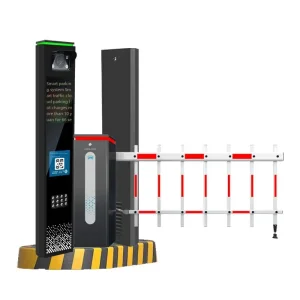
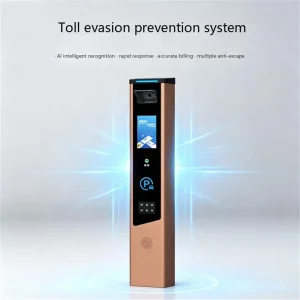
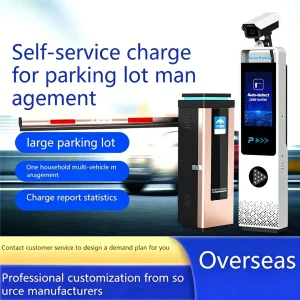
| Integrated AIoT Access Terminal Package | Complete Lane: High-Def ANPR Camera + Boom Barrier + Intercom | Automated Gated Entrances, Unattended Border Access | Direct Software API / Cloud Whitelist Synchronization | $1,500 - $4,800 / Lane |
Procurement Factor: Real-world cost variance depends primarily on raw zinc bath immersion depth, gauge diameter (gauge 9 vs. gauge 6), roller assembly metallurgy (nylon core vs. cold-rolled bearing steel), and integrated motor drive technology. Pairing physical wire gates with automated boom systems minimizes operational bottlenecking.
Global Deployment & Site-Specific Engineering
Tailoring barrier doors to international geological, climatic, and industrial conditions ensures non-stop facility operation.
Coastal Marine & Desalination Facilities
Harsh saline mists cause premature rust on budget electro-galvanized gates within 18 months. Marine applications require duplex coatings: 80-micron minimum hot-dip galvanization followed by a thermo-bonded polyolefin film, sealed with marine-grade 316 stainless steel hinges and pivot pins.
High-Frequency Logistics Corridors
Distribution centers with 2,000+ daily truck passages cannot rely on manual swing gates. Systems employ counter-balanced cantilever gates automated with high-speed brushless DC drive systems, integrated with optical safety curtains and license plate recognition to sustain free-flow access.
Substations & Critical Power Grids
High-voltage utility substations enforce zero touch potential risks. Chain link gates integrate grounding braid straps across hinge assemblies, non-conductive top barbed extensions, and fail-safe interlocking controllers that isolate gate tracks from stray ground currents.
Technological Evolution: Smart Perimeter Infrastructure
The convergence of passive steel wire barriers and active digital IoT infrastructure is reshaping modern site security.
Phase 1: Fiber Sensor Integration
Micro-bend fiber optic intrusion cables are woven directly into the chain link fabric, translating mechanical vibration, cutting, or climbing attempts into localized perimeter alarm data in sub-second time.
Phase 2: Brushless DC Vector Automation
Replacing high-wear AC gear motors with closed-loop brushless servo drives reduces mechanical stress on heavy gate frames by over 60%, adjusting torque profiles for strong wind gusts automatically.
Phase 3: Edge-AI Vision Telemetry
Automated boundary gates pair with edge LPR cameras and multi-spectrum thermal imaging to classify approaching entities (heavy trucks, service cars, pedestrians, wildlife) before physical contact.
Phase 4: Cloud-Synchronized Lifecycle Control
Gate operations report operational cycle counts, motor thermal curves, roller bearing wear, and lock status to a unified dashboard, enabling predictive preventative maintenance.
Macro Industry Access & Perimeter Solutions
Integrated site-level architectures engineered for complex industrial layouts, logistics terminals, and commercial parking perimeters.
Tier-1 Logistics Hubs & Dry Ports
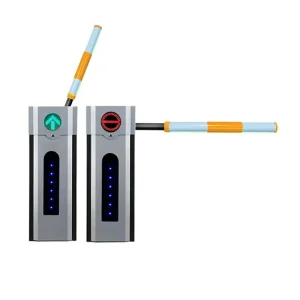
Unattended vehicle throughput demands multi-tier gating. Perimeter chain link cantilever gates open at scheduled operational shifts, while fast boom barriers combined with ANPR terminals handle individual tractor-trailer access authorization in 1.2 to 2.5 seconds per vehicle.
Industrial Estates & Special Economic Zones
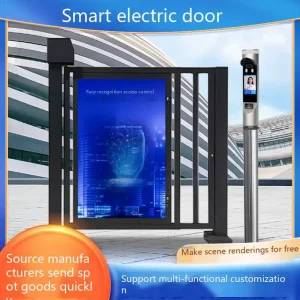
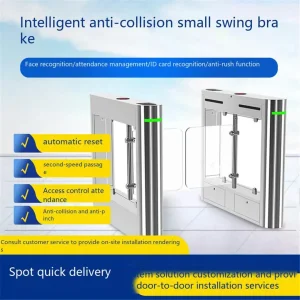
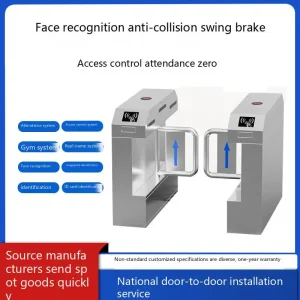
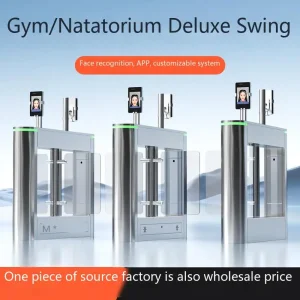
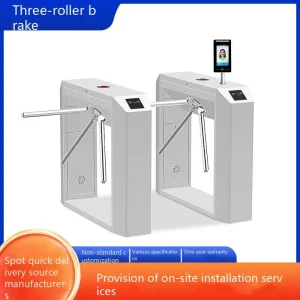
High-security manufacturing zones require combined pedestrian and vehicular management. Perimeter fence gates prevent perimeter infiltration, while integrated pedestrian swing and tripod turnstiles handle thousands of shift workers safely with biometrics and RFID.
Commercial Mixed-Use & Revenue Operations
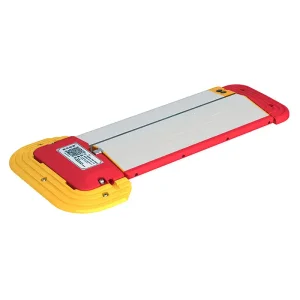
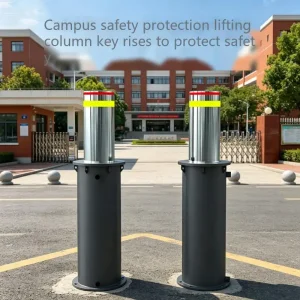
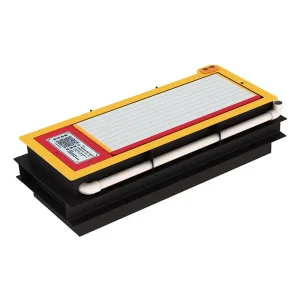
For large commercial parks, advertising barrier gates provide revenue while controlling traffic. Synchronized smart parking locks protect assigned tenant bays, backed by hydraulic rising bollards at main entrances for emergency anti-ram security.
Engineering & Procurement FAQ
Detailed technical answers to common queries from global procurement managers, EPC contractors, and automation integrators.
Full Access Control & Barrier Matrix
Explore our complete range of smart perimeter parking systems, hydraulic rising bollards, and high-speed pedestrian turnstiles.