
High-Throughput Enterprise Access Control Hardware
Pre-engineered vehicle barriers, speed gates, and smart perimeter locks manufactured to seamlessly interface with modern RFID/NFC badge readers and Wiegand/OSDP door lock architectures.

Intelligent Barrier Gate Model D03
View Model Details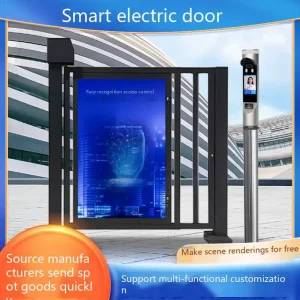
Intelligent Pedestrian Advertising Gate
View Model Details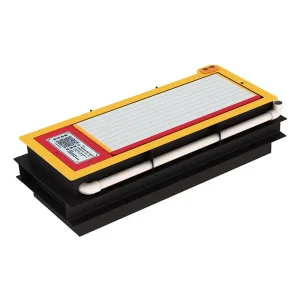
City Parking Access Infrastructure
View Model Details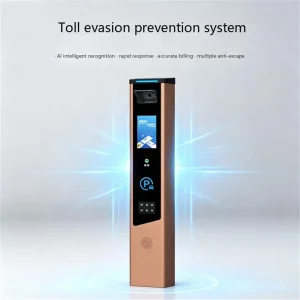
AnRuitong II HD LPR Integrated System
View Model Details
Industrial Fast-Speed Swing Turnstile
View Model Details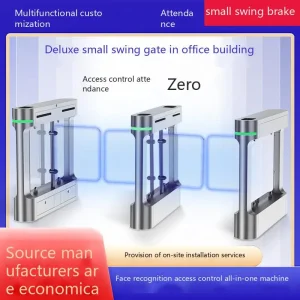
Heavy-Duty Commercial Swing Gate
View Model Details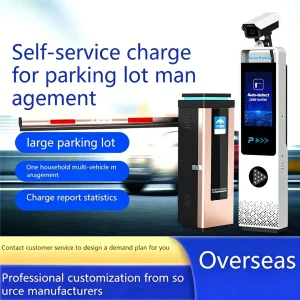
Dolphin I HD LPR Recognition Machine
View Model Details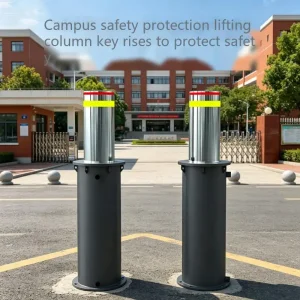
Automated Hydraulic Rising Bollard
View Model DetailsCommercial PACS Evolution & Hardware Resilience
Physical security engineering is undergoing a generational shift. Facility managers and security directors are moving away from proprietary legacy locks toward open-supervised, multi-credential badge reader door locks that integrate with unified identity registries.
Cryptographic Transition
Unencrypted 125 kHz proximity cards (EM4100, HID Prox) and standard MIFARE Classic 1K chips are vulnerable to credential cloning. Modern facilities require MIFARE DESFire EV3, Seos, or FIPS 201 PIV compliant credentials with AES-128/256 bit hardware encryption at rest and in transit.
- End-to-End Secure Channel Protocol (SCP)
- Zero-Key exposure during reader-to-lock transit
- EAL5+ certified hardware crypto co-processors
Mechanical Grade 1 Rigor
Electronic smart locks in high-traffic corridors frequently fail mechanically before their circuit boards burn out. High-spec installations require ANSI/BHMA Grade 1 certified heavy-duty mortise bodies capable of withstanding severe physical impact and extensive duty cycles.
- Over 1,000,000 continuous cycle operating life
- Solid cast SUS304 / SUS316 stainless steel latches
- 3-hour UL 10C positive pressure fire rated
Open Protocol Interoperability
Proprietary reader-to-controller lockouts limit supply chain flexibility. Engineering requirements now enforce SIA OSDP v2.2 with Secure Channel (over RS-485) or direct IEEE 802.3bt Power-over-Ethernet (PoE) IP-to-the-door configurations.
- Continuous tamper detection & line monitoring
- Elimination of unencrypted Wiegand sniffers
- Remote over-the-air (OTA) firmware signing
Badge Reader Door Lock Wholesale Price & Pricelist
Direct B2B unit pricing models categorized by physical lock geometry, integrated communication architecture, and volume procurement thresholds for contractors and system integrators.
| System Architecture Tier | Supported Badge Credentials | Communication Protocol | Sample Unit (1-10) | Mid-Tier (50-200) | Volume OEM (500+) |
|---|---|---|---|---|---|
| Commercial Offline Smart Cylindrical Lock | 13.56MHz MIFARE, NFC, Mobile App | Standalone / Bluetooth Low Energy 5.2 | $75.00 - $95.00 | $58.00 - $68.00 | $42.00 - $49.00 |
| Enterprise Networked Mortise Badge Lock | DESFire EV2/EV3, Seos, ISO14443A/B | RS-485 (OSDP v2.2) / Wiegand 26/34 | $145.00 - $185.00 | $115.00 - $135.00 | $88.00 - $98.00 |
| High-Traffic PoE Electronic Strike/Mortise | Dual-Frequency (125kHz + 13.56MHz + BLE) | IEEE 802.3af PoE / TCP/IP Direct | $210.00 - $260.00 | $170.00 - $195.00 | $130.00 - $145.00 |
| Multi-Modal Badge + Biometric + PIN Mortise | DESFire EV3 + FAP10 Optical + Capacitive PIN | OSDP v2.2 Secure Channel / Wi-Fi 6 | $280.00 - $340.00 | $220.00 - $265.00 | $175.00 - $195.00 |
| ATEX Explosion-Proof / Heavy Coastal Lock | Encrypted Smart Badge + UWB Presence | Hardwired OSDP / Fiber Transceiver | $620.00 - $780.00 | $510.00 - $590.00 | $410.00 - $460.00 |
Mission-Critical Application Scenarios
Field installations vary by physical environmental stress, audit log security demands, and throughput requirements. Anrui badge reader systems operate in over 80 countries across diverse operational profiles.
Hyperscale Data Centers
Server rack containment corridors and colocation cages require dual-factor authorization (Badge + PIN or Biometric) coupled with anti-passback and real-time door prop alarms to maintain SOC 2 and ISO 27001 compliance.
- Sub-second badge credential latency
- Tamper-monitored balanced magnetic switches
- Interlock mantrap controller integration
Bio-Pharma & Cleanrooms
Controlled air-pressure laboratory suites demand contactless badge reading through heavy glass partitions or sealed flush-mount medical stainless steel locks compatible with hydrogen peroxide vapor (HPV) washdowns.
- IP68 fully resin-potted RFID antenna head
- Corrosion-resistant SUS316 front plates
- Hands-free long-range BLE badge identification
University Campus Living
Dormitory access calls for high-abuse mechanical resistance coupled with multi-tenant card management, remote batch key revocation, and mechanical key overrides for master facility locksmiths.
- Offline audit trail logging (last 2,000 events)
- Lockout-safe emergency mechanical brass core
- Vandal-resistant clutch lever mechanism
Shenzhen Precision Manufacturing & Global Sourcing Agility
How our vertically integrated 8,000m² Shenzhen manufacturing facility lowers Bill of Materials (BOM) costs by 35-45% compared to Western assembly lines without compromising component quality.
Vertical Tooling & Casting
In-house high-pressure zinc die-casting, automated CNC machining, and robotic wire EDM tooling enable 14-day prototype turnaround for custom OEM escutcheons.
Automated SMT Surface Mount
Dual Yamaha high-speed pick-and-place lines populate micro-controller PCBs with 0201 passives, integrated RF baluns, and automated optical inspection (AOI).
Strict Accelerated Aging (HALT)
Every lock iteration undergoes -40°C to +80°C environmental thermal shock chambers, 96-hour neutral salt spray (ASTM B117), and 1,000,000 cycle mechanical test rigs.
Global Component Sourcing
Direct supply contracts with STMicroelectronics, NXP Semiconductors, and Texas Instruments ensure multi-year component lifecycle security without grey-market substitutions.
Technology Roadmap: The Next-Gen Door Access Lock (2026-2030)
Where physical security meets enterprise IoT: transitioning from manual card taps to seamless spatial awareness, zero-trust cryptographic verification, and self-powered locks.
Ultra-Wideband (UWB) Spatial Access
UWB IEEE 802.15.4z time-of-flight measurements provide centimeter-level credential localization, completely preventing relay attacks and allowing authentic hands-free door unlocking as users approach.
Matter-over-Thread Native Mesh
Standardized smart infrastructure protocols unify commercial locks with HVAC, lighting, and environmental sensing networks, eliminating proprietary wireless bridge appliances.
Kinetic Energy Harvesting
High-efficiency micro-generators built into the door handle lever harvest user rotational mechanical energy, charging supercapacitors to power reader circuits and eliminating battery waste.
Global Certification & Technical Support Framework
Ensuring compliance with local fire, electrical, and data privacy regulations across European, North American, Middle Eastern, and Asia-Pacific markets.
Regulatory Certification
Every production run complies with international standards: CE Marking (RED Directive, EMC EN 301 489, LVD EN 62368-1), FCC Part 15 Class B, RoHS 3 (EU 2015/863), and REACH regulations.
7x24 Direct Engineering SLA
Tier-3 embedded firmware and hardware engineers provide direct remote diagnostic access via SSH/API consoles, resolving integration hurdles directly with project EPCs.
Rapid Spare Logistics
Critical spare parts (solenoid actuators, logic mainboards, antenna heads) are stocked in regional hubs across Germany, the UAE, and Singapore for next-day dispatch.
Frequently Asked Questions for Project Specifiers
Authoritative technical and procurement answers addressing integration feasibility, mechanical standards, and lifecycle economics.
What primarily drives price differences in badge reader door locks?
Pricing is governed by three factors: 1) Physical Mortise Grade (ANSI Grade 1 cast-steel mechanisms cost 50% more than Grade 2 zinc alloys), 2) Connectivity Architecture (hardwired OSDP or PoE locks require microcontrollers and network drivers absent in standalone locks), and 3) Cryptographic Engine (dual-frequency MIFARE DESFire EV3/Seos secure hardware modules cost more than simple 125kHz EM readers).
Why is migrating from legacy Wiegand to OSDP v2.2 critical?
Wiegand protocols transmit badge card numbers in unencrypted plain text over copper wiring, making them vulnerable to inline micro-sniffers (such as the ESPKey). SIA OSDP v2.2 uses AES-128 cryptographic key exchanges to protect communication between the badge reader head and the door controller, while also providing constant two-way supervised line monitoring.
Can Anrui locks integrate with third-party PACS platforms?
Yes. Our badge reader locks communicate using open industry-standard protocols including OSDP v2.2, standard Wiegand 26/34/37/56-bit, and direct RESTful HTTP/JSON APIs on PoE models. They integrate smoothly with leading access control head-ends like LenelS2, Software House, Genetec Synergis, Gallagher, and Honeywell Pro-Watch.
What is the typical battery lifespan of offline smart escutcheons?
Anrui offline badge reader locks use optimized low-power ARM Cortex-M4 architectures with standby currents below 18 microamps (µA). Powered by four standard AA 1.5V lithium batteries, units perform up to 50,000 continuous door unlock cycles, translating to 18 to 24 months of real-world commercial office usage before low-voltage alerts occur.
How do you address fire door egress regulations (NFPA 80 / EN 179)?
All Anrui commercial mortise badge locks feature emergency mechanical single-motion egress. Turning the inside lever instantly retracts both the latchbolt and the deadbolt simultaneously, guaranteeing fail-secure perimeter security from the outside while ensuring immediate, barrier-free life safety egress during fires.
What OEM/ODM customizations are available for project distributors?
We provide comprehensive OEM customization: CNC engraved escutcheon corporate branding, customized housing finishes (PVD Matte Black, Brushed Satin Chrome, Polished Brass), tailored backset dimensions (60mm vs 70mm, European 72/85mm), and pre-flashed custom RFID cryptographic root keys.
Perimeter Hardware & Secondary Control Catalog
Complementary turnstile barriers, automatic parking locks, and vehicle control gates built to unify multi-door badge reader networks with perimeter entrance perimeters.
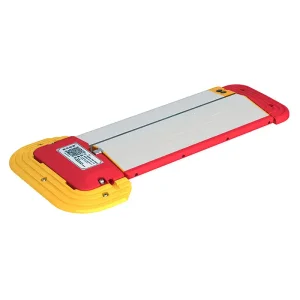
Automated Sensing Smart Parking Lock
View Product Details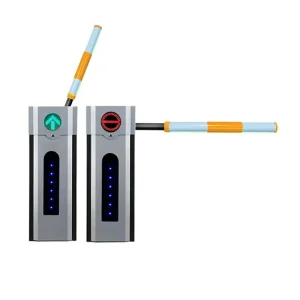
Intelligent Barrier Gate Model D11S
View Product Details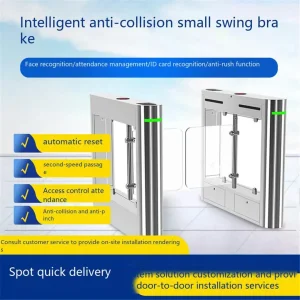
High-Volume OEM Optical Swing Gate
View Product Details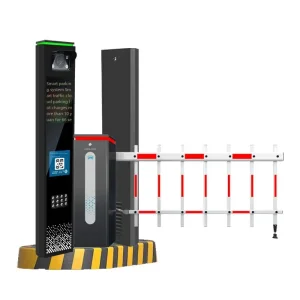
DC Boom Barrier Gate with Long-Range RFID
View Product Details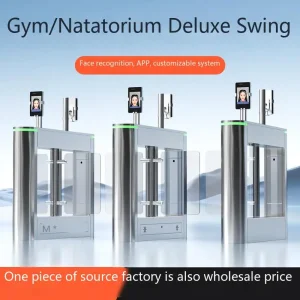
Office Building Attendance Speed Gate
View Product Details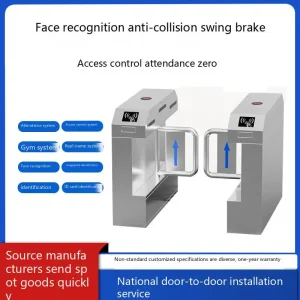
Bridge-Type Sloped Speed Barrier Gate
View Product Details
Intelligent Barrier Gate Model D03 (Industrial)
View Product Details