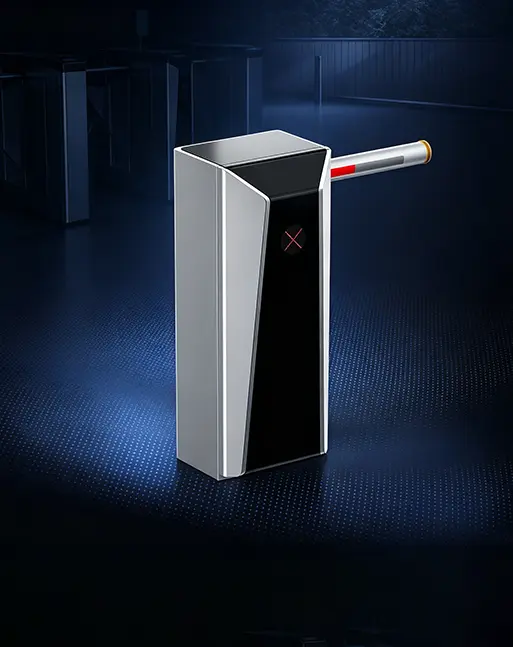
High-Performance Perimeter Gate Lineup
Explore our export-grade, field-tested entrance automation solutions tailored for rigorous industrial environments and commercial complexes.

Intelligent Pedestrian Advertising Gate
View Specifications
OEM Industrial Swing Gate Automation
Get Pricelist
Easy-Maintainable Barrier Gate Model D11S
Request Quotation
Heavy-Duty Fast Speed Industrial Turnstile
Factory Direct Supply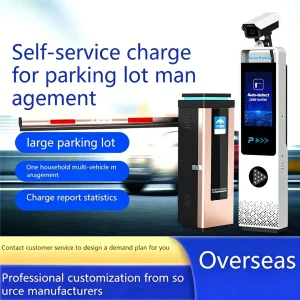
High-Def LPR System - Dolphin I
Check Availability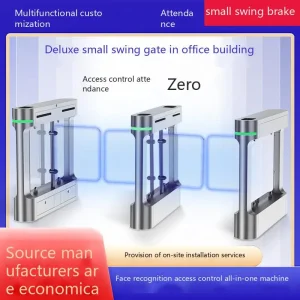
Commercial Architectural Swing Gate
View Specifications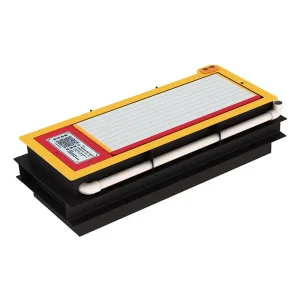
Smart City Integrated Parking Barriers
View Pricing
Intelligent Barrier Gate Model D03
Export InquiriesMacro Dynamics: The Trackless Bi-Fold Evolution
Understanding why international civil engineers and logistics operators are deprecating traditional sliding and cantilever track assemblies in favor of trackless bi-folding automated architectures.
The Geometric Challenge of Perimeter Security
Modern commercial distributions, defense hubs, and hyper-scale data centers face an identical operational friction: entry bottlenecking compounded by real estate constraints. Traditional sliding gates require runback lengths equal to the width of the clear roadway opening plus a 20% to 30% overhang counterbalance. On urban sites or constrained perimeter boundaries, runback clearance simply does not exist.
Standard swing gates alleviate the runback issue but introduce large turning arcs that consume usable vehicle staging space. Additionally, their cycle speed is inherently slow due to long physical moment arms. Trackless bi-fold gates resolve this trade-off: two hinged panels fold dynamically inward or outward like an accordion, requiring less than 25% of the sweep zone while maintaining high operational speeds.
- Complete avoidance of ground-track debris jamming (snow, gravel, sand)
- No excavation across the road surface for embedded tracks or grade beams
- Direct integration with automated LPR systems and fast-throughput barriers
Total Cost of Ownership (TCO) & Lifecycle Economics
When engineering procurement professionals analyze the acquisition of discounted trackless bi-fold gates from direct manufacturing exporters, the financial evaluation extends beyond initial equipment cost. Traditional tracked gates demand routine track sweeping, heater wire installations in freezing environments, and periodic replacement of embedded steel guides damaged by heavy axle loads.
By eliminating ground fixtures, trackless bi-fold systems deliver substantial lifecycle cost reductions. Axle load weight is transferred entirely to robust, reinforced structural end-columns anchored to concrete footings. Utilizing advanced brushless DC (BLDC) motors paired with self-lubricating heavy-duty spherical bearing hinges, these systems provide a continuous 100% duty cycle rating under variable wind shear loading conditions.
- Reduction of civil work overhead by up to 40% during site installation
- Extended MTBF on transmission linkages via harmonic drive gearboxes
- Factory direct export packaging mitigating long-haul transit oxidation
Engineering Architecture & Performance Mechanics
A rigorous inspection of the hardware mechanics, kinematics, and digital control integration that govern trackless bi-folding automated systems.
Dual-Panel Kinematics
Panels utilize internal concealed linkage assemblies synchronized via adjustable turnbuckles or linear rack mechanisms. This dynamic mechanical linkage translates a single rotary column drive into simultaneous folding action, guaranteeing smooth mechanical deceleration at both fully-open and fully-closed deadpoints without hydraulic shudder.
Vector Frequency Inverters
State-of-the-art intelligent controller boards integrate industrial frequency vector drives. This setup allows microsecond control of variable ramp speeds: rapid panel acceleration during initial clearance followed by active torque sensing deceleration, preventing gate slap while delivering complete open cycles within 4 to 8 seconds depending on span.
Multi-Tier Safety Redundancy
Safety parameters are calibrated to EN 12453 / EN 12445 standards. Hardware features dual active infrared safety beams, heavy-profile wireless conductive rubber edges that instantly reverse direction upon 50N impact, and an integrated optical encoder that flags abnormal motor current spikes caused by wind pressure or physical obstacles.
Localized Engineering Use Cases & Environments
From desert conditions to sub-zero industrial maritime zones, examine how trackless bi-fold systems adapt to demanding regional requirements.
Middle East & Arid Zones
In high-dust, extreme-heat regions such as Qatar, Saudi Arabia, and UAE, surface tracks accumulate blowing sand within minutes, causing conventional sliding roller derailments. Trackless bi-fold gates suspend all mechanical gear off the tarmac, while IP66-rated operator enclosures shield electronics from ambient temperatures exceeding 50°C.
Northern European Winter Zones
In Poland, Scandinavia, and Canada, freezing surface water and thick snow render ground track slots inoperable without continuous electric de-icing wires. Trackless folding systems clear 100mm to 150mm above finished grade, bypassing frozen ground completely without mechanical strain.
Urban Intermodal Distribution Hubs
Logistics depots and air cargo terminals handle thousands of continuous axle transitions daily. Ground tracks deteriorate under heavy 40-ton vehicle weights. By eliminating the ground track, trackless gates keep structural stress off the road plane, protecting internal underground cabling and stormwater culverts.
Unified Smart Mobility & Access Architecture
Modern perimeter defense demands end-to-end integration: bi-fold security barriers serving as physical access controls managed by networked AI vision and telematics.
Telemetry, Wiegand & OSDP Automation
A gate mechanism should never function as an isolated mechanical barrier. In modern smart enterprise facilities, trackless bi-fold systems interface with RS-485, OSDP, and TCP/IP networks. When integrated with High-Definition License Plate Recognition (LPR) cameras, an approaching authorized vehicle triggers pre-clearing algorithms that open the gate at full speed.
By the time the vehicle completes its deceleration cycle, the bi-fold leaf has completely folded clear, enabling rolling-stop ingress that eliminates vehicle queue backups during peak operational shift changes.
Layered Anti-Tailgating & Interlocking
High-security installations combine trackless bi-fold gates with intermediate high-speed boom barriers or hydraulic rising bollards to form a vehicle trap (airlock). The bi-fold gate remains locked until the primary verification stage is completed by optical LPR and ground induction loop sensors.
Simultaneously, pedestrian management turnstiles operating along the same boundary interface with the master control terminal, synchronizing perimeter protection across both vehicle lanes and foot traffic entry points.
Technological Roadmaps & Future Outlook
Emerging mechanical, electrical, and intelligence vectors transforming the gate automation industry over the next decade.
IoT Edge Telemetry
Modern gates are transitioning to embedded microcontroller units equipped with real-time predictive maintenance algorithms. By tracking motor phase temperature, micro-vibrations in internal bearing linkages, and cycle-by-cycle torque curves, local gateways dispatch maintenance alerts to facility managers before mechanical degradation occurs.
High-Efficiency BLDC Actuation
Traditional induction motors linked to oil-filled worm gearboxes are being phased out in favor of compact, high-torque Permanent Magnet Synchronous Motors (PMSM) and Brushless DC actuators. These motors run cool, achieve 90%+ energy efficiency, and feature built-in ultra-capacitors for automated failsafe emergency opening during power grid interruptions.
Engineered Composite Infill Panels
To maximize speed without sacrificing blast, ballistic, or crash-rated integrity, structural aluminum profiles and high-tensile fiber-reinforced composite infill panels are replacing heavy solid mild steel. The resulting weight reduction cuts cycle times in half while maintaining structural wind ratings exceeding Category 3 hurricane thresholds.
Frequently Asked Questions (FAQ)
Key technical, structural, and logistics insights for engineering contractors, system integrators, and procurement directors.
What makes a trackless bi-fold gate structurally superior to a tracked or cantilever gate?
How do factory-direct exporters handle dimensional customization and drive configurations?
What wind loading ratings can a trackless bi-fold gate withstand?
What maintenance schedules are required for the folding linkage mechanisms?
How are export packaging, sea freight, and site assembly handled?
Complementary Access Control & Parking Hardware
Complete your perimeter security package with our factory-integrated barrier arms, bollards, intelligent parking systems, and turnstile enclosures.
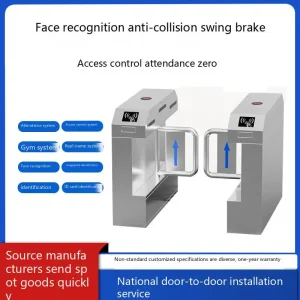
Bridge Type Sloped Swing Gate
View Product Details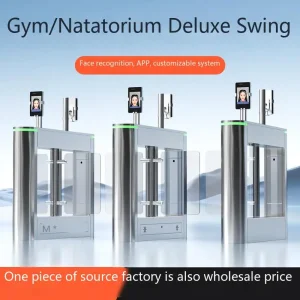
Lobby Attendance Speed Turnstile Gate
View Price Quote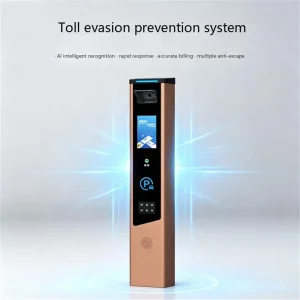
HD LPR Integrated Terminal - AnRuitong II
OEM Direct Source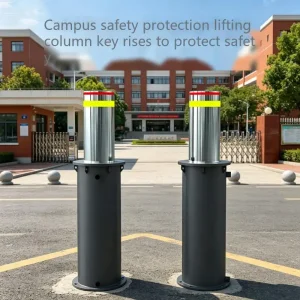
Hydraulic High-Security Rising Bollards
Download Manual & Price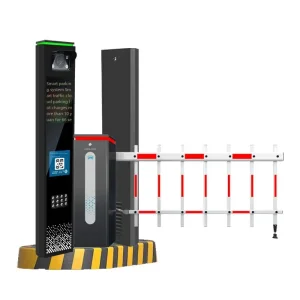
Articulated DC Boom Barrier with RFID
Supplier Quotation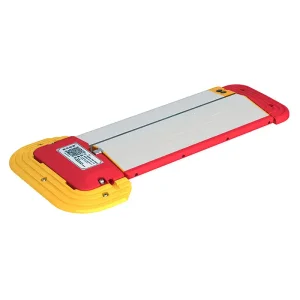
Scan-to-Pay Smart Parking Space Lock
Exporter Pricelist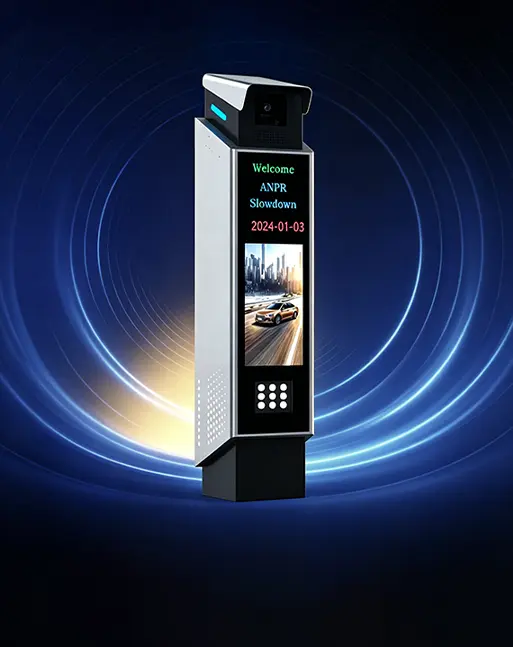
Enterprise AI Plate Recognition Camera
View Specifications