
Commercial Access & Internal Automatic Door Portfolios
Engineered for seamless architectural integration, our high-cycle automated internal sliding doors, lane control barrier assemblies, and intelligent security passages deliver enterprise-grade duty cycles at transparent direct-factory pricing.
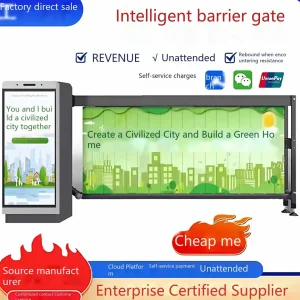
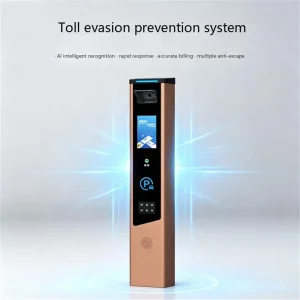
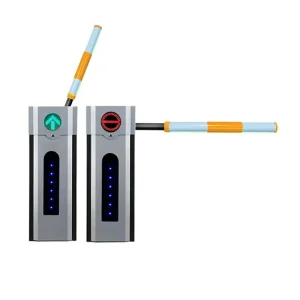
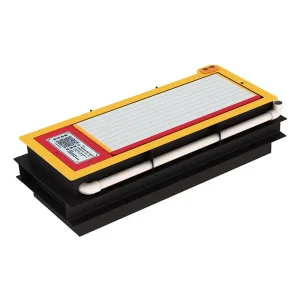
Precision Kinematics: Microprocessor & Magnetic Levitation Internal Sliding Systems
In modern architectural passage control and interior partition engineering, the distinction between high-maintenance mechanical door overheads and ultra-silent, frictionless internal sliding automation rests on mechatronic design. As an authoritative manufacturer based in Shenzhen, China, Shenzhen Anrui Intelligent Equipment Co., Ltd. pioneers advanced drive configurations that dramatically reduce whole-life maintenance costs.
Brushless DC (BLDC) Servo Drive
Utilizing high-torque 24V/36V brushless direct current motors with integrated digital optical encoders, our sliding systems deliver zero-cogging acceleration. Unlike traditional brushed motors that suffer from carbon dust degradation and thermal throttling, our drive systems maintain 100% continuous duty cycle ratings across millions of operational iterations without mechanical breakdown.
Maglev (Magnetic Levitation) Modules
For executive boardrooms, healthcare operating cleanrooms, and high-end residential suites, our linear magnetic suspension drives eliminate traditional drive belts, pulley sheaves, and gearbox wear. Linear magnetic repulsion guides the door leaf along extruded aerospace aluminum tracks, reducing ambient operating acoustics to under 38 decibels (dB).
AI Dynamic Anti-Pinch & Obstacle Reversal
Compliant with international pedestrian safety directives (EN 16005 and ANSI A156.10), our algorithmic 32-bit ARM microprocessor continuously samples back-EMF currents. If physical resistance exceeding 15 Newtons is encountered during the closing cycle, the leaf stops and initiates a soft-reverse cycle within 45 milliseconds, preventing passenger entrapment.
The "Discount" Paradigm: Lean Manufacturing Without Engineering Compromise
International contractors, MEP estimators, and security integrators often misinterpret the term "discount" in industrial procurement. When sourcing internal sliding doors, speed gate lane barriers, and automated pedestrian turnstiles directly from our Shenzhen manufacturing center, cost reductions do not stem from downgraded raw materials. Instead, they result from structural supply chain concentration, localized extrusion economies, and automated assembly optimization.
Clustered Component Sourcing
Situated in the Greater Bay Area hardware ecosystem, our factory sources 6063-T6 aluminum alloys, precision DuPont nylon rollers, and SMT surface-mount circuit boards within a 35-kilometer radius, drastically reducing inbound logistics markups and overhead lead times.
Vertically Integrated CNC Machining
We eliminate intermediate tooling brokers. All header chassis, reinforced motor mounting brackets, and sliding carriage bogeys are cold-drawn and CNC milled in-house, maintaining tolerances within ±0.02 mm and reducing manufacturing unit costs by up to 34%.
Zero-Distributor Margin Overhead
Purchasing directly through our enterprise B2B export desk bypasses national tier-1 wholesalers, regional stockists, and third-party import agents. Overseas integrators capture true ex-works (EXW) or FOB Shenzhen factory pricing, maximizing bidding margins on large project tenders.
Scalable Batch Packaging (SKD / CKD)
By engineering modular semi-knocked-down (SKD) and completely-knocked-down (CKD) export configurations, we compress sea container freight volume by 42%. Aluminum track extrusions, operator chassis, and motor units pack tightly to avoid expensive dimensional air cargo weight.
Global Regulatory Verification: Life Safety, Acoustic & Access Mandates
Navigating multinational commercial building codes requires strict documentation. Anrui's internal automatic sliding door assemblies and complementary intelligent lane turnstiles undergo rigorous third-party laboratory verification to satisfy global safety, fire egress, and electromagnetic compatibility frameworks.
EN 16005 & DIN 18650 Egress Safety
Our European specification automatic sliding packages feature redundant dual-motor circuits and monitored supercapacitor emergency backup modules. In the event of primary power failure, internal sliding barriers trigger instantaneous fail-safe breakaway opening within 1.2 seconds, ensuring unhindered emergency egress routes.
ADA & Barrier-Free Accessibility
Compliant with Americans with Disabilities Act (ADA) architectural guidelines, our sliding clear-passage widths range from 900 mm up to 1,800 mm. Low-energy operational modes can be enabled via firmware, limiting kinetic leaf energy to less than 1.69 Joules and door opening/closing speeds to prevent impact hazards for elderly and wheelchair occupants.
Acoustic Rating (ISO 10140-2) & Hermetic Seals
For executive meeting rooms, recording spaces, and medical surgical suites, specialized internal sliding leaf designs incorporate four-sided perimeter EPDM compression gaskets and acoustic laminated glass, achieving airborne sound insulation ratings of up to Rw 36 dB to safeguard speech privacy.
Target Commercial & Institutional Application Scenarios
Internal sliding doors and high-speed passage automation eliminate swing radius footprints, reclaiming up to 10% of usable floor area in high-density commercial real estate. Our hardware packages solve diverse architectural flow, hygiene, and security challenges.
Healthcare & Cleanroom Environments
Featuring touchless microwave motion sensors, foot-kick actuators, and hermetic perimeter interlocks, our doors maintain positive air pressure differentials and prevent cross-contamination across operating theaters, intensive care units (ICUs), and pharmaceutical processing zones.
Class-A Commercial Office Towers
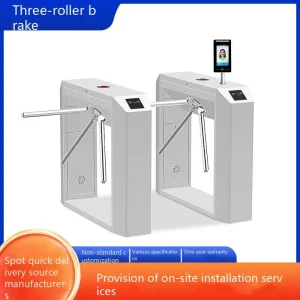
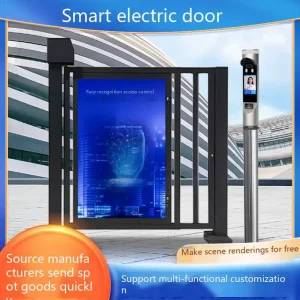
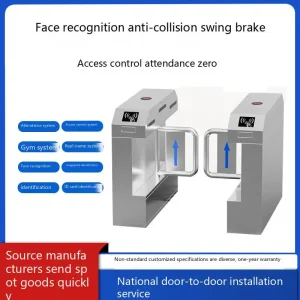
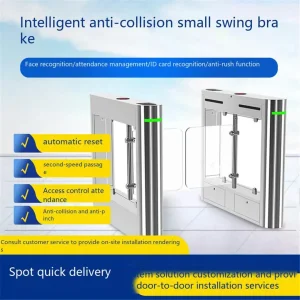
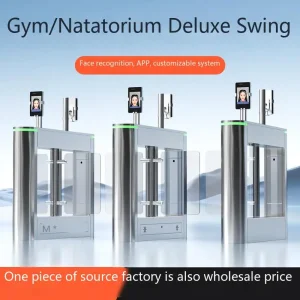
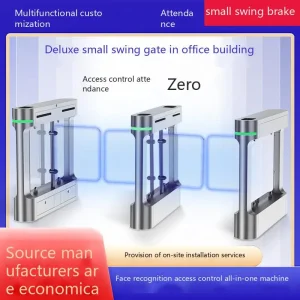
Integrated seamlessly with our swing turnstiles, optical speed gates, and facial recognition terminals, interior sliding telescopic glass walls delineate visitor reception lobbies from restricted tenant corporate floors with elegant anodized or PVD black titanium finishes.
Tier III/IV Data Centers & Server Rooms
Equipped with interlocking mantrap (airlock) firmware, our internal sliding systems prevent concurrent door openings. Interfacing with central dry contacts, Wiegand, and RS485 readers, only verified engineering personnel gain sequential cabinet corridor access.
Luxury Hospitality & Smart Living
Ultra-quiet maglev operators tuck concealed inside standard drywalls (pocket sliding configuration). Interfacing natively with Crestron, KNX, or Zigbee building management systems, doors glide open automatically upon ambient suite occupancy detection.
Industry Trends: AIoT Telemetry & Building Automation Integration
Internal sliding doors and pedestrian turnstile barriers are no longer isolated mechanical portals; they represent edge IoT nodes within smart building operational ecosystems. Anrui engineers continuous connectivity into every controller mother-board.
Predictive Cloud Maintenance
Embedded sensors constantly monitor motor thermal curves, roller vibration resonance, and cycle counts. Through MQTT or Modbus TCP protocols, the operator alerts facility management teams before mechanical bearing breakdown occurs, preventing expensive unscheduled downtime.
AI Computer Vision Sensor Integration
Replacing legacy single-beam photoelectric sensors, stereoscopic AI overhead optical sensors classify approaching targets. The system differentiates moving personnel from static objects or passing cross-traffic, preventing false triggers and optimizing interior HVAC energy retention.
Decarbonization & Low-Carbon Extrusions
Aligning with global ESG mandates, our door tracks and headers leverage recycled low-carbon green aluminum billets processed with renewable hydropower, reducing the embodied carbon footprint of architectural entry systems by 45%.
Architectural Specification & Performance Comparison Matrix
Engineers and project procurement executives can evaluate our core internal sliding drive architectures across load thresholds, opening velocity, acoustic emissions, and emergency safety compliance.
| Drive Architecture | Door Leaf Configuration | Max Load per Leaf | Opening / Closing Speed | Acoustic Footprint | Emergency Protocol | Typical Applications |
|---|---|---|---|---|---|---|
| Heavy-Duty BLDC (Belt) | Single Leaf / Bi-Parting | 150 kg (Single) / 2×120 kg | 150 – 550 mm/s (Variable) | ≤ 48 dB | Mechanical Spring / UPS Backup | Corporate Lobbies, High Traffic Corridors |
| Linear Maglev (Direct) | Single Pocket / Surface | 80 kg (Single) / 2×70 kg | 200 – 600 mm/s (Soft Start) | ≤ 35 dB (Frictionless) | Zero Back-Drive Manual Push | Executive Suites, Luxury Residential, Clinics |
| Hermetic Cleanroom BLDC | Single / Bi-Parting Sliding | 200 kg (Lead-Lined Glass) | 100 – 450 mm/s (Controlled) | ≤ 42 dB | Break-Out Fail-Safe Release | Hospitals, Operating Theaters, Labs |
| Telescopic Internal (2-4 Leaves) | 2-Leaf Single / 4-Leaf Bi-Part | 4×80 kg (Expanded Clear) | 250 – 500 mm/s (Synchronous) | ≤ 50 dB | Counterweight / Supercapacitor | Narrow Corridors, Conference Halls |
Frequently Asked Questions: Internal Sliding Automation Procurement
In-depth technical answers addressing engineering validation, minimum order quantities (MOQ), custom finish tolerances, and cross-border project execution.
What makes Shenzhen Anrui's factory pricing more competitive than European suppliers?
Our cost competitiveness stems from concentrated supply ecosystems in Shenzhen, direct in-house aluminum profile extrusion and CNC milling, automated SMT board manufacturing, and direct B2B shipping. We eliminate domestic distributor markups without lowering raw metal grades or motor quality.
How does an internal automatic sliding door handle unexpected power outages?
All operators include built-in terminals for monitored lithium or supercapacitor UPS backup packs. Integrators can program the microprocessor to either initiate a one-time emergency fail-safe open (standard fire compliance) or maintain battery-operated opening/closing for up to 200 cycles.
Can your internal sliding systems integrate with third-party Access Control & BMS?
Yes. Our controller motherboards provide dry contact relays, RS485 communication, Wiegand 26/34 interfaces, and optional TCP/IP network modules. They natively interface with RFID card swipers, biometric fingerprint scanners, facial recognition speed gates, and fire alarm triggers.
What is the typical lead time for custom aluminum extrusion lengths and finishes?
Standard clear-anodized or brushed aluminum tracks (2,100 mm to 4,200 mm) ship within 5 to 7 working days. Customized lengths, powder-coated RAL finishes, or architectural PVD titanium black/gold coatings require a production lead time of 10 to 15 business days.
Do you support OEM and ODM branding for international commercial door companies?
Yes. We support custom logo laser engraving on aluminum covers, bespoke wiring schematics, custom firmware parameter defaults, and specialized client packaging design, backed by strict non-disclosure agreements (NDAs) to protect distributor market exclusivity.
How are units packaged to prevent transport deflection during sea and air transit?
Aluminum rails are enclosed in reinforced protective PVC sleeves and packed inside high-rigidity honeycomb cartons or fumigated export timber crates. Motors, microprocessors, and hardware accessory brackets are individually nestled in high-density molded EPE foam compartments.
Turnstiles, Security Passage Gates & Smart Parking Portfolios
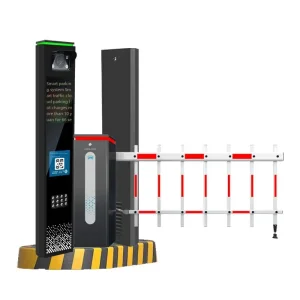
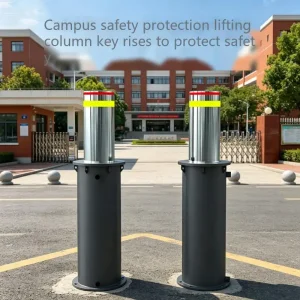
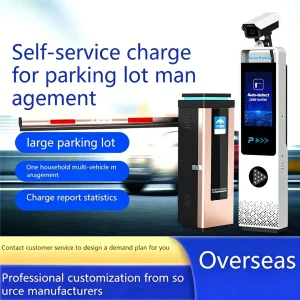
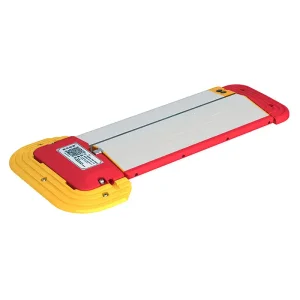
Explore our full line of perimeter bollards, pedestrian speed gate turnstiles, and automated license plate recognition infrastructure designed to pair with internal sliding doors for complete end-to-end building passage control.
Request Direct Factory Architectural CAD Drawings & B2B Pricing
Collaborate directly with Shenzhen Anrui's senior mechanical and access control engineers. We deliver customized lane assessments, CAD shop drawings, wiring diagrams, and wholesale commercial pricing within 24 hours.