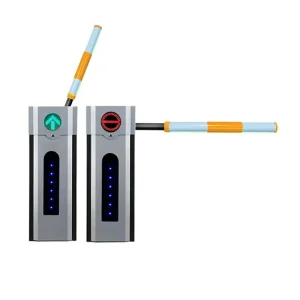
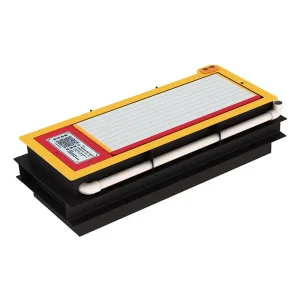
Featured Parking Swing Barriers & Access Control Systems
Discover factory-calibrated barrier mechanisms, high-definition ANPR cameras, and smart vehicle access units manufactured for enterprise deployments.
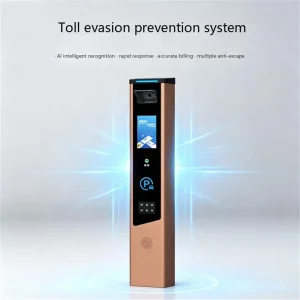
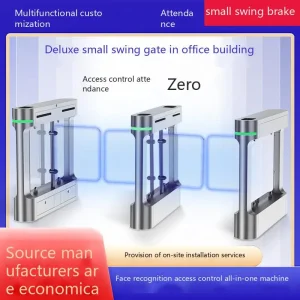
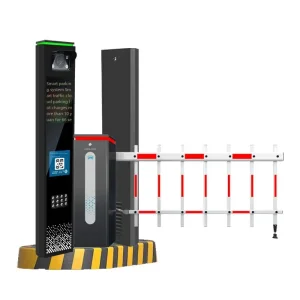
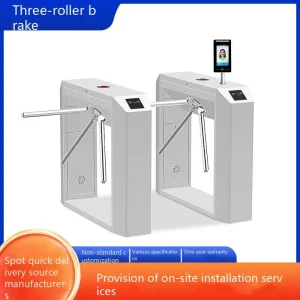
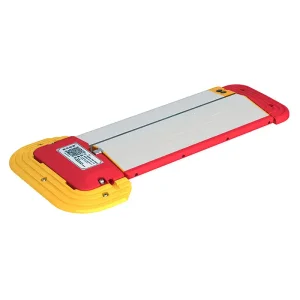
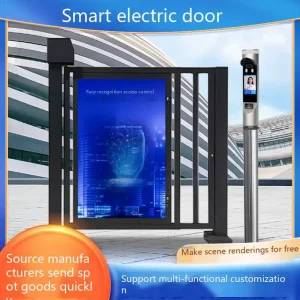
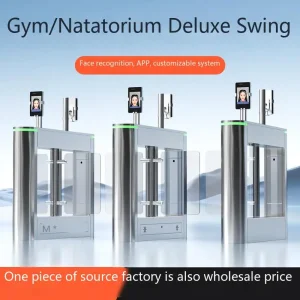

Engineering Integrity Behind "Discount" Parking Lot Swing Gates
Demystifying procurement semantics: How Chinese high-density automated manufacturing converts supply chain efficiency into direct cost reductions without compromising reliability.
The True Economics of "Discount"
In global industrial procurement, "discount" is frequently misinterpreted as de-specified components. In modern Chinese manufacturing hubs like Shenzhen, cost reduction stems from automated robotic sheet-metal punching, vertically integrated Brushless DC (BLDC) motor winding, and surface-mount technology (SMT) PCBA assembly lines. By bypassing multiple intermediary tiers, EPC contractors capture 35% to 50% capital expenditure savings while preserving tier-one industrial specifications.
Mechanical Kinematics & Longevity
Parking lot swing barriers face severe aerodynamic and structural loads. Modern swing mechanisms utilize planetary gear reducers coupled with sinusoidal arm cranks that eliminate end-of-stroke shock. This mechanical geometry achieves up to 5,000,000 Mean Cycles Between Failures (MCBF). Optical encoder feedback continuously loops position metrics back to the core microprocessor, ensuring millimetric positional accuracy during high-wind operational duty cycles.
Zero-Trust Perimeter Security
Access control is no longer isolated to simple dry-contact relay pulses. Contemporary parking lot swing gates feature encrypted Open Supervised Device Protocol (OSDP v2), Modbus-RTU, and Ethernet TCP/IP architectures. They serve as physical enforcement nodes within broader Zero-Trust physical network frameworks, seamlessly rejecting cloned credentials and isolating unverified vehicle telemetry instantly.
The Strategic Advantages of Sourcing From Chinese Manufacturing Hubs
Inside the Pearl River Delta industrial cluster: Precision CNC tooling, consolidated supply chains, and automated quality assurance workflows.
Vertical Cluster Aggregation & Material Velocity
The Greater Bay Area (Shenzhen, Dongguan, Foshan) houses the world's most concentrated electro-mechanical ecosystem. Raw cold-rolled carbon steel, SUS304/SUS316 stainless sheets, die-cast aluminium alloys, precision micro-gearboxes, and neodymium permanent-magnet stators are sourced within a 50-kilometer radius. This geographic compression eradicates transit latency, optimizes Just-In-Time (JIT) material flow, and mitigates raw material price volatility, directly benefiting international buyers through stable wholesale quotations.
Automated Fabrication & Tolerancing
Manual stamping and welding have been completely replaced with high-precision fiber laser cutting systems (accuracy within ±0.03mm) and robotic continuous TIG/MIG welding arms. Gate chassis undergo comprehensive multi-stage phosphating, electrostatic powder spraying, and thermo-curing at 200°C. This industrial regime delivers C4 to C5 marine-grade atmospheric corrosion resistance, capable of withstanding 720+ hours of continuous neutral salt spray (ASTM B117) exposure without chassis degradation.
Rigorous Life-Cycle Quality Assurance (QA)
Every swing gate chassis and BLDC controller rolling off Shenzhen production lines undergoes a continuous 72-hour full-load stress test protocol. Environmental chambers subject electronic sub-assemblies to extreme temperature swings (-35°C to +75°C) and 95% relative humidity to detect premature thermal drift. Dynamic torque measurement ensures the auto-rebound obstacle sensitivity complies precisely with international safety standards like UL 325 and EN 12453.
Turnkey OEM/ODM Engineering Specialization
Shenzhen factories excel in rapid custom engineering for international system integrators. Whether an installation demands specific chassis finishes (custom RAL powder coating), localized dual-frequency RFID housings, bespoke bi-directional articulated swing arms for low-clearance underground structures, or private-label firmware branding, native engineering teams deliver functional prototypes within 14 business days.
Technological Breakthroughs: Edge AI, BLDC Kinematics & Sensors
Examining the hardware-firmware converge: Brushless DC servo drives, millimeter-wave radar detection, and edge-native vehicle recognition.
24V/36V BLDC Vector Control
Traditional induction motors generate high heat, suffer capacitor degradation, and lack precise acceleration curves. Next-generation parking lot swing gates employ Brushless DC (BLDC) motors driven by Field-Oriented Control (FOC) vector algorithms. Operating at 24V or 36V safe low-voltage DC, these drives operate virtually silent (<45dB), consume 60% less energy during idling, and allow digital tuning of open/close velocity, deceleration dampening, and stall torque limits.
77GHz FMCW Millimeter-Wave Radar
Inductive ground loop detectors demand invasive asphalt trenching, sealants, and are prone to mechanical disruption during ground settling. Integrated 77GHz Frequency Modulated Continuous Wave (FMCW) radar modules eliminate ground-cutting entirely. Capable of classifying between pedestrians, motorized vehicles, and bicycles, FMCW radar prevents gate-strike accidents while maintaining continuous perimeter vigilance regardless of fog, rain, or snow.
Embedded Deep-Learning ANPR Fusion
Edge-AI license plate recognition cameras mount directly to the swing gate chassis or adjacent stanchions. Utilizing neural inference accelerators (NPU), these devices capture license plate numbers, vehicle make, model, and color classification within 80 milliseconds at 99.7% accuracy. Operating independently of server connectivity, the onboard whitelist triggers gate actuation autonomously during WAN disruptions.
| Performance Dimension | Legacy AC Induction Swing Systems | Modern BLDC Planetary Servo Systems | Engineering Benefit |
|---|---|---|---|
| Operating Voltage | 110V / 220V AC Direct Grid | 24V / 36V DC Isolated Step-Down | Intrinsic operator safety, UPS & solar battery bank compatible |
| Duty Cycle Rating | Intermittent (40% - 60% S3) | 100% Continuous S1 Duty | Zero thermal shutdown during sustained rush-hour traffic jams |
| Mean Cycles (MCBF) | 800,000 to 1,200,000 Cycles | 5,000,000 to 8,000,000 Cycles | Massive decrease in field service calls and operational MTTR |
| Safety Obstacle Response | Fixed mechanical clutch slipping | Instantaneous current-sensing auto-reversal | Prevents vehicular chassis damage and personal injury claims |
| Edge Connectivity | Dry Contact Relays Only | TCP/IP, RS485 Modbus, CAN-Bus, MQTT | Real-time cloud telemetry, remote firmware updates, and predictive maintenance |
Localized Deployment Scenarios: Engineered for Dynamic Traffic Profiles
Tailoring swing gate kinematics, arm geometries, and validation protocols to specific commercial, industrial, and mixed-use installations.
High-Density Commercial & Retail Parking
Shopping centers, mixed-use commercial towers, and airport parking facilities process severe vehicular throughput spikes. Swing gates deployed in these corridors utilize dual-synchronized swing configurations across wide 4.5m to 6.0m lanes. Integrated ANPR triggers opening sequences within 0.8 seconds, minimizing queue buildup. Illuminated LED swing arms transition dynamically from red to green, guiding motorists smoothly and preventing tailgate entry via high-frequency millimeter-wave interlocks.
Industrial Logistics Parks & Freight Terminals
Freight distribution centers and intermodal logistics zones encounter mixed traffic ranging from compact maintenance vehicles to Class 8 articulated flatbed trucks. Swing gate assemblies engineered for this environment incorporate heavy-duty galvanized structural steel housings and breakaway impact couplings. In the event of an inadvertent low-speed vehicle impact, sacrificial shear pins yield, protecting the primary gearbox drive and reducing repair downtime to under 15 minutes.
Gated Communities & Residential Estates
Residential communities demand whisper-quiet operations and clean architectural aesthetics. Brushless planetary gear systems maintain operating decibel profiles below 45dB, preventing noise disturbance to adjacent residences. Systems support long-range passive RFID windshield tags (EPC Gen2 UHF), allowing seamless, hands-free resident access alongside QR-code mobile credentials for invited guests.
Unattended Municipal EV Charging Hubs
With electric vehicle adoption surging worldwide, public charging bays suffer from illicit combustion-engine vehicle occupation (ICE-ing). Automated low-profile smart parking locks and localized swing flaps interface directly with charging station payment backends. The barrier mechanism lowers only upon authenticated mobile application payment or active OCPP (Open Charge Point Protocol) charge session initiation, protecting parking assets reliably.
Global Sourcing Matrix: Quality Criteria, Standards & Logistics
What international EPC contractors, municipal authorities, and security integrators must specify when ordering factory-direct access systems.
Statutory Harmonization & Certifications
Overseas compliance is non-negotiable for enterprise tenders. Factory shipments must arrive with verified CE declarations of conformity (governed by EN 12453 safety in use of power operated gates, EN 12445 test methods, and EN 60335 electrical safety). North American installations require UL 325 compliance and FCC Part 15 Class B electromagnetic compatibility verification to prevent RF interference with municipal communications.
Export Packing & Maritime Optimization
Transoceanic container shipments expose electronic hardware to heavy vibration and salt-laden humidity. Factory packaging standards require solid IPPC-certified fumigated plywood enclosures, heavy internal polyethylene moisture barriers with desiccant charges, and high-density EPE foam cradles. Knock-down (KD) arm modularity optimizes container cube utilization, reducing maritime freight landed costs by up to 28%.
Spare Parts Lifecycle & MTTR Metrics
A low initial acquisition cost is meaningless if field replacement parts are unavailable. Tier-one Chinese manufacturers guarantee 10-year spare part supply chains for all wear items, including planetary gears, optical encoder boards, and motor commutators. Quick-disconnect terminal wiring harnesses allow on-site technicians to swap complete motor-drive modules with a Mean Time to Repair (MTTR) under 20 minutes.
Technical Frequently Asked Questions (FAQ)
Precise answers to critical engineering, installation, and procurement questions asked by system integrators and distributors.
How do Brushless DC (BLDC) motors outperform traditional AC induction motors in parking swing gates?
What happens during a sudden mains power failure? What are the fail-safe mechanisms?
Why is 77GHz FMCW radar replacing traditional inductive loop detectors?
Can these swing gate systems integrate with third-party parking software and building management systems (BMS)?
How does the factory treat swing gate enclosures to prevent rust in coastal and marine environments?
What are the typical lead times and minimum order quantities (MOQ) for international procurement?
Explore Allied Smart Parking & Physical Perimeter Solutions
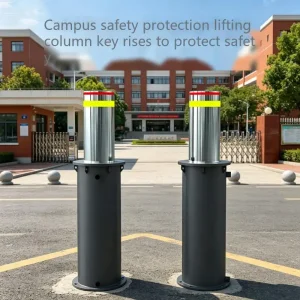
Integrate swing gates with high-speed boom barriers, hydraulic rising security bollards, smart space locks, and intelligent turnstile gates.