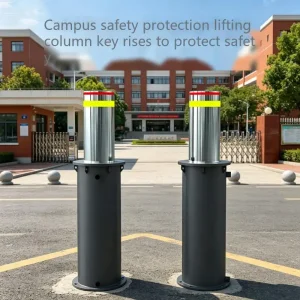
High-Performance Access Control & Perimeter Hardware
Explore direct factory-supplied physical security systems engineered for commercial, municipal, and industrial infrastructure.
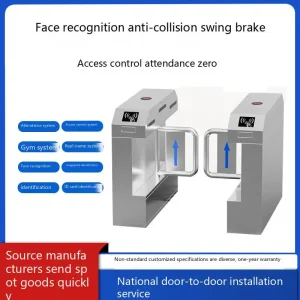
China Bridge Type Sloped Swing Gate Supplier, In Sales
View Details →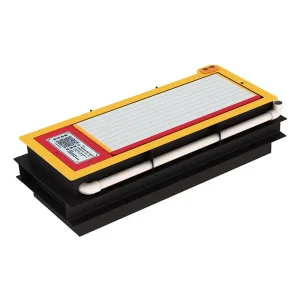
Easy-maintainable City Parking Product Factories, Price
View Details →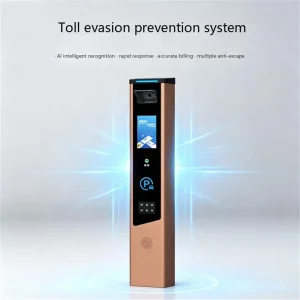
Cheap High Definition LPR Integrated AnRuitong II
View Details →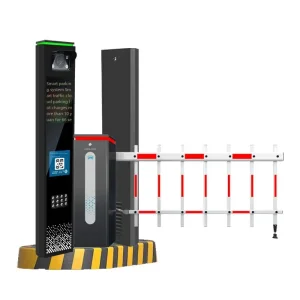
Cost-Effective Articulated DC Parking Boom Barrier Gate
View Details →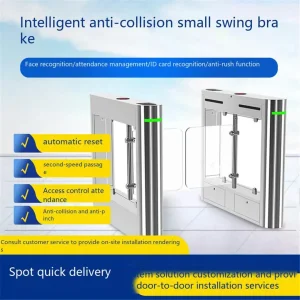
OEM Swing Gate Suppliers, Pricelist
View Details →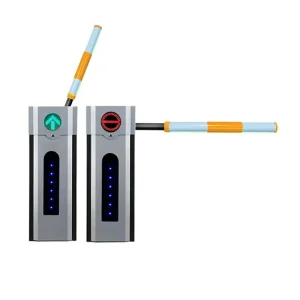
Intelligent Barrier Gate Model D11S Supplier
View Details →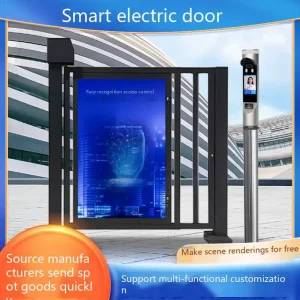
Discount Intelligent Pedestrian Advertising Gate
View Details →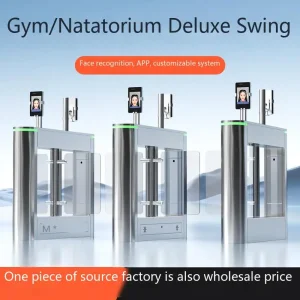
Office Building Entrance Security Access Control Turnstiles
View Details →Navigating Modern Perimeter Security: The Economics & Engineering of Hydraulic Rising Bollards
In an era characterized by evolving urban security challenges, critical infrastructure protection and hostile vehicle mitigation (HVM) have transitioned from optional safeguards to mandatory engineering standards. Commercial property developers, government agencies, municipal planners, and industrial facility managers increasingly rely on hydraulic rising bollards as the primary physical barrier against unauthorized vehicle penetration.
A hydraulic rising bollard represents the synthesis of mechanical durability, fluid dynamics, and smart electronic automation. Unlike static impact posts or manual barrier arms, automated hydraulic bollards offer dynamic access control—retracting flush with the roadway to facilitate rapid emergency vehicle access while raising within seconds to form a crash-resistant perimeter wall.
The Economic Paradigm: Cost-Effectiveness vs Total Cost of Ownership (TCO)
When procurement directors search for a cost-effective hydraulic rising bollard supplier and factory, the definition of "cost-effective" goes far beyond the initial FOB unit price. True cost-efficiency accounts for total life-cycle costs, including civil engineering installation complexity, maintenance frequencies, power consumption, structural failure rates under severe weather, and spare part availability.
Cheaper pneumatic or electromechanical bollard alternatives frequently present hidden long-term costs. Pneumatic systems demand external air compressors that suffer from moisture freezing in cold climates and high energy consumption. Electromechanical screw-driven designs often experience internal gear stripping under accidental vehicle nudges. In contrast, micro-hydraulic integrated rising bollards house the hydraulic pump and drive assembly within the sealed bollard cylinder itself. This architecture eliminates long hydraulic hose runs, minimizes fluid leakage points, drastically reduces installation labor, and provides superior operational longevity.
Technical Architecture & Structural Superiority
Understanding the mechanical metallurgy, hydraulic power unit (HPU) dynamics, and ingress protection of modern rising bollards.
Integrated Micro-Hydraulic Unit
Each bollard incorporates a self-contained, hermetically sealed hydraulic power unit. Powered by high-torque DC or AC motors, the micro-pump delivers smooth, quiet, and rapid lifting forces without requiring external hydraulic station houses or lengthy underground piping.
Heavy-Gauge Stainless Steel Construction
Manufactured using premium 304 or marine-grade 316 stainless steel with wall thicknesses ranging from 6mm to 16mm. Surface finishes include electro-polishing, brushed satin, or heavy-duty architectural powder coating to resist salt spray, UV degradation, and chemical de-icers.
Emergency Fast Operation (EFO)
For high-security applications, optional EFO systems utilize pressurized hydraulic accumulators to raise the bollard in under 1.5 seconds during a perimeter breach alert, creating an instantaneous anti-ram kinetic barrier.
| Specification Parameter | Standard Commercial Grade | High-Security Anti-Ram Grade (HVM) | Industrial OEM Custom Grade |
|---|---|---|---|
| Cylinder Diameter | 168mm / 219mm | 273mm / 325mm | Custom (114mm - 400mm) |
| Rising Height | 600mm / 700mm | 800mm / 1000mm | Custom up to 1200mm |
| Wall Thickness | 6mm - 8mm SS304 | 10mm - 16mm Carbon Steel / SS316 | Engineered multi-layer composite |
| Impact Resistance (Joules) | 65,000 J (Operational) | 650,000 J to 1,200,000 J (K4/K12 equivalent) | Tested to custom crash dynamics |
| Drive Mechanism | Integrated Hydraulic Pump | Integrated Heavy HPU / Central Pump | Solar-Assisted Micro-Hydraulic |
| Protection Level | IP68 Waterproof | IP68 Submersible | IP68 Extreme Temperature (-40°C~+70°C) |
| LED & Visual Warning | Top LED Ring + Reflective Band | High-Intensity Dual Flash LED Ring | Custom RGB LED Status Signaling |
Why Partnering with a Shenzhen China Factory Yields Competitive Advantage
The Shenzhen AIoT & Hardware Manufacturing Hub
Shenzhen, China, has evolved into the world's undisputed capital for physical security hardware, access control systems, and AIoT (Artificial Intelligence of Things) integration. By establishing direct OEM/ODM factory partnerships in Shenzhen, global buyers, integrators, and distributors unlock unprecedented cost savings without sacrificing precision engineering.
Our direct manufacturing facility leverages complete localized supply chains—from raw steel tube laser cutting, robotic seam welding, and CNC precision milling, to automated hydraulic assembly lines and environmental testing chambers. This tight industrial clustering drastically lowers component sourcing lead times and tooling costs.
Strategic Supply Chain Advantage
Eliminating third-party trading intermediaries allows overseas distributors to achieve margins 30% to 50% higher while receiving direct engineering support for complex custom tenders.
Rigorous ISO9001 & CE Quality Control
Every rising bollard undergoes 100% full-cycle testing prior to shipment. Tests include 72-hour continuous hydraulic pressure endurance, IP68 total water submersion checks, dynamic load testing, and circuit insulation safety validations compliant with CE and RoHS directives.
Flexible OEM & ODM Customization
We provide full tailor-made capabilities: custom dimension engineering, client brand logo laser engraving, bespoke LED lighting behaviors, specialized hydraulic fluid formulations for arctic or tropical climates, and custom access controller protocol integration (Wiegand, RS485, Modbus, TCP/IP).
Enterprise Procurement Criteria & TCO Evaluation Matrix
A structured framework for B2B buyers, EPC contractors, and security consultants evaluating bollard suppliers.
1. Initial CAPEX vs Life-Cycle OPEX
Initial purchase cost accounts for only 40% of a bollard system's lifetime cost. Selecting integrated micro-hydraulic bollards minimizes excavation depth, cuts concrete foundation requirements by up to 35%, and eliminates long hydraulic tube trenching labor.
2. Environmental Operating Range
Global projects demand thermal adaptability. Ensure your supplier uses synthetic hydraulic oils rated for wide temperature swings (-40°C to +70°C) and incorporates built-in heating elements for sub-zero climates or dual-fan thermal relief for desert installations.
3. Fail-Safe & Fail-Secure Mechanics
In power outages, high-security facilities require manual mechanical override valves or UPS battery backup systems to either maintain the bollard in the raised defensive state or safely lower it for emergency vehicle evacuation pathways.
Meeting Regional Standards & Providing On-the-Ground Assurance
Deploying physical security barriers across international borders requires strict adherence to regional safety codes, electromagnetic compatibility standards, and impact certifications. As an established global manufacturer, our rising bollard systems are engineered to comply with world-recognized benchmarks:
- European Union CE Marking & Machinery Directive: Full compliance with EN 60204-1 safety of machinery, EN 61000-6-1/3 electromagnetic compatibility (EMC), and Low Voltage Directive (LVD).
- Crash Testing Standards Equivalence: Designed and simulated according to PAS 68, IWA 14-1, and ASTM F2656/F2656M standards for vehicle crash testing.
- Ingress Protection Verification: Certified IP68 rating by third-party testing laboratories, ensuring flawless operation even when underground foundation pits experience complete water flooding.
Localization & Technical Enablement for Overseas Partners
We back our international distributor network with 3D CAD foundation drawings, step-by-step installation video manuals, multi-lingual wiring diagrams, and 7x24 remote engineering support via video link to ensure smooth site commissioning.
Technological Innovations & Smart City Ecosystems
How rising bollards are evolving from standalone physical posts into connected, intelligent perimeter sensors.
LPR & AI Camera Integration
Modern hydraulic bollards interface directly with License Plate Recognition (LPR) camera systems and AI-powered vehicle classification engines. Whitelisted vehicles trigger automatic bollard lowering without driver intervention, accelerating traffic flow in gated communities and corporate campuses.
IoT Cloud Telemetry & Predictive Maintenance
Embedded pressure transducers, temperature sensors, and stroke counters feed real-time operational metrics to centralized Smart City management dashboards. Maintenance teams receive automated alerts for oil replenishment, pressure drops, or sensor misalignment before operational downtime occurs.
Target Deployment Scenarios for Rising Bollard Systems
Government & Embassies
High-security anti-ram bollards deployed at outer perimeter checkpoints to neutralize high-speed vehicular attacks and protect diplomatic personnel.
Commercial Plazas & Malls
Aesthetic stainless steel bollards regulating delivery truck access during morning hours while creating open, pedestrian-friendly walking zones during peak shopping times.
Urban Pedestrian Zones
Automated rising bollards integrated with traffic lights and emergency services transponders, allowing ambulances and fire trucks instantaneous access while blocking urban commuters.
Logistics & Industrial Parks
Heavy-duty, high-frequency bollards built to withstand constant heavy vehicle passage, guiding freight transport into designated loading bays.
Deep-Dive Technical FAQ for Procurement & Engineering Teams
Explore Additional Smart Entry & Security Products
Direct factory supply for barrier gates, turnstiles, LPR equipment, and intelligent parking management systems.
Intelligent Pedestrian Advertising Gate Exporter
View Details →
Entrance Attendance Speed Gate Swing Barrier Turnstiles
View Details →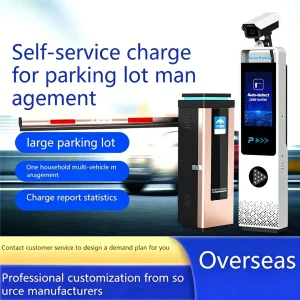
High-Def LPR Machine Dolphin I Model Exporters
View Details →
Intelligent Barrier Gate Model D03 Exporters
View Details →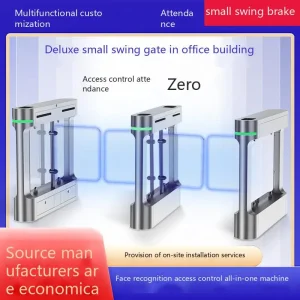
Swing Gate Image Reference Suppliers, In Sales
View Details →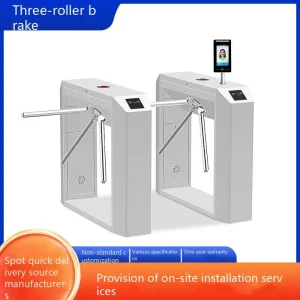
Smart Fast Speed Swing Industrial Gym Turnstile Gate
View Details →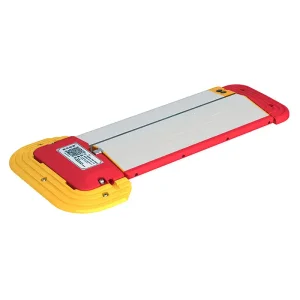
Scan-to-Pay Shared Community Smart Parking Lock
View Details →