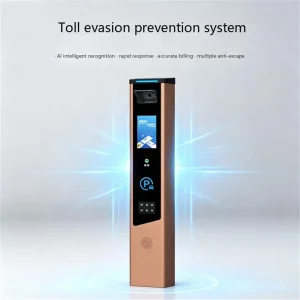
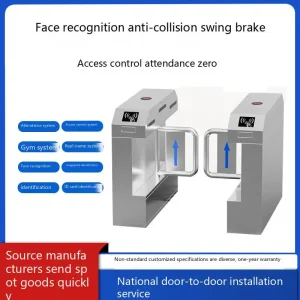
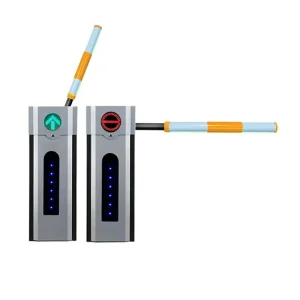
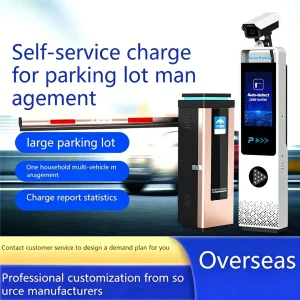
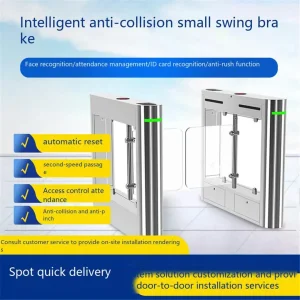
High-Performance Perimeter & Access Automation Matrix
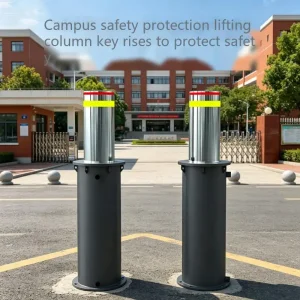
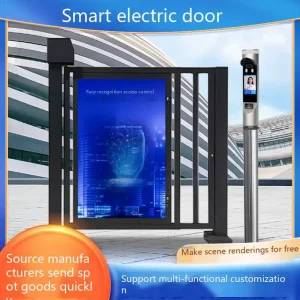
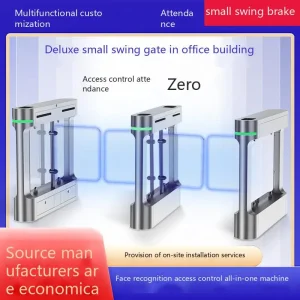
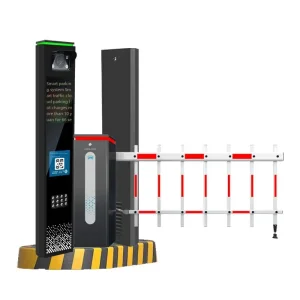
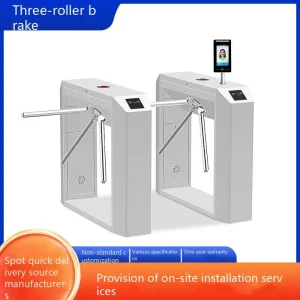
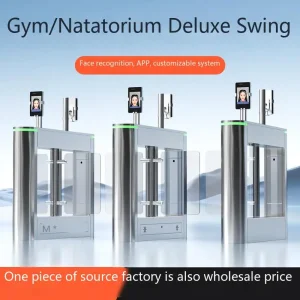
Featured vehicle control barriers, anti-ram bollards, and rapid transit swing portals exported directly from our automated Shenzhen manufacturing facilities.
The Evolution of Concealed Sliding Door Systems in Commercial Architecture
How the convergence of minimalist architectural demand, structural integration, and embedded mechatronics is redefining commercial entryways globally.
North American Commercial Real Estate
Driven by ADA compliance, ASHRAE 90.1 energy envelope standards, and Class-A commercial finishes, North American developers are retrofitting corporate offices with hidden pocket sliding operators to recover usable floor space while eliminating visible mechatronic hardware.
- Zero-sightline pocket installation standards
- Stringent UL 325 and ANSI/BHMA A156.10 certification requirements
- Integration with cloud-based building access and credential telemetry
European Union & UK Standards
The European market places premium emphasis on thermal break performance, acoustic rating (Rw values up to 42 dB), and micro-gap concealed brush systems compliant with EN 16005 safety-in-use criteria for pedestrian automatic doors.
- Fail-safe redundant monitored motor drives for emergency egress
- Strict thermal conductivity compliance (low U-value profiles)
- Acoustic interlock pockets for cleanrooms and medical campuses
Middle East & Asia-Pacific Expansion
Rapid mega-infrastructure growth in the GCC and APAC regions demands rugged concealed sliding gates and automated architectural portals that resist sand ingress, extreme ambient temperatures (up to 55°C), and continuous 24/7 duty cycles.
- Dustproof IP65 concealed brushless servomotors
- Integration with long-range vehicle UHF RFID and perimeter bollards
- Heavy-load hanging hardware capable of carrying 300kg+ double-glazed leaves
China's Industrial Ecosystem: Why Shenzhen Exporters Deliver Unmatched Cost-Efficiency
A technical deconstruction of Pearl River Delta hardware clustering, automated tooling, and high-precision motor manufacturing that powers global tier-1 supply chains.
Cluster Component Sourcing
Within a 30-kilometer radius in the Greater Bay Area, our factories procure 6063-T6 aerospace aluminum alloys, precision micro-ground steel bearings, neodymium permanent magnets, and optical encoders, minimizing transit lead times and intermediate markups.
Automated SMT & CNC Tooling
Surface-mount technology (SMT) lines assemble door controller logic boards with 99.98% first-pass yields. High-speed 5-axis CNC machines mill concealed overhead tracks and heavy-duty carriage assemblies with dimensional tolerances within ±0.02 mm.
End-to-End In-House Testing
Every motor drive and track assembly undergoes continuous cycle testing (tested up to 3,000,000 cycles MTBF), environmental thermal shock chamber verification (-25°C to +70°C), and acoustic noise profiling maintaining quiet operation below 45 dB(A).
Direct Freight Logistics
Located immediately adjacent to Shenzhen, Guangzhou, and Hong Kong ports, containerized shipments bypass middleman demurrage. Multi-tier crating protects precision-milled aluminum tracks against bending and salt-fog corrosion during ocean transit.
High-Value Architectural Applications & Mission-Critical Scenarios
Analyzing the deployment dynamics of concealed sliding door mechanisms across specialized commercial, institutional, and high-security installations.
Corporate Boardrooms & Executive Suites
Where acoustic privacy and pristine aesthetics take precedence, concealed automatic pocket doors slide completely flush into drywall partitions. Integrated micro-switches disable conference audio recording systems until the door leaf reaches 100% acoustic seal latching.
- Acoustic rating: STC 38-42 compliant perimeter brush tracks
- Silent magnetic levitation (Maglev) or low-vibration BLDC servomotors
- Flush push-to-exit illuminated capacitive sensors
Cleanrooms & Pharmaceutical Facilities
Hospital operating theaters, semiconductor fabrication plants, and pharmaceutical containment zones require air-tight interlocking sliding doors. Concealed overhead systems prevent particulate accumulation on track mechanisms while maintaining positive pressure seals.
- Hermetically sealing drop-and-slide carriage kinetics
- No-touch infrared radar wave sensors for zero-contact hygiene
- Interlocking logic: Door B cannot open until Door A completes cycle
Perimeter Security & Automated Sluice Portals
High-security correctional facilities, cash handling depositories, and VIP vehicle interlocks deploy heavy-duty concealed sliding gate automation where tracks are concealed underground or within armored structural pillars to prevent tampering and vehicle ramming.
- Interfacing with hydraulic anti-ram rising bollards and road blockers
- Anti-climb armored leaf compatibility up to 1,200 kg
- Manual bypass clutch with high-security mechanical key interlocks
Total Cost of Ownership (TCO): Western Tier-1 vs. Direct Shenzhen Exporter
A rigorous financial and engineering comparison evaluating upfront capex, operational lifecycle expenses, and spare part accessibility over a 10-year facility horizon.
| Evaluation Parameter | Western Tier-1 Automation Brands | Shenzhen Direct Engineering Exporters | Strategic Advantage / Procurement Gain |
|---|---|---|---|
| Initial Hardware Capex | $3,800 - $6,500 per concealed lane | $1,600 - $2,900 per concealed lane | 45% to 58% direct capital reduction on tender packages |
| Drive Motor Architecture | Proprietary brushed or standard BLDC | High-efficiency BLDC or Maglev linear drive | Longer service life, lower heat generation, 0 carbon brush dust |
| BMS Protocol Compatibility | Often locked behind closed licencing gateways | Standard RS485 / Modbus / dry contacts | Seamless native connection to third-party access & LPR systems |
| Custom Profile Extrusion | Requires massive MOQs, 12-16 week tooling | Agile tooling: custom profiles within 3 weeks | Adaptable to bespoke wall cavity depths and ceiling configurations |
| Spare Parts Availability | High margin markups (300%+ above manufacturing cost) | Direct factory component pricing, open global logistics | Reduces 10-year lifecycle maintenance budget by over 60% |
| Compliance & Field Safety | CE, UL 325, EN 16005 tested | CE, UL 325, EN 16005 certified production lines | Full regulatory conformity for North American & EU installations |
Emerging Technology Trends in Concealed Door & Access Control Integration
From linear magnetic drives to AIoT predictive telemetry, explore the cutting-edge innovations transforming commercial entrance management.
1. Magnetic Levitation (Maglev) Kinetics
Traditional sliding door systems rely on rotating toothed belts, gearboxes, and roller bearings that experience mechanical friction and wear over time. Next-generation concealed sliding doors utilize non-contact linear magnetic tracks. The door leaf floats along electromagnetic stators, producing zero friction, near-zero mechanical sound (<35 dB), and an operational life exceeding 5,000,000 cycles with virtually zero roller wear.
2. AIoT Edge Diagnostic Telemetry
Modern concealed door controller units feature embedded microcontrollers capable of measuring instantaneous motor current draw, cycle velocity variations, and track resistance. When a floor seal encounters friction or foreign matter, the onboard AI algorithm flags a predictive maintenance alert via MQTT or Modbus before an unexpected system stall can trap occupants or compromise building security.
3. Unified Pedestrian & Vehicle Interlock
Enterprise facilities increasingly integrate concealed sliding doors with license plate recognition (LPR) cameras, pedestrian swing barrier turnstiles, and automatic bollards. A single security logic orchestrates perimeter access: an approved vehicle triggers an exterior gate, followed by the silent pre-opening of the concealed lobby sliding portal as the authorized driver approaches.
RFP Specifications Checklist for Engineering & Procurement Directors
Crucial mechanical, electrical, and life-safety verification parameters required before finalizing commercial export contracts.
Emergency Egress & Fail-Safe Modes
Verify whether the operator includes an internal mechanical battery-buffered fail-open capacitor or a mechanical breakaway carriage system that allows door leaves to pivot outward at 90 degrees under a manual push force < 67N during power loss.
Thermal & Acoustic Ingress Isolation
Demand certified laboratory test reports on dynamic perimeter brush gaskets and concealed drop-down thresholds. Acoustic isolation ratings should meet STC 35 or higher for executive boardrooms and medical treatment areas.
Controller Duty Rating & Overcurrent
Ensure the brushless DC servomotor features continuous (100%) duty rating without thermal throttling. The motor driver must feature anti-pinch torque reversal within 150 milliseconds upon contacting an obstacle.
Packaging & Structural Track Rigidity
Export packaging must specify reinforced multi-ply wooden crates with internal steel-bracing to prevent track deflection exceeding 0.5 mm over 4,000 mm spans during long-haul sea freight and intermodal handling.
Comprehensive FAQ: Technical & Commercial Inquiries
Direct answers from our engineering team regarding concealed sliding door mechanics, export certifications, customization options, and global deployment logistics.
What distinguishes a concealed sliding door system from standard surface-mounted automatic sliding doors?
How are emergency egress and fire alarm integrations handled in concealed installations?
Can a concealed sliding system accommodate heavy acoustic double-glazed or blast-resistant panels?
How do you service or replace concealed drive motors once the drywall or ceiling is closed?
What are the lead times for custom-dimensioned concealed tracks shipped from China to international ports?
How does your export warranty and on-site commissioning support work for overseas contractors?
Complementary Smart Lane & Access Automation Hardware
Integrate your concealed entrance doors with intelligent vehicle barrier systems, LPR cameras, and precision pedestrian gates to create an unified entry management network.