
Featured Commercial Barrier & Intelligent Entrance Lineup
Factory-direct access systems engineered for continuous 24/7 duty cycles, high-frequency parking facilities, and high-security enterprise installations worldwide.
State of the Industry: The Shift Toward Cost-Effective Commercial Barrier Gates
In an era of hyper-connected smart cities and autonomous logistics, perimeter vehicular management is undergoing a structural paradigm shift from mechanical isolation to intelligent cyber-physical nodes.
1. Total Cost of Ownership (TCO) Re-engineering
For decades, commercial perimeter managers treated barrier gates as basic civil hardware amortized over rigid depreciation schedules. Traditional AC motor architectures suffered from thermal stress, carbon brush degradation, and high hydraulic linkage failure rates. Modern commercial barrier gates powered by 24V Brushless Direct Current (BLDC) and Permanent Magnet Synchronous Motors (PMSM) fundamentally redraw the economic equation.
By eliminating physical gear friction and mechanical limit switches, modern systems reduce field maintenance intervention by up to 82%. A true cost-effective supplier does not merely optimize factory bill-of-materials (BOM); they minimize operating expenditure (OPEX) across the entire 10-year deployment horizon through reduced electrical draw (as low as 150W peak) and modular component replacement architectures.
2. Convergence of AI Vision & Radar Detection
The historical reliance on inductive ground loop detectors is rapidly declining due to asphalt micro-fracturing, labor-intensive trenching, and sensitivity to geological freeze-thaw cycles. Leading barrier systems now employ native 77GHz to 79GHz millimeter-wave (mmWave) anti-smash radars paired with edge-computed machine vision.
This sensor fusion distinguishes accurately between human pedestrians, non-motorized two-wheelers, passenger vehicles, and ultra-high heavy trailers. The economic advantage is immediate: zero road surface excavation, half-day installation timelines, and near-zero false-trigger boom arm impacts, preventing costly liability incidents and motor clutch damage.
3. Cloud-Connected Edge Telemetry & MQTT Protocols
Modern commercial boom gates are no longer standalone islands of access control. Through IoT microcontrollers, barrier gates continuously stream operational telemetry: motor winding temperature, supply voltage ripple, boom arm balance coefficient, and cycle accumulation. Utilizing lightweight publish-subscribe protocols like MQTT and HTTP RESTful APIs, facilities directors can predict spring fatigue before mechanical failure happens.
For system integrators, native connectivity translates to remote firmware flashing (OTA), adaptive speed recalibration without visiting the site, and immediate diagnostic alerts sent directly to enterprise computerized maintenance management systems (CMMS).
Global Enterprise Procurement Requirements: Capex vs. Opex Analysis
Navigating international bidding documents, municipal safety mandates, and cross-border engineering parameters requires granular technical harmonization.
| Evaluation Parameter | Legacy AC Mechanical Barriers | Modern DC Servo / BLDC Intelligent Barriers | Direct Operational Impact & ROI |
|---|---|---|---|
| Motor Lifecycle (MTBF) | 500,000 – 1,000,000 cycles | 5,000,000 – 10,000,000 cycles | 10x Longer Service Life Lower capital replacement frequency. |
| Operating Speeds | Fixed 3.0s to 6.0s | Configurable 0.6s to 6.0s (sine-wave curve) | Zero Congestion Eliminates peak morning vehicle tailbacks. |
| Anti-Smash Protection | Pressure wave rubber strips + Ground Loops | 77GHz Millimeter-Wave Radar + Digital Torque Sensing | Zero Vehicle Damage Immediate rebound within 0.1s of obstacle contact. |
| Extreme Climate Tolerance | Requires external heater/cooling fan (-20°C max) | Cold-start tested to -40°C, operates to +75°C | Global Adaptability Direct deployment in Arctic, Gulf, or Tropical zones. |
| Corrosion Resistance | Cold-rolled steel + single-layer spray (240h salt spray) | 2.0mm Hot-dip Galvanized steel + AkzoNobel powder (1000h) | C5 Coastal Rating Resists maritime salt fog and chemical industrial air. |
| Emergency Protocols | Manual hand-crank clutch only | Auto-arm drop / Auto-rise on power cut + Battery backup | NFPA / EN Fire Safety Unimpeded emergency vehicle ingress/egress. |
Tender Documentation Rigor
Global EPC contractors and tier-1 security distributors require more than just datasheets. Enterprise procurement requires validated test bench reports, including wind tunnel survivability certificates (capable of sustaining Beaufort Scale 10 to 12 winds without mechanical arm snapping), CE EN 12453 impact safety compliance, and UL 325 door/gate safety certifications.
Integration Stack Agility
Hardware must interface out-of-the-box with third-party ecosystems. Commercial barrier gates exported to international markets require standardized communication headers: Wiegand 26/34, RS485 Modbus-RTU, TCP/IP Ethernet terminals, optical isolation dry contacts, and open SDKs compatible with Milestone, Genetec, Hikvision, and custom parking ERP software.
Macro Industry Architectural Solutions
Tailoring access speed, boom dynamics, anti-collision breakout joints, and security layers to demanding project environments.
Intermodal Logistics Parks & Ports
Operational Challenges: Severe lane congestion, heavy chassis vibration, extended lane widths (up to 6 to 8 meters), continuous tractor-trailer flow, and abrasive environmental dust.
Engineered Solution: Heavy-duty commercial barrier gates featuring reinforced octagonal aluminum booms, integrated auxiliary support stanchions, and dual-direction radar anti-drop modules. Combined with long-range 900MHz passive UHF RFID readers and ultra-wide dynamic range LPR cameras capable of identifying dirty, obscured container chassis plates.
Mixed-Use Commercial & Retail Hubs
Operational Challenges: Extreme morning and evening commuter rush hours, multi-tiered parking tariffs, mixed pedestrian-vehicle friction, and architectural aesthetic demands.
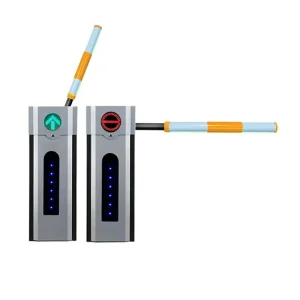
Engineered Solution: High-speed 0.8s to 1.5s sinusoidal barrier gates with integrated LED boom arm illuminating strips that transition from red (stop) to green (go). Utilizing dual-panel advertising display cabinets that generate secondary digital-out-of-home (DOOH) revenue for asset managers while integrating seamlessly with QR-code mobile payment kiosks.
Corporate Campuses & High-Security R&D Centers
Operational Challenges: Strict perimeter denial, vehicle tailgating mitigation, executive automated priority lanes, and visitor audit compliance.
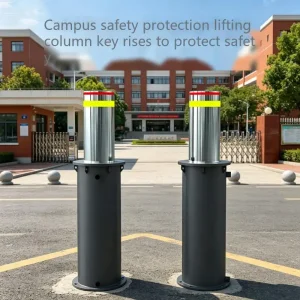
Engineered Solution: Dual-barrier interlock (air-lock sally port) systems integrated with hydraulic crash-rated rising bollards. The entry gate opens solely upon dual-factor biometric or LPR verification, maintaining physical isolation until the under-vehicle inspection system (UVIS) completes comprehensive contraband and explosive screening.
Localization Support, Global Compliance & Quality Engineering
How Shenzhen manufacturing precision aligns with demanding international quality standards, extreme climate durability, and overseas logistics protocols.
1. Electrical Grid Adaptability
Exporting equipment across 80+ countries requires resilience against volatile electrical infrastructures. Industrial barrier gate chassis utilize universal wide-voltage switched-mode power supplies (SMPS) operating flawlessly between 100V AC to 264V AC at 50/60Hz. Integrated surge arresters withstand voltage spikes up to 4kV, protecting sensitive microcontrollers from lightning-induced back-EMF common in developing industrial regions.
2. Extreme Weather Metallurgy
From the blistering +55°C heat of Middle Eastern deserts to -40°C Nordic subzero freezes, physical materials must not warp or embrittle. Cabinets are laser-cut from high-tensile 2.0mm SPCC galvanized steel sheets, treated with an acid-wash phosphating bath, and coated with electrostatically applied thermo-hardened fluorocarbon powder paint that resists UV degradation and ASTM B117 salt spray exposure for over 1,000 continuous hours.
3. Heavy-Duty Export Packaging
Maritime shipping subjects cargo to rough handling, humid ocean air, and multi-week cargo hold vibration. Every barrier gate undergoes hermetic vacuum moisture wrapping, high-density custom-molded polyethylene foam cushioning, and is secured inside heavy-duty ISPM-15 fumigated solid plywood crates with reinforced metal edge protectors, preventing misalignment of mechanical drive shafts during transit.
Technology Roadmap: The Future of Autonomous Vehicular Access
The technological roadmap charting the transformation of physical barrier hardware into autonomous, self-healing cyber-physical entry terminals.
Integrated Edge Neural Processing
Transition from external PC-based parking management to onboard NPU-driven barrier motherboards capable of running multi-exposure neural models directly at the gate, achieving sub-100ms plate verification and frictionless pass-through.
Matter & Unified IoT Protocols
Elimination of proprietary RS485 communication protocols in favor of Thread and Matter over IPv6, enabling barrier gates, bollards, speed gates, and smart street lighting to interact natively on an encrypted peer-to-peer security bus.
Zero-Carbon Energy Harvesting
Ultra-low power sleep-mode BLDC motor drivers integrated with photovoltaic solar canopies and regenerative deceleration braking, allowing autonomous off-grid perimeter operation for remote mining, oil fields, and logistics checkpoints.
Autonomous V2I Direct Handshake
Vehicle-to-Infrastructure (V2I) microwave DSRC and 5G RedCap handshakes bypassing physical plate scanning entirely; authenticated autonomous delivery drones and self-driving fleets negotiate secure instant corridor passage via cryptographically signed tokens.
Frequently Asked Technical Questions (FAQ)
Definitive answers to the most common engineering, integration, and procurement inquiries submitted by security architects and international distributors.
What differentiates a commercial DC brushless servo barrier from standard residential gate operators?
How does the barrier gate prevent smashing vehicles or striking pedestrians without cutting road loops?
Can these commercial barrier gates operate reliably during power grid outages or fluctuations?
What parameters must be calculated when selecting straight boom vs. articulated folding vs. fence arms?
How is license plate recognition (LPR) synchronized with barrier gate actuation to ensure zero latency?
What OEM / ODM customization capabilities are provided for international systems integrators?
Integrated Perimeter Access & Parking Automation Hardware
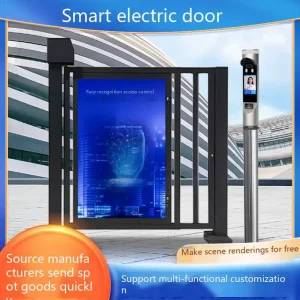
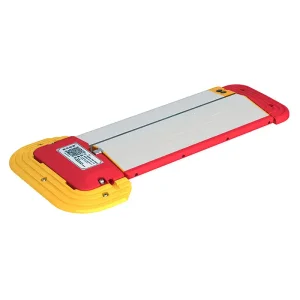
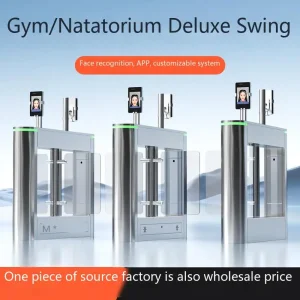
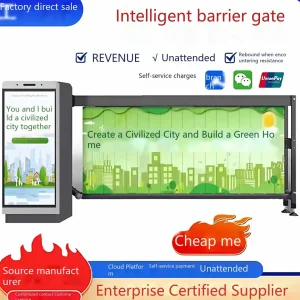
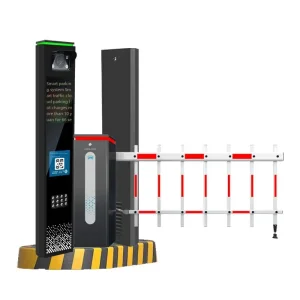
Explore our complete ecosystem of automated speed barriers, smart parking locks, hydraulic rising bollards, and pedestrian control turnstiles engineered for high-frequency performance.
Engage Our Access Control System Engineers
Request turnkey CAD lane schematics, electrical wiring diagrams, factory-direct OEM/ODM pricing, and comprehensive tender documentation tailored to your local access standards.