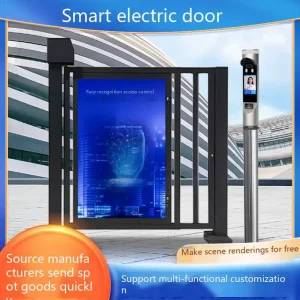
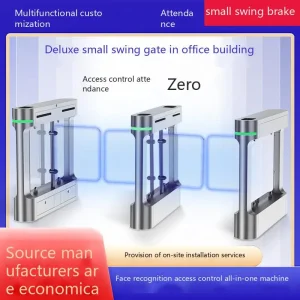
Featured Vehicle Control & Speed Barrier Deployments
Engineered for direct lane pairing with rolling gates and security perimeters across high-throughput commercial and industrial choke points.
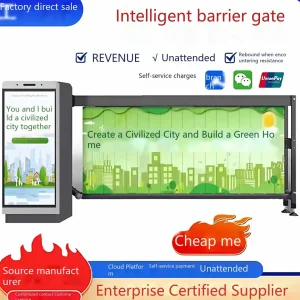
Chain Link Fence Rolling Gates in Modern Industrial Security
Across global supply chains, logistics hubs, defense compounds, and utility facilities, the chain link rolling gate remains the most economically resilient, operationally reliable perimeter barrier solution ever deployed.
Spatial Footprint Optimization
Unlike traditional cantilever gates requiring a 1.5× counter-balance tail extension or swing gates demanding immense radial arc clearance, pipe-track rolling gates slide parallel directly alongside the adjacent fence line. This provides 100% net opening accessibility even in confined freight corridors.
Total Cost of Ownership (TCO)
Rolling gates deliver up to a 45% reduction in initial capital expenditure compared to heavy structural cantilever slide units. Standardized Schedule 40 galvanization, easily replaceable double-wheel assemblies, and pipe-track setups reduce ongoing maintenance overhead to near-zero operating costs.
Aerodynamic & Severe Wind Resistance
Constructed from high-tensile hot-dip galvanized wire woven into diamond mesh aperture profiles (typically 2-inch or 1-inch mini-mesh for anti-climb), rolling gates exhibit over 85% wind permeability. They eliminate motor strain, track derailment, and chassis bending common during cyclonic gust events.
Engineering Blueprint: ASTM Standards & Metallurgy
Evaluating physical component integrity, metallurgical protection, and friction-coefficient dynamics for automated rolling barriers.
ASTM A392 & ASTM F1083 Compliance
Frames are fabricated from Schedule 40 cold-formed, induction-welded structural steel tubing (outer diameter 1.900" to 2.375"), post-dip hot galvanized with a minimum 1.8 oz/ft² (550 g/m²) zinc coating to prevent subterranean rust creep and atmospheric acid etching.
Double-Wheel Assembly Dynamics
The ground carrier relies on dual 6-inch to 8-inch solid rubber or polyurethane-treaded cast iron core wheels. Equipped with sealed double ball bearings (ABEC-3 or higher) and grease zerks, they achieve rolling friction coefficients under μ=0.03 even across uneven aggregate concrete.
Rear Universal Pipe Track Rollers
Malleable iron pipe track rollers with safety retainers clamp directly onto 1-5/8" or 2" schedule pipe tracks welded or bracket-secured along the support posts. This ensures absolute lateral stability against high wind loads and lateral ram pressures.
B2B Quotation Matrix & Specification Parameters
Procuring chain link rolling gate systems requires understanding the exact bill-of-materials (BOM) elements that influence factory export pricing, container stowage, and total installation costs.
| Clear Opening Width | Gate Frame Tubing (OD) | Track & Hardware Spec | Chain Link Fabric Gauge | Estimated Base FOB Cost | Recommended Automation Pair |
|---|---|---|---|---|---|
| 12 to 16 Feet (Standard Utility) | 1.900" Schedule 40 Galv. | Dual 6" Rubber Wheel + 2 Track Rollers | 11-Gauge Galvanized Core | $420 – $680 | Brushless DC Boom / Slide Actuator (Model D03) |
| 18 to 24 Feet (Commercial Freight) | 2.375" Pipe with Truss Rods | Dual 8" Poly Wheel + 3 Pipe Rollers | 9-Gauge Commercial Grade | $750 – $1,150 | Industrial Rack-and-Pinion Drive + Photocell Array |
| 26 to 36 Feet (Heavy Logistics Double) | 2.875" Structural Steel + Cross Truss | Heavy-Duty Ground Bogie + Dual Pipe System | 9-Gauge or Mini-Mesh Anti-Cut | $1,400 – $2,250 | Continuous High-Speed DC Drive + LPR Reader System |
| Custom Anti-Intrusion Spec | Schedule 80 Reinforced + Barbed Riser | Cast Steel Wheels + High-Security Ground Guide | 6-Gauge Heavy Vinyl-Coated Core | Quotation on Request | Integrated Rising Bollard + Advertising Boom Setup |
Holistic Perimeter Security Architecture
A manual or motorized chain link rolling gate should never operate as an isolated island. In modern smart cities, airports, and multi-tenant logistics centers, it serves as the outer boundary barrier layer.
Layer 1: AI License Plate Recognition (LPR)
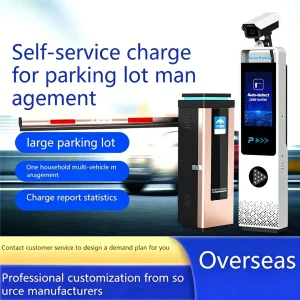
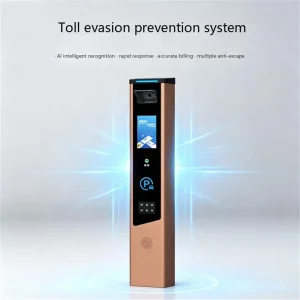
High-definition OCR cameras read arriving carrier freight plates at distances of 15 to 25 meters, automatically querying cloud whitelists to trigger the rolling gate or secondary barrier before the vehicle reaches a full dead stop.
Layer 2: Fast-Action Secondary Boom Gates
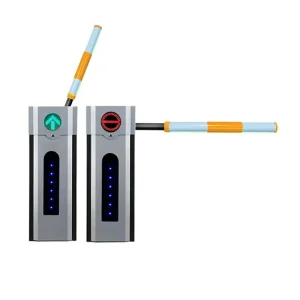
During peak daytime shifts, the heavy rolling gate remains latched open while a rapid 1.5-second intelligent barrier gate (such as Anrui Model D03 or D11S) regulates single-vehicle transit, preventing tailgating and reducing mechanical wear.
Layer 3: Hydraulic Bollard Anti-Ram Backup
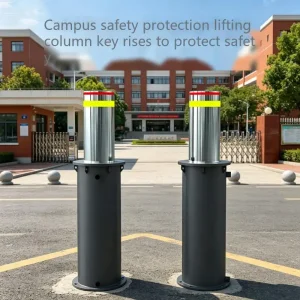
For government facilities, sensitive substations, and bonded warehouses, integrated automatic hydraulic rising bollards install directly inside the rolling gate's sweep line, providing PAS 68 / K12 anti-ram stopping power against rogue intrusions.
Next-Generation Rolling Gate Roadmap
Anticipating autonomous logistics, edge computing diagnostics, and carbon-neutral perimeter operations.
IoT Edge Predictive Vibration Monitoring
Integrated MEMS accelerometers attached to the wheel axle bogie and top track roller continuously stream acoustic and harmonic telemetry over LoRaWAN or NB-IoT. By identifying bearing micro-pitting or track warping before mechanical seizure occurs, maintenance tickets are dispatched automatically without lane downtime.
Solar Off-Grid Supercapacitor Actuation
Remote infrastructure often lacks stable 220V/110V grid drops. Future rolling gates utilize low-friction carbon-reinforced composite rollers coupled with hybrid solar-supercapacitor DC drives, providing up to 500 complete open-close duty cycles during extended overcast winter storms.
Frequently Asked Technical & Commercial Questions
Expert responses compiled by Anrui’s perimeter automation engineering group for EPC contractors, specifiers, and procurement officers.
What distinguishes a pipe-track rolling gate from a cantilever slide gate?
Can a chain link rolling gate be automated with modern access control?
How do uneven ground and deep winter snow impact rolling gate performance?
What anti-corrosion specifications ensure a 20+ year lifespan in coastal sites?
Access Sensors, Parking Automation & Recognition Systems
High-precision smart parking, optical guidance, and access equipment designed to complete your integrated enterprise perimeter infrastructure.