
Direct Integration Catalog
Featured Automated Lane & Recognition Systems
Pre-calibrated edge computing modules, high-definition ANPR cameras, and rapid barrier actuation gates manufactured in Guangming, Shenzhen for turnkey international deployments.
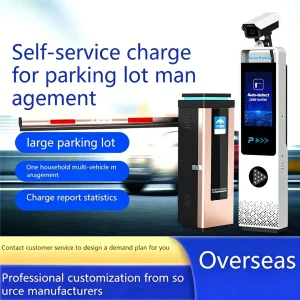
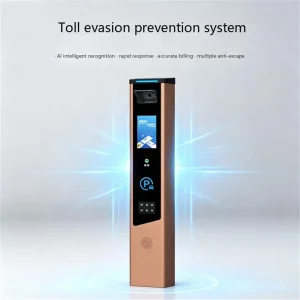
Buy Discount High-def license plate recognition machine Dolphin I model Exporters, In Sales
View Product & Price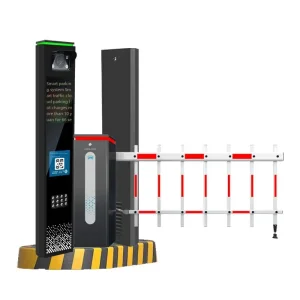
Cost-Effective Car Parking And Toll Access Control Automatic Articulated DC Parking Boom Barrier Gate With Long Range Rfid Reader Suppliers, Factory
View Product & Price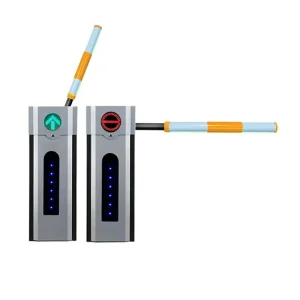
Easy-maintainable Intelligent Barrier Gate Model D11S Supplier, Quotation
View Product & Price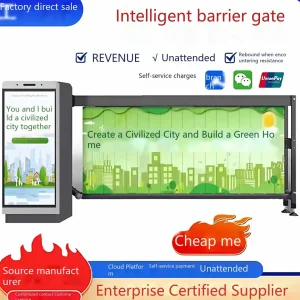
Buy Discount Intelligent Barrier Gate Model D03 Suppliers, Exporters
View Product & Price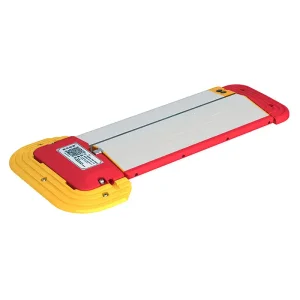
Cheap Scan to pay charging pilecommunity parking lock automatic sensing,electric shared scanning paymentanti-oil car occupying parking space Exporter, Pricelist
View Product & Price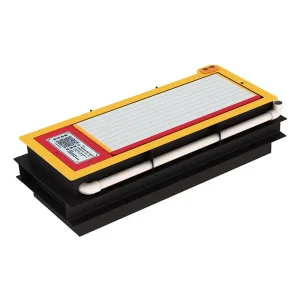
Easy-maintainable City Parking Product Factories, Price
View Product & Price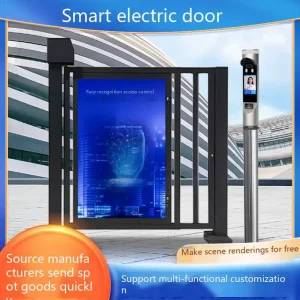
Buy Discount Intelligent pedestrian advertising gate Suppliers, Exporter
View Product & Price
Executive Sourcing Architecture
Unlocking True Cost-Efficiency in Automated License Plate Recognition (ALPR/ANPR)
In modern intelligent transport systems (ITS) and perimeter access governance, “cost-effective” is frequently misunderstood as simply pursuing the lowest unit wholesale price. Enterprise system integrators, municipal concessionaires, and commercial operators recognize that real cost-efficiency is dictated by lifetime operational accuracy, zero-server edge processing topologies, rapid non-contact ingress throughput, and low mean-time-to-repair (MTTR).
Capital Expenditure (CAPEX) Precision
Traditional legacy ANPR setups mandated dedicated industrial servers on-site, discrete magnetic loop detector cards, third-party software licensing dongles, and independent LED strobe drivers. Contemporary Shenzhen edge-computing integrated terminals merge the optical sensor, Neural Processing Unit (NPU), strobe lighting, and barrier relay control into a monolithic IP66 cast-aluminum housing, cutting upfront equipment bills by 40% to 55% per lane.
- Elimination of local on-premise compute servers
- Direct relay triggering to high-speed barrier gates (<0.8s)
- Embedded OCR algorithm—zero recurring per-plate runtime fees
Operational Expenditure (OPEX) Mitigation
Unattended vehicle throughput removes the massive cost burden of manned guardhouses and manual ticketing stations. When vehicle recognition rates elevate from 92% to 99.6%+, gate queue times collapse, customer support escalations dwindle, and physical paper ticket dispenser jams become completely obsolete across 24/7 operating cycles.
- Fully automated whitelist/blacklist autonomous gating
- Reduced manual cashier overhead by up to 92%
- Lower electrical power profile (<25W per edge device)
Edge Computing vs Server Latency
Cloud-dependent plate recognition introduces unpredictable network latency (300ms–2000ms) and collapses during intermittent wide-area internet outages. Shenzhen Anrui hardware delivers native edge-inference processing inside the camera assembly, achieving complete plate extraction, validation, and barrier relay triggering within ≤120 milliseconds.
- Decentralized fail-safe: offline operation uninterrupted
- Encrypted SQLite/Flash local memory storage for up to 50,000 plates
- Ultra-low bandwidth footprint; only vehicle metadata synced upstream
Shenzhen Industrial Ecosystem Superiority
Why Chinese Manufacturing Redefines ALPR Quality & Pricing
Shenzhen Anrui Intelligent Equipment Co., Ltd., based in Guangming District, Shenzhen, capitalizes on the planet’s most consolidated precision electronics, AI hardware, and mechanical engineering cluster to drive cost efficiency without performance compromise.
Supply Chain Density
Within a 30-kilometer radius in the Pearl River Delta, optical Starlight Sony sensors, custom motorized varifocal lenses, high-tensile carbon steel housings, and brushless DC motors are sourced with minimal inter-tier logistics markups.
100% In-House Testing
Every license plate recognition unit and barrier gate undergoes dynamic thermal cycle testing (-30°C to +75°C), 72-hour salt-fog anti-corrosion screening, and 5-million-cycle brushless motor endurance verification in our 8,000m² facility.
Agile OEM/ODM Tailoring
Global plate designs vary wildly—from European elongated retro-reflective plates to North American square formats, Arabic dual-script plates, and Southeast Asian high-density two-wheelers. Our R&D adapts firmware and OCR models in days, not quarters.
Disintermediation Pricing
By eliminating western master-distributors, regional brand agents, and re-branding layers, overseas project integrators obtain direct manufacturer FOB/CIF contracts that preserve 35% to 50% gross project margins.
8,000m²
Shenzhen Manufacturing & Testing Facility
99.7%
Edge Deep-Learning Plate Recognition Accuracy
80+
Destination Export Countries Supported
≤120ms
Sub-Second Lane Recognition & Relay Response
Technological Roadmap
Key Industry Evolution Vectors Shaping Global ALPR Procurements
Purchasing decisions in 2026 and beyond must account for these fundamental architectural paradigm shifts to protect infrastructure investments against premature obsolescence.
1. Deep Learning CNNs Replacing Rule-Based OCR
Early legacy systems operated via rigid template-matching and edge-gradient binarization, failing severely when plates were tilted, dirty, shadowed, or degraded. Modern ALPR systems deploy Convolutional Neural Networks (CNNs) capable of character disambiguation (e.g., distinguishing '0' vs 'O', '8' vs 'B') even under acute 45-degree angle capture and high headlight glare.
2. Multimodal MMCR (Make, Model, Color Recognition)
Simple optical character recognition is no longer sufficient for high-security facilities and tolling enforcement. Edge NPUs now execute multi-task learning models that simultaneously extract the alphanumeric plate, classify the vehicle category (sedan, SUV, light truck, bus, motorcycle), match the vehicle paint color, and inspect the vehicle brand insignia for robust anti-cloning security.
3. Open API & Microservices Interoperability
Proprietary software lock-ins are universally rejected by global systems engineers. Modern buyers mandate standard JSON/RESTful APIs, MQTT messaging for IoT telemetry, ONVIF Profile M compatibility for metadata streaming, and Wiegand / OSDP legacy output for direct tie-in to legacy access control panels.
Application Engineering
Macro-Industry Deployment Blueprints & Localization Scenarios
Engineered hardware and firmware packages optimized for distinct operational profiles across global project environments.
Smart Logistics Hubs & Industrial Distribution Centers
Heavy duty vehicles operating around the clock demand automated weighbridge integration and fast freight dispatch. Shenzhen Anrui’s long-range varifocal ALPR systems capture high-cab trucks and low trailers while pairing with high-speed articulated barrier gates, logging arrival time-stamps into ERP systems (SAP/Oracle WMS) via standard HTTP webhooks.
- Elimination of driver exit for badge presentation
- Weighbridge license-to-weight auto-association
- Anti-tailgating radar detection preventing unverified yard entry
Commercial Complexes & Unattended Paid Parking
Mixed-use retail hubs require zero-barrier, frictionless ticketless parking with multi-method payment settlement (QR code scan-to-pay, dynamic app payment, or automated exit debit). When combined with Anrui Louver Advertising Barriers, facility owners generate secondary marketing revenue while keeping vehicle throughput exceeding 600 vehicles/hour per lane.
- Ticketless barrier-free ingress eliminates paper consumables
- Integrated LED guidance displays showing real-time space counts
- Direct integration with automated scan-to-pay charging locks
Residential Communities & Gated Compounds
Property management firms demand airtight security without frustrating legitimate residents. Anrui Dolphin I & AnRuitong II machines manage whitelist directories locally, maintaining seamless resident entry even if internet connectivity drops. Temporary visitor passes are generated remotely via mobile QR tokens or license pre-registration.
- Zero ongoing monthly cloud software lock-in
- Anti-cloning vehicle identification with snapshot proof logs
- Silent high-torque DC brushless gate operation preventing noise pollution
Government Facilities, Banking & Perimeter Defense
Critical security facilities combine license plate verification with hydraulic rising bollards and interlocking dual-gate mantrap zones. If an unregistered or blacklisted vehicle triggers an alert, the system suppresses barrier opening, activates hydraulic road blockers within 1.5 seconds, and triggers security control room telemetry.
- Direct relay triggering to heavy-duty hydraulic crash bollards
- Blacklist visual and audible perimeter siren activation
- Tamper-proof encrypted log retention for forensic compliance
Procurement Benchmark
Technical Specification & Global Sourcing Price Breakdown
A transparent comparative matrix detailing typical factory-direct sales pricing, sensor optics, and processing tier architectures.
| System Architecture Tier | Optical Sensor & Resolution | Embedded NPU Computing | Vehicle Speed Range | Barrier Actuation Trigger | Indicative Direct Factory FOB Price Range |
|---|---|---|---|---|---|
| Standard Parking Access (AnRuitong II) | 2.0 Megapixel Sony Starlight CMOS (1920×1080) | 1.2 TOPS Embedded Neural Engine | 0 – 40 km/h (Stop & Go / Slow Approach) | Relay Output / Wiegand 26/34 / RS485 | $180 – $320 / unit |
| Enterprise Commercial Ingress (Dolphin I Series) | 4.0 Megapixel Ultra-HD Sensor with Motorized Zoom | 2.4 TOPS Dual-Core Vision AI Processor | 0 – 70 km/h (Continuous Dynamic Flow) | Dual Relay / TCP-IP / HTTP Push / OSDP | $340 – $580 / unit |
| Multi-Lane Free-Flow / Highway Tolling | 4K Global Shutter Industrial Sensor (3840×2160) | 4.0+ TOPS Dedicated Deep Learning Engine | Up to 160 km/h (High-Speed Expressway) | Optocoupled Isolated I/O & Gigabit Ethernet | $750 – $1,250 / unit |
| Complete Matched Lane Turnkey Package | ALPR Camera + Brushless Barrier Gate + Radar Loop | Integrated Lane Controller Micro-Architecture | Turnkey Stop-and-Go or Fast Non-Stop (0.6s–3s boom) | Direct Pre-Wired Matched Connector Loom | $650 – $1,450 / complete lane |
Technical Clarifications
Frequently Asked Questions by Global Engineering Contractors
Objective, field-tested answers addressing international communication protocols, algorithmic adaptation, weather durability, and cross-border trade.
How does the Anrui edge ALPR system perform under extreme weather (monsoon rain, desert dust, low winter temperatures)?
Every unit engineered in our Guangming, Shenzhen factory is housed in an IP66/IP67 sealed die-cast aluminum enclosure with internal conformal coated PCB boards. Optics feature dynamic wide dynamic range (WDR > 120dB) and an anti-reflective hydrophobic front glass shield that prevents water droplet distortion during tropical storms. For high-temperature desert conditions (such as deployments in Qatar and the UAE), our thermal dissipation chassis operates reliably up to +75°C without auxiliary fan failures. For sub-zero regions (e.g., projects in Poland), internal thermostatic heating elements prevent front-element condensation and frost accumulation down to -35°C.
Can the embedded OCR engine accurately recognize unique license plate syntaxes across 80+ countries?
Yes. Unlike legacy systems that rely on hardcoded character aspect ratios, Anrui edge cameras employ trainable Convolutional Neural Network models. We maintain localized character recognition libraries for European alphanumeric fonts, North American variable state formats, Middle Eastern dual-script (Arabic / Latin) numerals, and Southeast Asian high-density stacked formats. Integrators can simply submit 100 to 200 real lane capture photos to our Shenzhen R&D engineering team for pre-shipment synthetic model validation, ensuring >99.5% field recognition accuracy upon commissioning.
Does your hardware support direct barrier gate triggering without an intermediary PC controller?
Absolutely. The edge ALPR terminal features onboard optocoupler-isolated relay dry contact outputs. The internal processor maintains an offline whitelist and blacklist database of up to 50,000 vehicles. When an authorized vehicle approaches, the internal NPU recognizes the plate, cross-checks the local database, and pulses the relay switch directly to open the barrier within ≤120ms. This hardware-level triggering guarantees total operational uptime even if the local network switch or wide-area fiber backbone goes completely offline.
What third-party software integration protocols are available for PARCS and toll systems?
We provide full, royalty-free SDKs (C++, C#, Java, Python) and open API documentation. For cloud-native parking management software, the camera supports standard HTTP/HTTPS POST and JSON payloads that push vehicle snapshots, license strings, confidence ratings, and timestamps directly to your cloud webhook. For traditional physical security panels, hardware Wiegand 26/34 and RS485 communication protocols are natively supported, as well as ONVIF Profile M for video analytics streaming.
What are the typical lead times, MOQ, and international logistics terms for volume shipments?
We maintain a standard minimum order quantity (MOQ) of 1 unit for sample engineering evaluation, and volume discounts starting at 20+ lane packages. Standard evaluation units ship within 3 to 5 business days from Shenzhen; containerized commercial orders (100–500 units) ship in 14 to 20 calendar days. We routinely support EXW, FOB Shenzhen, CIF, and DDP terms with comprehensive international documentation (Certificate of Origin, CE, FCC, RoHS compliance certificates).
Complete Entrance Infrastructure
Complementary Vehicle & Pedestrian Access Control Systems
Integrate our ALPR optics with factory-matched speed gates, crash bollards, and swing barriers for synchronized facility security management.
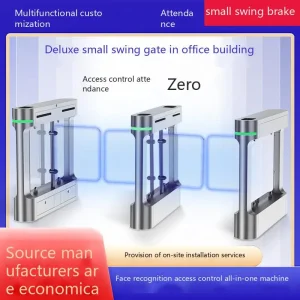
Buy Discount Swing Gate Image Reference Suppliers, In Sales
View Product & Price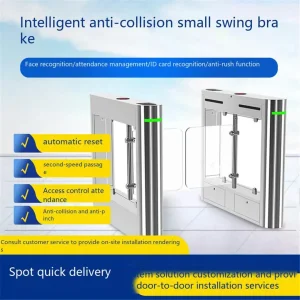
OEM Swing Gate Suppliers, Pricelist
View Product & Price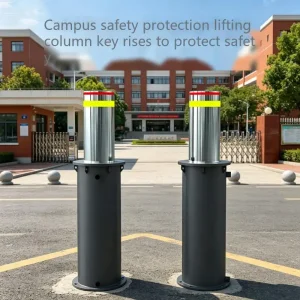
High-Quality Rising Bollard Instruction Manual In Sales, Price
View Product & Price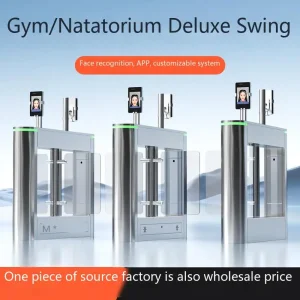
Buy Discount Office Building Entrance Attendance Security Access Control Turnstiles Gate Swing Barrier Speed Gate Manufacturers, Price
View Product & Price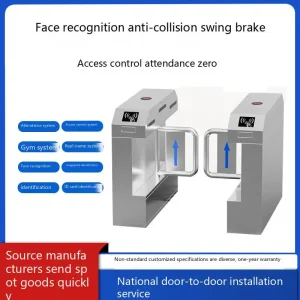
China Bridge Type Sloped Swing Gate Supplier, In Sales
View Product & Price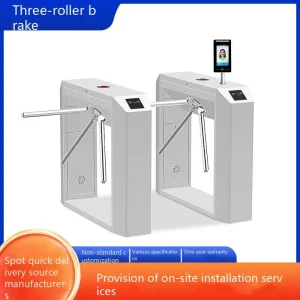
Advanced Factoryoem/ODM Durable Smart Fast Speed Swing Automatic Used Industrial Gym Turnstile Gate Supplier, Factory
View Product & Price
Buy Discount High-def license plate recognition machine Dolphin I model Exporters, In Sales
View Product & Price