
Featured Perimeter Gates & Access Control Systems
Precision-manufactured in Shenzhen, China. Certified for high duty-cycles, extreme temperature tolerance, and seamless hardware-to-software protocol integration.
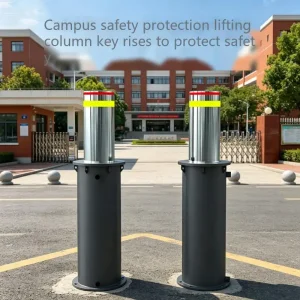
High-Quality Rising Bollard Instruction Manual In Sales, Price
View Specifications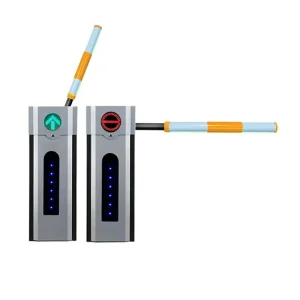
Easy-maintainable Intelligent Barrier Gate Model D11S Supplier, Quotation
Request Quotation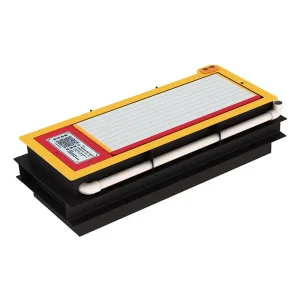
Easy-maintainable City Parking Product Factories, Price
Get Factory Price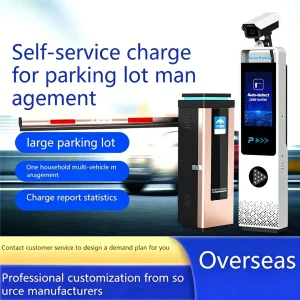
Buy Discount High-def license plate recognition machine Dolphin I model Exporters, In Sales
Explore Dolphin I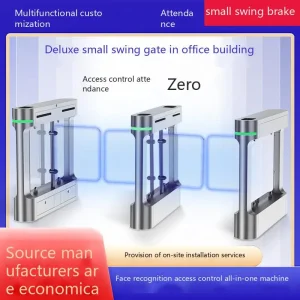
Buy Discount Swing Gate Image Reference Suppliers, In Sales
View Reference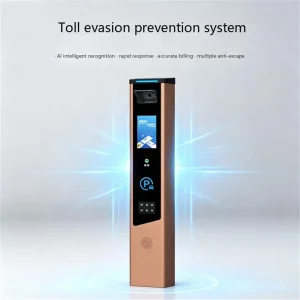
Cheap High definition license plate recognition integrated - AnRuitong II Manufacturer, Factories
Discover AnRuitong II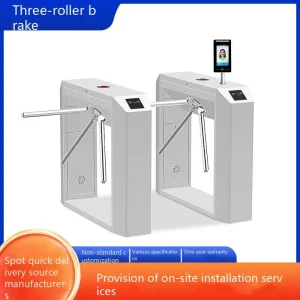
Advanced Factory OEM/ODM Durable Smart Fast Speed Swing Automatic Industrial Gym Turnstile Gate
OEM/ODM Details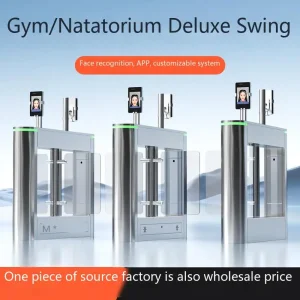
Office Building Entrance Attendance Security Access Control Turnstiles Gate Swing Barrier Speed Gate
View Commercial LineGlobal Landscape: The Convergence of Physical Perimeter Defense & AIoT Telemetry
Analyzing structural shifts in commercial real estate, logistics hubs, critical national infrastructure (CNI), and how Chinese manufacturing clusters deliver structural cost and technology leadership.
The global security fencing and automated gate sector has crossed a pivotal technological boundary. Historically defined as a passive metallurgical industry driven by structural carbon steel, welded mesh, and electromechanical gearboxes, perimeter access control has transitioned into a mission-critical sub-segment of the Industrial Internet of Things (IIoT) and Zero-Trust Physical Architecture. Global geopolitical realignments, the rapid escalation of automated logistics, and stringent infrastructure resilience mandates (such as EN 12453 in Europe, UL 325/ASTM F2200 in the Americas, and ISO 9001 quality compliance) have forced enterprise operators to demand intelligent, low-latency, and crash-rated access barriers.
As projected by global infrastructure security indices, the commercial perimeter security market is expanding at a Compound Annual Growth Rate (CAGR) exceeding 7.8% through 2032, propelled primarily by high-throughput vehicle entry automation, smart cities, and automated freight handling. Modern access management is no longer judged solely by tensile boundary strength; operational metrics such as Mean Cycles Between Failures (MCBF), Edge-AI license plate parsing latency, motor thermoregulation, and frictionless biometric throughput dictate total project viability.
Supply Chain Clustering
Shenzhen and the Greater Bay Area represent the world's most dense access automation manufacturing ecosystem. Proximity to advanced SMT electronics, precision die-casting, motor winding foundries, and automated laser fabrication lines reduces prototyping-to-mass-production cycles by over 65% compared to Western counterparts.
- Vertically integrated mechanical & electronic assembly
- Rapid batch customization and private labeling
Brushless DC (BLDC) Migration
Legacy alternating current (AC) torque motors suffer from heat accumulation under continuous duty, limiting throughput at busy toll plazas and commercial hubs. Contemporary Chinese manufacturers prioritize 24V/36V digital brushless DC servo systems that generate negligible thermal load and guarantee continuous 100% duty cycles.
- Operational lifecycle exceeding 5,000,000 to 10,000,000 cycles
- Microsecond electronic rebound upon obstacle contact
Optimized Total Cost of Ownership
System integrators and EPC contractors in over 80 countries have transitioned to direct Chinese factory partnerships. Factory-direct procurement strips out 30–45% of unnecessary middleman margins while delivering modular spare components with transparent cross-border logistics support.
- Standardized modular sub-assemblies for swift maintenance
- Universal hardware communication protocols (RS485, TCP/IP, Wiegand)
Material Science, Crash Ratings & Anti-Corrosion Standards
An engineering breakdown of barrier housing metallurgy, surface conversion chemistry, and impact-absorption mechanics for mission-critical installations.
In perimeter physical defense, environmental exposure and mechanical impact present persistent operational risks. Structural fencing, boom barrier cabinets, and pedestrian turnstiles fabricated by leading Shenzhen manufacturers utilize cold-rolled pickling steel sheet (SPCC) or marine-grade AISI 304/316 austenitic stainless steel. Structural longevity is achieved through a multi-stage chemical pretreatment line involving alkaline degreasing, zinc-phosphate conversion coating, electrodeposited cathodic e-coating, and architectural-grade pure polyester powder baking (minimum thickness 80–120μm), delivering salt-spray resistance certified up to 1,000 hours (ASTM B117 standard).
| System Category | Core Material Grade | Ingress & Impact Rating | Kinetic Impact / Duty Cycle | Primary Integration Interface |
|---|---|---|---|---|
| Hydraulic Rising Bollards | AISI 304 / 316 Stainless Steel (6–10mm wall) | IP68 Submersible | PAS 68 / K4 Crash Equivalent (7.5t @ 48 km/h) | PLC, RS485, Remote Wireless Relay, Emergency EFO |
| BLDC Barrier Gates (D11S / D03) | 2.0mm Cold-Rolled Galvanized Sheet + C5-M Coating | IP54 / IP65 Modular | 10,000,000 Cycles MTBF; 0.6s – 6s Adjustable Speed | TCP/IP, CAN-BUS, Loop Detector, Millimeter-Wave Radar |
| Speed Gates & Swing Turnstiles | 1.5mm AISI 304 Brushed Hairline Finish | IP44 Indoor / IP54 Outdoor | 5,000,000 Cycles; Dual Optical IR Sensors (12–24 Pairs) | OSDP v2, Wiegand 26/34, Ethernet RESTful API, Dry Contact |
| Solar Community Parking Locks | Die-Cast High-Tensile A380 Aluminum Alloy | IP67 Enclosure | 5.0 Ton Static Compression Load Resistance | NB-IoT, Bluetooth Low Energy 5.2, LoRaWAN, 4G Cat-1 |
Hostile Vehicle Mitigation (HVM)
High-security compounds require active anti-ram measures. Anrui's hydraulic rising bollards feature integrated hydraulic pump units (HPU) capable of raising within 1.5 seconds under Emergency Fast Operation (EFO) triggers to neutralize unauthorized vehicular threats.
Millimeter-Wave Radar Anti-Crush
Departing from destructive ground loop cutting, modern gates integrate 77GHz–79GHz millimeter-wave radar sensors. These differentiate between pedestrian movement and motor vehicles, completely eliminating accidental boom drop while lowering civil engineering installation costs.
Neural LPR Deep-Learning Cores
Edge-computing LPR cameras feature dedicated Neural Processing Units (NPUs) running multi-frame recursive algorithms. They maintain accurate character segmentation across multi-line, reflective, Arabic, Cyrillic, Latin, and non-standard license formats even in torrential rain or glare.
Localized Application Scenarios & Environmental Resilience
How Chinese precision barrier systems are adapted for extreme operational environments across the Gulf, Eastern Europe, Southeast Asia, and dense urban metropolises.
High-Heat Desert Regions (GCC)
Deployed in Qatar, Saudi Arabia, and the UAE, where ambient temperatures exceed 50°C and airborne silica dust causes standard equipment failure. Barrier gate housings use IP66 sealed motor compartments, dual-fan thermostatic cross-ventilation, and specialized high-viscosity synthetic hydraulic lubricants rated for continuous operation at up to +75°C.
- UV-stabilized fluorocarbon powder finish resists chalking
- LPR cameras equipped with dual polarization anti-glare filters
Sub-Zero & Northern Latitudes
For installations in Poland, Scandinavia, and North America facing winter freeze cycles down to -40°C. Units are engineered with internal ceramic Positive Temperature Coefficient (PTC) heating elements, low-temperature synthetic hydraulic oils, and silicone-encapsulated drive belts to prevent mechanical brittle cracking.
- Internal heating prevents freezing of hydraulic fluid
- Microprocessor-controlled preheating cycle on cold startup
Coastal & High-Humidity Belts
Projects in the Philippines, Timor-Leste, and island economies contend with marine salt spray and monsoon dampness. All turnstile housings, barrier shafts, and internal linkages are upgraded to 316-grade stainless steel with conformal-coated PCB motherboards to eliminate electrolytic corrosion and shorts.
- Conformal silicone coating on all control electronics
- Submersible IP68 hydraulic cylinders with double O-ring seals
Macro Industry Solutions: Integrated Enterprise Entry Systems
Proven engineering blueprints harmonizing physical gates, automatic bollards, vehicle recognition, and credential management into a single, cohesive software architecture.
Smart Logistics & Freight Corridors
High-speed articulated and straight-boom DC barriers integrated with UHF long-range RFID readers and dual-camera ANPR setups automate entry for commercial freight. Eliminates driver cab dismount, verifies gross weight station signals, and records optical container codes within 800 milliseconds.
Residential & Commercial Mixed-Use
Combines advertising louver barrier gates (monetizing perimeter real estate via front-lit LED advertising media) with unattended payment kiosks and parking space reservation locks. Provides whitelist community entry for residents while seamlessly issuing QR ticket vouchers to visitors.
High-Throughput Transit & Campuses
High-speed pedestrian swing gates and heavy-duty tripod turnstiles handle thousands of daily passages. Equipped with biometric facial recognition terminals, 1D/2D QR readers, and anti-tailgating infrared arrays, processing up to 45 authorized individuals per minute per lane.
Technology Roadmap: 2025–2030 Access Innovations
Anticipating the technological disruptions shaping the next generation of Chinese perimeter barriers and perimeter protection equipment.
V2X Direct Vehicle-to-Gate Linkage
Transitioning from passive optical imaging to direct Dedicated Short-Range Communications (DSRC) and Cellular-V2X. Autonomous delivery vehicles and smart connected cars negotiate entry authorization cryptographically, raising boom gates with zero latency before the vehicle comes to a complete halt.
Predictive AI Cloud Telemetry
Real-time vibration, internal winding thermal rise, and current ripple metrics stream via MQTT/HTTPS to centralized management clouds. Machine learning algorithms anticipate gearbox backlash or spring tension fatigue up to 300 operating hours prior to component failure, turning scheduled repairs into proactive, zero-downtime maintenance.
Zero-Trust OSDP v2 Integration
Phasing out unencrypted Wiegand signaling across all pedestrian turnstile and vehicle barrier lines. Upgraded hardware supports Open Supervised Device Protocol (OSDP v2.2) with Secure Channel AES-128 encryption, safeguarding edge perimeter hardware against physical sniffing and man-in-the-middle credential replay attacks.
Engineering & Procurement FAQ for International Buyers
Clear, technically detailed responses addressing the structural, mechanical, and logistical questions integrators face when sourcing from China.
What is the operational lifespan and maintenance cycle for Anrui BLDC barrier gate mechanisms?
Can the Dolphin I and AnRuitong II LPR systems handle non-standard international license plates?
What fail-safe mechanisms trigger during mains power outages?
How does the factory support OEM/ODM branding and custom enclosure configurations?
What trade terms, warranties, and after-sales support frameworks are available?
Industrial Turnstiles, Intelligent Locks & Advertising Gates
Explore our specialized perimeter hardware lineup, engineered for smart toll stations, corporate facilities, residential communities, and shared-mobility bays.
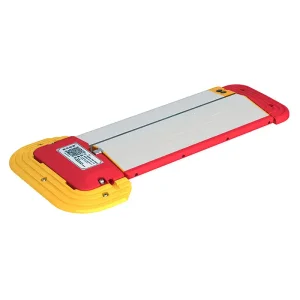
Cheap Scan-to-pay Community Parking Lock Automatic Sensing & Payment
View Pricelist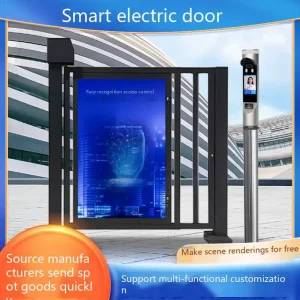
Buy Discount Intelligent Pedestrian Advertising Gate Suppliers, Exporter
Check Exporter Specs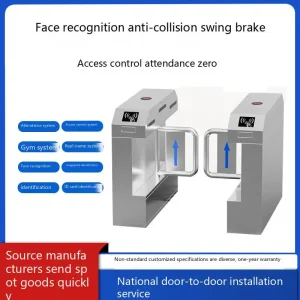
China Bridge Type Sloped Swing Gate Supplier, In Sales
Request Quote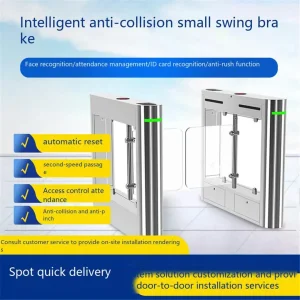
OEM Swing Gate Suppliers, Pricelist
View OEM Catalog
Buy Discount Intelligent Barrier Gate Model D03 Suppliers, Exporters
Explore Model D03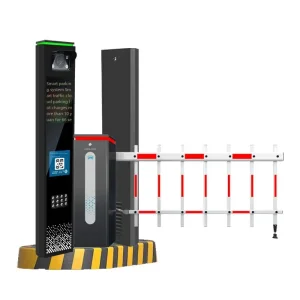
Automatic Articulated DC Parking Boom Barrier Gate With Long Range RFID Reader
View Articulated Boom
Industrial Grade Intelligent High-Speed Barrier Gate Series D11S
Technical Data