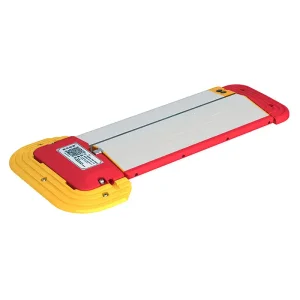
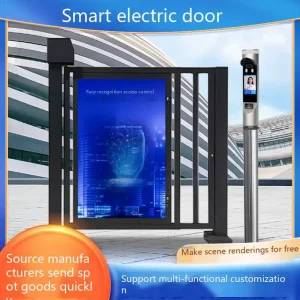
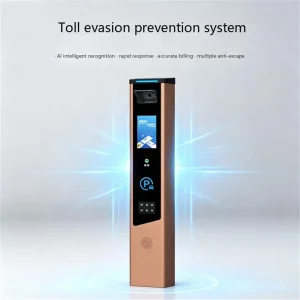
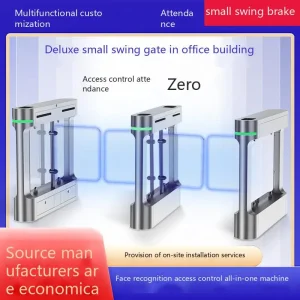
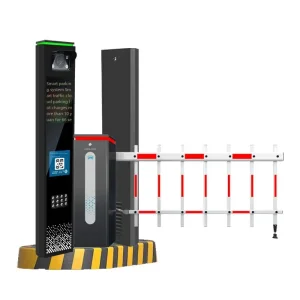
Featured Industrial Automation & Access Enclosures
Direct-from-factory intelligent access equipment, precision-engineered for commercial gates, high-security perimeters, and vehicle checkpoint control.
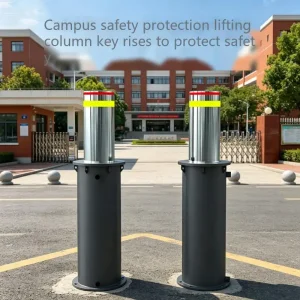
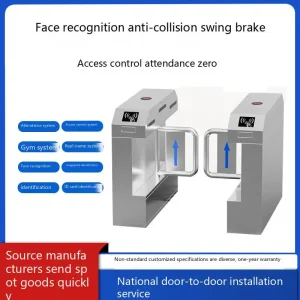
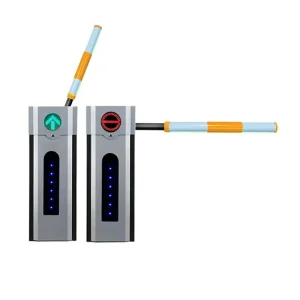
Macro-Industry Engineering Solutions: The Evolution of Chain Link Driveway Gates
How Chinese structural fabrication hubs are redefining industrial driveway security through automated integration, metallurgical resilience, and precision cantilever kinematics.
Perimeter access infrastructure has transitioned from passive spatial demarcation into an active, electronically monitored physical barrier system. In the context of industrial plants, logistics distribution hubs, military installations, and remote utilities, the chain link driveway gate remains the undisputed global benchmark for cost-efficiency, low wind resistance, and boundary transparency. However, conventional manual chain link gates constructed from lightweight tube-steel are rapidly being phased out by civil engineering teams worldwide.
Leading Chinese chain link driveway gate manufacturers operate at the nexus of high-throughput structural steel metallurgy and advanced electronic motion control. By sourcing domestic hot-dip galvanized structural tubing (ASTM A53 / ASTM F1083 standards) and heavy-gauge wire fabric (ASTM A392 Class 2 zinc coatings), tier-one factories deliver automated cantilever sliding gates, track-guided rolling gates, and double-leaf swing gates that withstand operational duty cycles exceeding 250,000 movements without structural frame sagging or hinge shear.
Cantilever Kinematic Balancing
Unlike track-based gates that fail due to ground heave, snow pack, or aggregate accumulation, advanced cantilever chain link gates utilize internal or external high-tensile roller truck assemblies. The counterbalance overhang (typically 40% to 50% of the clear opening) distributes dynamic load across dual pillar footings, preventing sag across clear vehicle spans up to 60 feet (18.2 meters).
Advanced Metallurgical Coating Systems
Export-focused factories leverage multi-tier anti-corrosion chemistry: a thermally diffused hot-dip galvanized core (minimum 2.0 oz/ft² or 610 g/m² zinc mass), supplemented by an electrostatic epoxy primer and a cross-linked thermoset polyester or PVDF powder coating. This prevents galvanic oxidation even in maritime Class C4/C5 coastal environments.
Turnkey Automated Integration
Modern driveway gates are no longer standalone ironmongery. Chinese manufacturing facilities integrate factory-prewired raceways, mechanical drive racks, high-torque brushless DC (BLDC) gate operators, safety edge channels, optical entrapment sensors, and mounting interfaces for optical License Plate Recognition (LPR) and UHF long-range transponders.
Global Commercial & Industrial Landscape
Navigating global procurement dynamics: How Chinese export hubs fulfill regional wind load, safety, and operational standards across varied geographical zones.
North America (UL 325 & ASTM F2200)
Procurement in the United States and Canada demands stringent entrapment protection. Driveway chain link gate panels must eliminate pinch points and fall-over hazards. Fabric must cover all gaps below 2.25 inches to prevent limb entrapment, while structural frames must adhere to ASTM F1184 Type II Class 2 standards for horizontal sliding gates.
European Union (EN 12453 / EN 12604)
The European market prioritizes dynamic force limitation and CE Machinery Directive conformity. Driveway gate leaves must pass dynamic crash impact tests, featuring redundant drop-safe arrestor cables, self-diagnostic dual-channel photocells, and structural calculations factoring eurocode wind loads (EN 1991-1-4) across open industrial facilities.
Middle East & GCC (Extreme Thermal/Dust)
Deployment across Saudi Arabia, UAE, and Qatar introduces extreme thermal expansion (+50°C ambient) and airborne silicate abrasion. Chinese tier-1 factories engineer heavy-wall Schedule 40 tubular frames with sealed stainless-steel roller bearings (IP67 ingress rating) and UV-stabilized extruded PVC woven wire fabric that resists brittle fracture.
Australia & Pacific (AS 1725 Series)
Australasian civil contractors demand compliance with AS 1725 for chain link security fences and gates. Emphasis is placed on zinc mass thickness (hot-dip galvanization to AS/NZS 4680) and cyclone wind rating standards (AS/NZS 1170.2), requiring reinforced diagonal truss rods and heavy-duty locking drop rods capable of anchoring against storm shears.
Engineering Comparison: Driveway Gate Typologies
Choosing the appropriate kinetic gate geometry requires a clear understanding of space restrictions, vehicle approach angles, clear span widths, and cycling frequencies. The matrix below illustrates typical engineering choices specified by international project consultants.
| Gate Typology | Structural Mechanics | Maximum Span (Single Leaf) | Wind Load Tolerance | Optimal Deployment Arena |
|---|---|---|---|---|
| Internal Roller Cantilever | Enclosed track profile with internal 4-wheel or 8-wheel sealed carriage trucks. Zero ground contact. | Up to 18 m (60 ft) | High (low mesh drag, rigid boxed lower track) | Logistics distribution centers, automated freight terminals, rail depots |
| Tracked Industrial Sliding | V-groove or round inverted ground track anchored in continuous reinforced concrete grade beam. | Up to 24 m (80 ft) | Moderate (track prone to aggregate/ice interference) | Heavy equipment yards, coastal ports with flat bedrock foundations |
| Heavy Double-Swing Gate | Hinged heavy-wall posts (6" to 8" OD Schedule 40). Requires 90°–180° unobstructed inward/outward swing radius. | Up to 10 m (33 ft) per leaf | Low to Moderate (requires heavy actuator holding force) | Corporate campuses, perimeter utility substations with limited lateral runoff |
| Bi-Folding High-Speed Gate | Multi-section hinged leaves driven by overhead track or electro-mechanical knuckle arms. 4x faster cycling. | Up to 8 m (26 ft) | High (rigid truss frame, low swing duration) | Emergency vehicle stations, correctional facilities, high-throughput secure yards |
Metallurgical Standards & Fabrication Architecture
Detailed engineering specifications of structural frames, fabric gauges, welding compliance, and automated operator kinematics engineered in Shenzhen industrial manufacturing clusters.
Frame Steel & Weld Structural Integrity
Gate frames are manufactured from premium high-frequency ERW round or rectangular steel tubing (ASTM A500 Grade B/C). All corner joints are miter-cut at 45 degrees, fully seam-welded utilizing automated robotic MIG welding under 80/20 Argon/CO2 shielding gas. Welds are smoothed and thermal-spray zinc re-metallized to eliminate micro-porosity and corrosion points.
Wire Fabric Specifications
Weave mesh options range from standard commercial 2" diamond mesh (9-gauge or 6-gauge galvanized steel) to high-security anti-climb 358 mesh (3" x 0.5" aperture) welded panels. Chain link fabric is secured to the frame via tension bars (3/16" x 3/4"), tension bands spaced every 12 inches, and hooked stainless-steel tie wires to prevent deflection under physical forced-entry attack.
BLDC Automation Kinematics
Direct compatibility with 24V/36V Brushless DC motor operators featuring electronic soft-start and soft-stop ramping. Digital torque sensing detects physical obstructions within 15 milliseconds, reversing gate trajectory prior to mechanical crushing force generation, meeting UL 325 Class I, II, III, and IV requirements for vehicular barrier systems.
| Component Element | Standard Commercial Grade | Heavy Industrial / Military Grade | Testing & Compliance Protocol |
|---|---|---|---|
| Gate Outer Frame | 1.90" OD (48.3 mm) Schedule 40 Pipe | 2.375" to 2.875" OD (60.3 - 73.0 mm) Sch 40 / Sch 80 | ASTM A500 / ASTM F1043 Group IA |
| Internal Truss Bracing | 1.66" OD (42.2 mm) with adjustable tension rods | 1.90" OD tubular diagonals + 3/8" stainless turnbuckles | ASTM F1184 Diagonal Sag Test |
| Chain Link Fabric Wire | 9-Gauge (3.76 mm) Core, Hot-Dip Galvanized | 6-Gauge (4.88 mm) Core or Class 2B PVC Coated | ASTM A392 / ASTM F668 Class 2b |
| Zinc Coating Mass | 1.2 oz/ft² (366 g/m²) Zinc Coverage | 2.0 oz/ft² (610 g/m²) Batch Hot-Dip Galv | ASTM A90 / ISO 1461 Gravimetric Inspection |
| Operating Wind Speed | Operational up to 80 km/h (50 mph) | Operational up to 130 km/h (80 mph) (3-second gust) | ASCE 7-16 Wind Tunnel Simulation Standards |
| Duty Cycle Rating | 60 cycles/hour (Intermittent duty) | Continuous 100% duty cycle (24-hour operation) | IEC 60034-1 S1 Continuous Duty Certification |
Localized Application Scenarios & Field Implementations
Engineered perimeter enclosures tailored to solve unique structural, climatic, and traffic management challenges across critical industries.
Intermodal Logistics & Freight Corridors
Distribution centers require expansive 40-to-60-foot driveway spans to facilitate tandem trailer turning radiuses. Cantilever chain link systems with top-hung enclosed track profiles eliminate ground debris failure from gravel, ice, and dirt. Integration with high-speed commercial barrier arms permits rapid vehicle staging during peak operating windows.
Substations & Renewable Energy Parks
Solar fields and high-voltage electrical substations require non-lethal, anti-intrusion fencing with grounding continuity to prevent touch-potential hazards. Gate leaves feature flexible copper grounding braid jumpers connected to perimeter ground grids, topped with 3-strand barbed wire arms (45-degree angled) meeting NESC (National Electrical Safety Code) guidelines.
Municipal Utility & Water Treatment Facilities
Municipal infrastructure faces aggressive chemical exposure, including airborne chlorine, hydrogen sulfide, and constant moisture. Double-leaf swing or sliding chain link driveway gates utilize dual-layer protection: heavy thermal galvanizing followed by fluid-bed applied polyolefin coating that resists chemical corrosion and prevents surface blistering.
Localized Support, Compliance & Global Shipping Assurance
Standard operating procedures for global container packing, structural anti-deformation cradling, and field installation verification.
Export Container Packing & Crating
Cantilever gate leaves exceeding standard shipping lengths are engineered as precision modular flanged sections. Using internal splice sleeves with grade-8 structural fasteners, leaves up to 18 meters can be securely packed into standard 40-foot High Cube (40HC) ocean containers. Dedicated heavy-gauge steel storage racks prevent tube crushing and wire deformation during multi-modal marine transport.
Anti-Entrapment Safety Architecture
Full integration ready for UL 325 and EN 12453 safety standards: gate designs incorporate factory-drilled mounting provisions for monitored safety photo eyes, inductive loop detectors, fail-safe pneumatic sensing edges, and mechanical stop-brackets rated to withstand double the rated impact kinetic force of the motorized gate mass.
EPC & Engineering Field Support
Every industrial gate delivery includes complete engineering drawings, structural CAD/BIM profiles, concrete foundation depth calculations based on regional frost lines and wind exposure categories (Exposure B, C, or D), wiring schematics, and bilingual 24/7 technical hotline access for field electrical sub-contractors.
Technology Roadmap: Intelligent Gateways & Edge AI Integration
The convergence of physical perimeter metallurgy with intelligent edge computing, optical AI, and autonomous solar microgrid power supplies.
Edge-AI Vehicle Plate & Make-Model Telemetry
Traditional gate activation via manual remotes or proximity keycards is being replaced by onboard neural processing units (NPU) integrated into entrance pedestals. Deep learning models identify license plates, commercial vehicle DOT numbers, hazardous material placards, and vehicle dimensions in real time, triggering cantilever gate opening sequences within 0.8 seconds.
Predictive Kinematic Telemetry (IoT)
Modern commercial gate controllers feature cloud-connected cellular or LoRaWAN communication gateways. Kinematic sensors measure mechanical load current, vibration frequency on guide rollers, gear-reduction temperature, and cumulative cycle thresholds, automatically dispatching preventative maintenance notices before mechanical drive failure occurs.
Zero-Emission Solar-Battery Microgrids
For remote commercial properties, oil & gas pipeline valve yards, and agricultural perimeters lacking grid AC electrical access, high-efficiency MPPT controllers and LiFePO4 battery modules integrate directly into gate stanchions. Ultra-low standby draw circuits permit up to 150 daily full open-close cycles even through 5 days of zero-insolation overcast weather.
Frequently Asked Technical Questions (FAQ)
Authoritative answers to the most common engineering, metallurgical, and procurement inquiries submitted by commercial contractors, integrators, and distributors.
The universal engineering rule for heavy-duty industrial cantilever sliding gates requires an overhang (tail) length equal to 40% to 50% of the clear opening width. For example, a 30-foot (9.14 m) clear span driveway requires a total gate frame length of 42 to 45 feet (12.8 to 13.7 m). This geometry ensures the center of mass remains firmly positioned between the dual carriage trucks during the entire stroke, preventing roller binding and post torque deflection.
Sagging is prevented through rigid trussing and positive mechanical tensioning. Frames incorporate vertical internal stiffeners spaced at intervals no greater than 8 feet, paired with diagonal adjustable 3/8-inch high-tensile truss rods with forged turnbuckles. Chain link fabric is secured on both ends using 3/16" x 3/4" galvanized tension bars locked into the frame via 11-gauge steel tension bands, backed by top and bottom tension wire (7-gauge spring coil steel) stretched to 1,200 lbs of tension.
According to ASTM A392, Class 1 zinc coating delivers a minimum average zinc mass of 1.2 oz/ft² (366 g/m²), designed for standard commercial environments. Class 2 zinc coating specifies a minimum of 2.0 oz/ft² (610 g/m²). For coastal projects, salt-air exposure, or heavy industrial chemical zones, Class 2 fabric provides more than double the service life before onset of red rust (ferrous oxide), easily exceeding 20 years of maintenance-free operation.
Yes. To eliminate costly break-bulk cargo charges, tier-1 Chinese manufacturers utilize precision-engineered modular sleeve joints. The gate top pipe, bottom track, and frame tubes are fabricated in interlocking sections with internal solid steel dowel sleeves and heavy cross-bolting flanges. When assembled on site with structural Grade 8.8 or Grade 10.9 hot-dip galvanized hardware, the joint retains 98% of the monolithic pipe's bending moment resistance while fitting easily into a standard 40HC container.
Foundation engineering depends on regional frost line depth, soil bearing capacity (psf), and wind shear moment arms. Generally, for cantilever gates up to 40 ft total length, main support posts (6" to 8" OD) are cast into continuous reinforced concrete grade beams (minimum 3,000 psi compressive strength) with a width of 24 inches and a depth extending at least 12 inches below the local frost depth (typically 36 to 48 inches), reinforced with rebar cages to resist torsional overturning moments.
All automated gate controllers manufactured in our ecosystem provide dry contact inputs/outputs, Wiegand 26/34 interfaces, and RS485 / Modbus protocols. This universal electrical compatibility allows plug-and-play connection to RFID card readers, long-range UHF tags (up to 15 m range), optical License Plate Recognition (LPR) cameras, building management systems (BMS), and emergency fire department knox-box override switches.
Integrated Vehicle Access & Perimeter Control Matrix
Review our full range of automated vehicle boom barriers, commercial advertising gates, smart parking locks, and long-range RFID access solutions.