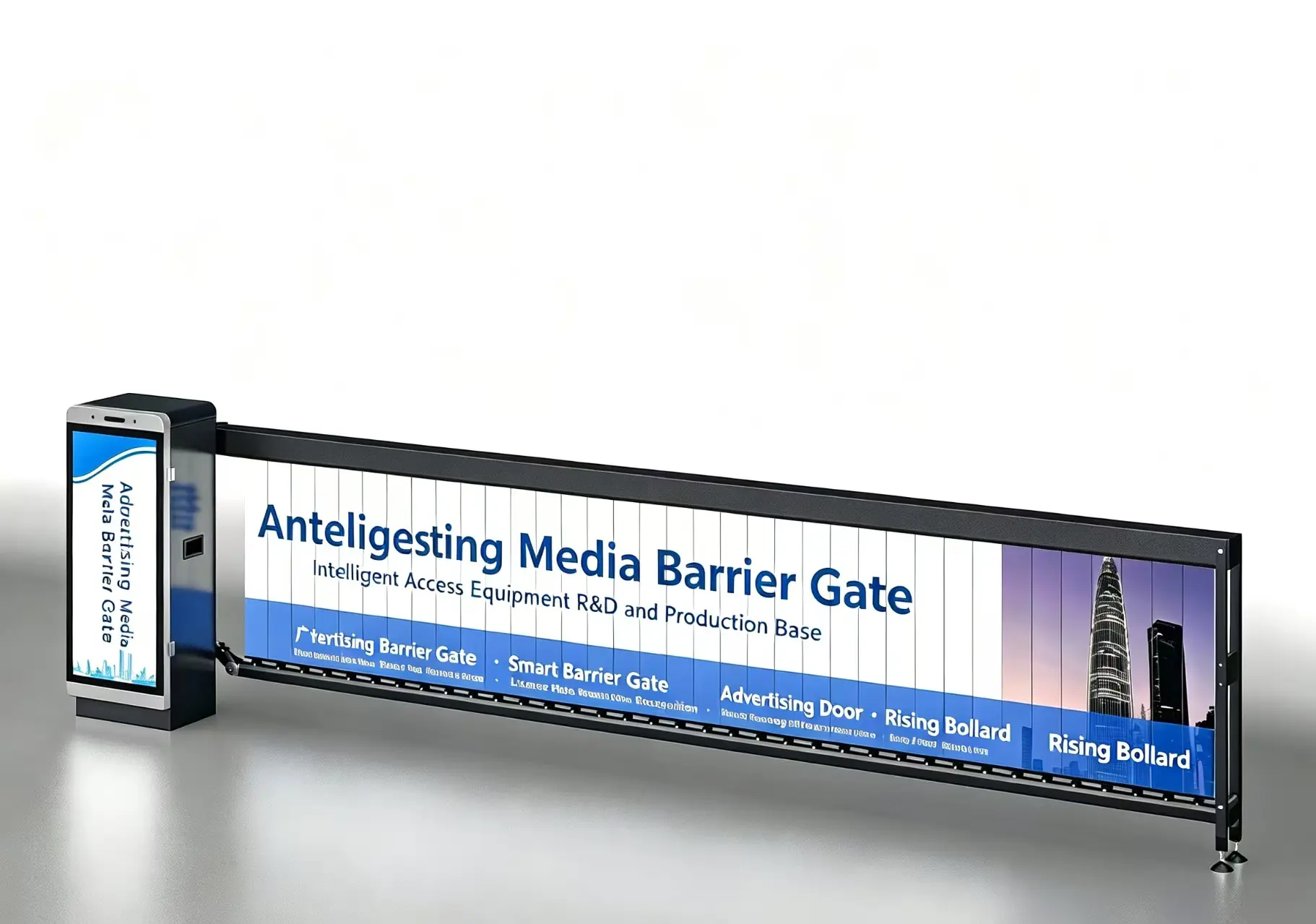
Engineered Perimeter Access & Parking Control Series
Proven hardware modules configured for industrial facilities, high-throughput commercial zones, and urban smart parking infrastructure.
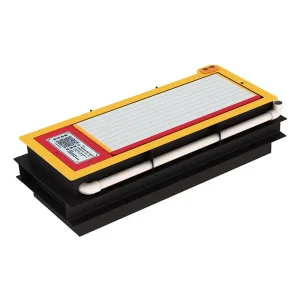
Easy-maintainable City Parking Product Factories, Price
Explore Model Specs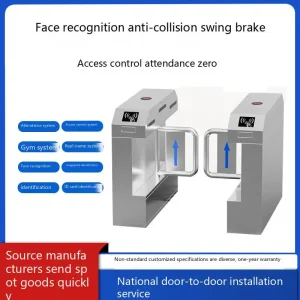
China Bridge Type Sloped Swing Gate Supplier, In Sales
Explore Model Specs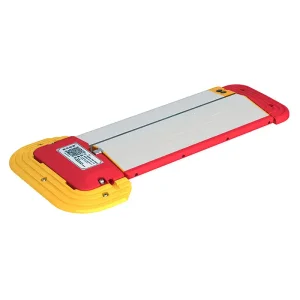
Cheap Scan to Pay Charging Pile & Parking Lock System
Explore Model Specs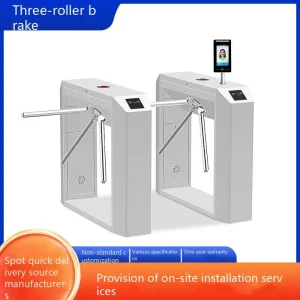
Factory OEM/ODM High Speed Swing Turnstile Access Gate
Explore Model Specs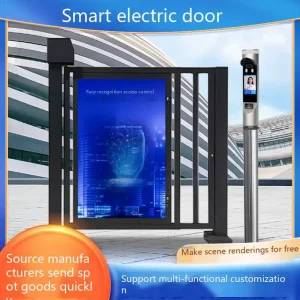
Intelligent Pedestrian Outdoor Advertising Barrier Gate
Explore Model Specs
Intelligent Heavy Duty Barrier Gate Model D03
Explore Model Specs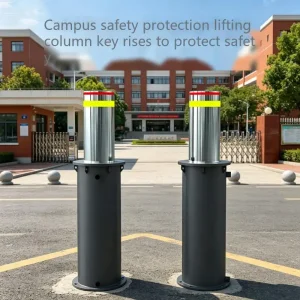
High-Security Automatic Hydraulic Rising Bollard System
Explore Model Specs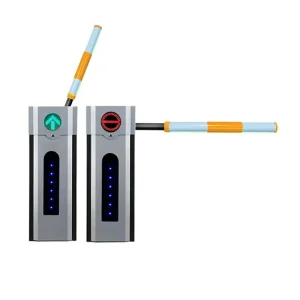
Easy-Maintainable High-Speed Barrier Gate Model D11S
Explore Model SpecsWhy Global EPCs Source Automatic Barriers from China
Shenzhen's integrated manufacturing ecosystem enables rapid prototyping, rigorous environmental validation, and unprecedented cost-to-performance efficiency for automated perimeter gating.
Vertically Integrated Brushless DC Motors
By producing high-torque planetary reduction gearboxes and variable frequency 24V/36V brushless DC (BLDC) motors in-house, Chinese manufacturing guarantees over 5,000,000 MTBF cycles while eliminating thermal degradation under heavy continuous duty.
Marine-Grade Anti-Corrosion Finishing
Cabinets undergo 7-stage phosphating, electrophoretic base coating, and electrostatic architectural powder spray (AkzoNobel). This ensures 1,000-hour neutral salt spray compliance (ASTM B117), essential for humid Southeast Asian and coastal Gulf environments.
Deep Component Clustering in Shenzhen
Located in the Greater Bay Area hardware cluster, factories source high-speed DSP processing chips, industrial microswitches, radar detection arrays, and optical encoder modules within a 30-kilometer radius, slashing lead times by over 45% compared to Western counterparts.
Technological Trajectories in Automated Vehicle Access
The market is moving away from standalone electromechanical barriers toward intelligent, networked AIoT edge nodes capable of predictive maintenance and multi-modal edge validation.
Millimeter-Wave (mmWave) Radar Anti-Smashing
Traditional inductive ground loop detectors require disruptive civil trenching and are prone to premature wire degradation. Next-gen China barrier systems deploy 77GHz FMCW radar sensors capable of differentiating pedestrian trajectories from tailgating vehicles, eliminating mechanical entrapment incidents.
Edge-AI Multi-National ANPR/LPR Engines
Modern export gates feature on-board embedded neural processing units (NPUs) running localized OCR inference models. These support dynamic license plate structures across GCC, European alphanumeric scripts, and dual-line Asian plates with recognition confidence exceeding 99.4% in variable luminescence.
Cloud Telemetry via MQTT & Open REST APIs
Proprietary closed-loop controllers are being replaced by standard Linux/Android-driven motherboards exposing RESTful endpoints, native MQTT brokers, and Wiegand/RS485 bridges, enabling frictionless integration with platforms like Genetec, Milestone, and Nedap.
Specialized Solutions for Global Operational Environments
Tailored barrier and pedestrian speed-gate topologies designed around physical footprint constraints, environmental threats, and duty-cycle demands.
Smart Gated Residential Communities
Equipped with advertising louver barriers, low-decibel sinusoidal mechanisms, and Bluetooth low-energy (BLE) smartphone tags that ensure quiet operation below 52dB for non-intrusive 24/7 vehicle clearance.
Intermodal Logistics Hubs & Toll Plazas
Featuring 0.9s to 1.5s ultra-fast carbon-fiber booms, break-away crash clutches to prevent motor shaft shearing during impact, and integrated red/green LED signaling booms for high-speed lane control.
High-Density Commercial Revenue Parking
Unified architecture combining LPR cameras, barcode payment validators, dynamic space counting boards, and automatic anti-parking locks, enabling ticketless parking operations with zero revenue slippage.
Critical Perimeter & Anti-Ram Zones
PAS68 / IWA14-1 crash-tested automated rising bollards integrated with heavy-duty wedge barriers, offering K4 to K12 kinetic impact mitigation for embassy zones, oil refineries, and government plazas.
Essential Specification Checklist for Global B2B Importers
Overseas systems integrators must balance multiple mechanical, electrical, and international compliance factors when sourcing barriers and gates from Chinese suppliers.
Grid Fluctuations & Wide Voltage Tolerances
Unstable local power grids often cause logic board resets. Industrial Chinese gates deploy wide-input switching power supplies (AC 100V-264V, 50/60Hz) paired with integrated battery backup (UPS) circuits supporting over 300 cycles during grid failure.
CE, FCC & RoHS Regulatory Compliance
Cross-border distribution demands verified certification. Factory hardware must hold electromagnetic compatibility (EMC EN 61000-6-3) approvals and Low Voltage Directive (LVD EN 60335-1) compliance, fully documented with transparent factory test reports.
Sea Freight Packaging & Knock-Down Assemblies
Boom arms, high-density counterweights, and cabinet casings require non-fumigation ISPM-15 compliant wooden crating with vapor-phase corrosion inhibitor (VCI) bags to prevent condensation damage during transoceanic shipping.
Frequently Asked Questions for Project Specifiers
Clear answers to mechanical, logistical, and systems integration questions from overseas procurement teams and engineering consultants.
Traditional AC motors experience brush wear, higher thermal load, and clutch degradation, typically lasting 1 to 2 million cycles. In contrast, 24V/36V DC Brushless motors use non-contact Hall sensor commutators, delivering upwards of 5 million cycles with zero internal thermal degradation, even under high-duty toll plaza conditions.
Boom arms exceeding 4.5 meters use aerodynamic octagonal profiles or round aluminum profiles to lower the drag coefficient. For regions exposed to typhoons or desert gusts, our factory integrates secondary balancing tension springs, dynamic wind dampening valves, and break-away pivot clamps to protect internal gearsets.
Yes. Our embedded camera firmware includes localized neural network weights pre-trained on datasets from over 80 countries, covering GCC Arabic fonts, EU formats, North American plate styles, and Southeast Asian double-stack character matrices. Custom character sets can be trained in 2 to 4 weeks using real lane capture samples.
All exported units include a mechanical clutch keyed disengagement mechanism. In emergency conditions or power cuts, turning the ergonomic handwheel allows manual counterbalanced lifting of the arm. Where specified, an integrated supercapacitor or 24V UPS can automatically trigger a fail-open action immediately upon AC disconnect.
Specialized Pedestrian Gates & High-Definition Vision Units
Explore our full line-up of swing barriers, speed gates, long-range RFID readers, and integrated license plate recognition cameras.
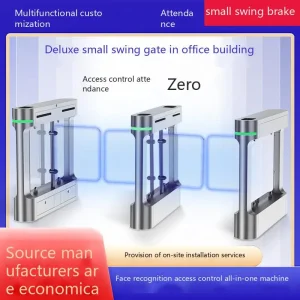
Discount Commercial Architectural Pedestrian Swing Gate
Explore Model Specs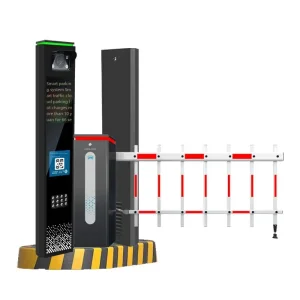
Articulated DC Boom Barrier Gate with Long-Range RFID
Explore Model Specs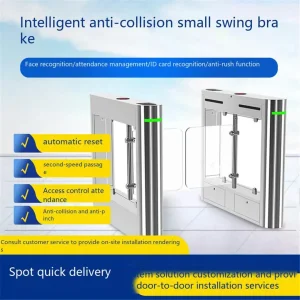
Custom Precision OEM Pedestrian Swing Speed Gate
Explore Model Specs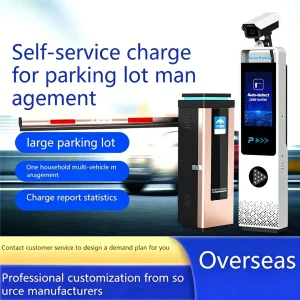
High-Definition LPR All-In-One Machine - Dolphin I
Explore Model Specs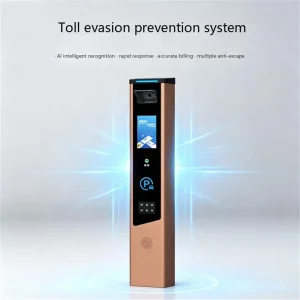
Integrated High-Definition LPR Terminal - AnRuitong II
Explore Model Specs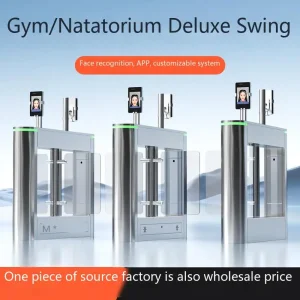
Commercial Entrance Speed Gate Optical Turnstile
Explore Model Specs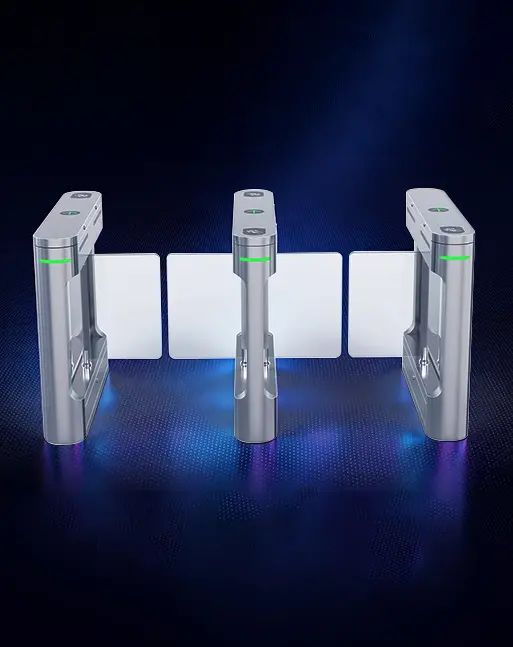
Accessible Bi-Directional High-Flow Swing Turnstile
Explore Model Specs