Integrated Access Control & Guidance Deployments
Enterprise-grade hardware engineered in Shenzhen to interface directly with dynamic parking guidance networks, high-density vehicle loops, and multi-tenant smart facility matrices.

Evolutionary Paradigms in Parking Guidance Systems (PGS)
The convergence of spatial telemetry, edge-native deep learning, and unified IoT infrastructure is reshaping how large commercial footprints control curbside and multi-story parking inventory.
From Ultrasonic Arrays to AI Visual Telemetry
Legacy single-point ultrasonic sensors are rapidly being supplanted by multi-space video detection cameras. Modern video-based PGS models employ wide-angle, neural-network-driven imaging sensors positioned along central aisles. A single dual-sensor camera can monitor up to 6 adjacent bays simultaneously, executing license plate recognition (LPR), video security recording, and multi-color vacancy LED signaling over a solitary PoE link.
Dynamic Curbside & EV Charger Integration
The explosive adoption of electric vehicles requires parking guidance architectures to resolve dwell-time disputes and non-EV occupancy of charging bays ("ICEing"). Cutting-edge Chinese manufacturers have engineered unified ultrasonic and camera units equipped with customized optical algorithms to distinguish whether a vehicle in a designated EV bay is actively charging or idling, dynamically dispatching digital infractions.
BMS Interoperability via Open APIs & MQTT
Siloed, proprietary parking loops have been made obsolete by modern facility demands. Enterprise facility managers mandate full BACnet/IP, Modbus TCP, and RESTful API exportability. Modern European and Middle Eastern smart-city hubs consume live bay vacancy telemetry from field controllers directly into central Building Management Systems (BMS) to modulate HVAC air-exchange volumes based on real-time vehicle density.
CE Certification Benchmarks: Regulatory Demands for Exporters
Procuring European-bound guidance infrastructure demands strict regulatory validation. The CE mark constitutes an irrevocable legal assertion of conformity across electromagnetic, radio, and low-voltage directives.
| Directive / Regulation | Harmonized Technical Standard | Tested Engineering Scope | Impact on Reliability & System Safety |
|---|---|---|---|
| EMC Directive (2014/30/EU) | EN 55032 / EN 55035, EN 61000-6-3 | Radiated emissions & electrostatic discharge (ESD) | Passed Prevents sensor telemetry packet loss in proximity to heavy HVAC or elevator inverters. |
| LVD (2014/35/EU) | EN 62368-1:2014+A11:2017 | Audio/video, information & communication tech safety | Passed Ensures safe power dissipation in 24V DC / PoE field data aggregators under peak thermal load. |
| RED Directive (2014/53/EU) | ETSI EN 300 328 / ETSI EN 301 489-1/-17 | 2.4GHz / Sub-1GHz wireless mesh & LoRa nodes | Passed Eliminates RF cross-talk with public 4G/5G carriers and private aviation radio bandwidths. |
| Ingress Protection (EN 60529) | IP65 (Outdoor signs) / IP54 (Indoor nodes) | Fine particulate dust containment & pressurized water spray | Verified Eliminates optical fogging and corrosion in subterranean car parks with high humidity and exhaust pollutants. |
| RoHS Directive (2011/65/EU) | IEC 62321 Analytical series | Restricted hazardous materials (Lead, Cadmium, PBDEs) | Verified Eco-compliant circuitry packaging guaranteeing non-toxic recycling lifecycles across EU municipalities. |
Comprehensive Exporter Pricing Matrix & 10-Year TCO Analysis
Understanding factory FOB pricing tiers against Total Cost of Ownership (TCO) allows EPC contractors and parking concessionaires to accurately budget capital expenditures and operational longevity.
Tier 1: Ultrasonic Node Architecture
Factory Cost: $18 – $35 / Parking Space
Includes single-bay ceiling ultrasonic sensor with integrated RGB indicator lamp, RS-485 area collectors, and central data forwarding controllers. Ideal for strict budget-sensitive underground decks requiring rudimentary bay guidance without video surveillance or vehicle tracking capabilities.
Tier 2: AI Multi-Bay Video Telemetry
Factory Cost: $42 – $75 / Parking Space
Deploys 3.0MP or 5.0MP dual-lens camera modules covering 3 to 6 perpendicular or angled bays. Incorporates localized ONVIF-compliant RTSP streaming, 99.8% plate capture, find-my-car capability via kiosk, and 7-color software-defined indicator lights via PoE infrastructure.
Tier 3: Outdoor Geomagnetic Wireless
Factory Cost: $55 – $95 / Parking Space
Features dual-axis magnetic perturbation + microwave radar embedded pucks with lithium thionyl chloride batteries (5-8 year service life). Communicates via NB-IoT or Sub-1GHz LoRaWAN gateways to outdoor solar-powered LED variable message signs (VMS).
| Component Category | Hardware Specifications | Export Unit FOB Shenzhen | Installation & Cabling Labor Est. |
|---|---|---|---|
| Indoor AI Dual-Lens Detector | Dual 1/2.8" CMOS, 1080p, integrated multi-color LED, IP54 | $85.00 – $135.00 / unit (serves 3-6 bays) | $15.00 – $22.00 / drop (Cat6 PoE) |
| Area Collector Gateway | Manages up to 64 camera streams, dual GbE, industrial DIN mount | $280.00 – $480.00 / controller | $65.00 – $110.00 / rack position |
| Variable Message Sign (Indoor) | High-contrast 3-digit green/red arrows, aluminum housing | $75.00 – $160.00 / unit | $35.00 – $50.00 / mounting point |
| Dynamic Entrance Totem (Outdoor) | Multi-tier LED matrix, IP65, auto-brightness, RS485/TCP-IP | $650.00 – $1,800.00 / totem | $250.00 – $500.00 (plinth & conduit) |
| Central Management Server & Core SW | Pre-activated Linux/Windows server, API gateway, perpetual license | $1,500.00 – $4,500.00 / system | $800.00 – $1,500.00 (commissioning) |
China Factory 4.0: Supply Chain Resilience & Manufacturing Depth
Shenzhen's hyper-dense hardware manufacturing corridor provides unmatched component sourcing agility, high-throughput surface mount technology (SMT), and rigorous environmental life testing.
Automated SMT & AOI Inspection
Every guidance sensor board is manufactured on high-speed SMT lines featuring automated optical inspection (AOI) and 3D solder paste inspection (SPI), guaranteeing zero bridging or dry solder joints across dense ball grid arrays (BGA).
Continuous Burn-In Thermal Cycling
Components undergo 72-hour continuous thermal stress screening from -30°C to +75°C in automated environmental chambers. This mitigates early semiconductor failure (infant mortality) before international packaging and container loading.
Bespoke OEM/ODM Customization
Direct factory alignment permits custom CNC-machined polycarbonate enclosures, specific optical lens focal lengths for ultra-low structural ceilings, custom corporate brand silk-screening, and firmware adaptation to regional license plate layouts.
Resilient Tier-1 Sourcing Ecosystem
Our Shenzhen factory leverages direct supply links with leading optical sensor and processing foundries. This eliminates single-vendor dependencies, shortens component lead times to under 3 weeks, and insulates overseas buyers from global stock volatility.
Field-Engineered Localized Application Scenarios
Architectural layout demands dictate guidance topology. Discover how tailored parking guidance systems resolve traffic bottlenecks across varied global operations.
International Airport Mobility Hubs
Terminal parking structures handle extreme cyclic peaks corresponding to flight arrivals and departures. Video-based PGS nodes cross-reference captured vehicle plates against automated flight-scheduling databases. If an incoming traveler inputs their license plate at an interactive kiosk, the system displays their exact stall number alongside an indoor pedestrian routing vector straight to their vehicle.
High-Density Mixed-Use Retail Complexes
Multi-level retail shopping developments demand dynamic inventory segmentation. An integrated guidance platform reallocates bay privileges on the fly via configurable 7-color LED indicators: Green (General Public), Blue (Accessible), Magenta (VIP Reservation), and Amber (Short-Stay Express). Real-time outdoor totems divert incoming motorists away from saturated underground levels to reduce structural congestion.
Industrial Logistics & Heavy Freight Yards
Heavy distribution hubs rely on long-range ultrasonic and radar nodes designed for high-clearance overhead structures (6 to 12 meters). The guidance system dynamically routes 40-foot articulated trucks to dedicated loading bays, synchronizing with gate barrier systems and RFID tag readers to accelerate supply chain handovers and eliminate turn-around bottlenecks.
Engineering & Procurement FAQ
Authoritative technical guidance for EPC contractors, electrical engineers, and global procurement teams evaluating parking guidance system architecture.
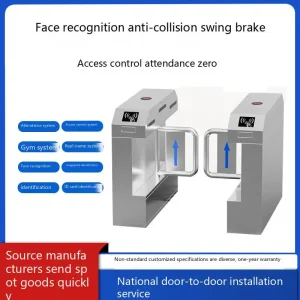
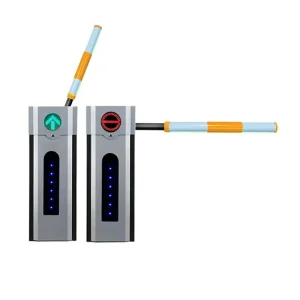
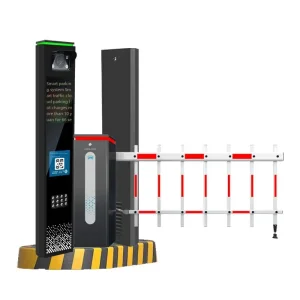
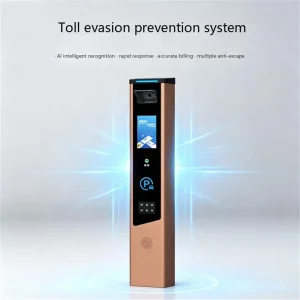
Comprehensive Access Control & Space Reservation Lineup
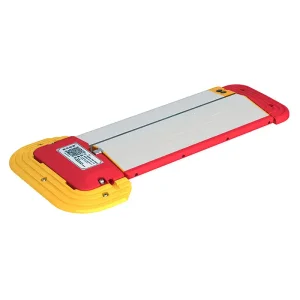
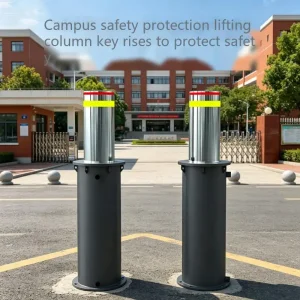
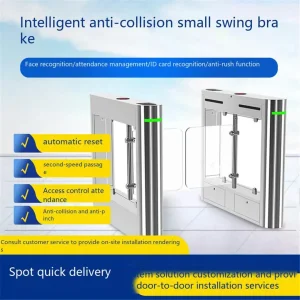
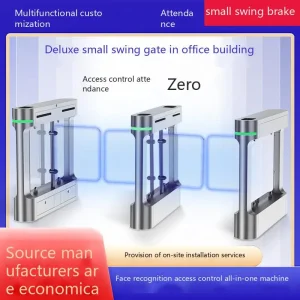
Complementary edge barrier solutions, smart parking space locks, and automated perimeter security hardware tested to perform seamlessly alongside our centralized parking guidance backbones.