
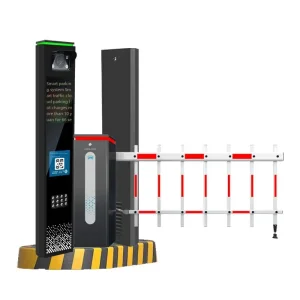
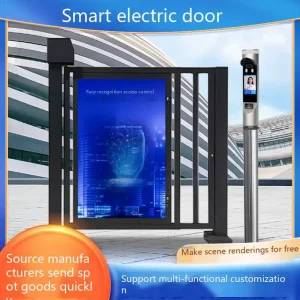
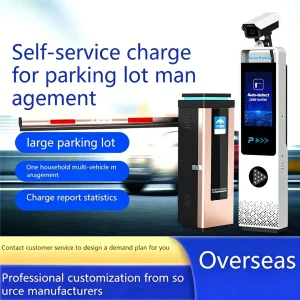
Featured Industrial Access & Barrier Infrastructure
Enterprise-grade vehicle checkpoints and access control nodes integrated with high-accuracy plate recognition
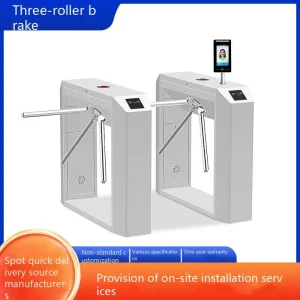
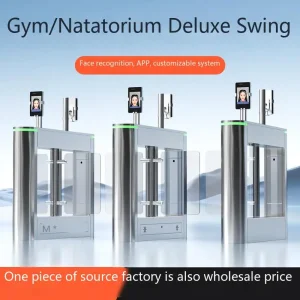
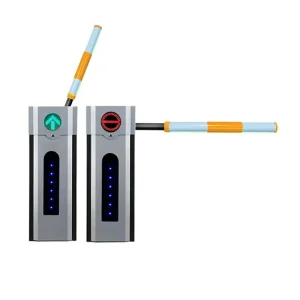

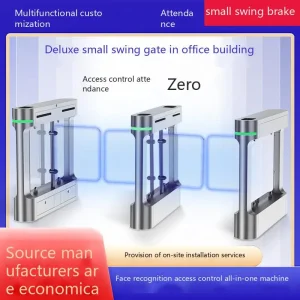
Global Landscape: Commercial Realities of CE-Compliant ANPR/LPR Deployments
Transitioning from optical character recognition (OCR) to multi-spectral deep learning engines at the connected smart-city edge
The global demand for License Plate Recognition (LPR) and Automatic Number Plate Recognition (ANPR) surveillance cameras has undergone a seismic shift from passive forensic logging to active real-time edge orchestration. Within commercial logistics corridors, municipal free-flow tolling, and mission-critical smart facilities, international infrastructure operators no longer accept disconnected edge devices. Surveillance hardware must function reliably under severe environmental stress while strictly conforming to regulatory safety mandates.
In the European Union and aligned trade regions, CE Certification is not merely a border customs formality—it is a rigorous benchmark governing Electromagnetic Compatibility (EMC Directive 2014/30/EU), Low Voltage electrical safety (LVD 2014/35/EU), and environmental substance compliance (RoHS 2011/65/EU). Uncertified or non-compliant equipment presents immense enterprise risk: field failures caused by industrial electromagnetic interference from variable-frequency drives, radio-frequency access gates, or nearby substations can cause intermittent license plate capture drops, resulting in direct revenue loss and severe lane congestion.
EMC Immunity & Reliability
Certified hardware is tested against EN 50130-4 standards, guaranteeing that rapid electrical transients, electrostatic surges, and proximity to 5.8GHz microwave antennas will not corrupt neural frame buffers or freeze trigger relays.
Sub-100ms Inference Latency
Modern commercial tolling and unstaffed parking infrastructure require integrated on-die NPUs capable of parsing character geometry, font variations, and retro-reflective retrofitting instantly before high-speed vehicles cross inductive loops.
Tamper-Proof Data Privacy
Strict alignment with General Data Protection Regulation (GDPR) mandates demands on-camera cryptographic signing of license image metadata, preventing stream manipulation while retaining verifiable chain of custody for law enforcement.
Shenzhen Precision Manufacturing & Global Supply Chain Dominance
How direct manufacturing vertical integration drives unmatched unit economics without compromising engineering tolerances
The Shenzhen Supply-Chain Advantage
Operating out of the Guangming District in Shenzhen, our integrated manufacturing lines control every stage of production: SMT board placement, multi-spectral optics alignment, dynamic thermostatic testing (-30°C to +75°C), and automated lens collimation. By eliminating tier-two distributor markups, our clients receive factory-direct wholesale pricing backed by Tier-1 electronic architectures (Sony STARVIS sensors coupled with high-efficiency edge AI microprocessors).
Direct Engineering Synchronization
Unlike trading intermediaries, our in-house firmware development team works in direct collaboration with foreign contractors. We supply bespoke SDKs for Python, C++, and C# along with MQTT and RESTful webhooks natively executed inside the camera. This drastically compresses deployment lead times and eliminates communication friction during third-party parking revenue control systems (PARCS) implementation.
Industrial Pricing Architecture & System Cost Engineering
Clear budgetary evaluation across commercial tiers, optics specifications, and project scope volumes
A legitimate industrial CE Certification LPR Surveillance Camera quotation is composed of three structural layers: sensor/optics fidelity, on-board compute capacity (NPU TOPS rating), and ruggedized enclosure protection (IP67/IK10 ingress ratings). Procurement teams must evaluate not only initial capital expenditure (CapEx) but total cost of ownership (TCO) derived from mean time between failures (MTBF), firmware stability, and power consumption profiles.
| System Classification | Sensor & Optical Setup | Edge Compute Engine | Protection Rating | Target Applications | Estimated Volume Tier |
|---|---|---|---|---|---|
| Standard Commercial Edge LPR | 2.0MP (1080p), 2.8-12mm Motorized Varifocal, Starlight CMOS | 1.5 TOPS NPU, Dual-Core ISP, Integrated White/IR LED | IP66 Die-Cast Aluminum, Internal Defog | Residential Gated Communities, Commercial Garages, Office Parks | $180 – $320 USD |
| High-Speed Multi-Lane LPR | 4.0MP (2K), 6-22mm Telephoto Lens, Global Shutter Sensor | 3.0 TOPS NPU, Direction Detection, Multi-Plate Tracking | IP67 Sealed Housing, Integrated Heating Array | Highway Toll Plazas, Highway Checkpoints, Port Logistics Terminals | $380 – $650 USD |
| All-in-One Dual-Sensor Terminal | Dual 4MP Sensors (LPR + Context Overview), Strobe Sync | 4.0 TOPS NPU, Multi-Nation Plate Recognition, Vehicle Classification | IK10 Vandal-Proof, IP67 Enclosure with Status Display | Automated Customs Gates, Unattended Automated Weighbridges | $720 – $1,250 USD |
| Complete Lane Package | LPR Camera + Barrier Gate + Display Screen + Radar Detection | Integrated Lane Controller, Direct Wiegand/Relay Logic | Full Outdoor Marine-Grade Weatherproof Coating | Turnkey Commercial Parking Access, Logistics Park Checkpoints | $1,200 – $2,400 USD |
Localized Deployment Architectures Across International Markets
Overcoming regional alphanumeric variations, extreme climates, and infrastructure standards
European Union: Multi-Line & Retro-Reflective Plates
European registrations demand precise segmentation of single-line and two-line license plates across distinct fonts (e.g., German FE-Schrift, French SIV, UK Charles Wright). Combined with strict CE regulations, our units leverage customized polarization filters that eliminate windscreen glare and direct headlamp flaring in wet conditions.
Gulf Region (GCC): High Thermal Tolerance & Dust Ingress
Deployments in the UAE, Saudi Arabia, and Qatar contend with ambient temperatures exceeding +50°C and pervasive airborne silica. Our units utilize dual-chamber thermal dissipative designs with specialized hydrophobic glass coatings that prevent dust accumulation, backed by algorithms capable of reading dual-language (Arabic/English) alphanumeric plates.
Americas & Asia-Pacific: Dynamic Aspect Ratios
Navigating wide variations in plate geometries—from standardized North American plates to irregular ASEAN motorcycle and commercial vehicle layouts—our edge algorithms utilize deep convolutional neural networks (CNNs) trained across 100+ national jurisdictions, ensuring high-speed recognition regardless of angle or mounting offset.
Industry Technological Vectors Shaping Procurement Strategies
The evolutionary roadmap: how deep learning edge integration is transforming security hardware into smart data sensors
MMCR Neural Engines
Next-generation cameras go beyond character extraction. Make, Model, Color, and Recognition (MMCR) engines analyze vehicle geometry to match vehicle classification against license records, eliminating tag-switching fraud in automated tolling systems.
Edge-to-Cloud Interoperability
Modern architectures eliminate on-site localized lane computers. Cameras publish parsed JSON metadata payloads directly to enterprise cloud brokers (AWS IoT Core, Azure IoT Hub) over TLS 1.3 encrypted websockets, reducing deployment footprint and field maintenance overhead.
Integrated Radar Fusion
Integrating 24GHz FMCW millimeter-wave radar directly into the camera casing enables continuous vehicle speed and range measurement. This triggers the camera shutter based on exact physical positioning, eliminating the installation and maintenance costs of buried ground inductive loops.
Automated Security Hardening
With cyber attacks increasingly targeting IoT entry points, CE-certified cameras must feature secure boot architectures, signed firmware enforcement, and automated port locking to prevent unauthorized lateral network penetration through outdoor camera ports.
Enterprise Procurement Framework: 5 Crucial Verification Checkpoints
A field-validated engineering checklist for systems integrators, EPC general contractors, and public works purchasers
1. Shutter Architecture Validation
Verify whether the camera utilizes a true Global Shutter or an advanced Rolling Shutter with high-speed electronic gating (up to 1/100,000s). For vehicle speeds exceeding 40 km/h, rolling shutters can introduce severe geometric distortion, invalidating plate character segmentation.
2. Verifiable Test Lab Reports
Do not accept generic self-declarations. Demand the accredited ISO/IEC 17025 laboratory test reports verifying compliance with EN 55032 (Emissions), EN 55035 (Immunity), and EN 62368-1 (Product Safety). Confirm testing covered all optical and auxiliary illumination units.
3. Lighting Synchronization
Ensure the camera housing integrates pulsed infrared (850nm) or white-light LEDs coordinated directly with the sensor shutter. Continuous ambient lighting consumes excessive power, generates thermal issues, and often causes blinding glare on reflective plate coatings.
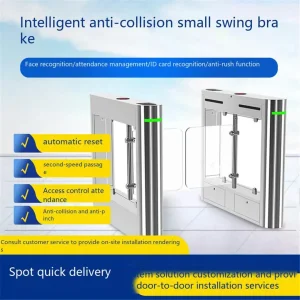
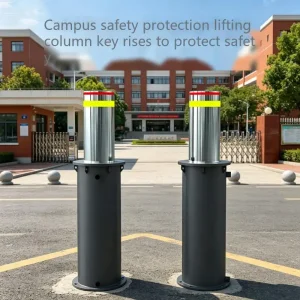
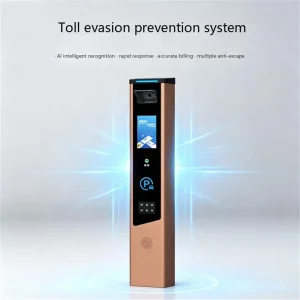
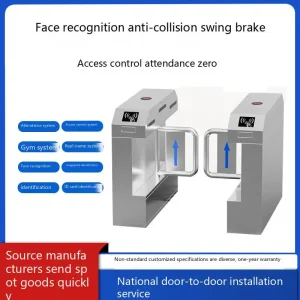
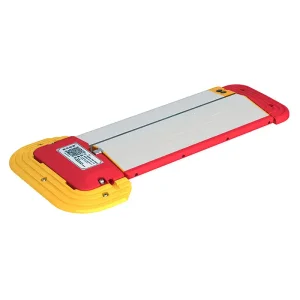
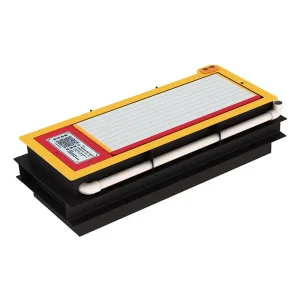
Integrated Hardware Lineup & Automated Access Nodes
Expanding checkpoint resilience: complete perimeter turnstiles, rising bollards, and intelligent locks
Frequently Asked Questions & Technical Procurement Inquiries
Direct engineering answers addressing compliance, customs protocols, and on-site integration
What specific standards must an LPR camera meet to obtain authentic CE Certification?
How does ambient illumination affect plate capture accuracy at night?
Can Anrui LPR cameras integrate directly with third-party barrier gates and software?
What are the lead times and minimum order quantities (MOQs) for custom OEM configurations?
How does the camera maintain performance in extreme temperatures and humid marine environments?
Request Your Project Engineering Quotation
Connect with our Shenzhen engineering hub to discuss lane geometry, local license plate recognition models, and receive a transparent volume quotation for your international installation.