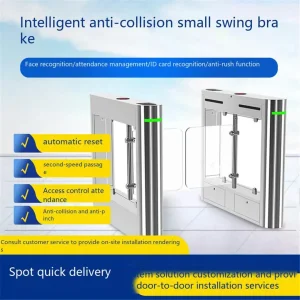
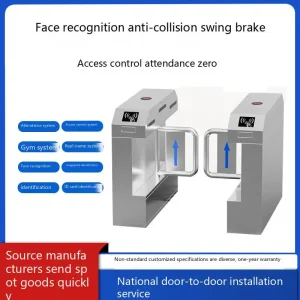
Featured Residential Access & Automation Systems
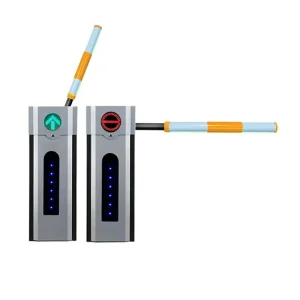
Procure high-duty cycles, automated barrier mechanisms, and license plate recognition subsystems directly from certified manufacturing facilities with volume discounting.
The Paradigm Shift in Residential Electric Gate Engineering
From electro-mechanical gear drives to AIoT-connected brushless DC powertrains: how smart residential developments, HOA enclaves, and multi-family residences are redefining perimeter entry standards.
The global market for residential electric gates is experiencing an unprecedented architectural transformation. What was historically viewed as a rudimentary physical barricade powered by conventional AC induction motors has evolved into an intelligent, edge-computing perimeter node. Modern property developers, luxury gated community planners, and municipal residential engineers now demand seamless throughput, active collision deterrence, and round-the-clock telemetry integration.
Central to this technological progression is the widespread adoption of Brushless DC (BLDC) servo-motor architecture. Compared to traditional single-phase AC motors that suffer from thermal throttling and continuous brush wear, BLDC actuators deliver up to 85% electro-mechanical efficiency, programmable acceleration and deceleration curves, and near-silent operation (sub-45 dB acoustic footprint). Crucially, 24V/36V DC native drive units enable direct coupling with micro-solar photovoltaic arrays and lithium iron phosphate (LiFePO4) uninterrupted power supplies, eliminating downtime during grid instability or substation blackouts.
BLDC Planetary Gearsets
Continuous-duty brushless electro-mechanical drives offering 5,000,000+ Mean Cycles Between Failures (MCBF) and sub-second directional reversing.
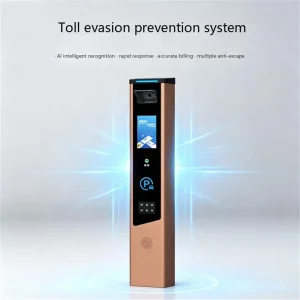
Edge-AI ALPR Integration
Onboard Neural Processing Units (NPUs) executing license plate classification, vehicle profiling, and biometric credentialing locally in <120ms.
Matter & LoRaWAN Mesh
Interoperable wireless protocols bridging gate operators directly into building management systems (BMS) and smart estate automation ecosystems.
Dynamic Collision Vectoring
Integrated 77GHz millimeter-wave (mmWave) radar sensors replacing traditional ground induction loops for true 3D spatial safety monitoring.
Global Sourcing Economics: Navigating Factory-Direct Discounts
A pragmatic evaluation of manufacturing Bill of Materials (BOM), wholesale MOQ scaling, freight packing optimization, and Total Cost of Ownership (TCO).
For international security distributors, access control EPCs, and regional gate installation contractors, securing true discount pricing from original manufacturers involves far more than comparing top-line FOB quotations. A nuanced understanding of manufacturing tolerances, structural alloy grades, and containerization density determines whether a procurement batch delivers profitable margins or unexpected site-support liabilities.
When procuring residential automated swing gates, sliding operators, or automated community barrier systems, tier-one manufacturers distinguish between consumer-grade aluminum fabrication and industrial architectural extrusion. Below is an engineering comparison matrix designed to guide procurement teams during supplier technical audits:
| Evaluation Parameter | Commercial Commodity Tier | OEM Tier-1 Architectural Grade | Anrui Engineering Standard |
|---|---|---|---|
| Motor Metallurgy | Brushed copper-clad aluminum | Solid oxygen-free copper BLDC | 100% Electrolytic Copper BLDC |
| Chassis Extrusion | 1.2mm Q215 stamped sheet | 2.0mm Q235 galvanized carbon steel | 2.5mm Hot-Dip Galvanized + Fluorocarbon |
| Operational Duty Cycle | 30% (Thermal tripping at peak) | 70% continuous rating | 100% Continuous (Class IV Rated) |
| Environmental Ingress | IP44 (Vulnerable to driving rain) | IP54 / IP55 certified | IP65 / IP66 Hermetic Gasketing |
| Control Electronics | Analog micro-switches, discrete relays | Microcontroller with basic optical encoder | ARM Cortex-M4 MCU + Dual Hall Encoders |
| Container Packaging Density | Individual unbraced single cartons | Reinforced honeycomb carton | Custom Steel-Banded Export Palletizing |
Wholesale Tiering Architecture & Customization Thresholds
Direct manufacturer procurement unlocks progressive margin discounts: Tier 1 (Sample / Project batch: 1–9 units) yields benchmark factory pricing with full standard warranty; Tier 2 (Regional Distributor: 10–49 units) unlocks a 15–22% discount with custom housing RAL powder-coating and localized firmware branding; Tier 3 (Containerized EPC / Master Importer: 50+ units / 20GP container) delivers up to 35% margin relief, bespoke tooling options, dedicated field spare kits, and private-label packaging.
Macro Engineering Solutions for Residential Environments
Addressing real-world physical constraints: wind-loading calculations, anti-tailgating algorithms, and acoustic dampening for quiet neighborhood installation.
Deploying automatic gate operators and barrier mechanisms within residential settings introduces challenges absent in heavy industrial facilities. Foremost among these is acoustic vibration and structural reverberation. Residential electric gates installed near living quarters require specialized worm-gear or planetary drive dampening, vibration-absorbing neoprene isolation pads, and soft-start/soft-stop PWM (Pulse Width Modulation) acceleration profiles. This eliminates mechanical shudder and metallic clanging at gate travel limits.
A second critical engineering challenge is aerodynamic wind loading. Solid privacy gates act as expansive sails under high wind speeds. A 2.0-meter tall by 4.0-meter wide residential swing leaf exposed to a 75 km/h gust experiences lateral aerodynamic thrust exceeding 2,800 Newtons. Inferior gearboxes shear drive pins or strip worm gears under such static resistance. Premium manufacturers combat this through algorithmic torque compensation:
Dynamic Adaptive Torque
Micro-controller continuous feedback continuously measures motor back-EMF, dynamically scaling current to overcome sudden aerodynamic gusts while maintaining active crush protection.
Bi-Directional Anti-Tailgating
Coupling overhead time-of-flight (ToF) sensors or dual-channel loop detectors with barrier gates to clamp closing cycles immediately after the authorized chassis traverses the threshold.
Auxiliary Regenerative Braking
Electrodynamic back-EMF dissipation replaces wear-prone mechanical friction clutches, providing frictionless gate retardation and extending mechanical system life tenfold.
Global Safety Mandates & Environmental Weatherproofing
Ensuring compliance with UL 325, EN 12453, CE-LVD, and regional statutory requirements across extreme environmental deployment envelopes.
Importing electric gate assemblies into highly regulated jurisdictions—such as North America, the European Union, Australia, or the GCC—requires unwavering adherence to personal safety and radio frequency standards. Non-compliant gate operators expose installers and property managers to catastrophic liability should an entrapment accident occur.
Under UL 325 (Class I: Residential Gate Operators) and European EN 12453 / EN 12445, automated gate mechanisms must incorporate dual monitored entrapment protection. This mandates both an inherent motor-torque reversing capability and external secondary sensing devices (such as monitored retro-reflective infrared photo-eyes or pneumatic/resistive 8.2kΩ safety contact edges). Factory testing protocols must certify that closure force does not exceed statutory limits (under 400N dynamic spike dissipating to <150N within 0.75 seconds).
Thermal Resilience (-35°C to +70°C)
Industrial low-temperature synthetic polyalphaolefin (PAO) gear lubricants and self-regulating internal PCB heating strips ensure uninhibited torque delivery across Nordic winters or Middle Eastern summers.
Coastal Saline Protection (C5-M)
Housings treated with multi-stage zinc phosphating, e-coating, and dual-layer thermoset fluorocarbon powder baking prevent electrolytic rust and pit corrosion in sub-tropical coastal installations.
EMC & Power Surge Immunity
Integrated Class II surge arrestors rated for 10kA/20kV discharge protect delicate logic microcontrollers against atmospheric lightning strikes and unstable municipal power grids.
Technology Roadmap & Horizons: What Integrators Must Anticipate
The progression toward frictionless vehicular transit: UWB credentials, multi-spectral machine vision, and federated predictive maintenance telemetry.
As the smart home ecosystem harmonizes around unifying connectivity fabrics such as Matter over Thread, residential gates will no longer function as isolated perimeter islands. Systems integrators should prepare for three structural architectural developments over the coming development cycle:
Ultra-Wideband (UWB) Hands-Free Authorization
Moving beyond RFID windshield tags and mobile Bluetooth pairing, UWB micro-location chips inside vehicles or smartphones enable cryptographic centimeter-accurate proximity gating, preventing relay-spoofing attacks.
Predictive Micro-Vibration AI Telemetry
Integrated MEMS accelerometers coupled with local micro-controllers detect bearing raceway pitting, track alignment deviation, or hinge fatigue before physical seizure occurs, reporting alerts via MQTT.
Zero-Trust Edge ALPR Encryption
End-to-end hardware encryption (AES-256) inside edge optical cameras, ensuring vehicle passage records, license plates, and timestamps cannot be intercepted across public or sub-LAN topologies.
Frequently Addressed Engineering & Sourcing Questions
Authoritative technical clarification on duty ratings, international motor voltage compatibility, wholesale container consolidation, and warranty protocols.
How do factory-direct discount structures operate for residential electric gate orders?
Can residential BLDC gate mechanisms operate on standard North American and European power grids?
How do Anrui systems prevent false triggers and ghost openings caused by extreme weather?
What is the standard Mean Cycles Between Failures (MCBF) for residential vs. commercial operators?
How are overseas warranty claims, replacement components, and technical debugging handled?
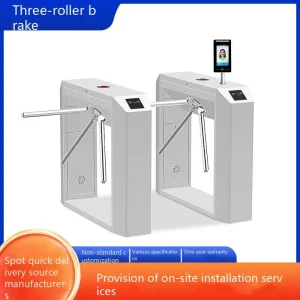
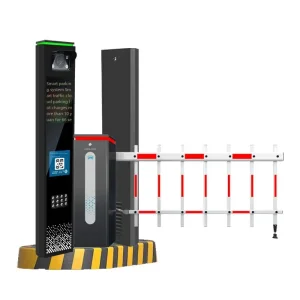
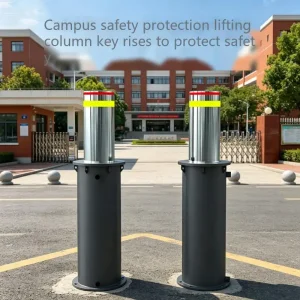
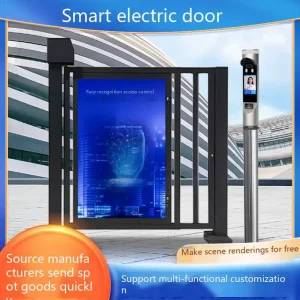
Integrated Gating, Turnstiles & Access Control Systems
Procure complementary vehicle barriers, heavy-duty hydraulic bollards, pedestrian speed lanes, and articulated boom systems to complete your site masterplan.