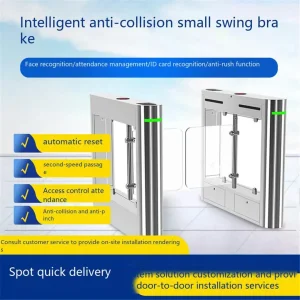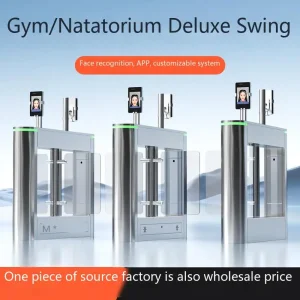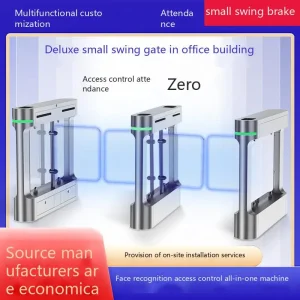
Advanced Factory OEM/ODM Durable Smart Fast Speed Swing Industrial Gym Turnstile
Procure Specification
Pre-calibrated automated physical barrier mechanisms and integrated optical validation infrastructure for heavy commercial and industrial duty cycles.
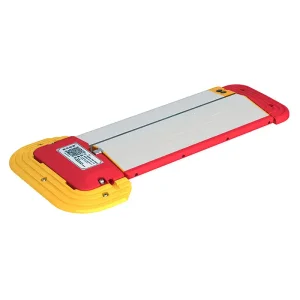
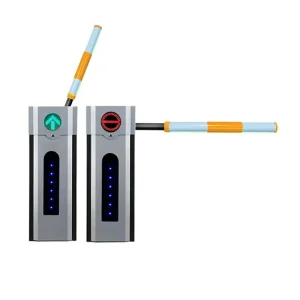

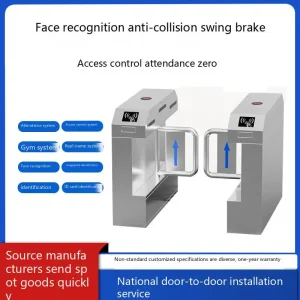
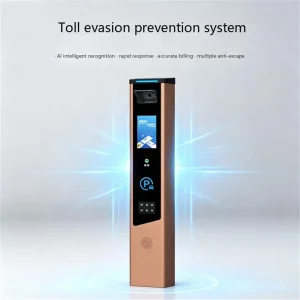
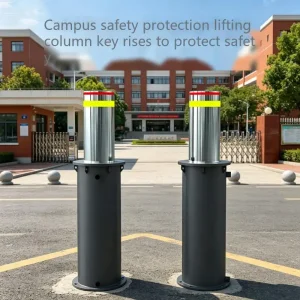
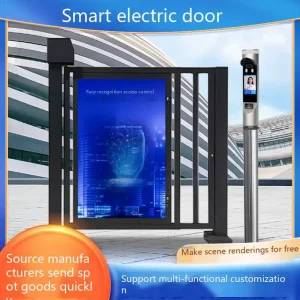
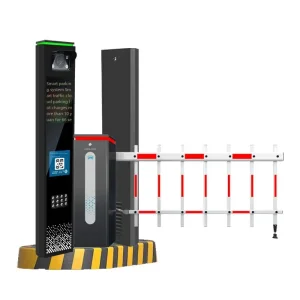
Curved pole fence gates (also referred to as folding, articulated, or drop-profile fence barrier systems) require an optimal equilibrium between structural counterbalance kinematics, high torque responsiveness, and harsh-environment metallurgic protection.
Shenzhen and Guangdong supply clusters offer unprecedented access to lightweight 6063-T6 aluminum alloys and high-tensile structural profiles. This dramatically lowers the load on planetary reduction gearboxes while preventing sag or stress fatigue across wide perimeter openings under continuous 100% duty-cycle operation.
By shifting away from legacy single-phase AC induction motors, modern Chinese production lines implement 24V/36V Brushless DC systems with vector servo control algorithms. These ensure variable torque acceleration, seamless slow-down curves at mechanical limits, dynamic rebound upon sensing obstruction, and heatless 5,000,000 MTBF cycles.
Perimeter gates must survive ambient extremes ranging from coastal hyper-saline winds to arid 50°C solar radiation. Direct tier-one manufacturing utilizes multi-tier anti-corrosion treating: phosphating baseline passivation followed by outdoor-grade polyester electro-static powder coatings tested to withstand 1,000+ hours in neutral salt spray chambers.
The convergence of computerized optical surveillance, height-constrained underground spaces, and strict anti-tailgating protocols has redefined physical barrier engineering.
Historically, commercial entryways were faced with a critical compromise: standard boom barriers provided swift operating cycles (1.5s to 3.0s) but negligible anti-pedestrian security, while traditional steel sliding or cantilever perimeter gates offered total closure but suffered from slow mechanical travel (10s to 25s) and excessive ground footprint requirements. The Curved Pole Fence Gate (articulated vertical-folding picket system) eliminates this trade-off by deploying vertical barrier bars that expand dynamically during closure and compress seamlessly overhead during opening.
| Evaluation Parameter | Legacy AC Straight Boom Gate | Heavy Cantilever Rolling Gate | BLDC Intelligent Curved Pole Fence Gate |
|---|---|---|---|
| Physical Intrusion Deterrence | Low (Easily crossed beneath arm) | High (Solid vertical pickets) | High (Integrated 1.2m - 1.8m anti-climb barrier fence) |
| Operating Clearance Velocity | 1.2s - 2.5s | 12s - 30s | 2.0s - 4.5s (Configurable multi-stage ramp) |
| Headroom Clearance Envelope | Requires full horizontal length | Zero vertical overhead demand | Engineered Articulated Joint (Ideal for <3.5m ceiling basements) |
| Drive Mechanism Durability | Worm-gear subject to shear wear | Rack-and-pinion grit sensitive | Brushless DC Servo + Dual-Helical Harmonic Reducer |
| Wind Loading Resistance | High (Round profile minimal draft) | High surface drag | Aerodynamic Hollow Elliptical Pickets (Operational in Beaufort Scale 8) |
Engineered flexibility enables rapid architectural deployment across varied environmental challenges and programmatic security perimeters.
Severe overhead clearance restrictions (typically between 2.2m and 3.0m) eliminate the ability to use conventional continuous 4.5-meter barrier poles. The mechanical articulation knuckle of a curved pole gate bends at custom geometric ratios, sealing 4-meter driveway lanes without contacting overhead sprinkler mains, cable trays, or ducting.
Freight staging yards require rapid validation of incoming tractor-trailers while preventing illegal unmanifested pedestrian border trespass. Curved vertical picket gates provide total vertical channel closure, deploying synchronized infrared beam grids and high-frequency radar anti-crush modules to protect cargo transport vehicles.
Where architectural presentation must balance aggressive perimeter hardening, custom anodized bronze, silver, or matte-black powder-coated pickets provide an imposing deterrent without visually isolating the campus. Integrated dry contacts accept remote commands from central SCADA building management software.
Direct export configurations operate beyond simple relay closures. Industrial barrier machines deploy unified I/O architectures designed to bridge field sensors directly into enterprise security matrices.
Direct serial RS485 and TCP/IP handshakes allow the barrier controller to accept direct digital opening signals from neural network ALPR cameras upon algorithmic confidence validation greater than 98.5% within 150 milliseconds.
Integrated quad-layer safety architectures unify subsurface loop detectors, 79GHz millimeter-wave radar obstacle detectors, pressure-sensitive pneumatic rubber bottom edges, and opposing safety photobeams to eliminate car impact risks.
Optocoupler-isolated fire system interlocks force mechanical fail-open conditions upon current drop or master emergency broadcasts, instantly releasing counterweight spring potential to elevate fence arms even during facility electrical cutouts.
Onboard microprocessor telemetry streams cycle counts, internal motor core temperatures, gear backlash deviations, and power stability records straight to web monitoring consoles, permitting true predictive maintenance.
Executing international wholesale orders demands robust testing regimes, maritime crating rigor, and seamless trade compliance.
Procuring curved pole fence gates directly from leading Chinese OEM/ODM factories provides significant capital expenditure reductions, but Tier-1 EPC contractors and global access system integrators prioritize precise factory audit parameters:
Every industrial barrier gate unit undergoes uninterrupted 72-hour continuous cycling burn-in tests prior to palletizing. Factory inspection reports include dynamic balance calibration sheets, dynamic motor insulation resistance tests, and high-voltage breakdown analysis.
Barrier arms and motor housings require segregated crating to prevent shipping damage. Mechanisms are encased in moisture-sealed vapor corrosion inhibitor (VCI) bags and locked into fumigated ISPM-15 wooden skeletal shipping frames engineered for heavy container handling.
Direct exporters must furnish genuine third-party European CE certifications conforming to Low Voltage Directive (LVD) 2014/35/EU, Electromagnetic Compatibility (EMC) 2014/30/EU, as well as RoHS compliance certificates to avoid port customs impounds.
Critical mechanical, electrical, and commercial clarifications for access control project managers and international procurement executives.
While a conventional articulated barrier gate bends a single rectangular or round pole at 90 degrees to bypass ceiling heights, a curved pole fence gate deploys an articulated continuous grid of interconnected vertical pickets. This provides vertical anti-pass-under security (typically 1.0m to 1.5m high) across the drive lane while maintaining an articulated upper arm that curves dynamically to clear indoor obstructions, balancing spatial volume constraints with strict perimeter anti-intrusion control.
Standard gates use light tension springs sized purely for single booms. Fence gates utilize high-strength dual or triple variable-pitch compression or tension springs engineered from high-grade silicon-manganese spring steel. These springs counterbalance up to 95% of the boom assembly mass, enabling high-torque brushless DC motors to pivot the multi-link system without thermodynamic overheating or premature planetary gear wear.
Tier-1 exporters provide end-to-end customization options: RAL custom electro-static housing color codes, customized laser-cut company logos with back-lit LED matrices, custom articulation geometry for unconventional ceiling profiles, integration of customized wide-angle flashing LED warning strips along the fence frame, and factory-flashed microcontroller firmware adapted to client-specific access protocols.
Standard catalog orders of 20 to 50 complete units generally feature a production lead time of 7 to 12 working days. Custom engineering configurations (special dimensions or custom voltage controllers) take approximately 15 to 20 working days. Shipping from Shenzhen or Ningbo ports to major European or North American base ports typically requires 22 to 35 days maritime transit via FCL or LCL consolidated sea freight.
Direct supply contracts normally include an unbroken 24- to 36-month hardware warranty covering the BLDC motor, digital drive controller, and chassis gear train. Factories support foreign contractors through express air dispatch of replacement PCB cards and critical mechanical components, backed by detailed wiring schematics, video diagnostic sessions, and comprehensive maintenance manuals.
Complete project-matched access hardware available directly from our manufacturing facilities with comprehensive export warranties.