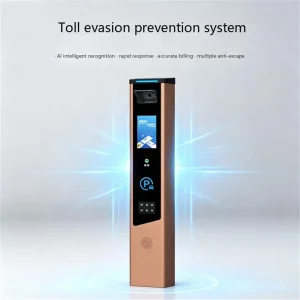
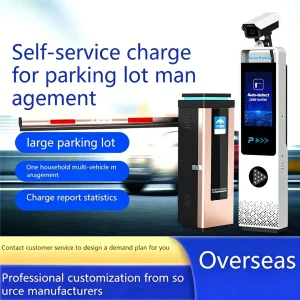
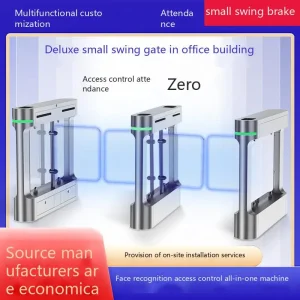
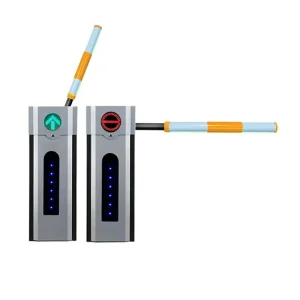
Featured Automated Billing & Access Control Units
Industrial-grade barrier gates, turnstiles, and automated sensor systems calibrated for unattended cloud-settlement entry points.
Anatomy of an Automated Billing System: Hardware Topology & Logic
An industrial automated billing system in vehicle and pedestrian mobility transcends standalone payment kiosks. It forms an end-to-end, multi-layered cyber-physical ecosystem integrating neural license plate recognition, sub-second mechanical articulation, edge controllers, and redundant fiscal ledger engines.
In modern smart cities and commercial environments, unattended transaction speed dictates overall site throughput. Automated billing hardware requires deterministic latency: the moment an optical vehicle sensor or ground loop detector triggers, the edge camera must identify the alphanumeric plate, query the centralized cloud database or local whitelist, calculate dwell-time tariffs, and either clear the vehicle or initiate a dynamic payment prompt within 400 milliseconds.
1. Edge Sensing & Optical Layer
High-dynamic-range (HDR) LPR cameras featuring embedded deep learning neural networks (NPU) capturing plate syntax, vehicle classification, and color under extreme headlight glare and harsh atmospheric conditions.
- 99.6%+ Recognition Accuracy
- Motorized Starlight 2.8-12mm Varifocal Lens
- Dual Trigger: Video Stream + Inductive Ground Loop
2. Dynamic Kinetic Control
Brushless Direct Current (BLDC) servo actuation motors driving high-cycle boom barrier arms and turnstile baffles. Engineered for continuous duty without overheating or thermal throttling.
- 0.6s to 3.0s Programmable Speeds
- 5,000,000+ Mean Cycles Between Failures (MCBF)
- Auto-Rebound on Pressure Resistance
3. Cashless Settlement Gateway
Omnichannel fiscal terminals accepting EMV contactless debit/credit, dynamic QR codes (Alipay, WeChat Pay, PayPal, Apple Pay), RFID smart passes, and mobile app-directed pre-clearing.
- Offline Cache Mode (Zero Revenue Loss on Net Drop)
- PCI-PTS & EMV Level 1/2 Certified Modules
- Restful API / MQTT Integration to Custom ERPs
Why Global Buyers Source Automated Billing Hardware from Shenzhen Factories
Shenzhen, China represents the world epicenter for hardware automation, IoT sensing, and embedded micro-electronics. Shenzhen Anrui Intelligent Equipment Co., Ltd. leverages this ecosystem to deliver structural price advantages without compromising structural endurance.
Vertical Manufacturing Integration
Unlike Western equipment assemblers who outsource critical components, Anrui produces high-tensile carbon steel housings, CNC gearboxes, brushless DC motors, and control motherboards internally in our Guangming District facility.
Severe Environmental Validation
Exported hardware withstands extreme climates. Cabinets undergo a 480-hour salt-spray mist corrosion evaluation (ASTM B117), IP67 submersible sealing audits, and dynamic thermal chamber stress tests from -35°C to +75°C.
Open Protocol Agility (Zero Vendor Lock-in)
We reject proprietary walled gardens. All barrier gates, payment poles, and turnstiles feature open-architecture relay circuits, Wiegand 26/34 interfaces, TCP/IP, and comprehensive SDKs for seamless third-party software ingestion.
Wholesale Price Benchmarks & Sourcing Cost Structures
Procuring discount automated billing systems requires navigating unit purchase pricing, shipment packing overhead, firmware licensing, and total cost of ownership (TCO). Below is an authentic factory-direct pricing matrix.
| Equipment Category | Core Specifications & Drive Mechanism | Evaluation Sample (1-4 Units) | Volume Tier (5-20 Units) | Container Fleet (50+ Units) | Lead Production Time |
|---|---|---|---|---|---|
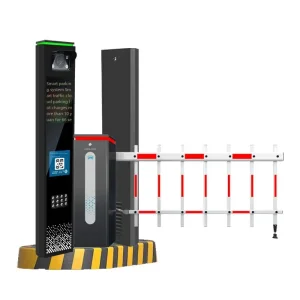
| Commercial BLDC Barrier Gate | 0.9s-3s speed, 140W Brushless DC, IP54 steel cabinet, remote & loop trigger | $280 - $420 | $210 - $310 | $165 - $240 | 5 - 8 Business Days |
| Integrated LPR Edge Terminal | 2MP/4MP Starlight sensor, deep learning OCR on-board, integrated fill light & LED display | $390 - $550 | $290 - $410 | $220 - $320 | 7 - 10 Business Days |
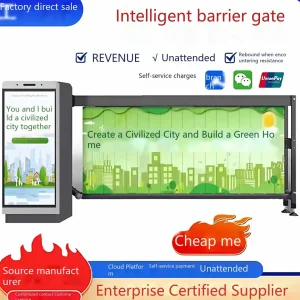
| Louver Advertising Barrier | Motorized dynamic billboard panels, LED night-illumination frame, heavy-duty chassis | $480 - $690 | $380 - $520 | $290 - $410 | 10 - 14 Business Days |
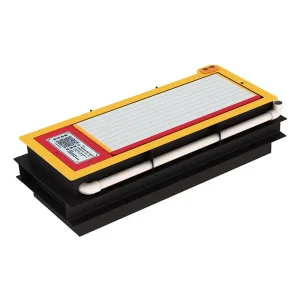
| Automated Scan-to-Pay Lock | Solar/LiFePO4 battery, radar dual-detection, NB-IoT / 4G cellular telemetry | $95 - $150 | $72 - $110 | $55 - $82 | 5 - 7 Business Days |
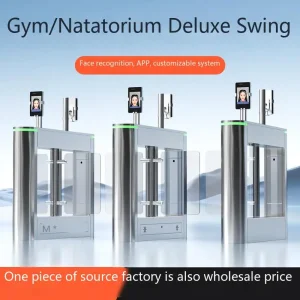
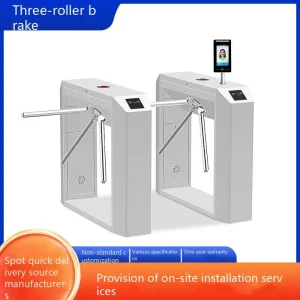
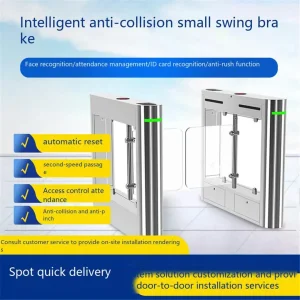
| Pedestrian Speed Turnstile | SUS304 hairline finish, infrared anti-pinch matrix, wide handicap lane option | $520 - $890 | $410 - $680 | $330 - $540 | 8 - 12 Business Days |
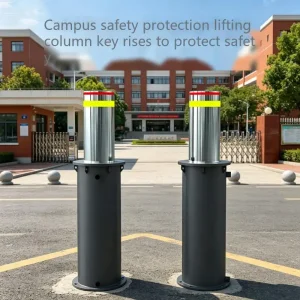
| Hydraulic Rising Bollard | Integrated micro-hydraulic power pack, K4 impact crash rated, 304 stainless sleeve | $650 - $1,100 | $510 - $840 | $420 - $690 | 12 - 15 Business Days |
The TCO Fallacy: Initial CapEx vs. Lifetime OpEx
Purchasers often focus solely on invoice cost, ignoring continuous mechanical wear and power waste. Traditional AC motor barrier gates consume 250W-400W and generate heat that deteriorates capacitor life in high-traffic plazas.
Anrui's modern Brushless DC (BLDC) motors operate at 24V with digital speed curves, drawing just 80W during movement and 3W on standby. Over a 5-year deployment cycle with 15 lanes, electricity consumption falls by 64%, while maintenance dispatches drop due to zero brush friction and contact-free encoder position monitoring.
Navigating Factory Discounts: How to Secure Minimum Pricing
Shenzhen industrial factories price output according to tooling continuity, production runs, and standardized packaging. Buyers can achieve maximum discount brackets by:
- Ordering complete matching entry/exit lane sets (Barrier + LPR + Controller) rather than split components.
- Standardizing on classic RAL colors (Grey/Orange or Carbon Black) to eliminate custom paint-booth batch setup charges.
- Consolidating sea freight across 20GP or 40HQ container volumes to minimize individual wood crating and port clearance charges.
Macro Industry Applications & Field Architectures
Automated billing hardware must harmonize with operational protocols. Explore how enterprise deployments tailor hardware configurations across four major industrial applications.
1. High-Density Commercial Plazas & Malls
Operational Challenge: Extreme peak departure queues during weekends and evenings; lost parking revenue from manual attendant cash leakage; congested ramps.
Hardware Architecture: Dual-lane entry/exit featuring Anrui high-speed 0.9s DC barrier gates linked with Dolphin-I LPR cameras. Exit lane incorporates an advertising barrier displaying corporate sponsors alongside QR scan-to-pay prompts for dynamic payment validation.
- Throughput Rate: Up to 720 vehicles per lane per hour
- Revenue Boost: 18% increase via zero unrecorded exits
2. Heavy Logistics Ports & Industrial Freight Parks
Operational Challenge: Mixed traffic of heavy articulated container lorries, standard courier vans, and plant worker motorbikes; severe vibration and airborne industrial dust.
Hardware Architecture: Articulated DC parking boom barrier gates with reinforced fence barriers, extended-range 12m UHF RFID readers, and heavy-duty automatic rising bollards to physically prevent non-authorized perimeter ingress.
- IP65 Ingress protection against corrosive chemical fumes
- Integrated weighbridge scale data correlation interface
3. Municipal On-Street Smart Parking Bays
Operational Challenge: Scattered parking spots across downtown avenues where erecting physical boom barriers is prohibited; persistent illegal car occupancy.
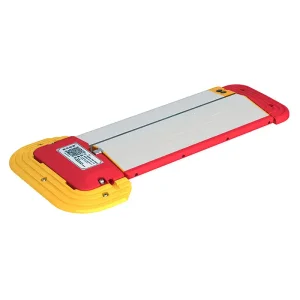
Hardware Architecture: Ground-mounted Scan-to-Pay automatic sensing parking locks with solar-trickle charging. When a vehicle occupies the space, internal radar raises the mechanical plate lock. The driver scans the QR code to unlock upon departure.
- Zero Trenching: Operates completely wire-free via 4G/NB-IoT
- Crush Resistance: 5-ton compressive vehicle load capacity
4. Corporate Headquarters & Mixed Commercial Lobbies
Operational Challenge: High-throughput worker access combined with paid gym/visitor day-pass billing, needing seamless architectural aesthetics.
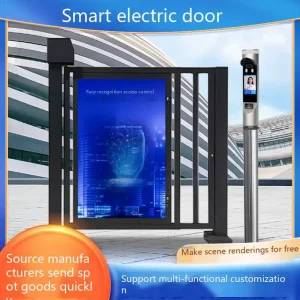
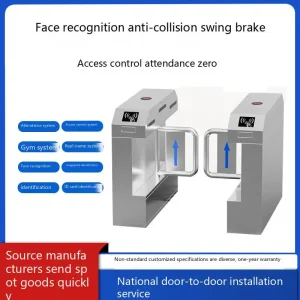
Hardware Architecture: Optical speed swing gates with brushless servo control, synchronized with biometric facial recognition terminals and integrated visitor QR billing printers for hourly facility access.
- Ultra-quiet sound profile (<45dB during peak rotation)
- Emergency fire-alarm trip: Automatic break-open barrier drop
Emerging Trends Driving Next-Generation Automated Billing Systems
The parking access industry is undergoing a structural paradigm shift driven by AI vision computing, open APIs, and ubiquitous smartphone payment rails. Here are the macro developments reshaping engineering specs.
1. Synthetic Neural OCR Engines
Traditional LPR cameras relied on standard contour-based character matching, causing high error rates with dirty, bent, or non-standard plate fonts. Modern 2026/2027 systems incorporate transformer-based multi-modal vision models.
Trained across billions of localized plate variants, these edge processors reconstruct obstructed digits, read non-Latin alphabets (Arabic, Cyrillic, Thai), and simultaneously classify vehicle make, model, and year for dynamic pricing.
2. Free-Flow Gantry Billing (Barrier-Free)
While physical boom barriers remain mandatory for tight security perimeters, open commercial environments are migrating toward barrier-free free-flow tolling.
Multi-camera tracking arrays capture vehicles entering at speeds up to 40 km/h, automatically logging timestamp coordinates to cloud wallets. Physical barriers are activated solely when an unpaid vehicle attempts repeated non-settled entries.
3. Unified EV Charging-Parking Billing
Electric mobility introduces a dual-billing friction point: charging kWh electricity fees plus municipal parking dwell fees.
Next-gen automated billing architectures unite smart parking space locks and EV charging piles into a unified OCPP/MQTT bus. A single scan authorizes charge power and calculates tiered parking discounts based on active energy consumption, eliminating idle bay hogging.
Frequently Asked Questions: Global Sourcing & Integration
Crucial answers addressing integration protocols, currency adaptation, maintenance cycles, and international factory procurement terms.
Can Anrui automated billing systems be integrated into our proprietary local management software?
How does the system handle localized payment systems and foreign currencies?
What happens if a vehicle has an illegible, damaged, or missing license plate?
What is the typical production lead time and international shipping protection?
How are barrier gates protected against vehicle damage and pedestrian injury?
What are the factory warranty terms and spare parts availability?
Extended Automated Billing Hardware Catalog
High-definition recognition cameras, articulated arm barrier gates, rising bollards, and specialized access accessories.