
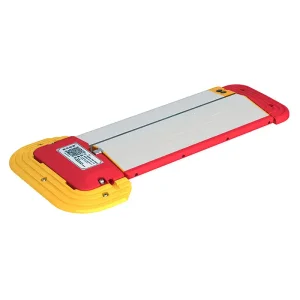
Cheap Scan to pay charging pile community parking lock automatic sensing
View Specifications
Integrate robust barrier hardware and perimeter boundary components designed for high-cycle industrial, agricultural, and commercial logistics hubs.



Analyzing macro-economic shifts, polymer stabilization technologies, and the lifecycle cost superiority of Three Rail Vinyl (PVC) fencing over traditional perimeter infrastructure.
Traditional pressure-treated timber and galvanized iron wire fences exhibit severe structural degradation from rot, subterranean termites, and salt-mist corrosion. Three-rail vinyl eliminates cyclic painting, chemical sealing, and frequent post replacements, yielding an aggregate operational expenditure reduction of over 68% over a 15-year lifecycle window.
Modern equine facilities, livestock pastures, and suburban ranching corridors require perimeter structures that mitigate traumatic injuries. Engineered vinyl posts and ribbed rails flex under abrupt kinetic impact without splintering into sharp, dangerous shards, dramatically lowering mortality and liability insurance premiums.
Export-tier manufacturers formulate rigid virgin polyvinyl chloride with high concentrations (10-12 parts per hundred resin) of non-chalking Rutile Titanium Dioxide (TiO₂). This ensures structural polymer retention and colorfastness under severe ASTM F964 compliance tests, resisting UV embrittlement across desert, tropical, and sub-zero zones.
Unpacking the engineering process, automated tooling, and regional material clustering that allow Chinese manufacturers to supply ultra-competitive 3-rail vinyl profiles without compromising structural integrity.
Tier-1 extrusion plants leverage dual-screw co-extrusion technology. This technique differentiates the profile into two chemically fused functional matrices:
The manufacturing cluster advantage lowers landed container costs through localized value stream integration:
| Engineering Metric | Standard Domestic Fence | Export-Grade Co-Extruded Vinyl | Industrial Anrui Integration Target |
|---|---|---|---|
| Profile Wall Thickness | 0.110 in (2.8 mm) | 0.135 - 0.150 in (3.5 - 3.8 mm) | 0.150 in Internal Heavy-Duty Core |
| UV Stabilizer Matrix | Standard Lead/Tin Stearate | High-Purity Rutile TiO₂ (>10 phr) | Multi-Zone ASTM F964 Certified |
| Tensile Elasticity | Moderate / Risk of Splintering | High Flexural Recovery (>6,500 psi) | Dynamic Impact Absorption |
| Installation Assembly | Manual Screws / Prone to Rust | Internal Notched Locking Tabs | Integrated Auto-Gate Post Anchors |
| Annual Maintenance Overhead | $4.50 - $7.00 per Linear Foot | Negligible (< $0.20 per Linear Foot) | Zero Recurring Painting / Sealing |
Examining field-deployed three-rail vinyl fencing across global architectural, industrial, and agricultural topographies.
Equine enclosures demand smooth surfaces without external fasteners. Three-rail vinyl provides high boundary contrast for visual animal recognition, while its forgiving flex prevents bone fractures and puncture wounds in racehorse and cattle facilities.
Modern residential developers and Homeowner Associations (HOAs) leverage uniform 3-rail vinyl along main boulevards and retention basins to maintain long-term architectural aesthetics without the risk of weathering, fading, or peeling.
Large fulfillment centers and freight hubs use vinyl fencing to demarcate buffer zones and natural preserves around main truck aprons, pairing easily with smart vehicle barrier gates and license plate recognition entry portals.
Coastal and agritourism sites require perimeter barriers that resist sea mist corrosion and fertilizer chemicals. Vinyl’s hydrophobic properties prevent salt encrustation, keeping perimeters clean with basic pressurized water washes.
Critical purchasing factors: bio-based stabilizer transitions, robotic assembly lines, and the operational convergence of passive fencing with smart access gates.
Stricter European REACH and global environmental mandates are accelerating the shift from traditional heavy-metal compounds to non-toxic Calcium-Zinc (Ca-Zn) and organic thermal stabilizers, providing clean circular recyclability for dismantled fences.
Leading exporters have replaced manual stamping with high-speed automated robotic milling. This eliminates burrs, guarantees uniform notched tab alignment, and allows on-site contractors to cut installation labor times by up to 40%.
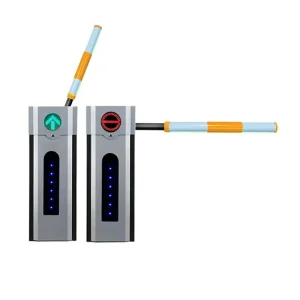
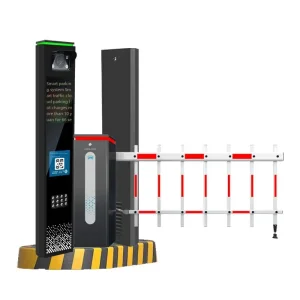
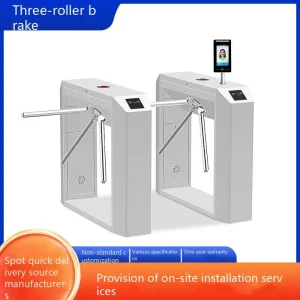
Large facilities increasingly procure passive boundary fencing and active gate controls from a single manufacturing hub. Integrating matching vinyl barriers with automated cantilever arms, swing turnstiles, and LPR cameras prevents compatibility issues and simplifies logistics.
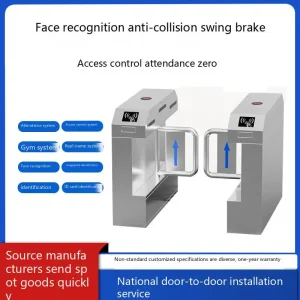
Pair your 3-rail vinyl physical fencing with heavy-duty entrance gates, pedestrian turnstiles, and intelligent parking control equipment.




Direct engineering answers addressing material formulation, ASTM compliance, logistics optimization, and access system integration.
Low-grade PVC fences often blend high volumes of post-consumer regrind and excessive calcium carbonate into a mono-extrusion matrix, causing yellowing, brittleness, and cracking within 24 months. By contrast, factory-direct co-extrusion concentrates 100% virgin polymer with 10-12 phr Rutile TiO₂ in the exterior capstock, optimizing raw material costs in the core while meeting ASTM F964 standards.
Export-tier three-rail vinyl uses automated CNC routing and internal tab notching. Posts feature precision factory-milled rectangular cutouts. The rails are equipped with spring-locking tabs that depress during insertion and snap into place inside the post cavity, creating an invisible, rust-proof mechanical lock that accommodates thermal expansion.
Yes. Combining bulk vinyl fencing profiles with active gate automation (such as barrier gates, hydraulic bollards, and pedestrian speed gates) optimizes 40ft High Cube container layouts. Heavy automation units anchor the container floor, while lightweight vinyl bundles pack efficiently into the remaining space, reducing landed freight costs per meter.
While unplasticized vinyl stiffens slightly in sub-zero climates (-20°C to -40°C), our export formulations incorporate specialized acrylic impact modifiers. These prevent micro-cracking and preserve impact resistance, while routed post tolerances allow rails to expand and contract smoothly without buckling or pulling out.