High-Precision Access Hardware & Integrated Systems
Engineered for high throughput, seamless API integration, and harsh environmental tolerances.
Demystifying "Budget-Friendly" LPR: Engineering vs. Capital Trade-offs
Understanding how edge neural processors and vertical hardware manufacturing lower total cost of ownership without sacrificing recognition fidelity.
Edge vs. Cloud Inference
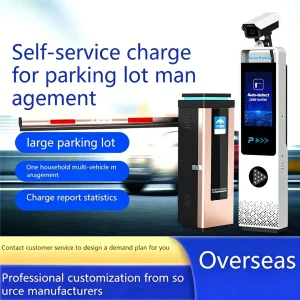
Traditional LPR setups rely heavily on external host servers and recurring software licensing fees. Next-generation, budget-friendly architectures execute OCR and deep learning classification directly on edge neural network chips housed inside the camera enclosure, eliminating network strain and recurring cloud compute costs.
Integrated Form Factor
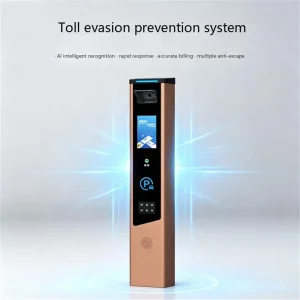
By packaging multi-core optical sensors, adjustable fill lights, voice output drivers, and dynamic LED status matrices inside a single extruded aluminum column, integrators dramatically reduce on-site conduit routing, junction box complexity, and setup labour hours.
Brushless DC Motor Efficiency
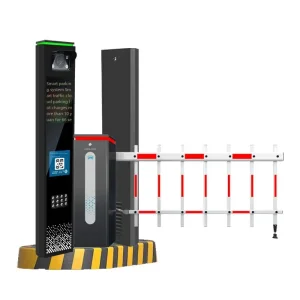
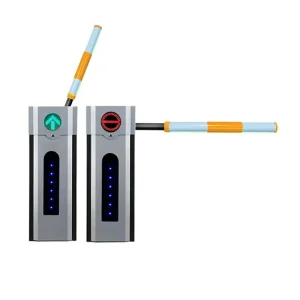
Modern barrier gates matched with LPR cameras incorporate DC brushless motors rated for over 5 million cycles without oil changes or clutch adjustments, protecting facility owners against unexpected operational failure and high technician maintenance call-out rates.
Standardized Protocols
Proprietary communications lock systems into single-vendor ecosystems. Cost-effective hardware from certified Chinese manufacturers implements standard protocols like ONVIF, Wiegand 26/34, and open HTTP/MQTT APIs, ensuring trouble-free third-party PMS integration.
The Shenzhen Advantage: Why Direct Chinese Factory Sourcing Delivers Value
Decoupling marketing markups from real production cost through tight supply chain integration and mature precision manufacturing.
In global procurement, "budget-friendly" is frequently misunderstood as a compromise in reliability or build quality. In industrial access automation, however, cost efficiency is fundamentally an ecosystem achievement. Shenzhen and the greater Pearl River Delta represent the densest concentration of precision electro-mechanical tooling, optical sensory assembly, and high-performance semiconductor distribution on Earth. Sourcing directly from an established Shenzhen manufacturer like Shenzhen Anrui Intelligent Equipment Co., Ltd. delivers measurable cost efficiency driven by production density:
Localized Sub-Tier Supply
Aluminum die-casting, CNC sheet metal fabrication, motor windings, and surface-mount technology (SMT) production occur within a 30-kilometer radius of our Guangming facility, eliminating intermediate logistics delays and cross-border component tariffs.
Rigorous Factory-Direct QC
Every sub-assembly undergoes multi-stage verification: high-temperature burn-in chambers, moisture ingress validation (IP66/IP67), torque analysis, and high-vibration stress testing directly on the factory floor before pallet packing.
Tier-1 Carrier Export Channels
Direct access to Yantian and Shekou maritime ports and Shenzhen/Hong Kong international air hubs ensures predictable maritime container logistics, consolidated LCL shipping, and expedited sample evaluation for global engineering projects.
Localization Support, Data Governance, and Compliance Safeguards
Designing perimeter automation that respects regional typography, harsh environmental climates, and strict international privacy frameworks.
Global Plate Typography Adaptation
License plates vary significantly: dual-line layouts in Southeast Asia, Arabic script across the GCC, multi-colour background contrasts in Latin America, and retro-reflective acrylic materials in the EU. Our machine vision neural models are retrained against regional image datasets to sustain 99%+ capture rates irrespective of font, emblem, or layout quirks.
GDPR & Privacy Mandate Compliance
Enterprise clients must comply with strict privacy policies. Our embedded camera software supports configurable automatic plate redaction, dynamic blurring of non-target pedestrians or adjacent traffic lanes, encrypted transmission via TLS 1.3, and programmable on-device retention limits that delete metadata automatically once barrier triggers clear.
Climatic Ruggedization
From high-heat, high-dust deployments in Qatar and Kuwait to humid coastal environments in Timor-Leste and the Philippines, our housings feature IP66 weatherproofing, internal dual fan-assisted thermostatic heating systems, and specialized anti-corrosive powder coatings certified to resist salt-fog degradation.
Enterprise Selection Matrix: Matching Hardware to Site Typology
A structured technical reference for systems integrators, EPC developers, and commercial procurement heads.
| Equipment Category | Optimal Deployment Environment | Core Technical Capability | Critical Engineering Pre-requisites |
|---|---|---|---|
| Integrated LPR System | Unattended Commercial Lots, Industrial Parks, Gated Condominiums | Edge OCR, Sub-100ms Trigger, Multi-exposure Strobe Control | Lane geometry, approach angle (<30°), optical focal depth, camera height |
| High-Speed Barrier Gate | Highway Toll Plazas, Mixed Traffic Terminals, Logistic Hubs | DC Brushless Core, 0.6s–3s Configurable Travel, Anti-smash Radar Loop | Boom length (3m–6m), cycle duty rating, wind resistance, power fallback |
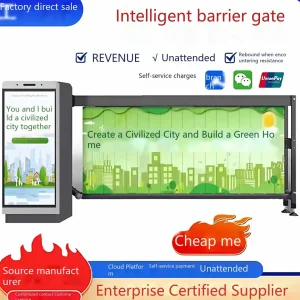
| Advertising Barrier Gate | Retail Centers, Mixed Commercial Towers, Public Plazas | Dual-layer dynamic signage or static louver frame + access barrier | Wind loading ratings, local display municipal codes, display illumination timers |
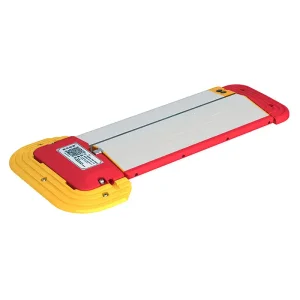
| Smart Parking Locks | Designated VIP Spaces, EV Charging Bays, On-Street Shared Parking | Multi-mode unlatch (Bluetooth/App/LPR trigger), anti-crush chassis | Sub-surface drainage, anchor bolt foundation, battery life vs. solar hookup |
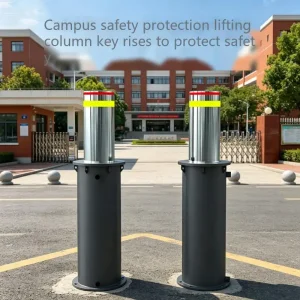
| Hydraulic Rising Bollards | Embassies, Government Precincts, Pedestrian Malls, High-Security Hubs | Heavy anti-ram impact ratings (K4/K12), high-speed hydraulic ascent | Excavation depth, groundwater sump pumping, emergency power manual drop |
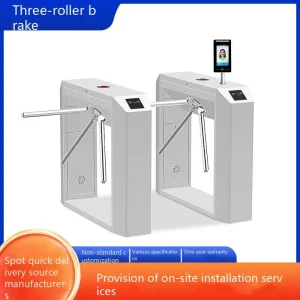
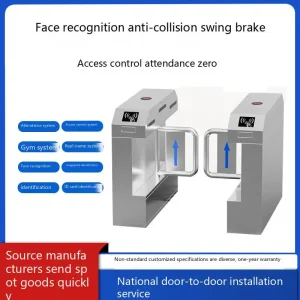
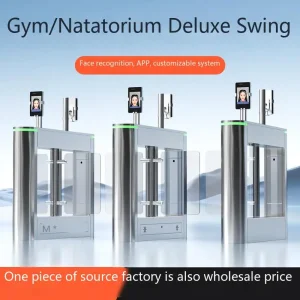
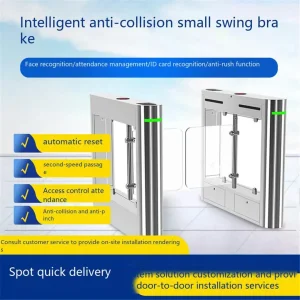
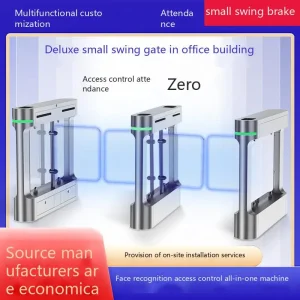
| Speed Gates & Turnstiles | Class-A Commercial Lobbies, Gymnasiums, Campus Entrances | Bi-directional optical arrays, anti-tailgating algorithms, ADA wide lane | Pedestrian peak volume/min, fire alarm dry-contact relay integration |
Emerging Industry Trends Reshaping Vehicle Access Systems
Where AI computer vision, IoT networks, and smart city infrastructure intersect over the coming five years.
Frictionless Multi-Sensor Fusion
Modern parking setups are moving past single-camera LPR. Current architectures combine video OCR, ultra-high-frequency (UHF) RFID tags, and under-chassis radar detection to maintain continuous 99.99% access authorization even when plates are mud-spattered, missing, or obscured by adverse snow and glare.
Native Cloud API Microservices
Edge hardware no longer exists in a local network silo. Today's controllers natively push JSON payloads over MQTT and WebSockets directly to third-party smart parking cloud platforms, mobile payment apps, and building management networks without expensive proprietary middleware servers.
EV Charging & Space Reservation Convergence
With global EV adoption surging, parking systems must protect charging infrastructure from internal combustion vehicle blocking. The deployment of smart floor parking locks linked directly with bay-level LPR cameras ensures chargers remain accessible only to verified electric vehicles during authorized charging windows.
Frequently Asked Technical & Procurement Questions
Practical insights derived from hundreds of successful real-world field installations.
What core hardware components constitute a complete turnkey LPR lane?
How does an LPR system maintain accuracy under extreme environmental conditions?
Can international integrators customize firmware and hardware branding?
What backup operations exist during sudden municipal power failure?
What communication latency should integrators expect with factory-direct Chinese LPR systems?
Enterprise Perimeter, Turnstile & Urban Parking Equipment
Explore further engineered components for multi-lane commercial and municipal access deployments.