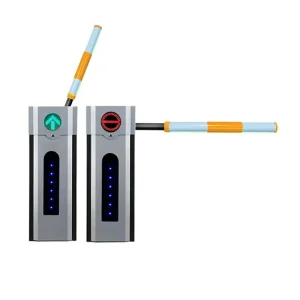
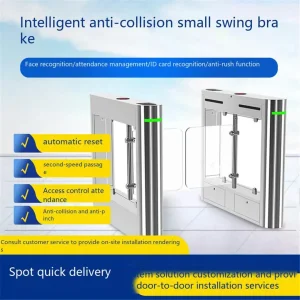
Featured High-Precision Access Control Hardware
Factory-certified vehicle barrier gates, intelligent turnstiles, and LPR sub-assemblies built in Shenzhen for international project distribution.
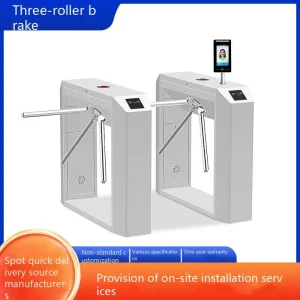
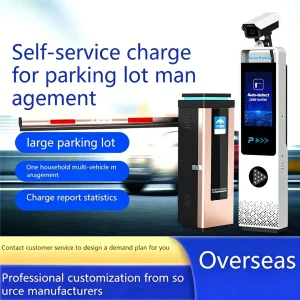
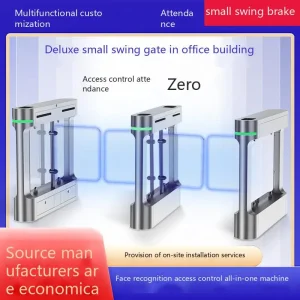
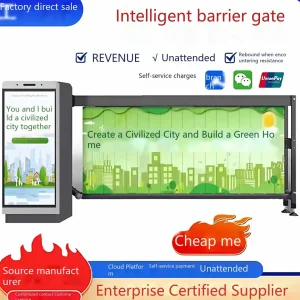
The Global Industrial Landscape & Total Cost of Ownership (TCO)
Breaking down the false dichotomy between premium western brand fees and budget-friendly factory-direct Chinese optical character recognition (OCR) systems.
Capital Outlay Reduction
Traditional western LPR deployments demand software server licenses, recurring annual per-lane royalties, and closed hardware ecologies costing $4,500–$12,000 per lane. Direct factory engineering delivers neural-edge integration at sub-$1,200 baseline capital outlays.
Edge-NPU Intelligence
By migrating deep learning OCR inference directly into low-power, edge-level neural processing units (NPU) housed inside IP67 camera housings, factories eliminate costly on-premise GPU servers while attaining 99.4% plate accuracy.
Standardized Open Protocols
Budget-friendly systems prevent lock-in by supporting ONVIF Profile S/G/T, MQTT telemetry, RESTful JSON Webhooks, and direct RS485/Wiegand signal triggering directly to gate barriers without middleware extortion.
LPR System Procurement: Architectural Tier Pricing Matrix
| System Architecture Tier | Typical Hardware Configuration | Plate Recognition Accuracy | Estimated Factory Direct FOB Price (USD) | Ideal Operational Scope |
|---|---|---|---|---|
| Tier 1: Embedded Edge Standalone | 2MP HD Sensor, 0.5T NPU, Integrated Strobe, All-in-one Housing | 98.2% - 99.1% (Standard Speeds <40km/h) | $280 – $480 per camera terminal | Residential communities, small commercial lots, private garages |
| Tier 2: Dual-Sensor High Dynamic Range (HDR) | 4MP Dual-Sensor, Polarized Filter, 2.0T NPU, Auto-Focus Zoom | 99.2% - 99.7% (Multi-Angle, Day/Night Retroreflective) | $550 – $850 per camera terminal | Commercial shopping centers, logistics freight plazas, tolled roads |
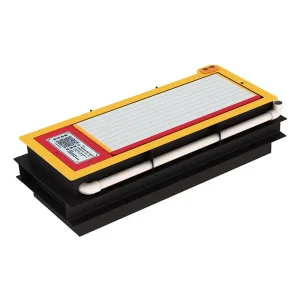
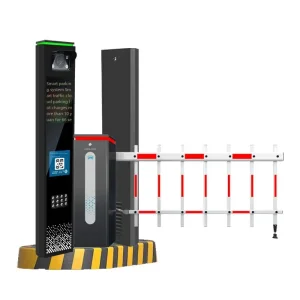
| Tier 3: Turnkey Lane Package | LPR Terminal, High-Speed DC Brushless Barrier, Loop Detector, Intercom | 99.5% - 99.8% (Matched System Triggering) | $1,100 – $1,950 complete lane unit | Industrial manufacturing parks, municipal transport hubs, seaports |
| Legacy Monopolistic Western Brands | Proprietary Camera, Central GPU Server, Annual Software Seat Fees | 98.5% - 99.4% (Server Dependent) | $4,500 – $12,000+ per lane | Restricted government municipal tenders with legacy lock-in |
Shenzhen Supply Chain Resilience: Why Factory Direct Yields True Value
Decoupling factory cost efficiency from product durability through vertical hardware cluster integration, localized bill-of-materials (BOM), and rigorous environmental validation.
Micro-Cluster BOM Sourcing
Within the Pearl River Delta, optical lenses, Sony Starvis CMOS sensors, automotive-grade DC brushless motors, and die-cast aluminum chassis are sourced within a 50km radius, slashing lead times to under 7 working days.
Algorithmic Economy of Scale
Chinese vision engineering benefits from training across millions of domestic alphanumeric license configurations, including multi-color, vertical stacked, and low-contrast reflective plates, yielding robust out-of-the-box neural weight libraries.
Direct Hardware Testing
Eliminating broker margins permits heavy reinvestment into quality control: 72-hour continuous thermal cycling (-30°C to +75°C), salt-spray anti-corrosion chambers, and IP67 water intrusion tests before ocean freight dispatch.
Tailored OEM/ODM Firmwares
Factory-direct relationships unlock firmware-level tailoring: custom OCR neural training for obscure domestic license fonts, specialized logo silk-screening, and matched communication protocols for local POS and parking meters.
Technical Roadmap: Next-Gen AI Vision Evolution
The architectural convergence from pure character extraction to multimodal vehicular analytics, environmental self-adaptation, and decentralized edge governance.
Multi-Spectral Polarization
Integrating active polarizing optical filters with alternating infrared (850nm/940nm) strobe illumination to completely cancel windshield glare, headlight overexposure, and high-speed motion distortion in sub-optimal climates.
Vehicle MMCR Metrology
Going beyond alphanumeric plates: edge neural models classify vehicle Make, Model, Color, and Generation (MMCR) simultaneously. This stops plate-swapping fraud and provides secondary verification when plates are obscured.
Serverless Cloud Orchestration
Zero-configuration device provisioning via secure TLS MQTT tunnels. Remote fleets automatically receive quantized neural weight updates for newly released regional plate designs without dispatching service technicians.
Localized Application Scenarios: Field Engineering & Adaptation
How Anrui hardware engineering meets rigorous site specifications across real-world civil topologies, harsh environments, and municipal constraints.
Unattended Gated Communities
Residential entries require smooth high-throughput operations with 0.8-second barrier lifters. An integrated whitelist memory buffer stores up to 20,000 plates locally within the camera cache, ensuring zero gate latency even during total WAN internet network collapse.
High-Security Logistics Freight Yards
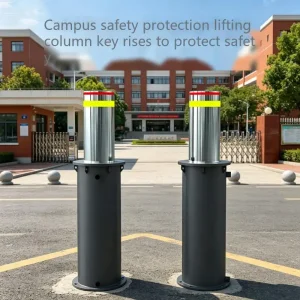
Heavy articulated freight trucks present severe plate elevation differences and wide turning radii. Our dual-camera master-slave topologies capture both front cabin and rear trailer plates concurrently, interfacing with weighbridges and automated rising bollards.
Desert & Coastal Extremes
Deployments across the Middle East (Qatar, UAE) and maritime hubs require IP67 optical ingress sealing, internally pressurized anti-fog enclosures, and powder-coated electrostatic galvanized sheet steel to resist sandstorm abrasion and aggressive saltwater corrosion.
Data Protection, Regulatory Compliance & Global Support
Navigating stringent international data protection frameworks, sovereign compliance standards, and lifecycle operational governance.
GDPR & Privacy Compliance
Modern enterprise installations must comply with strict privacy regulations. Our edge firmware supports automatic plate character masking, automated vehicle occupant face blurring, and scheduled non-volatile FIFO cache deletion.
Industrial Certification
All exported models carry authentic CE, FCC, RoHS, and ISO9001 compliance certifications. Integrated power filtering shields sensitive motor drives and optical microprocessors from volatile site power surges up to 6kV.
7x24 Direct Engineering Tiers
Overseas system integrators skip ticket queues. Access direct Tier-3 factory firmware developers and mechanical engineers via WhatsApp, Teams, or remote SSH tunnels for instant lane diagnostics and protocol adaptations.
Frequently Asked Questions (FAQ)
Technical answers for system integrators, EPC contractors, and procurement managers evaluating factory-direct access control investments.
What parameters define a genuine "budget-friendly" LPR system without sacrificing durability?
Can Anrui cameras accurately recognize non-standard or retroreflective plates across various nations?
How does the camera trigger boom barrier gates and rising bollards during offline network outages?
What technical specifications must be provided to receive an exact turnkey lane quotation?
What warranty, component replacement, and cross-border after-sales policies are provided?
Integrated Smart Parking & Perimeter Protection Solutions
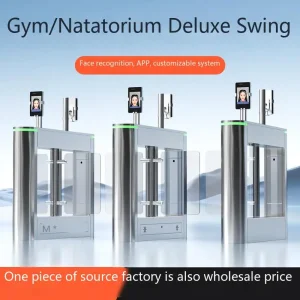
Factory-engineered accessories, advertising barrier displays, integrated scanning stations, and speed gates completing multi-modal facilities.