
Featured Parking Automation Hardware Portfolio
Engineered for endurance, operational resilience, and budget discipline across demanding toll, commercial parking, and perimeter access scenarios.
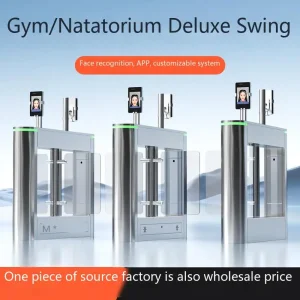
Buy Discount Office Building Entrance Attendance Security Access Control Turnstiles Gate Swing Barrier Speed Gate Manufacturers, Price
View Product Specs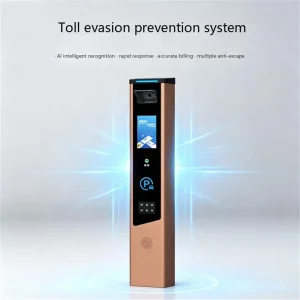
Cheap High definition license plate recognition integrated - AnRuitong II Manufacturer, Factories
View Product Specs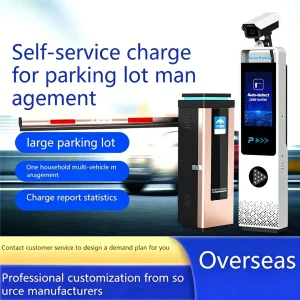
Buy Discount High-def license plate recognition machine Dolphin I model Exporters, In Sales
View Product Specs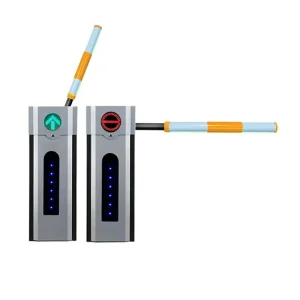
Easy-maintainable Intelligent Barrier Gate Model D11S Supplier, Quotation
View Product Specs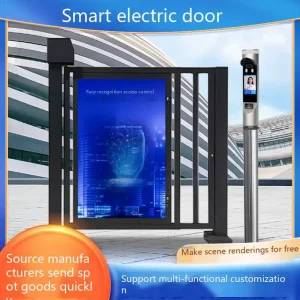
Buy Discount Intelligent pedestrian advertising gate Suppliers, Exporter
View Product Specs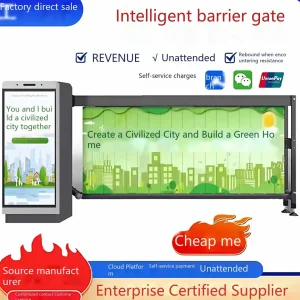
Buy Discount Intelligent Barrier Gate Model D03 Suppliers, Exporters
View Product Specs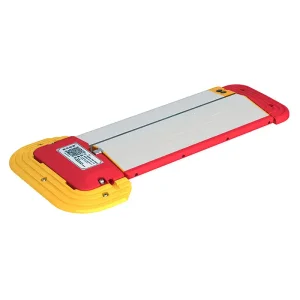
Cheap Scan to pay charging pilecommunity parking lock automatic sensing,electric shared scanning paymentanti-oil car occupying parking space Exporter, Pricelist
View Product Specs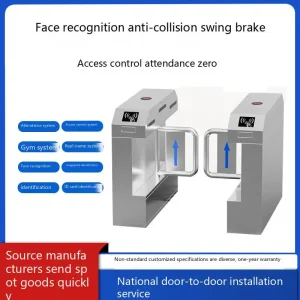
China Bridge Type Sloped Swing Gate Supplier, In Sales
View Product SpecsDemystifying Automatic Barrier Gate Pricing Architecture
True cost transparency requires evaluating the initial Capital Expenditure (CAPEX) alongside long-term Operational Expenditure (OPEX), Mean Time Between Failures (MTBF), and power metrics.
| System Category & Configuration | Core Motor Architecture | Rated Cycles (MTBF) | Ideal Site Deployment | Budget Quotation (Tiered) |
|---|---|---|---|---|
| Standard Commercial Access Barrier (3m-6m) | 24V DC Brushless Planetary Drive | 3,500,000 Operations | Residential communities, light commercial lots | $280 - $420 / unit |
| High-Speed Highway & Toll Gate (0.6s - 1.2s) | Torque-Controlled Servomotor System | 6,000,000 Operations | Electronic Toll Collection (ETC), logistics hubs | $450 - $680 / unit |
| Commercial Advertising Folded/Louver Barrier | Heavy-Duty High-Torque BLDC Drive | 2,500,000 Operations | Shopping malls, airport revenue terminals | $520 - $850 / unit |
| Articulated Underground Parking Barrier | Dual-Linkage DC Brushless Unit | 4,000,000 Operations | Low-clearance basements, restricted height decks | $360 - $540 / unit |
China Smart Factory 4.0: Supply Chain Resilience & Efficiency
Direct from Shenzhen's premier hardware clusters: leveraging advanced robotics, component integration, and automated quality testing to eliminate markups without sacrificing engineering tolerances.
Automated Precision CNC Stamping
Our 8,000 m² Shenzhen manufacturing plant utilizes automated laser cutting and CNC cold-rolled sheet metal bending for housings. Phosphatizing and electrostatic powder coating deliver IP54-IP65 environmental ingress protection.
- 2.0mm cold-rolled carbon steel structural casing
- Multi-stage UV-resistant, anti-corrosive powder bake
- Modular drive chassis for sub-15 minute field swap
Vertical Supply Integration
By controlling motor winding, gearbox machining, and core microcontroller PCB surface mount technology (SMT) under one roof, we eliminate intermediate component markups and maintain complete quality trace-history.
- In-house SMT lines with automated optical inspection
- Zero middleman markups across gearings and motors
- Standardized componentry across our entire barrier range
Severe Dynamic Fatigue Stress Testing
Every batch undergoes thermal chamber exposure (-30°C to +75°C), continuous run torque cycles, and power fluctuation stress testing before receiving maritime export clearance.
- 100% 72-hour continuous burn-in test per mechanism
- Harmonic rebound and anti-crush sensitivity calibration
- Standardized export seaworthy crating and foam protection
Turn-Key Ecosystems for Global Sector Demands
Automatic system barrier gates achieve peak operational utility when integrated into end-to-end access architectures designed for specific traffic densities and throughput requirements.
AI License Plate Recognition (LPR) Corridors
Unattended vehicle lanes combining 99.8% capture LPR cameras with 1.2-second high-speed barriers. Capable of handling rush-hour queues without manual ticketing or token dispenser delays.
- Multi-country neural plate network algorithms
- Embedded white-list offline gate trigger cache
- Integration with third-party parking billing APIs
Mixed Perimeter Defense & Traffic Channelling
Combining heavy-duty rising bollards with high-speed DC booms for critical infrastructure, government campuses, and corporate headquarters that require anti-ram protection and flexible traffic throughput.
- Interlocking controller logic between bollard and gate
- Emergency vehicle pre-emption triggering (Strobe/Siren)
- UPS battery backup for automated emergency failsafe up
Commercial Advertising & Retail Monetization
Louver and display advertising barrier gates designed for high-density commercial centers, converting entry and exit choke points into dynamic, revenue-generating media boards.
- Integrated LED edge-lit and scrolling graphic panels
- Wind-resistant mechanical louver blades with quick release
- Programmable timers for day and night display activation
Technology Roadmap: 2026-2030 Smart Gate Innovations
A look ahead at how next-generation drive mechanics, edge sensor fusion, and micro-power technologies are reshaping automatic barrier gate systems.
Sensor Fusion & mmWave Radar
Replacing traditional ground induction loops with 77GHz mmWave radar sensors. Eliminates costly pavement trenching and provides dual detection of both vehicles and pedestrians, with an MTBF in excess of 100,000 hours.
Edge-IoT Predictive Health Monitoring
On-board microcontrollers run continuous vibrational and thermal diagnostic routines, reporting mechanical anomalies via MQTT to central control centers before component failure happens in the field.
Solar-Microgrid Ultra-Low Power Draw
Brushless planetary gearsets combined with regenerative deceleration braking reduce standby power consumption to under 5W, enabling uninterrupted off-grid solar deployment at remote toll checkpoints.
Localized Support, Engineering Compliance & Field Assurance
International deployments demand strict alignment with regional safety mandates, power variations, and predictable after-sales technical support.
CE, FCC & UL Standardization
All barrier gate models and power conversion subsystems conform to global electrical and mechanical safety regulations. Built with flame-retardant industrial wiring, galvanic isolation, and EMC electromagnetic compatibility.
- CE Low Voltage & Machinery Directive adherence
- FCC Part 15 Class B telecommunications certified
- ISO 9001:2015 continuous factory quality audits
Climate Adaptability Engineering
Tested for extreme environments: whether deployed in high-humidity tropical coastlines, sub-zero winter regions, or the heat of Gulf deserts, our hardware maintains its rated duty cycle without derating.
- Operational envelope: -35°C to +75°C without auxiliary heater
- Internal heating kit integration for polar installations
- Marine-grade electroplating to resist salt-fog corrosion
7x24 Field Engineering & Spares Stock
Direct communication with the engineers who design and assemble the hardware. We provide wiring diagrams, API SDK kits, and fast air shipment for critical spare parts to protect uptime commitments.
- Critical replacement components dispatched within 48 hours
- Interactive video installation support for local contractors
- Comprehensive developer SDK for custom parking systems
Frequently Asked Questions for Global Procurement Teams
Answers to common technical, logistics, and cost questions encountered when specifying automated barrier gates.
The three primary price drivers are: 1) Motor engineering (Brushless DC vs. older AC induction designs), 2) Articulation speed requirements (sub-second highway mechanisms require higher-precision gearboxes than standard 3-second parking booms), and 3) Custom options such as boom LED illumination, folding linkages, or built-in advertising displays.
BLDC motors eliminate carbon brushes that wear down over time, reducing mechanical friction and heat buildup. They offer over 5,000,000 continuous operation cycles (versus 800,000 to 1,000,000 for standard AC models), draw less power, run quietly, and provide precise digital speed control without rebound bounce.
All our automatic barrier gates include a manual mechanical clutch release wheel on the drive unit. In the event of total power loss, site staff can lift the boom arm with minimal effort. In addition, 24V DC configurations can run directly from an external 24V UPS battery backup system for continuous operation.
Yes. Our logic control boards support standard dry contact pulse inputs, RS485 communication protocols, and optional Wiegand or TCP/IP adapters. They integrate with RFID readers, long-range UHF tags, license plate recognition cameras, and third-party ticketing terminals.
Our barrier gates use multi-tier safety layers: 1) Auto-reversing high-sensitivity pressure sensors built into the digital motor controller, 2) Ground loop detectors that monitor vehicle presence beneath the arm, and 3) Optional millimeter-wave radar and infrared photo sensors for dual vehicle and pedestrian detection.
We supply equipment under FOB Shenzhen, CIF, or DDP terms. Units are packed in fumigated wooden crates with custom high-density shockproof foam to withstand maritime transport. Typical production lead time for orders under 50 units is 7 to 10 working days.
Complementary Access & Traffic Hardware Solutions
Browse our full range of vehicle control, perimeter protection, and pedestrian gate systems for comprehensive access control deployments.
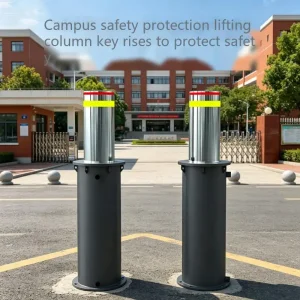
High-Quality Rising Bollard Instruction Manual In Sales, Price
View Product Specs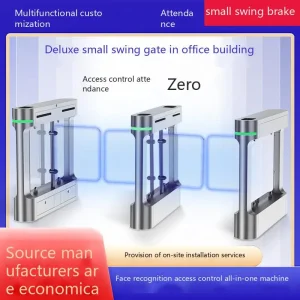
Buy Discount Swing Gate Image Reference Suppliers, In Sales
View Product Specs
Advanced Factoryoem/ODM Durable Smart Fast Speed Swing Automatic Used Industrial Gym Turnstile Gate Supplier, Factory
View Product Specs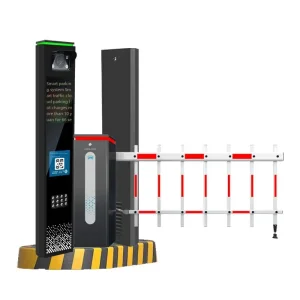
Cost-Effective Car Parking And Toll Access Control Automatic Articulated DC Parking Boom Barrier Gate With Long Range Rfid Reader Suppliers, Factory
View Product Specs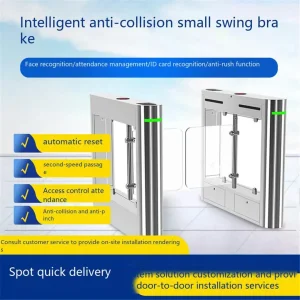
OEM Swing Gate Suppliers, Pricelist
View Product Specs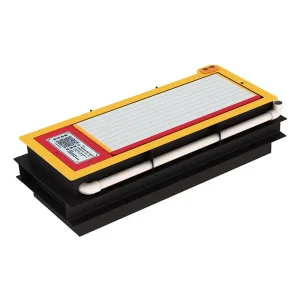
Easy-maintainable City Parking Product Factories, Price
View Product Specs
Easy-maintainable Intelligent Barrier Gate Model D11S Supplier, Quotation
View Product Specs