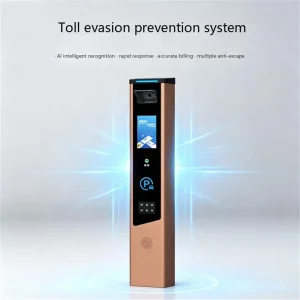
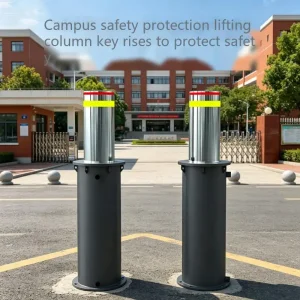
Featured Perimeter & Portal Automation Catalog
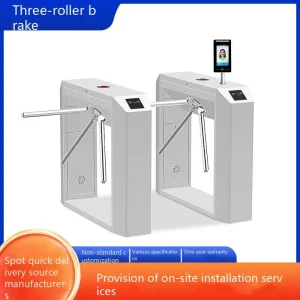
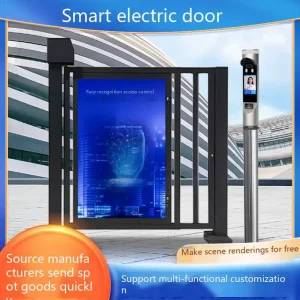
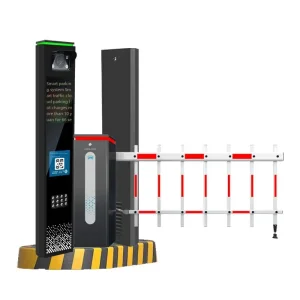
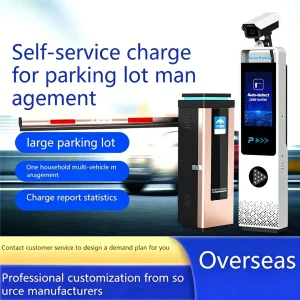
Directly synchronized with commercial telescopic entryway controls, our industrial vehicle barriers, optical turnstiles, and perimeter control units deliver seamless integrated access management for global infrastructure.
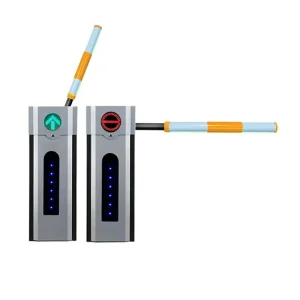
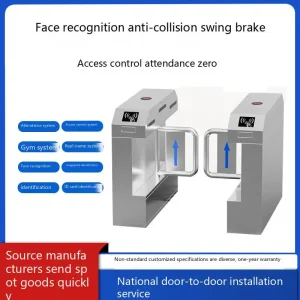

Engineering Whitepaper: The Mechanics of Multi-Leaf Telescoping Portals
Where traditional bi-parting or single-slide portals fail due to restrictive structural pocketing, advanced telescoping sliding doors deploy synchronous differential cable or secondary belt drives to deliver maximum net clear width within constrained envelope perimeters.
Kinematic Differential Drive
Telescopic systems function on a synchronous velocity ratio (typically 2:1 for two-leaf configurations and 3:2:1 for triple-leaf setups). The primary lead panel moves at velocity V, directly propelled by a brushless DC servo or synchronous motor, while secondary trailing panels are driven via a low-stretch toothed timing belt and tension-compensating pulley array, reaching the full-open position simultaneously without mechanical shudder.
- Dual-speed synchronous panel articulation
- Precision backlash-free planetary reduction
- Dynamic dynamic inertia dampening algorithms
Clear Opening Optimization
Standard automated sliding doors utilize 50% of the overall structural opening width for panel resting zones. Telescoping sliding door assemblies increase effective egress aperture up to 66% to 75% of total structural rough opening. This spatial geometry proves decisive in retrofit applications where building support columns cannot be relocated, allowing architects to comply with universal access and fire egress ratios.
- Up to 75% clear width efficiency ratio
- Zero-pocket retrofit envelope compliance
- Full breakout emergency egress certified
Thermal & Acoustic Barrier Envelope
By engineering interlocking vertical labyrinth brush seals, multi-chamber thermal break profiles, and silicone perimeter gaskets across telescoping leaf interfaces, air infiltration ratings meet ASTM E283 and EN 12426 requirements. Acoustic decoupling is further elevated through acoustic PVB laminated glazing, dampening low-frequency urban traffic rumble by up to 38 dB Rw.
- Interlocking active labyrinth sealing
- Acoustic attenuation up to 38 dB Rw
- Thermal transmittance U-values down to 1.4 W/(m²K)
Localized Application Scenarios & Sector Blueprints
How advanced telescoping door automation solves architectural spatial bottlenecks across mission-critical facilities, high-throughput transport hubs, and harsh industrial environments worldwide.
ICU & Healthcare Isolation
In emergency surgical wings and Intensive Care Units (ICUs), rapid transfer of hospital beds and diagnostic carts requires minimum clear openings of 1800mm to 2200mm. Telescoping sliding doors achieve this within limited hallway footprints, incorporating non-touch microwave sensors, hermetic pressure seals, and anti-microbial coatings to prevent cross-contamination.
- Hands-free capacitive activation switch
- Positive/negative pressure retention
- Smooth floor-trackless bottom guide pins
Semiconductor & Cleanrooms
Cleanroom environments (ISO Class 4-6) require strict differential air pressure maintenance and minimal particle generation. Telescopic airlock portals utilize anodized anti-static aluminum profiles, brushless motors generating zero carbon dust, and interlocking automation logic ensuring downstream and upstream door leaves never break seal simultaneously.
- Interlocking airlock cycle integration
- Zero particulate belt drive components
- Rapid transit cycles up to 1.2 m/s
Intermodal Transit & Airports
Aviation concourses, high-speed rail terminals, and metro stations process continuous foot traffic surges carrying heavy luggage. Continuous-duty (100% duty cycle) industrial telescoping doors handle over 4,000 operations per day, incorporating high-resolution 3D infrared curtain sensors to prevent pedestrian strikes and maintain steady commuter throughput.
- 3,000,000+ cycle MTBF rated
- Continuous bi-directional smart detection
- Centralized SCADA/BMS telemetry hookup
Automotive & High-End Retail
Automobile dealerships, luxury exhibition pavilions, and flagship commercial retail require full structural clear openings to permit vehicle roll-in and roll-out without unsightly center posts. Four-leaf bi-parting telescoping systems allow up to 4500mm of uninterrupted span while presenting minimal sightline 12mm tempered architectural glass facades.
- Structural ultra-slim profile sightlines
- Full drive-in clearance capacity
- Locking via electro-mechanical drop-bolt
Coastal & Extreme Weather Gates
Coastal developments in Florida, the Caribbean, and Southeast Asia face severe typhoon and hurricane forces. Reinforced telescoping doors feature stainless steel structural sub-frames, impact-resistant hurricane-laminated glass, and reinforced mechanical track anchors rated for Florida Building Code (FBC) TAS 201/202/203 high-velocity hurricane zones.
- FBC & TAS certified impact compliance
- Anodized 25µm marine-grade finish
- Sub-floor drainage flush channels
Cold Chain & Logistics Airlocks
In temperature-controlled food distribution and pharmaceutical cold storage (-25°C to +4°C), telescoping high-speed doors equipped with insulated polyurethane panels and integrated perimeter heating elements prevent ice condensation. Rapid multi-panel opening cuts thermal transfer exposure time by 45% compared to swing gates.
- 50mm insulated PIR composite panels
- Frost-prevention perimeter trace heaters
- Fast-cycle opening speed up to 1.5 m/s
Engineering Benchmark & Drive Specifications
Direct comparative parameters between our flagship 2-leaf single-slide telescoping series and 4-leaf bi-parting architectural packages manufactured for international EPC contracts.
| Performance Parameter | TS-200 (Single-Slide 2-Leaf) | TS-400 (Bi-Parting 4-Leaf) | TS-600 Heavy-Duty Industrial |
|---|---|---|---|
| Clear Opening Width (COW) | 1000 mm – 2800 mm | 1800 mm – 4500 mm | 2400 mm – 6000 mm |
| Maximum Panel Weight | 2 × 120 kg (240 kg total) | 4 × 100 kg (400 kg total) | 4 × 250 kg (1000 kg total) |
| Operator Header Dimensions | 160 mm (H) × 185 mm (D) | 160 mm (H) × 185 mm (D) | 220 mm (H) × 250 mm (D) |
| Motor Technology | Brushless DC 24V / 100W Servo | Brushless DC 24V / 150W Dunkermotoren | Dual 36V Synchronous Heavy Servo |
| Opening / Closing Velocity | Adjustable 15 – 65 cm/s per leaf | Adjustable 20 – 75 cm/s per leaf | Adjustable 10 – 50 cm/s per leaf |
| Drive Transmission | Kevlar-Reinforced HTD 8M Belt | Synchro-Steel Cord Reinforced Belt | Precision Gear & Duplex Chain Synchronizer |
| Fail-Safe Egress Mechanism | Mechanical Counterweight / Elastic Cable | Dual-State 24V Battery UPS Backup | Full Breakout Emergency Mechanical Pivot |
| Operating Temperature | -20°C to +55°C | -30°C to +65°C | -40°C to +70°C (with Arctic Pack) |
| Safety Compliance Standard | EN 16005 / DIN 18650 | ANSI/BHMA A156.10 | UL 325 / CE Machinery |
Chinese Factory Supply Chain Resilience & Export Precision
Headquartered in the Guangdong-Hong Kong-Macao Greater Bay Area, our manufacturing base leverages the world’s most concentrated industrial mechatronics cluster to deliver custom architectural engineering with unyielding consistency.
Vertical Component Integration
Unlike European and North American brand assemblers that rely on fragmented global outsourcing, our facility operates in-house aluminum extrusion anodizing lines, high-speed automated SMT circuit board pick-and-place lines, and 5-axis CNC machining bays. This vertical cohesion eliminates supply tier disruptions and cuts factory lead times to under 15 business days for custom dimensions.
- In-house 6063-T6 architectural extrusion
- Automated Surface Mount Technology (SMT)
- Precision 5-axis CNC carriage milling
Rigorous Stress & Fatigue QA
Every batch of operator assemblies undergoes a 100% full-load pre-commissioning burn-in protocol before packaging. Dedicated test towers subject door assemblies to over 1,000,000 continuous test cycles under artificial cross-wind resistance, extreme thermal swings (-30°C to +70°C), and erratic power voltage surges, ensuring unmatched field reliability upon site arrival.
- 100% pre-shipment dynamic testing
- Climatic chamber stress profiling
- Full Factory Acceptance Testing (FAT) reports
Direct-to-Dock Global Logistics
Located 45 minutes from Shenzhen Yantian and Shekou international container deep-water terminals, orders move directly into export logistics corridors without domestic transshipment bottlenecks. Heavy-duty fumigated wooden crates with moisture-barrier vacuum foil packaging protect fragile drive electronics and optical sensors during ocean transit.
- FOB, CIF, DDP multi-tier trade capabilities
- Engineered marine export packaging
- Direct parts replacement air shipments
International Compliance & Local Safety Engineering
Strict adherence to universal accessibility regulations and international safety directives guarantees turnkey acceptance by municipal building code inspectors worldwide.
EN 16005 & DIN 18650
European safety directives mandate low kinetic energy settings or redundant active presence sensing along leaf travel paths. Our control systems integrate monitored safety light curtains that scan the entire swing, slide, and pinch-point zones, testing optical circuit integrity prior to every opening cycle in full conformity with Performance Level 'd' (PL d, ISO 13849-1).
- Monitored optical test input pulse
- Pinch-point secondary leaf sensors
- Dynamic impact force limited < 150 N
ANSI/BHMA A156.10 & ADA
For the North American market, our telescoping assemblies satisfy Americans with Disabilities Act (ADA) guidelines, maintaining minimum 32-inch clear opening widths even on compact storefront configurations. Control programs support adjustable hold-open delays (1-30s), push-and-go activation, and low static force opening under emergency manual intervention (< 15 lbf / 66 N).
- ADA compliance clear passage thresholds
- Emergency breakaway force < 220 N
- Adjustable hold-open & walk-assist modes
Fire Safety & Emergency Smoke Evac
When integrated into building life-safety networks, our microcontrollers interface with automated fire alarm systems (FAS) via dry contact inputs. Upon alarm trigger, fail-safe battery back-ups automatically command full emergency opening, or lock doors in air-tight closed mode when positive pressure smoke evacuation shafts are energized.
- Instant FAS signal hardwired trigger
- BS 476 / EN 1634 smoke rating optional
- Fail-secure / fail-safe field switchable
Technology Roadmap & Next-Gen Portal Innovations
The entrance automation sector is undergoing a rapid transition from basic mechanical articulation to intelligent, edge-computing portals seamlessly woven into the broader Smart Building Internet of Things (AIoT) ecosystem.
Linear Maglev Direct Drive
The elimination of traditional mechanical timing belts, pulleys, and gearboxes represents the defining trend in premium silent entrances. Magnetic levitation linear synchronous motors (LSM) glide leaf carriers on contact-free magnetic fields, yielding near-zero operating noise (< 35 dBA) and virtually infinite mechanical service life without lubricant degradation.
- Whisper-silent contact-free motion
- Zero particulate generation (ISO Class 1 ready)
- Zero mechanical wear parts to service
AI Multi-Spectrum Computer Vision
Next-generation door headers incorporate onboard neural processing unit (NPU) vision systems replacing obsolete passive microwave radars. Deep-learning algorithms track approaching pedestrian trajectories, cross-referencing gait vector angle and approach velocity to eliminate unnecessary ghost openings caused by parallel pedestrian traffic, dramatically reducing HVAC energy loss.
- Vector-based intent detection engine
- Integrated anti-tailgating occupancy audit
- Up to 32% building envelope HVAC savings
Cloud Digital Twin Telemetry
Equipped with MQTT and native BACnet/IP network modules, each door continuously transmits motor temperature, belt tension harmonics, cycle counts, and braking deceleration curves to cloud management consoles. Real-time predictive maintenance alerts notify facility teams to service roller bearings before mechanical failure occurs.
- Cloud predictive vibration diagnostics
- Remote parameter commissioning & OTA updates
- Live API connectivity for facility management
Architectural & Engineering Q&A (FAQ)
Authoritative answers to the most frequent technical, structural, and procurement inquiries posed by global facade consultants, MEP engineers, and general contractors.
How is the Clear Opening Width (COW) calculated on a 4-leaf bi-parting telescoping sliding door?
On a 4-leaf bi-parting telescoping system, the overall structural rough opening (RO) is divided into the central clear opening passage and two side stacking pockets. The formula for calculating clear opening width is approximately: COW = (RO − 2 × Profile Overlap − 2 × Jamb Depth) × (2/3).
Unlike standard 2-leaf bi-parting doors which only yield approximately 50% clear opening of the total rough opening, a 4-leaf telescoping configuration routinely delivers between 65% and 72% net clear width. This makes it the premier architectural selection for sites where structural shear walls or elevator shafts restrict rough frame widening.
What measures prevent secondary leaf racking and derailment under heavy wind loads?
Telescopic door leaves have offset planes of movement, which introduces torsional shear forces under wind gust pressures. We counteract this through a three-point kinematic stabilizing assembly:
1. Dual Extruded Overhead Tracks: Fabricated from structural 6063-T6 tempered aluminum alloy with independent hardened track runners for primary and secondary leaf trolleys.
2. Heavy-Duty Anti-Jump Rollers: Secondary inverted eccentric bearing rollers clamp beneath the track rail, preventing vertical jump or disengagement under lateral pressures up to 1.4 kPa.
3. Concealed Floor Interlocking Guides: Precision stainless steel floor shoes fitted with self-lubricating POM nylon guides slide inside reinforced under-leaf channels, ensuring panel plumbness across all operational cycles.
How does the system ensure emergency egress compliance during complete electrical blackouts?
Our operator packages support dual fail-safe methodologies per local statutory life-safety mandates:
1. Active Electrical Fail-Safe: A continuously monitored 24V DC lithium-ion battery buffer immediately triggers full opening upon mains power severance, executing up to 300 full opening/closing cycles or remaining parked in the wide-open position according to fire commissioner programming.
2. Full Breakout Emergency Hardware: For sites requiring compliance with NFPA 101 or International Building Code (IBC) egress requirements, both sliding leaves and static sidelites feature mechanical break-away pivot hinges. When pushed outward with an applied force under 133 N (30 lbf), the entire door cluster swings open 90 degrees outward like traditional exit doors.
Can these automated door operators integrate with third-party Building Management Systems (BMS)?
Yes. The central microprocessor controller provides native connectivity for all common industrial building protocols. Standard terminals feature dry-contact relays for Fire Alarm Input, Access Control (Card Reader, Biometric, RFID), Emergency Stop, and Intrusion Alarm feedback.
For smart facility infrastructure, optional expansion boards provide native RS485 Modbus RTU or Ethernet TCP/IP BACnet protocols. Building management operators can monitor door status (open, closed, fault mode, maintenance alert, cycle count) in real time directly on their central security console.
What are the lead times and container loading specs for export shipping from Shenzhen?
Standard modular operator track assemblies (lengths of 3.0m to 6.5m) maintain a 7 to 10 business day fabrication cycle. Custom profile powder coating (any RAL color) or architectural architectural PVDF finishes require 12 to 15 business days.
Packaging utilizes solid timber export-grade wooden cases lined with shock-absorbent closed-cell polyethylene foam and desiccant canisters. Long operator headers are packed with custom longitudinal stiffeners to prevent transit bending. Full container loads (20GP / 40HQ) or Less than Container Loads (LCL) ship weekly directly from Shenzhen Yantian Port.
Turnkey Physical Access & Perimeter Automation Solutions
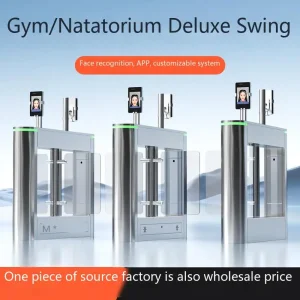
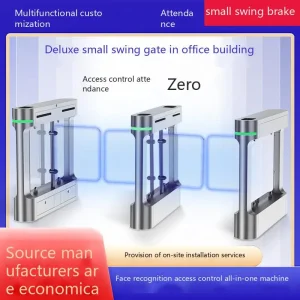
Complete your entryway envelope by matching high-performance telescoping glass portals with heavy-duty pedestrian speed gates, hydraulic anti-ram rising bollards, and precision access management hardware.