
Engineered Access Hardware & Perimeter Columns
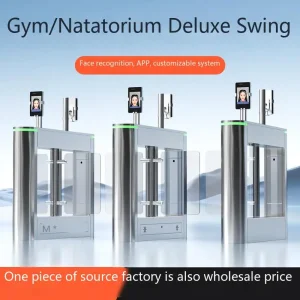
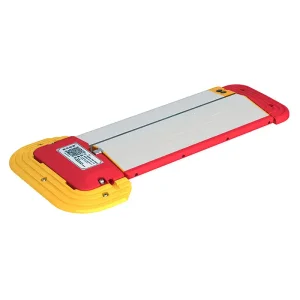
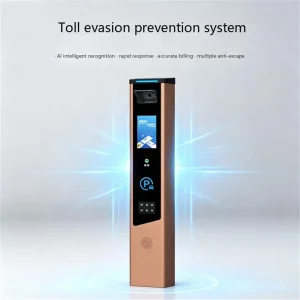
Direct factory production from Shenzhen Anrui Intelligent Equipment. Fully certified, precision-machined vehicle gates, speed lanes, license plate recognition optics, and semi-automatic lifting bollards deployed across 80+ international territories.

Global Commercial Status & Kinetic Physics of Semi-Automatic Columns
Understanding why international municipal authorities, defense compounds, and corporate campuses prioritize mechanically autonomous, gas-assisted bollards over purely electromechanical or manual counterparts.
Capex & Opex Decoupling
Unlike fully automatic hydraulic systems that mandate complex subsurface trenching, hydraulic oil conduit routing, high-voltage subterranean cabling, and dedicated PLC cabinets, semi-automatic lifting columns leverage enclosed internal gas springs (nitrogen-pressurized struts). This cuts initial civil engineering and infrastructure deployment expenditures by 45% to 65% while completely eliminating standby electrical power consumption.
Autonomous Kinetic Erection
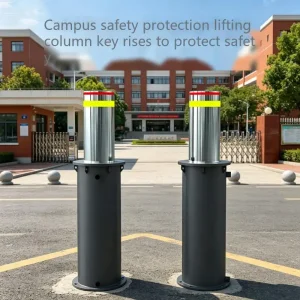
Semi-automatic columns operate via balanced pneumatic-hydraulic mechanical equilibrium. When an authorized security key or triangular mechanical release is activated at pavement grade, the pre-loaded sealed gas spring silently drives the stainless steel bollard cylinder upward to its locked zenith in 1.5 to 2.5 seconds. Retraction is executed by downward foot pressure, locking securely flush with the roadway surface.
Zero-Power Grid Immunity
In critical national infrastructure, military checkpoints, and explosion-prone petrochem facilities (ATEX Zones 1 and 2), reliance on electrical motors poses both a point of failure during brownouts and an ignition risk. Semi-automatic rising columns ensure perpetual, 100% operational uptime irrespective of severe grid outages, cyber warfare, or lightning-induced power surges.
Hostile Vehicle Mitigation (HVM) Engineering Roadmap
Export-ready semi-automatic lifting columns engineered in accordance with international impact performance benchmarks including ASTM F2656, PAS 68, and IWA 14-1 certifications for perimeter hardening.
| Component Specification | Standard Commercial Grade | Heavy-Duty Industrial / HVM Grade | Engineering Benefit for Overseas EPCs |
|---|---|---|---|
| Cylinder Alloy & Thickness | AISI 304 Stainless Steel (3.0mm – 4.0mm) | AISI 316 Marine Grade (6.0mm – 10.0mm wall) | Superior resistance against saline, de-icing salts, and high-velocity shear loads. |
| Pneumatic Gas Actuator | Single-Chamber 400N Gas Spring | Dual-Chamber Reinforced 650N Nitrogen Strut | Extended cycle life (>350,000 actuations) with cold-weather viscosity compensation (-35°C to +75°C). |
| Subsurface Outer Sleeve | Hot-Dip Galvanized Q235 Carbon Steel | Epoxy-Coated Cathodic Galvanized Steel + Sump | Prevents soil acidic degradation, ground heave deformation, and simplifies modular core replacement. |
| Impact Resistance (Joules) | 120,000 J (Operational Elastic Limit) | Up to 380,000 J (Perimeter Interception Capacity) | Effective deterrent against unauthorized commercial vans and rogue perimeter penetration. |
| Night Visibility Array | 3M Diamond Grade Retro-Reflective Band | IP68 Autonomous Solar-Phosphor / 3M Band | Ensures high luminous reflection under vehicle headlamps without external low-voltage connection. |
Strategic Real-World Installation Topologies
How worldwide project contractors, city councils, and security integrators integrate semi-automatic columns where electrical trenching is physically prohibitive or strategically undesirable.
UNESCO & Historic Urban Cores
European and Middle Eastern old towns frequently possess shallow sub-surfaces packed with centuries-old drainage, gas conduits, and delicate archaeological strata. Deep electric conduit digging is legally banned. Semi-automatic columns require solely a self-contained borehole and gravel soakaway pit, allowing pedestrianized historic zones to regulate delivery vehicle ingress without street-cutting.
Petrochemical & Explosive Silos
Refineries, LNG transfer terminals, and chemical loading racks impose rigorous ignition-proof standards. Hydraulic pumps and high-draw electric bollards introduce spark vectors and require explosion-proof junction boxes ($$$). Semi-automatic gas-assisted columns contain no electrical components, providing absolute ATEX compliance natively at fraction of the capital footprint.
Remote Substations & Microwave Relays
Critical national utility nodes located in mountainous or arid regions require secondary anti-ram perimeter defense on service tracks used only 1-2 times per month. Automatic bollards suffer seal drying and hydraulic leakage under extended non-use. Semi-automatic columns remain seated indefinitely and deploy instantly when authorized maintenance teams visit.
Macro Entry Lane Solutions: Matching Columns with LPR & Speed Gates
Shenzhen Anrui specializes in full-stack perimeter orchestration. Semi-automatic columns serve as an auxiliary emergency or secondary anti-ram threshold within an intelligent multi-tier access lane.
Tiered High-Risk Lane Geometry
In embassies and financial institutions, Anrui fast-speed boom barriers handle high-throughput daily commuter cycles via AnRuitong HD License Plate Recognition. Meanwhile, semi-automatic lifting columns flank the lane shoulders or form the redundant after-hours hard perimeter. Should a threat scenario trigger an alert, guard personnel instantly deploy the semi-automatic columns with a foot trip release, converting the roadway into an impenetrable anti-ram trap within seconds.
Precision Export Crating & Subassembly
Every bollard manufactured in our Guangming, Shenzhen plant undergoes 100% pneumatic pressure leak tests, stainless alloy spectrometry checks, and salt-spray testing. Units are crated in seaworthy, fumigated poly-plywood with moisture-desiccant packaging to withstand long-haul transoceanic freight through tropical humidity, ensuring turnkey drop-in installation on arrival in Rotterdam, Dammam, or Manila.
E-E-A-T Quality Governance
With cross-border trade spanning over 100 payment corridors and 80 destination nations, Anrui provides verified engineering submittals, AutoCAD foundation shop drawings, civil excavation depth profiles, and live 7x24 remote bilingual video troubleshooting for EPC project site superintendents and local electrical contractors.
Frequently Asked Questions by International EPCs & Exporters
Direct technical clarifications on semi-automatic lifting column mechanics, civil excavation prerequisites, corrosion resistance, and export terms.
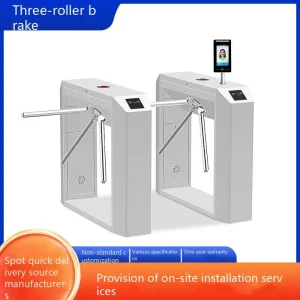
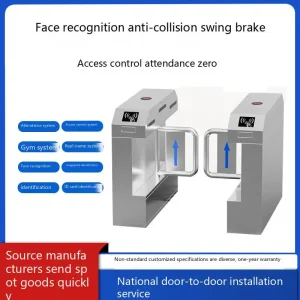
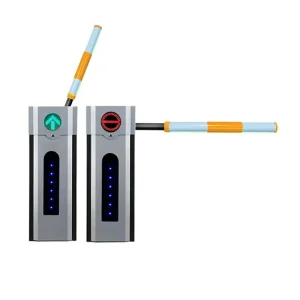
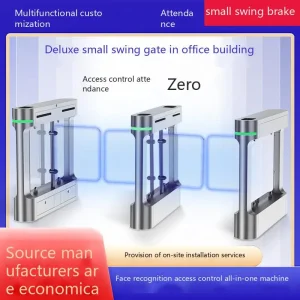
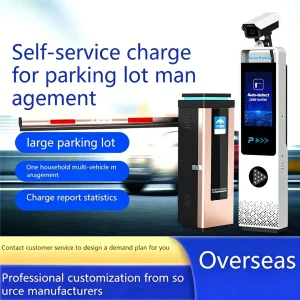
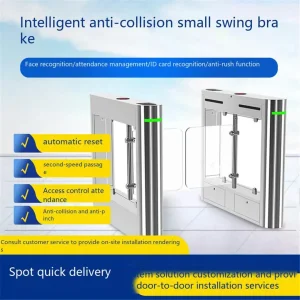
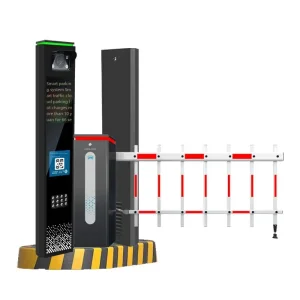
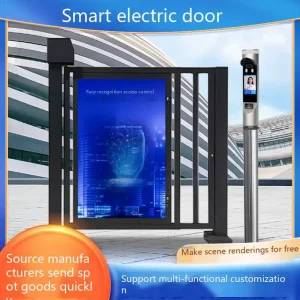
Coordinated Barrier Gates, Turnstiles & Recognition Machines
Complete your vehicle perimeter and pedestrian access array with high-performance integrated hardware, engineered to synchronize with bollards for comprehensive site protection.
Next-Generation Roadmap: Smart Sensing & Sustainable Materials
Where physical perimeter mechanics intersect with IoT intelligence. How Anrui engineers are advancing semi-automatic bollard technology for smart cities.
NB-IoT Kinetic State Transponders
Future iterations of Anrui semi-automatic columns incorporate ultra-low-power Bluetooth Low Energy (BLE) and Narrowband-IoT position transponders. While the column remains purely mechanical in its motive force, embedded magnetic reed sensors transmit deployment status directly to city surveillance dashboards, informing municipal traffic control whether emergency corridors are closed or accessible.
Decarbonized Cold-Drawn Stainless Metallurgy
In compliance with global ESG mandates and European carbon border adjustment mechanisms (CBAM), Anrui is adopting low-carbon electric arc furnace (EAF) stainless steel processing. This reduces the embodied carbon index of our lifting cylinders by 38% while improving grain structure density for enhanced kinetic shear resistance under physical impact tests.
Ergonomic Dampened Deceleration
To maximize operator comfort and eliminate rebound impact when the bollard reaches its terminal height, our advanced fluid-cushioned pneumatic dampers smoothly throttle the final 30mm of vertical stroke. This completely prevents metal-on-metal clang, decreases wear on the internal lock catch, and provides a whisper-quiet, premium tactile feel during security maneuvers.