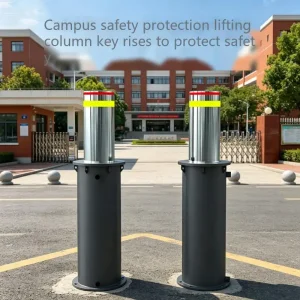
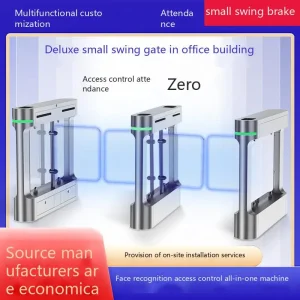
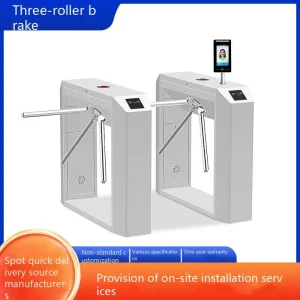
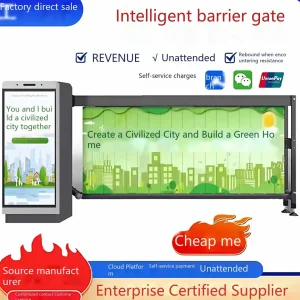
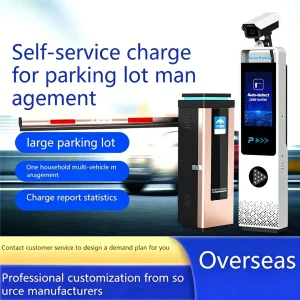
Featured Smart Access Control Equipment
Factory-direct turnstiles, barrier gates, and RFID key card access controllers engineered for seamless integration.
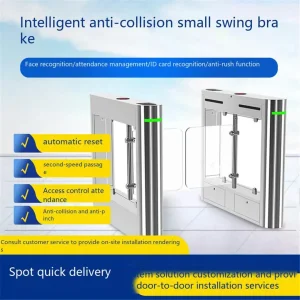
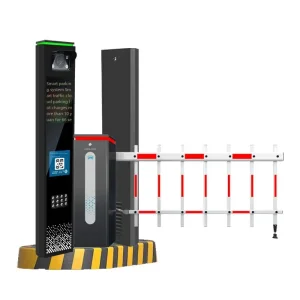
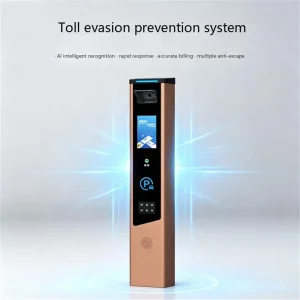
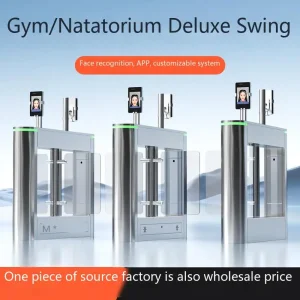
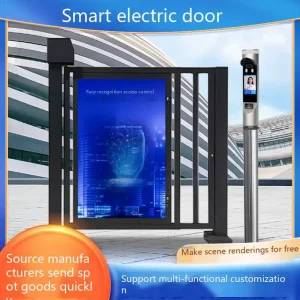
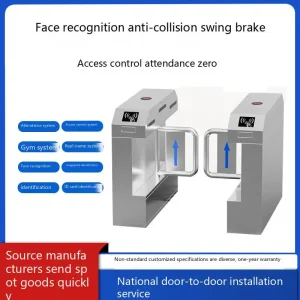
Architecture & Engineering of Modern Key Card Entry Systems
A definitive technical guide for procurement directors, security integrators, and facility engineers evaluating commercial physical access control systems (PACS).
Executive Summary: The modern key card entry system industry has evolved from simple legacy 125kHz proximity cards into complex, multi-layered IoT access management ecosystems. Utilizing high-frequency 13.56MHz RFID, AES-128 crypto-elements, and OSDP v2.2 protocols, advanced key card solutions eliminate legacy cloning vulnerabilities while delivering direct edge-to-cloud telemetry for commercial real estate, manufacturing plants, and smart urban infrastructure.
1. Technological Foundations: Frequency, Protocols, and Encryption Standards
When selecting advanced key card entry systems, hardware specification dictates long-term security posture. The market is divided into three primary Radio Frequency Identification (RFID) spectrums and credential processing formats:
LF Proximity (125 kHz)
Legacy formats including EM4100 and HID Prox. Operates via unencrypted RF handshake. High risk of card cloning; suitable only for low-security internal perimeter tracking.
HF Smart Card (13.56 MHz)
Utilizes MIFARE DESFire EV2/EV3 and ISO/IEC 14443 architecture. Employs hardware-based cryptographic engines (AES-128 / DES) to protect against replay and brute-force attacks.
UHF Long-Range (860-960 MHz)
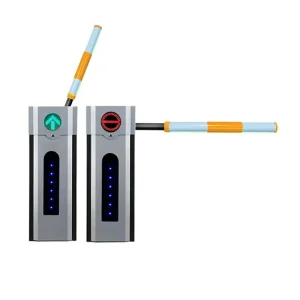
Designed for vehicle entry barrier gates and industrial logistics points. Offers reading distances up to 15 meters, integrated with Wiegand and IP-based access controllers.
Modern system integrators strictly specify OSDP (Open Supervised Device Protocol) v2.2 over legacy Wiegand interfaces. Wiegand cables lack encryption and bidirectional telemetry, making them susceptible to physical line sniffing. OSDP utilizes AES-128 encryption over RS-485 networks, constantly checking reader health, tampered housings, and unauthorized signal injection.
2. System Topology & Hardware Architecture
A commercial-grade key card entry system consists of three interconnected hardware tiers:
- Physical Edge Devices: RFID card readers, embedded keypad/card combo terminals, smart turnstile gates, drop-bolt electromagnetic locks, and automated boom barriers.
- Access Control Units (ACU / Controllers): Multi-door controller boards processing local access rules, holding offline memory buffers (up to 100,000 events), and managing door sensor relays.
- Management Layer: On-premise server software or Cloud Access Control as a Service (ACaaS) platforms connected via secure MQTT or RESTful APIs.
Global Deployment Metrics & Reliability
Quantifiable engineering performance delivered across international enterprise sites.
Key Card Entry System Price Breakdown & TCO Matrix
Understanding factory-direct unit economics versus total installed cost of ownership.
Total Cost of Ownership (TCO) for enterprise key card entry systems varies dramatically based on system complexity, door count, structural barrier integration, and licensing structures. Overseas procurement teams sourcing directly from Chinese Tier-1 original equipment manufacturers (OEMs) achieve substantial capital expenditure (CapEx) savings compared to local distributor markups.
| System Component Tier | Hardware Specifications | Direct Factory Price Range (USD) | Installed Market Price (USD) | Primary Application |
|---|---|---|---|---|
| Basic Standalone Reader | 125kHz / 13.56MHz, Keypad, IP65 Waterproof | $15 - $35 / unit | $120 - $250 / door | Small office doors, storage rooms, residential gates |
| Networked Smart Controller | 4-Door TCP/IP & RS485 Controller, OSDP support | $80 - $180 / board | $400 - $900 / controller | Commercial office complexes, multi-level buildings |
| Pedestrian Speed/Swing Turnstile | Brushless Servo Motor, Card/QR Reader Housing | $450 - $1,200 / lane | $2,200 - $5,500 / lane | Corporate lobbies, metro transit, industrial parks |
| Heavy-Duty Barrier Gate | DC Brushless motor, 1.5s-6s rapid boom arm | $280 - $750 / set | $1,500 - $3,800 / gate | Vehicle parking facilities, toll booths, logistics hubs |
| RFID Smart Cards (Bulk) | MIFARE DESFire EV2 4K / FM11RF08 Chips | $0.18 - $0.85 / card | $2.50 - $6.00 / card | Employee badging, hotel keycards, tenant cards |
Factors Influencing Direct Factory Pricing
- Credential Cryptography Level: Standard FM11RF08 chips cost significantly less than high-security NXP MIFARE DESFire EV3 chips with customized encryption keys injected at the factory level.
- Structural Material Grade: Standard 304 stainless steel turnstile chassis vs. 316 marine-grade stainless steel engineered for coastal or high-humidity environments.
- System Software Licensing: Open API and license-free embedded web server controllers vs. proprietary software platforms requiring monthly per-door SaaS fees.
China Factory & Supply Chain Advantages
Why Shenzhen's intelligent hardware ecosystem leads global physical security manufacturing.
Cluster Aggregation
Located in Shenzhen's Guangming Tech District, our 8,000+ m² facility is surrounded by raw metal stamping, SMT circuit assembly, and optical testing vendors, cutting procurement lead times by up to 60%.
Rigorous Quality Control
Every turnstile mechanism, barrier motor, and card controller undergoes 100% full-load aging tests, salt-spray corrosion chamber testing, and IP68 water penetration checks before packing.
OEM/ODM Customization
Full hardware customization including laser-etched brand logos, custom cabinet powder-coating colors, bespoke Wiegand/OSDP firmware modification, and private-label packaging.
Localization Support, Regional Compliance & Data Security
Ensuring physical and digital compliance across North America, Europe, the Middle East, and Asia-Pacific.
Regulatory Hardware Certifications
Exporting physical security equipment requires strict adherence to regional electromechanical and electromagnetic directives:
- CE Marking (Europe): Full compliance with EN 61000-6-3 (EMC Directive) and EN 60950-1 electrical safety.
- FCC Certification (USA): Part 15 Subpart B testing to guarantee non-interference with local wireless bands.
- RoHS & REACH: 100% hazardous substance compliance for international environmental safety.
- UL294 Standard: Meeting rigorous flame retardancy and emergency release fail-safe requirements.
Privacy & Data Protection (GDPR & CCPA)
Key card entry systems process Sensitive Personally Identifiable Information (PII) linked to employee card IDs and access timestamps:
- AES-256 Database Encryption: On-premise and cloud storage encrypts cardholder databases at rest.
- Configurable Audit Log Retention: Automatic purging of swipe logs to comply with European GDPR "right-to-be-forgotten" rules.
- Anonymized Tokenization: Systems transmit card badge ID numbers without revealing underlying user identity across open API endpoints.
Target Application Scenarios & Real-World Implementations
Tailored access solutions engineered for distinct commercial and industrial operational requirements.
Commercial Office Buildings
Integration of sleek turnstile speed gates with high-frequency key card readers and elevator destination control. Enables rapid, high-throughput pedestrian filtering during peak rush hours.
Industrial & Manufacturing Parks
Heavy-duty tripod turnstiles paired with rugged key card terminals and vehicle boom barrier gates. Manages multi-modal employee entry, trucker badge validation, and hazardous area isolation.
Automated Car Parks & Tolls
Combining UHF long-range RFID key card swiping with License Plate Recognition (LPR) cameras. Delivers dual-factor vehicle access authorization to prevent stolen credential entry.
Key Card Entry System Industry Development Trends
The convergence of physical credentials, mobile Bluetooth/NFC wallets, and AI-driven telemetry.
As smart building management systems transition to unified cloud networks, physical key card access technology is undergoing three major structural shifts:
1. Hybrid Credential Architecture (Cards + Mobile Wallet)
Modern card readers are no longer single-function devices. Advanced readers now embed dual-chip modules supporting physical 13.56MHz MIFARE cards alongside Bluetooth Low Energy (BLE) and Near Field Communication (NFC). Users can unlock doors using standard physical key cards or virtual credentials stored in Apple Wallet and Google Wallet.
2. Transition from On-Premise to Cloud Access Control (ACaaS)
Legacy systems reliant on heavy localized servers are giving way to cloud-native platforms. Edge controllers maintain local decision-making capabilities even during internet outages, but sync real-time log data, user permissions, and remote door control commands via encrypted web-sockets.
3. Convergence of Access Control with AI AIoT Analytics
By pairing key card swipe logs with AI surveillance cameras, modern security software detects tailgating violations, credential sharing, and unauthorized access attempts in real-time, instantly triggering alarm relays at the barrier gate or turnstile edge.
Frequently Asked Questions (FAQ)
In-depth answers to common technical, commercial, and installation inquiries.
What is the main advantage of direct factory procurement for key card entry systems from China?
How do MIFARE DESFire EV2/EV3 cards differ from traditional 125kHz EM cards?
Can key card access controllers integrate with automatic barrier gates and pedestrian turnstiles?
What happens to key card entry doors during a facility power outage?
How does long-range UHF key card access work for vehicle parking applications?
More Smart Barrier & Access Control Products
Explore our complete OEM range of barrier gates, LPR systems, bollards, and gym turnstiles.