
Perimeter, Lane & Ground Access Units
Pre-tested automated perimeter boom gates, smart parking security, and high-resolution license plate units coordinated with multi-tier vertical access nodes.
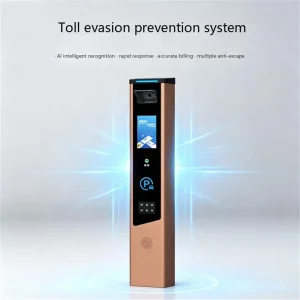
Cheap High definition license plate recognition integrated - AnRuitong II Manufacturer, Factories
View Hardware Specs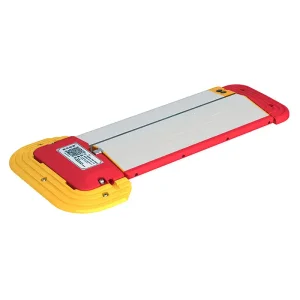
Cheap Scan to pay charging pilecommunity parking lock automatic sensing,electric shared scanning paymentanti-oil car occupying parking space Exporter, Pricelist
View Hardware Specs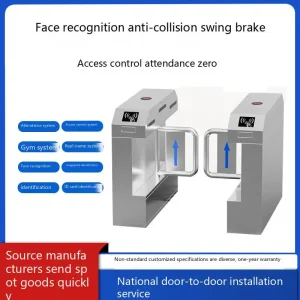
China Bridge Type Sloped Swing Gate Supplier, In Sales
View Hardware Specs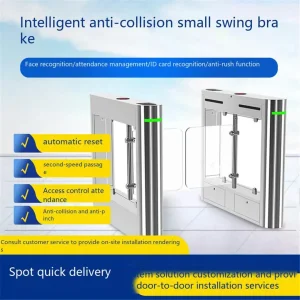
OEM Swing Gate Suppliers, Pricelist
View Hardware Specs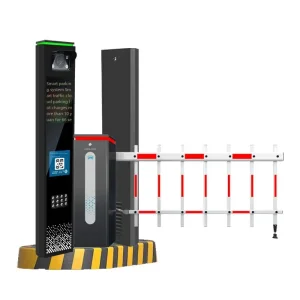
Cost-Effective Car Parking And Toll Access Control Automatic Articulated DC Parking Boom Barrier Gate With Long Range Rfid Reader Suppliers, Factory
View Hardware Specs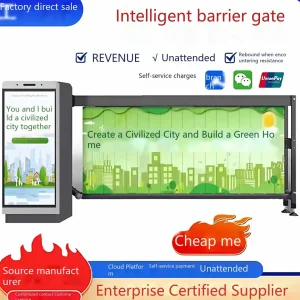
Buy Discount Intelligent Barrier Gate Model D03 Suppliers, Exporters
View Hardware Specs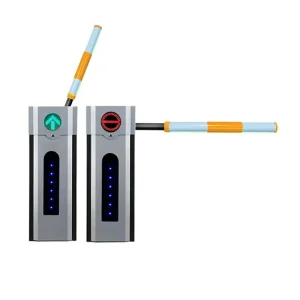
Easy-maintainable Intelligent Barrier Gate Model D11S Supplier, Quotation
View Hardware Specs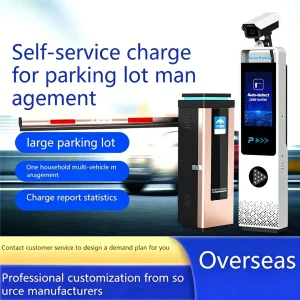
Buy Discount High-def license plate recognition machine Dolphin I model Exporters, In Sales
View Hardware SpecsThe Convergence of Vertical Mobility & Smart Building Automation
The elevator access control domain has transitioned from simple dry-contact relay closures to edge-computing intelligent nodes integrated into unified cyber-physical building systems.
Destination Dispatch Systems (DDS)
Traditional elevator access controlled floor buttons inside the car cab via relay matrix boards. Modern class-A towers integrate access control at the turnstile level. When an employee or visitor badges through a optical speed gate or turnstile, the Destination Control System (DCS) dynamically assigns an elevator bank, minimizing wait times and eliminating touchpoints.
Multimodal Biometrics & BLE Mobile Credentials
Contactless credentials have outpaced physical RFID cards. Ultra-low latency facial recognition modules (operating under 150ms verification speeds), dynamic encrypted QR codes, and BLE/NFC mobile wallet credentials allow authenticated users frictionless transition from perimeter parking gates to turnstiles and elevator cabs.
Zero Trust & Cyber-Hardened Edge Hardware
With elevator systems connected to enterprise IP networks, vulnerabilities in legacy Wiegand controllers represent severe attack vectors. Advanced elevator access control systems mandate end-to-end OSDP v2.2 (Open Supervised Device Protocol) with Secure Channel Protocol (SCP) over AES-128/256 encryption to prevent sniffer taps and replay exploits.
Global Procurement Demands & Technical Criteria
Enterprise buyers, general contractors, and low-voltage systems integrators must balance mechanical reliability, open-protocol integration, and life safety mandates during vendor vetting.
Scalable Floor Expansion Modules
Modern commercial developments feature variable-tenant layouts. Elevator Access Control Panels (ECP) must offer modular relay expansion boards (typically 8, 16, or 64 floor relays per controller) with programmable normally-open (NO) and normally-closed (NC) dry contact outputs capable of controlling elevator banks up to 128 landings without signal degradation.
Native OEM Lift Protocol Support
Integration directly into major elevator group dispatch controllers (including Otis Compass, KONE Polaris, Schindler PORT, and ThyssenKrupp/TK Elevator AGILE) via BACnet/IP, Modbus TCP/IP, or proprietary RESTful API bridges eliminates redundant physical traveling cable wiring and preserves factory warranties.
Fail-Safe Emergency Interlocking
Uncompromising compliance with international life safety standards (NFPA 101, EN 81-20/50, and BS 7273-4). Elevator access controllers must incorporate dedicated dry-contact fire alarm inputs that automatically bypass all access authorization states, unlocking every floor button immediately upon fire system trip or power loss.
Hybrid Cloud & Distributed Edge Offline
Global multi-site portfolios demand central cloud identity management (Active Directory / Okta / Azure SCIM sync) coupled with edge-resident controller memory storing at least 100,000 user credentials and 500,000 offline event logs to maintain 100% operation during wide-area network drops.
Comprehensive Elevator Access Control Pricelist & Bill of Materials
Transparent factory-direct and wholesale integrator unit pricing for elevator controllers, destination dispatch software bridges, turnstile readers, and traveling cable accessories.
| Equipment Category | Technical Specification / Model Type | Typical Application | Wholesale / FOB Price (USD) | Enterprise MSRP (USD) |
|---|---|---|---|---|
| Primary Elevator Master Controller | Dual-Core ARM, Linux OS, 2x OSDP Reader Ports, TCP/IP, Onboard Web Server, 100K Cards | Elevator Machine Room / Cab Panel | $280 - $450 | $650 - $950 |
| 16-Floor Relay Expansion Board | 16 Form-C Dry Relays (30VDC 2A), Optocoupler Isolation, RS-485 Daisy Chain Bus | Floor-By-Floor Access Control Expansion | $110 - $185 | $280 - $420 |
| 32-Floor Relay Expansion Unit | 32 Form-C Relays, Extended Surge Suppression, Dual Bus Redundancy | High-Rise Multi-Tenant Towers | $195 - $290 | $450 - $680 |
| In-Cab Flush Multimodal Reader | Mifare DESFire EV2/EV3, BLE Mobile, Dynamic QR Code, OSDP v2.2, Flush Mount Stainless | Elevator Car Operating Panel (COP) | $135 - $220 | $320 - $490 |
| In-Cab 3D AI Face Recognition Terminal | Dual-Lens Infrared + RGB, Live Body Detection, WDR, 50K Face Database, <0.2s Match | Executive High-Security Cab Entry | $320 - $550 | $750 - $1,200 |
| DDS Software Integration Gateway | BACnet/IP & OPC-UA Gateway for Otis, KONE, Schindler, TKE, Dual Ethernet LAN | Lobby Speed Gate to Lift Group Calling | $1,450 - $2,800 | $3,800 - $6,500 |
| Specialized Elevator Traveling Cable (100m) | Cat6 Industrial Shielded + 2x Shielded Twisted Pair OSDP + 4x 16AWG Power Core | Dynamic Motion Signal Cab Transmission | $240 - $380 | $550 - $800 |
| Integrated Pedestrian Speed Gate Turnstile | Brushless DC Servo, Tempered Glass Barrier, Pre-machined Lift Reader Slot, 10M MTBF | Ground Floor Lobby Interlocking | $1,100 - $1,950 | $2,800 - $4,600 |
Lifecycle TCO Optimization Note for EPCs and Facilities Directors
When budgeting vertical transportation access control, hardware represents only 32%–40% of the initial capital deployment. Traveling cable installation, elevator company inspection fees (OEM maintenance mechanic sign-off), and custom elevator interface unit (EIU) configuration typically account for 45% of deployment cost. Specifying standard OSDP bus controllers with modular relay topologies substantially mitigates future recabling expenditures when tenant layouts are modified.
Vertical Industry Macro Architectures
System topologies customized for strict compliance, high physical throughput, and multi-tenant zoning segregation across global tier-1 facilities.
Tier-IV Commercial Multi-Tenant Towers
Challenge: Segregating disparate multinational corporations residing across 60+ floors while processing 3,000+ staff during 08:30–09:15 peak entry windows.
Solution: Optical swing turnstile lanes equipped with biometric facial recognition terminals communicating directly with the Destination Dispatch Group Controller via BACnet/IP. Employees authenticate once at the turnstile barrier; the barrier swings open, and a digital display directs the user to "Car C - Floor 42". Floor buttons inside Car C remain locked for unauthorized floors, isolating corporate tenancies entirely.
Healthcare & Hospital Trauma Centers
Challenge: Balancing general visitor restrictions with zero-latency emergency medical override for sterile surgical floors and trauma units.
Solution: Dual-tier priority matrix. RFID readers installed inside the cab operate in "Zoned Floor Authorization" mode for routine shifts. Designated Trauma Elevators feature a continuous supervised relay wired to the Code Blue resuscitation paging console. Activating Code Blue triggers instant priority dispatch, recalls the cab to the ER bay, locks out all exterior hall call stations, and grants unrestricted landing directly to Surgery Suites.
Hyperscale Colocation Data Centers
Challenge: Eliminating social engineering, tailgating, and multi-floor hopping inside server farm white-space elevator shafts.
Solution: Multi-factor two-man rule interlocking. Cab call buttons are deactivated by default. Entering the cab requires simultaneous dual credentialing (Supervisory Keycard + Sub-contractor Biometric). Once authenticated, the elevator operates solely to the approved server hall landing. Optical overhead 3D anti-tailgating sensors in the cab cross-verify that only authenticated passenger counts exit onto the white space landing floor.
International Standards & Factory Quality Assurance
Rigorous manufacturing controls, electromagnetic compatibility compliance, and global engineering field support back every installed module.
EN 81-20 / EN 81-50 Safety Certification
All elevator controller expansion interfaces comply with European Lift Safety Standards EN 81-20 and EN 81-50. Signal isolation relays guarantee that electrical faults, voltage surges, or back-EMF spikes originating from the access control panel cannot penetrate or disrupt the primary safety chain circuit of the elevator hoisting machine.
UL 294 / CE / FCC Mark Compliance
Access controllers undergo comprehensive testing for destructive attack resistance, electrical endurance, line security, and power failure recovery. Printed circuit boards (PCBs) feature industrial-grade conformal coating to safeguard against shaft condensation, brake dust accumulation, and fluctuating ambient shaft temperatures (-20°C to +70°C).
GDPR & BIPA Biometric Privacy Architecture
For installations utilizing facial recognition or fingerprint readers within elevator cars, controllers support edge-encrypted template storage. Raw facial images are discarded; only irreversibly hashed 256-bit mathematical representations are stored, satisfying strict European Union GDPR and US state-level biometric privacy statutes.
72-Hour Burn-In & Continuous Support
Every industrial master controller and 16/32-channel relay expansion module undergoes a continuous 72-hour high-temperature full-load switching cycle before packaging. Backed by dedicated low-voltage engineering teams providing 24/7 remote commissioning support, wiring schematics, and traveler cable pinout verifications.
Next-Generation Vertical Transportation Engineering
Anticipating structural shifts in autonomous mobility, smart cities, and edge artificial intelligence over the coming decade.
Ultra-Wideband (UWB) Spatial Precision Calling
Moving beyond near-field BLE, UWB micro-positioning allows elevator dispatch systems to track user trajectory through building corridors. The system pre-calls an elevator cab as the user approaches within 10 meters, calculating walking speed to arrive at the landing at the exact millisecond the doors cycle open.
Autonomous Delivery Robot Fleet Dispatching
As service robotics proliferate for indoor parcel, food, and medical supply transit, access control systems serve as the core translation bridge. Standardized interfaces (such as ROS 2 and IEEE 1872.1) allow robots to wirelessly request elevator cabs, designate floor transit, verify cabin occupancy via optical sensors, and clear doors without human friction.
Quantum-Resistant Cryptographic Bus Architecture
With NIST announcing post-quantum cryptography standards, next-generation elevator master controllers integrate lattice-based public-key algorithms to encrypt intra-building OSDP and BACnet backbones, preventing credential forgery from future quantum computation breakthroughs.
Frequently Asked Engineering & Procurement Questions
Authoritative technical clarifications addressing elevator access hardware topology, signal isolation, and building management integration.
How does an elevator access control system physically interface with an elevator's control system?
Elevator access control primarily interfaces using two distinct architectural methods: Physical Relay Interfacing (Dry Contact) and Software High-Level Interfacing (HLI). In a physical relay setup, access control relay boards are wired in series with the car operating panel (COP) floor pushbuttons. When an unauthenticated passenger presses a floor button, the circuit remains open. Upon presenting a valid credential, the controller energizes the specific relay, closing the circuit and allowing the passenger to select that designated floor. In an HLI setup (common with Destination Dispatch), the access controller connects via BACnet/IP or an API gateway directly to the elevator manufacturer's central computer, transmitting call commands digitally without modifying cab button wiring.
Where is the elevator access control panel physically installed?
There are two primary installation locations: Inside the Elevator Machine Room (MRL or Penthouse) or On Top of the Elevator Cab (Car Top). Installing the panel in the machine room requires dedicating individual traveling cable conductors for every controlled floor relay from the cab to the machine room, which can become prohibitively expensive in high-rise structures. Installing an industrial-grade, vibration-dampened access controller directly on the car top requires only a single shielded twisted-pair communication cable (or Ethernet traveler) plus power, locally switching the button circuits directly behind the Car Operating Panel (COP).
What occurs during a building fire alarm or power outage?
Under international building and fire codes (NFPA 72, NFPA 101, and EN 81-73), life safety overrides access control under all emergency conditions. Access control relay modules feature a dedicated, normally-closed (NC) supervised emergency input. When the fire alarm system trips, the emergency input opens, instantly de-energizing all access relays. This defaults the elevator system to unrestricted operation, enabling fire personnel to access any landing or returning cabs to the designated recall floor immediately.
Can an elevator access system prevent unauthorized passengers from following someone into the cab (tailgating)?
Relay-based elevator access control permits authorized passengers to push their approved floor button, but it cannot mechanically stop an unauthorized person from standing inside the elevator cab once the doors cycle open. To eliminate tailgating and floor-hopping, high-security facilities employ three complementary technologies: 1) Turnstile-level destination dispatching, which prevents unauthorized access to the elevator lobby entirely; 2) In-cab 3D optical time-of-flight (ToF) cameras that count passenger bodies against badges authenticated; and 3) Restricting floor buttons to single-select operation with instantaneous re-locking once pressed.
Why is OSDP v2.2 preferred over legacy Wiegand for in-cab elevator readers?
Elevator traveling cables traverse high-voltage inductive pathways alongside hoist motor power lines, hoist brake feeds, and door operator motors, exposing signal cables to severe electromagnetic interference (EMI). The legacy Wiegand protocol is an unencrypted, unidirectional, unshielded 5V pulse standard highly vulnerable to induced noise, ground loops, and hardware sniffing bugs. In contrast, OSDP v2.2 operates over balanced RS-485 differential signaling, providing superior noise immunity across long vertical drops, bi-directional device health monitoring, and AES-128 cryptographic security to defeat man-in-the-middle sniffing.
Pedestrian Turnstiles, Speed Gates & Perimeter Bollards
Commercial lobby speed gates, attendance turnstiles, and heavy-duty rising security bollards designed to interlock with central elevator dispatch networks.
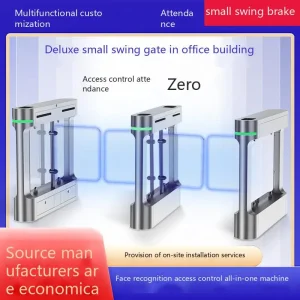
Buy Discount Swing Gate Image Reference Suppliers, In Sales
View Hardware Specs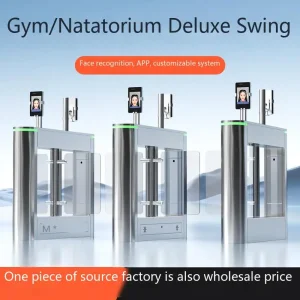
Buy Discount Office Building Entrance Attendance Security Access Control Turnstiles Gate Swing Barrier Speed Gate Manufacturers, Price
View Hardware Specs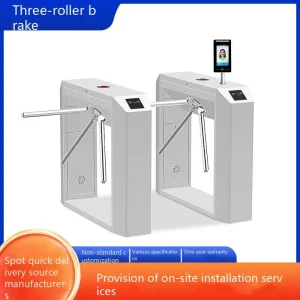
Advanced Factoryoem/ODM Durable Smart Fast Speed Swing Automatic Used Industrial Gym Turnstile Gate Supplier, Factory
View Hardware Specs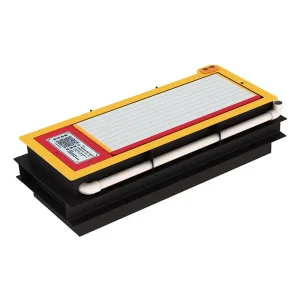
Easy-maintainable City Parking Product Factories, Price
View Hardware Specs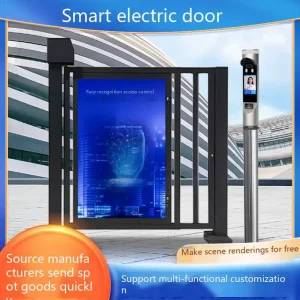
Buy Discount Intelligent pedestrian advertising gate Suppliers, Exporter
View Hardware Specs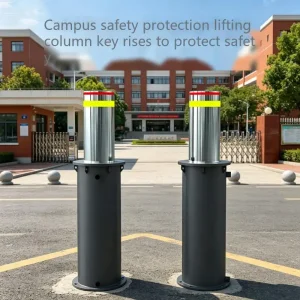
High-Quality Rising Bollard Instruction Manual In Sales, Price
View Hardware Specs
Cheap High definition license plate recognition integrated - AnRuitong II Manufacturer, Factories
View Hardware Specs