
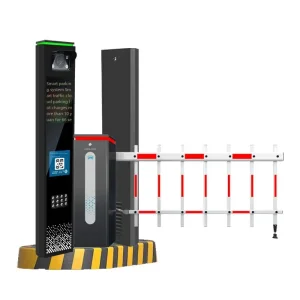
Factory Inventory · Series A
High-Performance Perimeter & Access Control Systems
Engineered at our Shenzhen smart manufacturing facility. Matched hardware, multi-layer weather resistance, and plug-and-play IoT vehicle automation protocols.
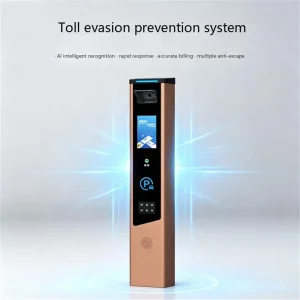
Cheap High definition license plate recognition integrated - AnRuitong II Manufacturer, Factories
View Specifications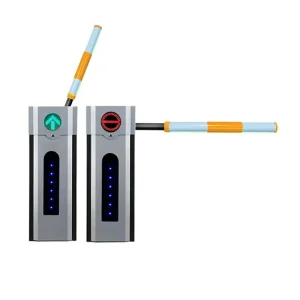
Easy-maintainable Intelligent Barrier Gate Model D11S Supplier, Quotation
View Specifications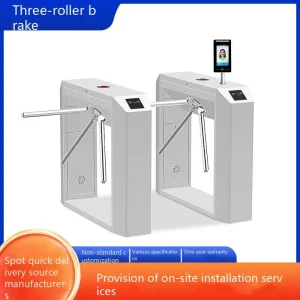
Advanced Factoryoem/ODM Durable Smart Fast Speed Swing Automatic Used Industrial Gym Turnstile Gate Supplier, Factory
View Specifications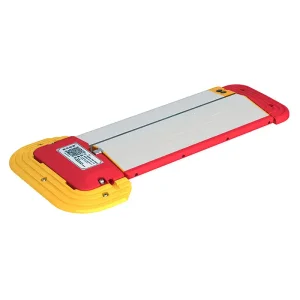
Cheap Scan to pay charging pilecommunity parking lock automatic sensing,electric shared scanning paymentanti-oil car occupying parking space Exporter, Pricelist
View Specifications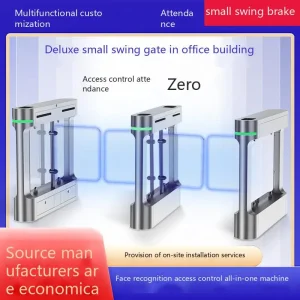
Buy Discount Swing Gate Image Reference Suppliers, In Sales
View Specifications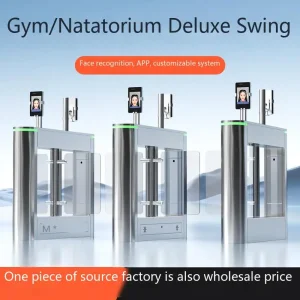
Buy Discount Office Building Entrance Attendance Security Access Control Turnstiles Gate Swing Barrier Speed Gate Manufacturers, Price
View Specifications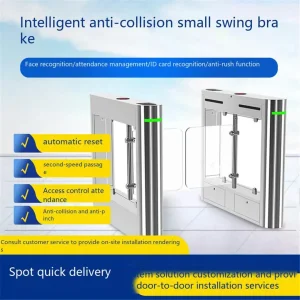
OEM Swing Gate Suppliers, Pricelist
View Specifications
Industrial Whitepaper Edition
Composite Fencing & Gate Infrastructures: Macro Industry Overview
Transitioning from traditional carbon-steel and raw timber boundaries to next-generation engineered composite fencing, polymer reinforcement, and integrated Mechatronic gate automation.
Material Science Paradigm Shift
Traditional fencing materials suffer severe degradation under environmental exposure: wood is susceptible to rot and subterranean termites, while ungalvanized steels corrode rapidly under saline maritime conditions.
Modern composite fencing combines thermo-polymer matrixes (HDPE/PP) with reclaimed bio-cellulose fibers and structural fiberglass reinforcement (FRP/GRP). This hybrid composition yields tensile strengths exceeding 35 MPa without warpage, rot, or peeling.
- Zero chemical preservatives required
- Hydrophobic core minimizes thermal contraction
- UV-9 stabilised coatings resist chromatic fading
Smart Access Gate Mechatronics
Composite boundaries require advanced structural kinematics. An integrated gate framework demands torsional rigidity paired with low inertia to safeguard motor mechanisms against early fatigue failures.
By pairing high-torque brushless direct-current (BLDC) drive assemblies with lightweight fiber-reinforced composite swing and cantilever gates, operators achieve cycle lifespans surpassing 3,000,000 continuous movements without backlash.
- Closed-loop encoder tracking for smooth deceleration
- Instant microsecond anti-crush pressure response
- Seamless integration into Anrui edge-computing LPR
Whole-Life Total Cost of Ownership (TCO)
Commercial specifiers, civil engineers, and EPC contractors increasingly measure perimeter security through life-cycle costing rather than upfront capital expenditure.
Composite fencing and gate infrastructure delivers a neutral break-even point within 48 to 60 months against commercial treated timber or powder-coated mild steel, primarily driven by zero recurring painting, sealing, or anti-oxidation overheads.
- Virtually zero recurrent chemical treatments
- Significantly reduced strain on swing arm motors
- 100% recyclable polymeric matrices
Worldwide Deployment Landscape
Global Commercial & Industrial Status of Perimeter Automation
Across North America, the European Union, the GCC corridor, and Australasia, physical security architectures are converging with digital identity governance and zero-carbon environmental mandates.
North America & Western Europe
Regulatory frameworks such as the EU Corporate Sustainability Due Diligence Directive (CSDDD) and North American LEED certifications increasingly demand cradle-to-gate environmental product declarations (EPDs) for site perimeters.
Factories are actively replacing heavy galvanised fences with composite-slat acoustic screens capable of attenuating ambient traffic noise up to 28dB while functioning as non-conductive RF-transparent barriers for radar and perimeter LIDAR nodes.
Middle East (GCC) & Arid Logistics Hubs
High ambient thermal cycling, saline humidity in maritime zones (such as Dubai, Doha, and Dammam), and abrasive airborne particulate stress render standard powder-coatings ineffective within 24 months.
Composite pultruded gates combined with hermetically sealed IP68-rated Anrui hydraulic rising bollards and brushless barrier motors deliver uninterrupted access control at logistics choke points, sustaining continuous 55°C operation without mechanical seizure.
Critical Infrastructure & Data Centers
Modern hyperscale data centers require strict electromagnetic isolation along perimeter boundaries. High-metal perimeters can distort 5G wireless arrays and produce passive intermodulation (PIM) issues.
Engineered dielectric composite boundaries isolate facilities electrically while housing concealed fiber optic perimeter intrusion detection sensors (PIDS) inside hollow-profile vertical composite posts.
8,000+
Factory Floor Area (m²)
80+
Global Markets Supplied
3,000,000
Tested Mean Cycles (MCBF)
100+
Payment & Currency Regimes
Material Performance Architecture
Engineering Specifications: Composite vs. Conventional Materials
Quantitative analysis evaluating structural resistance, maintenance intervals, and kinetic gate operation across varying climate stressors.
| Evaluation Parameter | High-Tech Composite Fencing | Structural Mild Steel / Iron | Autoclave Pressure-Treated Wood |
|---|---|---|---|
| Tensile Strength / Modulus | High strength-to-weight; resilient against flexural deformation | Extremely high tensile strength; prone to plastic denting | Variable grain strength; prone to splitting & warping |
| Atmospheric Corrosion Rate | 0.00 mm/year (Hydrophobic polymer encapsulation) | 0.05 - 0.20 mm/year (Subject to sacrificial coating wear) | Bio-decay and dry-rot degradation in wet ground contact |
| Electromagnetic Profile | Dielectric & RF-transparent (Ideal for radar & perimeter wireless) | Highly reflective (Causes signal scattering & PIM noise) | Neutral (Permeable to moisture-induced resistivity shifts) |
| Thermal Expansion Index | Linear expansion < 0.025 mm/m/°C with internal glass core | 0.012 mm/m/°C (Relatively stable thermal coefficient) | Non-linear anisotropic expansion via moisture absorption |
| Automation Motor Strain | Minimal inertia; reduces mechanical wear on swing actuators | Heavy inertial mass; requires industrial high-power motors | Medium weight; increases over time with rainwater retention |
| 20-Year Maintenance Cost | Near Zero (Occasional clear water pressure wash) | Substantial (Regular zinc re-coating, de-rusting & painting) | Severe (Periodic fungicide, staining, board replacement) |
Statutory Alignment & Compliance
Localized Support, Safety Directives & Statutory Assurance
Anrui's specialized equipment and composite access systems adhere to the rigorous structural safety and machinery directives demanded by Tier-1 contractors across international territories.
EN 12453 / EN 12604 Safety
European machinery standards require strict crush-prevention, obstacle impact limits, and structural fail-safe measures on automated vehicular and pedestrian gates.
Our dual-channel photoelectric sensors, mechanical safety edges, and smart digital torque encoders reverse movement within 100 milliseconds upon encountering any obstacle.
UL 325 & ASTM F2200
Mandatory across North American installations, our automated gate drive controllers feature isolated dual inputs for monitored entrapment protection sensors.
Entrapment alarms and physical barrier designs eliminate pinch-point pinch hazards, ensuring unhindered emergency vehicle egress under loss-of-power scenarios.
Environmental & Marine (IP66/IP68)
Coastal and extreme maritime zones require high resistance against salt fog spray. Our motors and rising bollard hydraulic power units (HPUs) feature IP68 ingress protection.
Composite fencing panels are certified under ASTM B117 salt spray exposure tests without blister formation or chemical delamination across 3,000+ testing hours.
Localized Engineering Support
With equipment deployed in over 80 countries, Anrui bridges cross-border requirements with detailed bilingual CAD/BIM technical documentation and custom electrical wiring schematics.
Our dedicated engineering department coordinates 7×24 remote system commissioning directly with local systems integrators, resolving setup issues across any time zone.
Real-World Deployments
Mission-Critical Application Scenarios
Purpose-engineered access ecosystems configured for harsh operational environments and high traffic densities.
Smart Port & Free Trade Zone Corridors
Tightly bound customs territories require automated vehicle and container access without bottlenecking arterial container flows.
Integrated Architecture: Ultra-fast articulated DC barrier gates integrated with Anrui Dolphin and AnRuitong license plate recognition cameras. High-wind rated composite perimeter fences isolate cargo compounds without blocking customs 5.8GHz DSRC gate transponders.
High-Security Corporate & Industrial Parks
Modern enterprise headquarters require unified access management across external perimeters, vehicle gates, and pedestrian turnstile lobbies.
Integrated Architecture: Sound-insulating composite boundary walls provide acoustic shielding from nearby highways, while heavy-duty rising bollards stop unauthorized vehicle access. Pedestrian lobbies leverage Anrui speed gates and swing turnstiles linked to cloud attendance databases.
Commercial Plazas & Mixed-Use Parking Assets
High-volume commercial carparks demand ticketless, low-friction processing that can simultaneously monetize entry corridors.
Integrated Architecture: Louver advertising barrier gates paired with smart automatic parking space locks protect dedicated bays from unauthorized oil-vehicle parking. The edge-recognition LPR pipeline processes vehicles in under 0.6 seconds, keeping entry lanes completely clear.
Factory Inventory · Series B
Precision Perimeter Mechatronics & Access Hardware
High-reliability bollards, advertising access portals, parking actuators, and edge-vision analytics cameras for immediate export delivery.
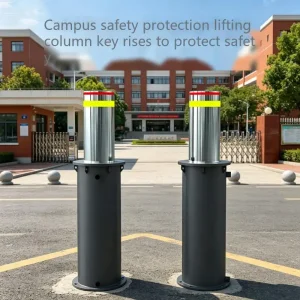
High-Quality Rising Bollard Instruction Manual In Sales, Price
View Specifications
Buy Discount Intelligent Barrier Gate Model D03 Suppliers, Exporters
View Specifications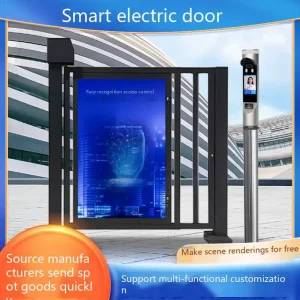
Buy Discount Intelligent pedestrian advertising gate Suppliers, Exporter
View Specifications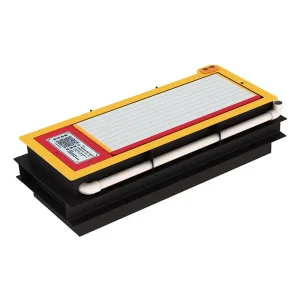
Easy-maintainable City Parking Product Factories, Price
View Specifications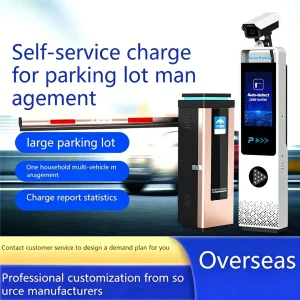
Buy Discount High-def license plate recognition machine Dolphin I model Exporters, In Sales
View Specifications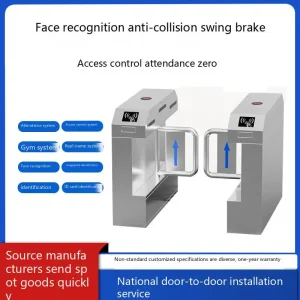
China Bridge Type Sloped Swing Gate Supplier, In Sales
View Specifications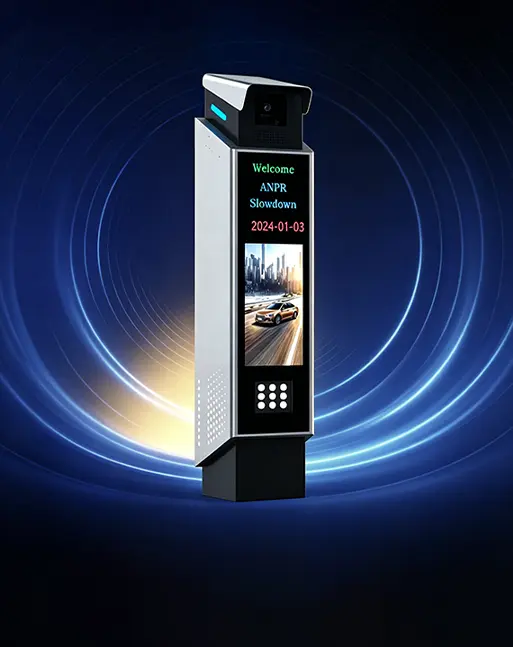
Anrui Complete Integrated Intelligent Perimeter & Automatic Lane Access Package
View Package Details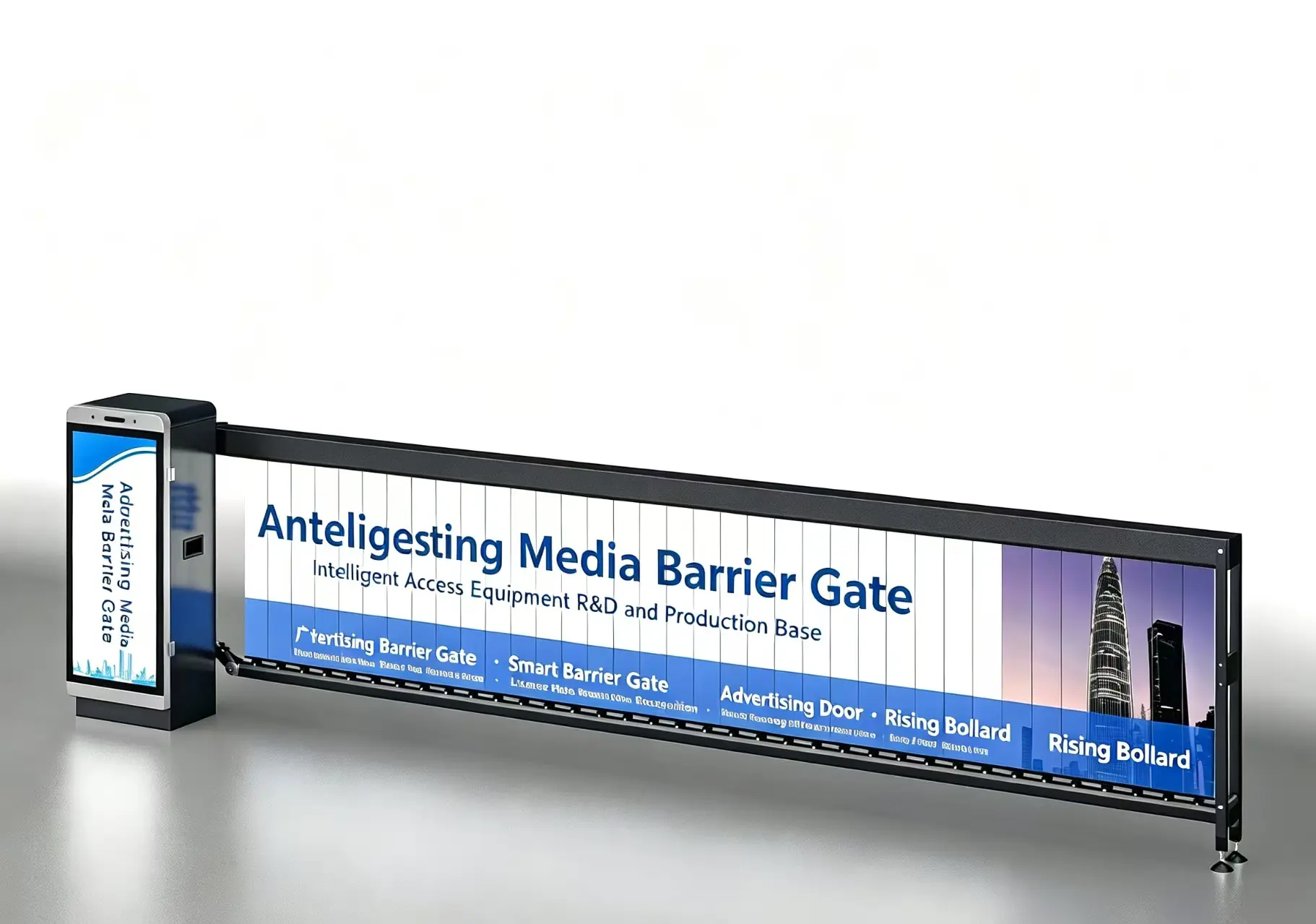
Complete Technical Engineering Matrix & Commercial Export Catalog
Download Full Catalog
Engineering Horizons
Technology Roadmap: The Future of Autonomous Perimeters
Exploring how advanced materials science, on-device Edge-AI algorithms, and clean solar micro-generation are reshaping modern perimeter security networks.
Self-Sustaining Solar Micro-Gates
By pairing low-power brushless DC motors with low-inertia composite swing and cantilever arms, next-generation gate automations can operate fully off-grid using small integrated solar PV skins laminated directly onto composite gate leaves.
Integrated solid-state sodium-ion battery buffers allow rural compounds and border installations to maintain full continuous automated operation over extended periods of overcast weather.
Bio-Polymer Closed Loops
Anrui's composite engineering pipeline is working to replace petroleum-derived resins with bio-based thermoset polyurethanes sourced from agricultural coproducts.
Coupled with mechanical recycling loops, future composite fence panels can be continuously crushed, re-extruded, and repurposed into new architectural-grade security barriers with zero material downgrading over their entire lifespan.
Edge Computer Vision & Sensor Fusion
Perimeter gates are quickly becoming smart edge-computing hubs. Real-time NPU chips inside Anrui recognition units perform optical vehicle re-identification, chassis scanning, and weight-sensor telemetry fusion locally.
By eliminating cloud round-trip delays, gates can authenticate vehicles and open within 0.3 seconds of approach, keeping high-throughput industrial and logistics lanes flowing smoothly.
Procurement & Engineering Authority
Frequently Asked Questions: Specifications & Ordering
Clear, direct answers to help engineering contractors, security integrators, and distributors specify composite fencing, automatic gates, and LPR access equipment.
What structural advantages do composite fence profiles offer over steel or wood in high-saline coastal settings?
Composite fencing combines high-density synthetic resins (such as virgin or recycled HDPE) with reinforced mineral fibers and wood fibers. Unlike iron or mild steel, it does not undergo galvanic or oxidation-reduction reactions, preventing rust streaks and structural thinning. Compared to wood, the material absorbs less than 0.5% water, preventing rot, fungal breakdown, and splintering caused by salty coastal air.
Can Anrui barrier gates and license plate recognition cameras be deployed as an interconnected lane kit?
Yes. Anrui supplies completely integrated vehicle lane setups combining high-definition LPR cameras, high-speed DC barrier gates (straight, folding, or articulated booms), loop detectors, and digital signage. Pre-configured I/O triggers, RS485 connections, and Ethernet TCP/IP links let the camera signal the barrier gate controller locally within 200ms of plate identification, without needing an external cloud server.
How does reduced gate leaf inertia benefit automated gate motor longevity?
Kinetic energy in an automated swinging or sliding gate is proportional to its moving mass (E = 0.5mv²). Traditional wrought iron or heavy solid steel gates place considerable torsional stress on drive shafts and gearbox pinions during initial acceleration and end-of-stroke braking. By using lightweight, rigid composite fencing panels on an engineered aluminum core, dynamic inertia drops by 40% to 60%, significantly extending brushless DC motor and gearbox operational lifespans.
What technical data must an engineering team prepare before placing an access control equipment order?
To provide accurate model selections, our factory engineering team will ask for: (1) Total clear roadway opening width and vertical clearance heights; (2) Projected peak daily cycle volumes; (3) Typical vehicle types, from passenger cars to heavy industrial trucks; (4) Site-specific power supplies and ground conditions; and (5) Local vehicle license plate specifications along with target recognition angles for our vision cameras.
What after-sales and warranty support does Anrui provide for international projects?
International customers receive direct technical support from our factory engineering team, including complete circuit schematics, step-by-step video installation guides, and remote commissioning assistance via dedicated 7×24 channels. Every system comes with standardized factory warranty coverage on all core motors, hydraulic pumps, and control logic boards, backed by an air-express replacement parts supply chain.
Are custom enclosure colors, OEM dimensions, and branding options available for distributors?
Yes. As a Shenzhen direct manufacturer with our own CNC sheet metal and coating facilities, Anrui provides complete OEM/ODM support for volume orders. This includes custom RAL powder-coating finishes, laser-cut distributor logos, specialized boom arm shapes, and fully branded advertising panels on our commercial barrier and pedestrian gate models.