
High-Spec Access Control Assets for Immediate London Deployment
Engineered for continuous heavy-duty duty cycles, rapid transit speeds, and full compliance with UK highway, safety, and security requirements.
-
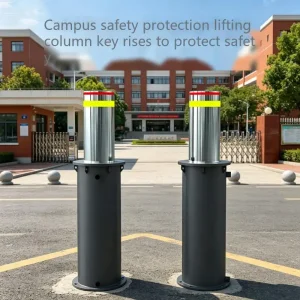
London Grade Automatic Rising Bollard Installation & Engineering Package
View Technical Manual -
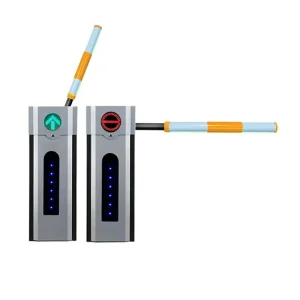
Model D11S High-Speed Intelligent Barrier Gate for London Commercial Sites
Request Quotation -
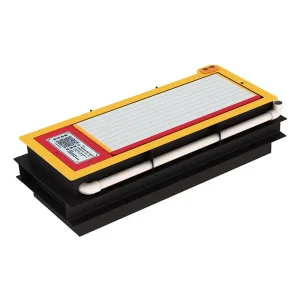
Low-Maintenance Integrated City Parking Guidance & Terminal Architecture
Factory Direct Pricing -

AnRuitong II Deep Learning License Plate Recognition Terminal (UK Formats)
Specs & Integration
London Commercial & Industrial Reality: The Rising Bollard Mandate
Urban density, Martyn's Law (Terrorism Protection of Premises Draft Bill), and congested subterranean utility corridors make Greater London one of the world's most demanding proving grounds for physical perimeter security.
Martyn’s Law & Protect Duty Alignment
UK premises operators with capacities above 100 individuals (Standard Tier) and 800+ (Enhanced Tier) face strict statutory duties to mitigate hostile vehicle threats. Our rising bollard systems directly satisfy public venue counter-terrorism requirements across London's West End, South Bank, and Olympic Park estates.
Shallow-Mount Urban Subsurface Realities
Underground London is heavily congested with Victorian gas mains, fiber optic cables, and London Underground tunnels. Our shallow-mount bollards require foundation excavations of only 200mm to 400mm, drastically cutting deployment time and utility redirection costs near the Square Mile and Westminster.
Global & UK Impact Rating Benchmarks
Every rising bollard chassis complies with internationally harmonized impact criteria: PAS 68:2013 (UK), IWA 14-1:2013 (International), and ASTM F2656 (US). Designed to eliminate 7,500 kg N2/N3 category trucks traveling at 48 km/h (30 mph) and 80 km/h (50 mph) with zero dynamic vehicle penetration.
Engineering Comparison: Drive Architectures for Urban Perimeter Defense
Choosing between Hydraulic, Electro-Mechanical BLDC, and Pneumatic rising bollards determines civil complexity, continuous power requirements, and total cost of ownership (TCO) across 15-year lifecycle models.
| Evaluation Parameter | Hydraulic Integrated (HPU Built-in) | Central Hydraulic (Remote HPU) | Electro-Mechanical (Brushless DC) | Pneumatic High-Speed System |
|---|---|---|---|---|
| Crash Rating Equivalent | PAS68 / 7.5T @ 50mph | PAS68 / 7.5T @ 50mph | IWA 14-1 / 3.5T @ 30mph | Traffic Access Control |
| Rise / Lower Speeds | 3.5s normal / 1.5s EFO | 3.0s normal / 1.0s EFO | 2.5s to 4.0s (Inverter Driven) | 1.8s to 2.5s |
| London Subsurface Suitability | Superior (Self-contained cylinder) | Requires hydraulic line routing | Excellent for low-noise zones | Requires compressor chamber |
| Submersion Resistance | IP68 Hermetic Sealed Chamber | IP68 Piston / Dry Plant Room | IP67 Sealed Actuator | IP65 Pneumatic Cylinders |
| Cold Weather / UK Winter Duty | Internal 100W heater elements | Thermostatic hydraulic reservoirs | Low-temp planetary gearbox grease | Air dryer mandatory (condensate risk) |
| Operational Frequency (Daily) | Up to 2,500 operations/day | Continuous 100% duty cycles | Up to 1,500 operations/day | High frequency / air tank throttled |
| Maintenance Interventions | Annual fluid analysis & seals | Biannual centralized valve inspect | Grease checks every 500k cycles | Quarterly filter drain & purge |
Engineered for Greater London's Micro-Climates & Security Sectors
From the high-threat banking rings of Canary Wharf to restricted historic thoroughfares in Westminster, our bollards harmonize structural fortitude with architectural discretion.
Canary Wharf & City of London Financial Plazas
Protecting high-rise corporate headquarters, server farms, and executive garages against coordinated vehicular ramming and standoff explosive threats without generating visual urban hostility.
- Emergency Fast Operation (EFO) triggered via integrated seismic & panic networks.
- 316-grade electropolished stainless steel sleeve combating urban road salt corrosion.
- Interfaced with high-speed ANPR and dynamic Under Vehicle Surveillance Systems (UVSS).
Westminster & Heritage Urban Consulates
Sensitive historical streetscapes requiring aesthetic integration, minimal acoustic footprint during nocturnal operations, and unyielding crash resistance against unauthorized heavy vehicle ingress.
- Ultra-shallow mount frames (under 250mm depth) preventing utility bridge conflicts.
- Bespoke cast iron / bronze finished historical architectural collars matching local street furniture.
- Whisper-quiet brushless DC electric drive mechanism operating below 45 dB(A).
Heathrow Logistics Corridors & ULEZ Loading Docks
Heavy multimodal logistics hubs handling air freight and rapid delivery fleets requiring uninterrupted 24/7 access control, fast lowering times, and resilient anti-rebound engineering.
- High-visibility reflective 3M diamond-grade banding with high-candela LED illuminated crowns.
- Multi-loop vehicle detection sensors eliminating accidental impact against compliant delivery vans.
- Zero-downtime hot-swappable hydraulic drive cartridges for rapid field repair.
Thames Estuary Ports & Critical Water Infrastructure
High-salinity maritime perimeters, flood-plain water intake facilities, and maritime freight berths demanding uncompromising ingress protection and anti-submersion resilience.
- Submersible IP68 hydraulic actuation operating continuously under 3 meters of standing water.
- Hot-dip galvanized structural steel foundation casseroles with sacrificial zinc anodes.
- Biodegradable non-toxic hydraulic fluids protecting nearby London marine ecosystems.
Request Site Feasibility Assessment & Civil Foundation Drawings
Our senior perimeter security consultants provide CAD layout files, structural rebar reinforcement calculations, and Martyn's Law compliance reviews tailored directly to London borough planning permissions.
Send Inquiry NowPerimeter Intelligence Roadmap: 2025–2035 Tech Vector
The physical barrier is no longer an isolated mechanical piston; it is an intelligent, edge-computing node connected to urban security operations centers (SOCs) and autonomous vehicle communication networks.
IoT Predictive Telemetry & Digital Twins
Every bollard column integrates vibration sensors, hydraulic fluid temperature monitors, and stroke speed accelerometers transmitting over 5G NB-IoT. Facility managers in London receive automated preventive maintenance alerts before seal degradation or motor anomalies result in lane downtime.
Net-Zero Energy & Kinetic Regeneration
In response to London's ambitious carbon net-zero mandates, our next-generation electric bollards utilize regenerative braking actuators that recover descending kinetic mass to recharge ultracapacitor banks, reducing perimeter standby consumption by up to 68%.
Autonomous Vehicle (V2X) Cryptographic Handshakes
Direct integration with ISO 15118 and Connected and Automated Vehicles (CAV) standards. Secure cryptographic authorization allows emergency service vehicles (London Ambulance, Met Police, London Fire Brigade) to trigger instant descent without operator intervention or RFID delay.
Frequently Asked Questions: Rising Bollard Procurement in London
Detailed technical answers for consulting engineers, principal contractors, and facility security directors evaluating HVM and traffic management investments.
What are the legal compliance differences between PAS 68 and IWA 14-1 in the UK?
BSI PAS 68:2013 is the British standard specifically created for vehicle security barriers, evaluating test vehicle mass, impact velocity, impact angle, penetration distance of the vehicle load bed, and resultant debris dispersal. IWA 14-1:2013 is an International Workshop Agreement that combines aspects of PAS 68 and US ASTM F2656 into a unified worldwide benchmark. In the UK, both standards are widely recognized by the Centre for the Protection of National Infrastructure (CPNI) and police Counter Terrorism Security Advisors (CTSAs). When procuring for London projects under Martyn's Law, bollards rated under either standard with zero or low penetration ratings (e.g., PAS 68: V/7500[N2]/80/90:0.0/0.0) offer complete regulatory defensibility.
How do shallow-mount rising bollards overcome London's dense underground utility services?
Traditional full-depth rising bollards with an 800mm or 1000mm rise height require pit excavations of 1,500mm to 1,800mm, which regularly collide with subterranean telecommunication ducts, gas mains, Victorian storm sewers, and electrical feeders common throughout inner London boroughs. Our shallow-mount engineered frames utilize an interconnected sub-grade horizontal rebar lattice matrix that spreads the dynamic impact force laterally into a continuous shallow reinforced concrete bed requiring only 250mm to 400mm depth. This removes the prohibitive cost and time delays associated with statutory utility diversions.
What happens during a sudden mains power outage? Can emergency vehicles still enter?
All automated rising bollard systems are equipped with dual fail-safe options according to life-safety specifications. Our London deployments feature integrated Uninterruptible Power Supply (UPS) backup battery banks capable of delivering 20 to 50 complete full-cycle actuations during a total grid failure. Additionally, the hydraulic circuits incorporate a manual release safety valve and an automatic fail-safe lowering solenoid. In the event of emergency service access, a high-priority physical key valve or secure firefighter override switch immediately triggers rapid gravity descent.
How do these bollards manage severe surface water runoff and Thames flooding conditions?
Our rising bollard canisters are engineered to IP68 environmental protection standards. The internal hydraulic power pack and electrical solenoids are enclosed in hermetically welded stainless steel enclosures capable of operating continuously while completely submerged. Civil foundation designs include a standard 100mm gravel soakaway base coupled with an automated submersible bilge pump featuring non-return check valves, which connects to municipal storm drains to prevent silt accumulation and standing water stagnation.
What lead times and logistical frameworks are provided for supply into Greater London?
From our 8,000 m² Shenzhen high-precision manufacturing campus, standard rising bollard configurations are fabricated within 15–20 business days. Direct maritime shipping to the Port of London / Tilbury or air cargo to Heathrow is managed under transparent Incoterms (CIF, DDP, FOB). Every unit is crated in IP-compliant structural ISPM-15 wooden export packaging accompanied by factory acceptance test (FAT) certs, mill test certs for structural steel, and step-by-step installation manuals for UK civil engineering contractors.
Integrated Physical Access Control & Barrier Portfolio
Complementary turnstiles, high-speed swing gates, intelligent parking locks, and secondary commercial barriers completing perimeter and interior facility protection.
-

OEM Precision Swing Gate Systems for Commercial London Lobbies
Check Pricelist -

High-Efficiency Glass Speed Lane Swing Gate for Corporate Towers
View Configuration -

Dolphin I Advanced License Plate Recognition Machine with UK OCR Support
Order Direct -

Model D03 High-Duty Barrier Gate for London Freight & Depots
Export Quotation -

Industrial Fast-Speed Automatic Swing Turnstile for London Fitness & Transit
Factory Direct -
High-Quality Hydraulic Rising Bollard System Manual & Civil Foundation Kit
Technical Handbook -
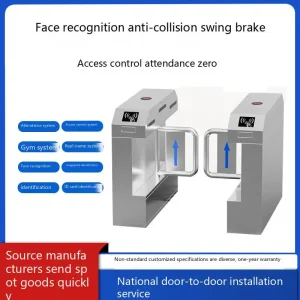
Stainless Steel Bridge-Type Sloped Swing Gate for Secure Reception Control
Inquire Model -
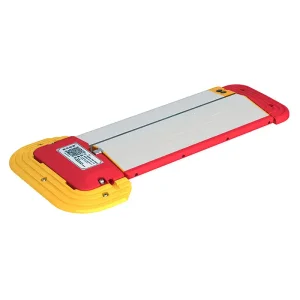
Smart Scan-to-Pay Automated Community Parking Space Lock & EV Bay Guard
Request Specs