
Frontline ANPR Capture & Intelligent Flow Systems
Engineered for dense urban environments, low-latency identification, and industrial perimeter monitoring tailored to Japan's Ministry of Land, Infrastructure, Transport and Tourism (MLIT) vehicle plate standards.
Industrial Demands & Commercial Landscape in Osaka
As Western Japan's premier economic hub, Osaka combines dense metropolis challenges with critical infrastructure: the Port of Osaka, Kansai International Airport logistics corridors, and large-scale industrial distribution clusters in Sakishima and Yumeshima.
Port & Maritime Freight Zones
Osaka Bay terminal operations process continuous fleets of multimodal freight trailers. Facilities demand LPR cameras with anti-corrosive IP67/IK10 housings, integrated salt-spray shielding, and dual-polarization LED strobes capable of deciphering non-standard logistics chassis and dual-line Japanese commercial registrations.
High-Density Urban Footprints
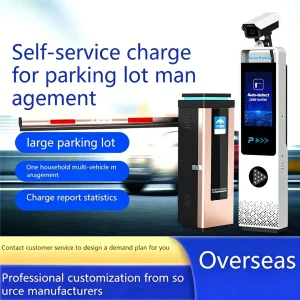
In bustling districts like Umeda, Namba, and Honmachi, commercial real estate operators require zero-footprint barrierless parking. Transitioning from physical flap-locks to intelligent multi-angle ANPR edge nodes lowers barrier mechanical wear while reducing entrance vehicle queues during peak commercial hours.
Manufacturing & R&D Parks
Spanning Higashiosaka and Sakai manufacturing estates, enterprise access demands stringent identity validation. Integrating LPR nodes directly with ERP and SCADA frameworks ensures authorized transit for specialized transport, dynamic delivery bay reservations, and full vehicle transit visibility.
Osaka Market Pricing & Hardware Tier Breakdown
Evaluating Capital Expenditures (CAPEX) versus Operational Expenditures (OPEX) across the entire equipment life-cycle helps engineering leaders balance sensor fidelity, barrier durability, and edge AI compute requirements.
| System Architecture Tier | Hardware Composition | Optimal Deployment Arena | Estimated Unit Range (USD/JPY) | Estimated Labor & Commissioning |
|---|---|---|---|---|
|
Entry-Level Smart ANPR Standard Gated |
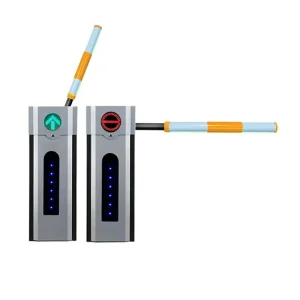
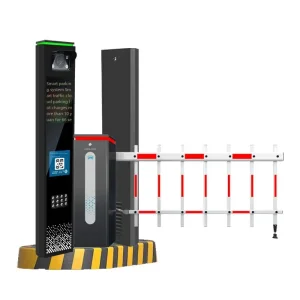
2MP HD OCR Camera, WDR, White Light Strobe, DC Brushless Boom Barrier Gate (3m-4m) | Small-scale commercial surface lots, medical clinics, boutique residential parking (Osaka residential suburbs). | $1,800 – $3,200 (¥270,000 – ¥480,000) |
$600 – $1,200 (Single-lane civil loops, standard bracket mounting) |
|
Commercial Dual-Vision Tier High Reliability |
4MP Dual-Sensor (Overview + Recognition), Dynamic LED Guidance Display, Intercom Unit, 1.2s Fast Barrier | Supermarkets, downtown office towers, multi-story mixed-use facilities (Kita & Chuo wards). | $3,500 – $5,800 (¥525,000 – ¥870,000) |
$1,200 – $2,200 (Network infrastructure, server routing, safety radar) |
|
Industrial Logistics Hub Package Heavy-Duty Port Spec |
Dual-Angle High-Strobe ANPR, Chassis Scanner Module, Heavy Duty 6m Articulated Arm, RFID Redundancy | Osaka Bay container terminals, intermodal freight yards, bonded warehousing in Sakishima. | $6,200 – $11,500 (¥930,000 – ¥1,725,000) |
$2,500 – $4,500 (Industrial conduit, heavy civil footings, automated dispatch integration) |
|
Barrier-Free Ticketless Cloud Hub Edge AI Smart City |
High-Mount Omnidirectional AI Cameras, In-Ground Occupancy Sensors, Dynamic QR Payment Terminal, Serverless Edge | Automated pay-by-plate parking facilities, municipal curbside bays, central Osaka commercial parking. | $4,200 – $7,800 per 2-lane zone |
$1,500 – $3,000 (Cloud payment gateway configuration, specialized calibration) |
Next-Generation Edge AI Architecture & Integration Blueprint
Modern ANPR deployments demand deep hardware-software synergy. Moving beyond basic character matching, our systems utilize deep neural networks (DNN) trained on millions of international and specialized Japanese plate structures.
Multitask Neural OCR Engines
Our edge units execute dual deep learning inference engines simultaneously: the first network segments vehicle class, color, and bounding box; the second performs character localization and morphological analysis across varying focal lengths, addressing dirty, skewed, or reflective plates without latency.
Millisecond Trigger & Radar Sync
Rather than relying solely on legacy inductive ground loop coils, our edge units utilize integrated 77GHz millimeter-wave radar sensors. This enables sub-millisecond vehicle tracking, avoids pavement-cutting civil work, and prevents barrier descent strikes on trailing vehicles or pedestrians.
Seamless Enterprise API Connectivity
Engineered for global interoperability, our controller motherboards feature native RESTful APIs, MQTT protocol bindings, and WebSocket telemetry. They link directly with Japanese parking aggregators, municipal toll networks, transit security platforms, and major building management platforms.
Localized Support & Regulatory Compliance in Japan
Deploying vehicular surveillance in Osaka demands strict adherence to national privacy laws, municipal civil engineering codes, and strict environmental resistance against typhoon winds and marine air corrosion.
APPI Privacy Law Adherence
Under Japan’s Act on the Protection of Personal Information (APPI), vehicle registration numbers paired with timestamps constitute identifiable tracking data. Our firmware includes automated face blurring, dynamic plate masking for unauthorized viewers, and AES-256 encrypted database protocols.
Electronic Payment Integration
Osaka’s consumer ecosystem relies heavily on contactless convenience. Our lane systems easily bridge to local payment gateways, QR code settlements (PayPay, LinePay), standard IC transit cards (ICOCA, Suica), and automated dynamic billing platforms for cashless, ticketless workflows.
Typhoon & Marine Salt Protection
Osaka Bay faces severe seasonal typhoons and humid, salt-heavy sea breezes. Barrier cabinets and ANPR enclosures are manufactured using 2.0mm galvanized steel treated with electro-deposition primer and thermal powder coating, delivering C4/C5 marine atmospheric corrosion endurance.
Technology Roadmap & Urban Mobility Outlook
The urban mobility ecosystem in Kansai is evolving quickly toward autonomous fleet management, electric vehicle (EV) smart charging orchestration, and zero-wait curbside mobility.
EV Charging Bay Protection
Deploying specialized low-profile ANPR nodes paired with automatic ground parking locks. The system identifies approaching registered EV vehicles, validates reservation credentials, and lowers the barrier lock automatically while restricting internal combustion engine (ICE) vehicles.
Autonomous Delivery Shuttles
Preparation for next-generation automated transport throughout designated Kansai test-beds. Systems communicate with commercial delivery pods via V2X (Vehicle-to-Infrastructure) protocols, matching optical recognition with wireless telemetry to ensure continuous, high-speed perimeter clearance.
Federated Learning Edge Swarms
Firmware architecture capable of learning localized non-standard plates, temporary permits, and damaged tags directly on-site. Decentralized model weights synchronize securely without streaming private video records back to central cloud repositories, reducing data transit overhead.
Frequently Asked Questions: Osaka & Kansai Projects
Technical specifications, hardware interfaces, and deployment parameters clarified directly by our access engineering division.
How does the system handle Japanese plate variations?
Our deep learning recognition network is trained on all 4 classes of Japanese license plates: standard private (white/green), commercial transport (green/white), light Kei vehicles (yellow/black), and commercial light Kei (black/yellow). It accurately segments Kanji issuing offices, numeric vehicle classification classes, Hiragana characters, and the main 4-digit serial numbers.
What is the typical hardware lead time for Osaka installations?
Standard model production runs ship within 7 to 12 business days from our high-capacity Shenzhen manufacturing facility. Ocean transit to the Port of Osaka typically requires 3 to 5 transit days, making equipment delivery faster than many European or domestic competitors.
Can the barrier units withstand coastal typhoon conditions?
Yes. Our industrial enclosures are fabricated from heavy-gauge galvanized steel treated with marine-grade thermoset powder coats. Boom arms feature aerodynamic folding profiles, internal counterbalancing springs, and wind-break break-away safety mechanisms built for severe weather conditions.
How do system integrators connect to local software suites?
Every camera controller exposes open REST APIs and complete SDK libraries (C++, C#, Python, Java). Integrators can ingest raw vehicle images, cropped plate images, character confidence metadata, and relay control signals directly into proprietary parking, toll, or security management software.
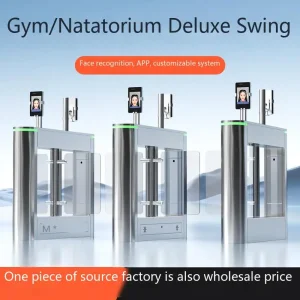
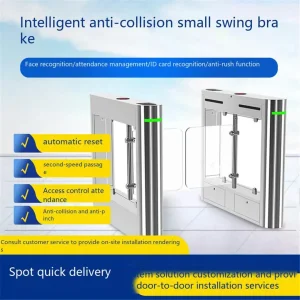
Full Access Control & Physical Perimeter Solutions
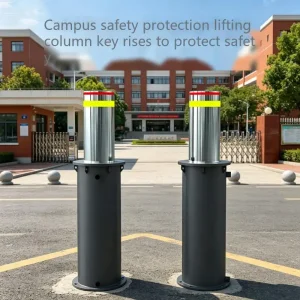
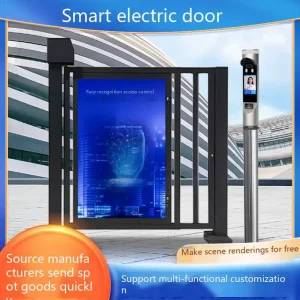
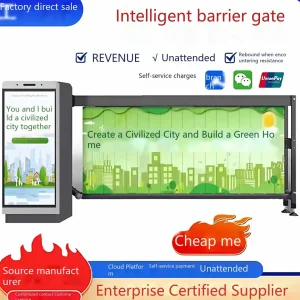
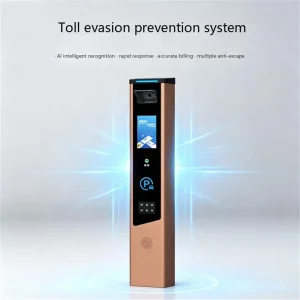
Browse our complete range of certified access control equipment designed for commercial properties, industrial sites, and urban transit systems.
Engineering Your Osaka Smart Mobility Infrastructure
Whether modernizing downtown Osaka parking facilities or securing heavy container lanes across Osaka Bay, our engineers provide comprehensive technical consultations, schematic drawings, and competitive factory-direct quotes.
Send Inquiry Now