
Flagship Smart Parking & Access Controls for Egyptian Projects
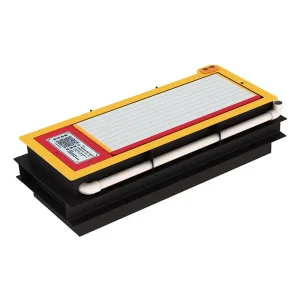
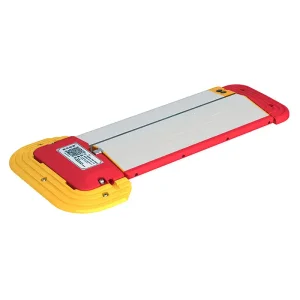
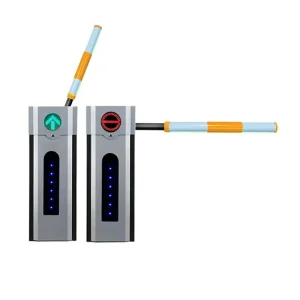
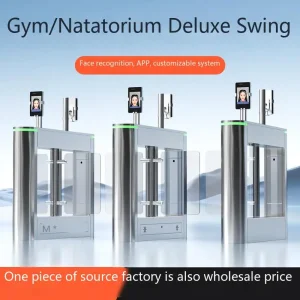
The Egyptian Smart Parking Landscape: Urban Velocity Meets Infrastructure Modernization
Navigating Cairo's ultra-dense urban core, the ambitious New Administrative Capital (NAC), and satellite master developments with scalable, climate-resilient space management hardware.
Egypt stands at the precipice of an urban mobility revolution. Driven by Egypt Vision 2030, the nation is aggressively decentralizing its historic urban centers, giving rise to multi-billion-dollar smart infrastructure projects across the New Administrative Capital (NAC), New Cairo, Sheikh Zayed City, 6th of October City, and the New Alamein coastal corridor. However, this unprecedented construction boom faces an acute systemic bottleneck: the exponential demand for structured, revenue-generating, and unauthorized-access-proof vehicular parking.
In mature Greater Cairo districts like Heliopolis, Nasr City, Maadi, and Downtown Zamalek, curbside saturation frequently exceeds 140% during peak commerce hours, sparking rampant double-parking and severe gridlock. Conversely, in the newly developed premium enclaves and business districts, property developers (such as SODIC, Emaar Misr, Talaat Moustafa Group, and Palm Hills) mandate high-precision access automation to protect tenant parking rights, prevent fuel-powered vehicles from occupying dedicated EV charging stations, and introduce contactless payment mechanisms aligned with the Central Bank of Egypt’s cashless directives.
Why "Cheap" Represents Structural Cost Efficiency, Not Substandard Metallurgy
In international B2B procurement, procuring a "cheap" parking lock from direct-export Chinese factories does not mean compromising on alloy thickness or actuator reliability. Rather, it signifies capitalizing on Shenzhen’s highly clustered electronics supply chain, automated die-casting molds, and high-volume economies of scale. Egyptian MEP contractors and parking operators achieve a 35% to 48% reduction in Capital Expenditure (CapEx) per bay compared to legacy European imports, allowing for broad municipal-scale rollouts without inflating baseline construction budgets.
Consequently, procurement managers are transitioning away from unmonitored manual barriers and frail hydraulic locks toward smart, battery-efficient, or solar-backed automatic sensing parking locks. These devices communicate via robust wireless protocols (NB-IoT, Cat-M1, 4G, and Bluetooth 5.2 Mesh) and withstand both the abrasive thermal stress of North African deserts and intense mechanical abuse from heavy commercial SUVs.
Hardened Architectural Design for Egyptian Desert & Coastal Realities
Engineered to neutralize ambient temperatures approaching +55°C, high-velocity particulate abrasion during the Khamaseen dust storm season, and high-salinity maritime humidity in Alexandria.
Thermal Dissipation & Asphalt Radiant Insulation
Asphalt surfaces in Giza and Upper Egypt can register radiant contact temperatures exceeding +78°C during peak summer months. Our parking locks incorporate cold-rolled automotive carbon steel chassis treated with thermal-barrier electrostatic powder coatings, preventing internal PCB component de-soldering and lithium-ion electrolyte crystallization.
Khamaseen Sand Ingress Sealing (IP68 Hermetic)
Spring seasons in Egypt introduce intense Khamaseen winds loaded with fine silicate sand. Traditional mechanical gears bind rapidly when contaminated. Our factory employs silicone dual-lip O-ring gaskets and nitrogen-sealed motor gearboxes, guaranteeing zero particle penetration into the planetary gear assemblies.
180° Bi-Directional Self-Resetting Kinetic Clutch
Vehicular misjudgments by drivers are frequent in congested bays. When external forced collision occurs, an internal hydraulic-mechanical dual-stage buffer disengages the drivetrain, emits a 105dB shrill audible alert, and permits up to 180° swing deflection without fracturing the motor spindle, automatically self-correcting upon car retreat.
Telemetry Routing: LoRaWAN vs. Cellular NB-IoT in Egypt
Deploying large-scale remote-controlled parking locks throughout Egyptian commercial plazas demands careful telecommunications architecture. Our engineering team supplies dual-path telemetry options tailored to Egyptian telecom parameters:
- NB-IoT (Narrowband IoT) & LTE-M: Operating directly over licensed carrier networks (Vodafone Egypt, Orange Egypt, Etisalat Misr, and WE), offering deep sub-level underground parking penetration without requiring local gateway backhauls.
- LoRaWAN (868 MHz / 433 MHz): For private estates, universities, and industrial zones desiring zero ongoing SIM subscription costs, deploying localized multi-channel gateway base stations with a 3 km outdoor urban transmission radius.
- Low-Power Bluetooth (BLE 5.2): Direct mobile application and smart badge interaction for instantaneous unlatching in residential private garage bays.
Lifecycle Energy Harvesting Protocol
By harnessing Egypt’s extraordinary solar irradiance index (exceeding 2,400 kWh/m² annually), our solar-supplemented parking locks incorporate microcrystalline silicon photovoltaic tops protected by high-impact polycarbonate glass.
With an average of 4.5 hours of daily direct sunlight in Cairo, the embedded solar panel sustains the 3.7V / 7.4V deep-cycle lithium iron phosphate (LiFePO4) storage cell indefinitely, eliminating manual battery replacements over a 5-year operating window.
China Industry 4.0: Supply Chain Agility, Metallurgy & Cost Arbitrage
How our centralized 8,000 m² Shenzhen manufacturing complex translates advanced robotic automation into budget-optimized procurement advantages for Egyptian enterprise buyers.
Procuring access equipment at wholesale tiers requires full transparency into the exporter’s underlying manufacturing ecosystem. Operating from our state-of-the-art facility in Guangming District, Shenzhen, we integrate component molding, high-precision surface mount technology (SMT), automated robotic welding, and environmental stress screening under one rigorous ISO 9001:2015 and CE-certified ceiling.
By eliminating third-party sub-assembly markups and maintaining direct upstream supply contracts with primary steel mills and brushless DC motor winders, our pricing framework provides Egyptian importers with an unassailable financial advantage. What the market describes as "cheap" is, in reality, the dividend of extreme manufacturing productivity:
Robotic Stamping & Hydro-Forming
Chassis bodies are stamped from single-sheet cold rolled alloy steel using 500-ton hydraulic press dies. This unitary monocoque construction eliminates structural seam weaknesses, ensuring zero deformation even when accidentally mounted by 5-ton armored military vehicles or cement mixers.
Continuous Salt Spray Corrosion Testing
In accordance with ASTM B117 international benchmarks, all parking lock housings undergo 120-hour accelerated neutral salt-fog spray tests. This guarantees resilience against the coastal brine mist of Alexandria and Port Said, preventing rust pitting and premature cosmetic degradation.
Furthermore, our streamlined factory shipping logistics simplify the complex overseas ordering process for Egyptian distributors, contracting groups, and EPC consortia. Each consignment is crated using reinforced seaworthy honeycomb pallets, equipped with desiccant packs to prevent condensation during the 24-day maritime transit from Shenzhen/Yantian Port across the Indian Ocean, through the Bab el-Mandeb Strait, to Alexandria Port, Damietta, or Ain Sokhna Port.
Strategic Applications Across Egypt's High-Growth Verticals
Targeted engineering configurations designed for commercial mall complexes, premium compound communities, and municipal street infrastructure.
Gated Residential Compounds
Developers in New Cairo and 6th of October frequently face internal disputes regarding reserved resident bay encroachment. We supply wireless smart locks paired with long-range Bluetooth RFID windscreen tags. As the authorized resident approaches within 5 meters, the barrier lowers automatically, rising as soon as the vehicle passes.
EV Charging Station Anti-ICEing
With Egypt aggressively expanding its EV charging grid through initiatives like Infinity EV and Revolta, standard combustion vehicles illegally blocking charging bays ("ICEing") constitutes a major operational loss. Our intelligent scan-to-pay locks descend only when an electric vehicle scans the localized charging portal.
Commercial HQ & Banking Towers
Financial centers in the New Administrative Capital's Banking District require hardened perimeter vehicle control. Synchronizing parking locks with ANPR (Automatic Number Plate Recognition) cameras ensures VIP and C-level bays remain strictly locked until plate verification triggers the arm release.
Regulatory Compliance: NTRA Certification, ACID Numbers & Nafeza System
Navigating customs regulations, telecommunication standards, and banking documentary letters of credit (L/C) with experienced export documentation support.
Importing electro-mechanical and telecommunication equipment into Egypt necessitates strict compliance with national trade governance bodies. Unprepared exporters often encounter costly demurrage fees or customs impoundment at Alexandria or Sokhna ports due to document discrepancies. Shenzhen Anrui provides complete administrative compliance support for Egyptian procurement managers:
NTRA Type Approval Compliance
Any smart parking device incorporating wireless frequency transmitters (Bluetooth, RFID, LoRa, 4G, or NB-IoT) is subject to approval by the National Telecommunications Regulatory Authority (NTRA) of Egypt. Our equipment is certified to adhere strictly to non-restricted, license-free industrial bands (such as 433 MHz and 868 MHz for RF remote units, and standard 2.4 GHz for BLE), facilitating seamless NTRA clearance without frequency interference penalties.
Nafeza & ACID Number Verification
Under Egypt's National Single Window for Foreign Trade (Nafeza), all ocean and air freight shipments require an Advanced Cargo Information Declaration (ACID) number issued 48 hours prior to vessel departure. Our experienced export documentation desk ensures commercial invoices, packing lists, and certificates of origin (CO) are directly registered onto the CargoX blockchain system.
Flexible Trade Terms: LC, TT & Local Currency Hedging
Recognizing foreign exchange realities within Egypt's banking sector, our commercial team supports diverse payment mechanisms including confirmed Irrevocable Letters of Credit (L/C at sight), standard T/T telegraphic transfers, and bilateral RMB settlement channels to streamline procurement workflows for large-scale infrastructure contracting firms.
Frequently Asked Questions: Sourcing Parking Locks for Egypt
Critical insights on lead times, harsh environmental durability, installation procedures, and system integration.
1. How do your parking locks handle the extreme summer heat on Cairo asphalt?
2. Can these parking locks be integrated into Egyptian third-party parking software or apps?
3. What is the typical maritime shipping lead time from Shenzhen to Alexandria Port?
4. How is the lock anchored to resist tampering, vandalism, and theft?
5. Do you offer OEM/ODM branding for Egyptian system distributors?
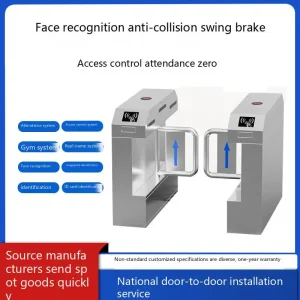
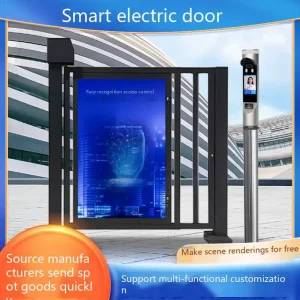
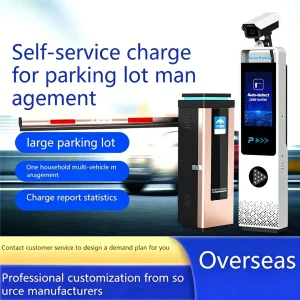
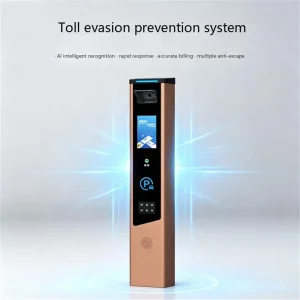
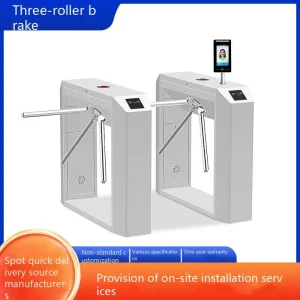
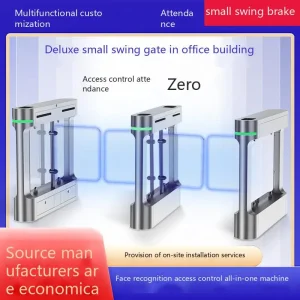
Access Control, LPR & Turnstile Systems Exported to Egypt
Full-lane packages and synchronized pedestrian-vehicular barriers ready for regional commercial procurement.
Partner Directly with China's Premier Parking Hardware Exporter
Whether you are outfitting a 2,000-bay residential development in the 5th Settlement, engineering automated toll lanes in Alexandria, or distributing smart security hardware throughout Egypt, our engineering group delivers factory-direct economics with uncompromised build quality.