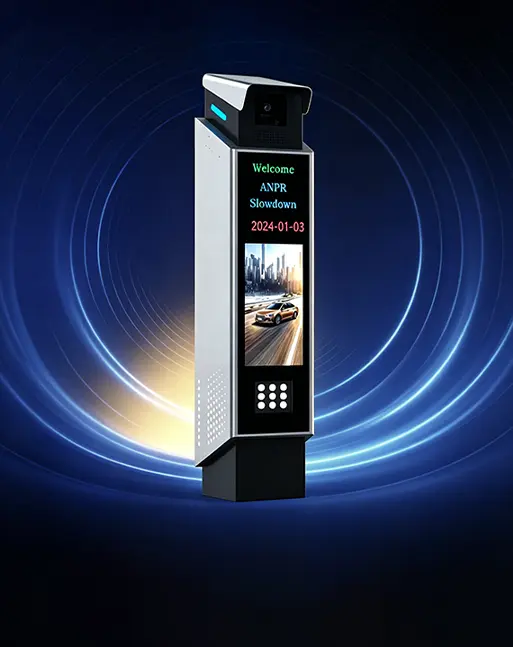
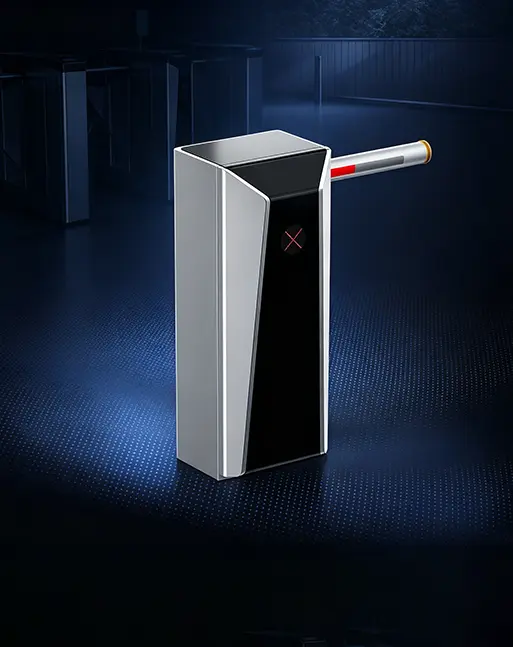
Primary Edge Recorders & Intelligent Entrance Automation
Engineered for seamless synchronization between real-time video forensics, optical license character ingestion, and rapid electromechanical barrier interception.


The Evolution of CE-Marked Digital Video Recorders in AIoT Infrastructure
Modern physical security and access architectures have shifted decisively away from passive recording. Today's industrial digital video recorder (DVR) operates as an embedded operational neural network, correlating real-time video with electromechanical responses.
Dual-Stream Neural Compression (H.265/AV1)
Industrial DVR architectures utilize FPGA-accelerated dual-codec pipelines. By decoupling high-throughput continuous recording streams from real-time metadata analytics channels, edge units reduce localized switch backbone congestion by up to 64% while maintaining bit-perfect forensic retention.
CE EMC/LVD Industrial Compliance
Deployments in European and high-interference industrial environments demand rigorous electromagnetic isolation. Our CE-certified DVR backplanes include multi-stage surge suppression (EN 61000-4-5 Class 4), galvanic optical isolation on trigger inputs, and conformally coated multi-layer PCBs.
Telemetry Relay & Barrier Triggering
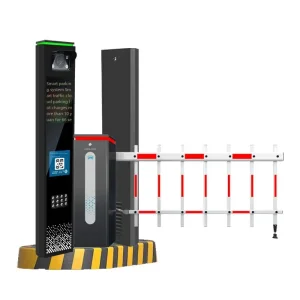
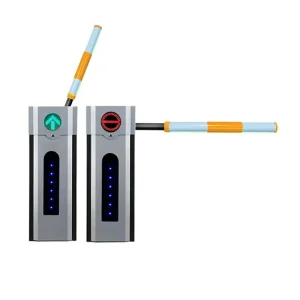
Eliminating intermediate cloud latencies, our digital video recording units integrate onboard optically decoupled micro-relays. When edge LPR algorithms validate an approaching license vector, trigger execution to boom gates or speed barriers occurs within 45 milliseconds.
Localized Mission Profiles & Edge Operational Scenarios
Edge DVR solutions are heavily subjected to microclimates, voltage drops, and unique regional access behaviors. Here is how our architecture adapts across key global verticals.
Intermodal Logistics & Free Trade Ports
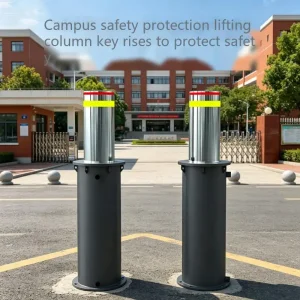
High-throughput freight terminals demand continuous recording under severe electromagnetic disruption and vibration. Operating alongside automated barrier booms and heavy-duty hydraulic bollards, our DVR solutions ingest high-resolution container codes, truck chassis numbers, and dual-angle vehicle identification without dropped frames during 24/7 continuous cycles.
Off-Grid EV Charging & Retail Hubs
Combining edge video analytics with automated parking locks and payment terminal telemetry. Recorders maintain local blacklists/whitelists to immediately lower parking locks for registered electric vehicles, trigger deterrence lights for illegal ICE vehicle encroachment, and retain local ledger backups during WAN backhaul failures.
Sub-Zero & High-Salinity Maritime Facilities
Salt spray and condensation frequently compromise substandard DVR terminals. Utilizing MIL-STD-810G compliant conformal encapsulation and active solid-state heating algorithms, Anrui units deploy within harbor perimeters and coastal tolls from Gdansk to Doha without risk of corrosion-induced signal degradation.
Shenzhen Precision Manufacturing & Global Supply Chain Resilience
Situated within the core high-tech corridor of Guangming District, Shenzhen, our manufacturing facility pairs vertical hardware integration with rigorous quality controls.
Vertical Precision Engineering
Unlike assemblers reliant on third-party white-labels, Anrui maintains dedicated SMT lines, automated optical inspection (AOI), and robotic CNC chassis milling. Every DVR enclosure, barrier motor armature, and turnstile housing is fabricated under ISO9001-supervised environmental conditions.
Component Resilience & Lifecycle Longevity
By dual-sourcing industrial-grade microprocessors and pairing them with high-temperature Japanese solid capacitors (rated for 105°C continuous operation), our recording backplanes achieve an independently audited Mean Time Between Failures (MTBF) exceeding 120,000 operational hours.
Direct Port Synergy & Global Shipping Rapidness
With immediate arterial access to Shenzhen and Hong Kong deep-water ports, bulk consignments bypass domestic inland logistics bottlenecks. Rapid clearance agreements facilitate container departure within 72 hours of end-of-line verification, serving tier-1 contractors across 80+ nations.
Technical Roadmap: The Next Era of Edge Ingestion & Analytics
Anticipating evolving data governance and perimeter protocols, our engineering pipeline integrates upcoming networking paradigms into near-term production baselines.
Phase I: Transformer-Driven Micro-Models
Transitioning from traditional convolutional networks to lightweight Vision Transformer (ViT) edge models executed directly on the DVR's NPU. This ensures ultra-accurate multi-national license plate ingestion under severe glare, horizontal occlusion, and adverse precipitation.
Phase II: Hardware-Enforced Zero-Trust Protocols
Integrating TPM 2.0 cryptographic cryptoprocessors directly onto motherboards to secure firmware integrity. Video streams and plate records are signed with tamper-evident SHA-256 watermarks at the hardware boundary, neutralizing Man-in-the-Middle (MitM) replay vectors.
Phase III: Mesh-Clustered Edge Failover
Decentralized synchronization enabling adjacent lane recorders to automatically form peer-to-peer redundancy clusters. In the event of an individual node power interruption, neighboring DVRs assume multi-channel lane video recording and access barrier triggering instantaneously.
Global Compliance, Data Privacy & Deployment Assurances
Exporting across the EU, Middle East, and the Americas necessitates complete alignment with stringent consumer data privacy directives and structural electrical directives.
GDPR/CCPA Edge Redaction Frameworks
To satisfy EU Regulation 2016/679 (GDPR), our firmware contains dynamic on-chip automated masking engines. Non-relevant pedestrian faces, bystander license numbers, and non-target public spaces are cryptographically blurred prior to frame write-in, ensuring regulatory immunity for enterprise facility managers.
RoHS & WEEE Lifecycle Stewardship
All production units satisfy EU Directive 2011/65/EU (RoHS 2.0), restricting hazardous compounds including lead, cadmium, and polybrominated biphenyls. Solder matrices utilize silver-copper non-toxic alloys, paired with comprehensive disassembly blueprints for rapid circular end-of-life recycling.
Round-The-Clock SLA Support Matrix
Recognizing the criticality of mission access control, Anrui coordinates global field support backed by tier-3 Shenzhen R&D systems engineers. We provide 7x24 real-time diagnostic connectivity, zero-downtime over-the-air firmware patches, and advance hardware dispatch warranties across international project corridors.
Technical Frequently Asked Questions (FAQ)
In-depth technical answers addressing systemic integration, hardware protocols, and cross-border project logistics.
What specific CE directives do your digital video recorders and gate systems fulfill?
How is real-time vehicle interception executed between the DVR and barrier motors?
Can your DVR platforms ingest and analyze non-standard international license plates?
What thermal protections prevent DVR failure in high-heat outdoor enclosures?
What protocols exist to preserve forensic video integrity during catastrophic power losses?
Associated Access Automation & Smart Terminal Lineup
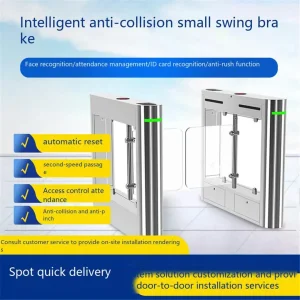
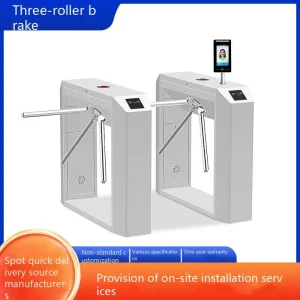
Hardware components engineered to pair with enterprise digital video recorders, forming cohesive and responsive site perimeters.