
CE-Certified Automated Access & ANPR Control Hardware
Engineered for high-volume logistics hubs, tolling points, municipal transit, and automated perimeter terminals requiring zero-latency vehicle access execution.

Buy Discount Intelligent Barrier Gate Model D03 Suppliers, Exporters
Request Quotation
Cheap Scan to pay charging pilecommunity parking lock automatic sensing,electric shared scanning paymentanti-oil car occupying parking space Exporter, Pricelist
Request Quotation
Advanced Factoryoem/ODM Durable Smart Fast Speed Swing Automatic Used Industrial Gym Turnstile Gate Supplier, Factory
Request Quotation
China Bridge Type Sloped Swing Gate Supplier, In Sales
Request Quotation
Easy-maintainable City Parking Product Factories, Price
Request Quotation
Buy Discount Swing Gate Image Reference Suppliers, In Sales
Request Quotation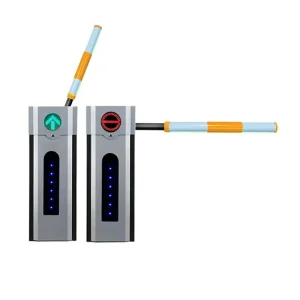
Easy-maintainable Intelligent Barrier Gate Model D11S Supplier, Quotation
Request Quotation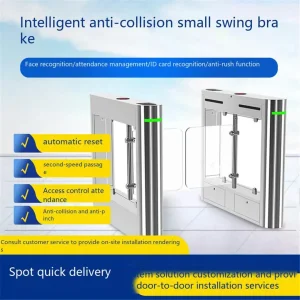
OEM Swing Gate Suppliers, Pricelist
Request QuotationThe Global Commercial & Industrial Landscape of ANPR/ALPR Systems
The Auto Number Plate Recognition (ANPR / ALPR) sector has transitioned from rudimentary localized pattern matching into an integrated AIoT ecosystem commanding an estimated market valuation surpassing $5.8 billion USD globally.
Industrialization and urbanization have placed massive pressure on traditional transportation network checkpoints. Today's commercial infrastructure can no longer tolerate physical ticketing kiosks, inductive magnetic loop vulnerabilities, or sluggish manual gate inspections. Global tolling operators, logistics warehouse hubs, airport multimodal centers, and enterprise business parks are rapidly standardizing on deep-learning edge ANPR hardware capable of capturing, deciphering, and authorizing multi-national plates across diverse retroreflective materials, ambient light distortions, and excessive vehicle approach velocities.
Furthermore, regional variations dictate hyper-specific industrial demands. Across the European Union and the United Kingdom, strict privacy standards under the General Data Protection Regulation (GDPR) dictate that optical sensors perform edge anonymization, vehicle bounding-box extraction, and metadata hashing before video frames traverse local area networks. In North America and Oceania, wide-aspect multi-state alpha-numeric license plate fonts require convolutional neural network (CNN) architectures tuned to detect non-standardized vanity designs, tinted acrylic covers, and high-mount commercial trailer tags. Meanwhile, within the Middle East, Southeast Asia, and Latin America, hardware reliability hinges upon relentless thermal dissipation (operating above +70°C), sandstorm ingress resistance, and resilience against aggressive electrical surges caused by unstable grid networks.
CE Certification Framework: Mandatory EU Directives & Harmonized Norms
Deploying automated recognition hardware within Europe and international jurisdictions requiring CE marks necessitates thorough verification across electromagnetic emissions, electrical safety, radio modules, and hazardous material controls.
EMC Directive (2014/30/EU)
ANPR installations operate in dense electromagnetic environments surrounded by industrial barrier gate motors, variable frequency drives, and wireless transceivers. Harmonized testing under EN 55032 Class B (Conducted and Radiated Emissions) and EN 55035 / EN 50130-4 (Immunity for Security Systems) ensures that high-speed sensor clock pulses and LED strobe power lines do not pollute the RF spectrum or suffer lock-ups from high-voltage transient spikes.
LVD Directive (2014/35/EU)
Ensuring absolute protection for field service technicians, installers, and drivers under EN 62368-1:2014+A11:2017 (Audio/Video, Information and Communication Technology Safety). Compliance benchmarks evaluate creepage distances, high-potential dielectric breakdown (surpassing 1.5 kV isolation between primary AC mains and low-voltage DC logic circuits), temperature rise ceilings, and ground continuity for metallic enclosures.
RED (2014/53/EU) & RoHS
Integrated devices embedding 4G-LTE telemetry, 2.4/5.8 GHz Wi-Fi bridges, Bluetooth low energy (BLE), or radar trigger sensors must satisfy the Radio Equipment Directive under ETSI EN 301 489-1/-17/-52 and ETSI EN 300 328. RoHS Directive 2011/65/EU and amendment (EU) 2015/863 verify strict elimination of lead, cadmium, mercury, and hazardous phthalates across the entire manufacturing chain.
| Directive | Harmonized Testing Standard | Engineering Verification Scope | Field Operational Impact |
|---|---|---|---|
| EMC 2014/30/EU | EN 55032:2015 / EN 55035:2017 | Radiated RF Emissions (30MHz-6GHz), Surge Immunity (4kV) | Prevents image freeze during barrier gate DC brush motor switching. |
| LVD 2014/35/EU | EN 62368-1:2020+A11:2020 | Electrical clearance, high insulation resistance, thermal limit | Eliminates risk of electrical shock in exposed roadside/outdoor tolling booths. |
| RED 2014/53/EU | ETSI EN 300 440 / ETSI EN 301 489 | Micro-wave radar vehicle presence detector spectrum compliance | Accurate millimetric vehicle presence detection with zero RF cross-talk. |
| RoHS 2.0 | IEC 62321 Standard Series | XRF screening for hazardous flame retardants & heavy metals | Sustainable lifecycle handling, unrestricted international customs clearance. |
Deep-Learning Optical Architecture: From Photons to Structured Telemetry
Capturing vehicle identifiers under severe optical challenges requires specialized sensor engineering, integrated stroboscopic illumination, and multi-stage edge neural pipelines.
Global Shutter vs. True WDR
Unlike consumer-grade rolling shutter cameras that cause horizontal geometric distortion ("skewing") on moving targets, our industrial ANPR heads employ true 1/1.8" or 1/2.8" progressive scan image sensors. Armed with 120dB Super-Wide Dynamic Range (WDR), the sensor simultaneously suppresses direct xenon/LED high-beam glare while enhancing retroreflective alphanumeric typography in low-lux conditions.
Synchronized Dual-Wavelength Strobing
Integrated LED arrays utilize pulsed Infrared (850nm) and warm white visible fill-light. By coordinating microsecond exposure triggering with plate detection routines, the optical unit avoids blinding incoming drivers, satisfies photobiological safety standards under IEC 62471, and secures crisp black-and-white plates alongside full-color vehicle body captures.
Multi-Stage CNN Edge Pipeline
Equipped with an onboard 2.0 to 4.0 TOPS INT8 Neural Processing Unit (NPU), our systems execute license plate localization (YOLO-based spatial extraction), character segmentation, optical syntax validation, and vehicle categorization (Make, Model, Color) locally in under 15 milliseconds, entirely independent of cloud connectivity.
Localized Commercial & Industrial Application Blueprints
Field installations demand custom-tailored logical workflows. Explore how our CE-certified ANPR platforms seamlessly scale across complex real-world use cases.
1. Logistics Hubs & Automated Weighbridge Integration
Heavy freight dispatch hubs handle hundreds of intermodal articulated trucks daily. The CE-certified ANPR terminal pairs with our long-range RFID readers and automatic DC boom gates. The camera decodes front and rear tractor-trailer plates, triggers weight-bridge sensors over Modbus TCP, validates axle gross weights against ERP manifest records, and actuates barrier gates automatically—eliminating paperwork bottlenecks and achieving a 400% increase in lane transit efficiency.
2. High-Density Commercial Mixed-Use & Unattended Parking
Tier-1 commercial towers require ticketless, frictionless access for registered tenant permit holders and ad-hoc shoppers. Integrated with our Dolphin & AnRuitong series ANPR units, vehicles are recognized upon approach, passing license data to local parking accounting software in 100 milliseconds. The system integrates payment terminals, QR scan-to-pay kiosks, and dynamic LED rate indicators while controlling high-torque barrier arms rated for 5,000,000 continuous operating cycles.
3. Critical Infrastructure & Government Border Protection
Embassies, power utilities, and financial vaults demand multi-tier verification. In these high-security scenarios, ANPR acts as the primary recognition threshold, cross-referencing blacklists in real-time. Upon detection of an unauthorized or cloned plate, the camera firmware bypasses standard boom gates and directly deploys high-speed hydraulic rising bollards (K4/K12 impact rated) in 1.5 seconds, while triggering facility lock-down relays and alerting regional monitoring centers.
4. Low Emission Zones (LEZ) & Municipal Urban Tolling
Smart municipal authorities enforce environmental congestion policies and Clean Air Zones using non-intrusive ANPR networks. Outfitted with high-speed optical zoom lenses, the camera captures multi-lane free-flow traffic at speeds up to 180 km/h. Edge software extracts Euro emission standard classifications from localized license registries, generating encrypted violation reports or executing automated micro-billing with 99.8% evidentiary confidence.
Manufacturer Evaluation, Bill of Materials (BOM) & Quotation Architecture
Demystifying the procurement parameters: how direct factory supply, Bill of Materials integrity, and modular engineering determine your total cost of ownership (TCO).
When engineering contractors and international distributors request quotes for CE-certified ANPR systems, headline figures can be deceptive if evaluated in isolation. A resilient, industrial-grade ANPR system quotation is governed by several core hardware and service variables:
Key Variables Influencing Quotation Structures:
- Optical Sensor Grade & Resolution: 2MP (1080p) vs. 4MP (1440p) vs. 8MP (4K) Sony Starvis / OmniVision global-shutter imaging chips dictate character legibility across multi-lane spans.
- Processing Compute Module: Entry-level DSP-based processors with static template matching vs. Advanced Heterogeneous NPUs (2.0–4.0 TOPS) executing dynamic multi-angle convolutional networks.
- Enclosure & Mechanical Armor: Die-cast aluminum alloy or 304/316 marine-grade stainless steel with anti-corrosion fluorocarbon coatings, thermostatically controlled cooling fans, and front-element PTC heating defoggers.
- Integrated Supplementary Lighting: Fixed single-tier IR illumination vs. dual-spectrum intelligent strobe arrays with pulse-width modulation (PWM) synchronization.
- Firmware Licensing & Multi-Country Plate Libraries: Pre-trained OCR networks encompassing 80+ national alphanumeric schemas, syntax correction, and ongoing over-the-air (OTA) algorithm updates without recurring per-lane seat fees.
| System Classification | Core BOM Hardware Components | Target Deployment Environment | Estimated Direct Factory Price Range (FOB) |
|---|---|---|---|
| Commercial Tier I (Standard Gate) | 2MP Progressive CMOS, 1.2 TOPS NPU, Fixed 2.8-12mm Varifocal, IP66 Enclosure, DC Brushless Barrier | Residential estates, private business garages, gym entries | $450 – $850 USD per lane setup |
| Industrial Tier II (Heavy Logistic) | 4MP Global Shutter, 2.4 TOPS NPU, Motorized 6-22mm P-Iris, IP67 Enclosure, Heavy Torque 1.5s Boom Gate | Distribution hubs, industrial parks, factory access, toll plazas | $850 – $1,600 USD per lane setup |
| Enterprise Tier III (High-Security) | Dual-Camera Setup (Context + Plate), 4.0 TOPS NPU, 850nm Strobe + White LED, Hydraulic Bollards Integration | Embassies, international airports, border customs checkpoints | $1,800 – $4,200+ USD per complete lane |
Technology Roadmap: The Next Frontier of Intelligent Vehicle Telemetry
Explore the ongoing technological convergence that will define access control automation, vehicular edge intelligence, and cooperative transport over the next half decade.
Edge Vision Transformers (ViT)
Traditional Convolutional Neural Networks (CNNs) are transitioning toward lightweight Vision Transformers running directly on micro-NPUs. This paradigm shift enables systemic contextual understanding—evaluating the entire vehicular silhouette, roof rack configuration, and front fascia geometry simultaneously to recognize forged or stolen plates instantly.
Federated Edge Learning
To comply with escalating data protection laws (such as GDPR Article 25 Privacy-by-Design), future ANPR nodes will train regional recognition models collaboratively without exporting raw image feeds back to centralized cloud servers. Only encrypted model gradient weights are synchronized, preserving sovereign personal privacy.
C-V2X Direct Vehicle Integration
The integration of Cellular Vehicle-to-Everything (C-V2X) side-link protocols allows physical ANPR cameras to act as roadside edge intelligence units (RSUs). The optical sensor verifies the digital cryptographic certificate broadcasted by the vehicle's onboard telematics unit, guaranteeing 100% spoof-proof physical access verification.
Enterprise Macro-Architecture: End-to-End System Topologies
A comprehensive vehicle access infrastructure requires flawless real-time protocol integration between cameras, barriers, sensory triggers, and enterprise management clouds.
Sensory Trigger Subsystem
Combines buried ground inductive wire loops with 79GHz millimetric vehicle detection radars. Dual-technology input eliminates phantom triggers from crossing pedestrians while guaranteeing 0% failure in detecting motorcycles, composite cars, and low-clearance vehicles.
Barrier Actuation Subsystem
Equipped with brushless direct current (BLDC) digital servo motors and sinusoidal dual-link transmission gears. The barrier controller receives dry contact, RS485, or Wiegand trigger commands from the ANPR camera, opening a 3-meter arm in as little as 0.6 to 1.5 seconds.
API / Cloud Integration Tier
Supports native RESTful JSON endpoints, MQTT 3.1.1/5.0 telemetry, WebSocket live video feeds, and ONVIF Profile S/G/T compliance. Easily bridges directly to SAP ERP, Oracle facilities management, Milestone VMS, or municipal parking revenue servers.
Frequently Asked Questions: Technical, Compliance & Quotation
Direct, rigorous answers to the critical engineering and procurement inquiries posed by global distributors, EPC contractors, and systems integrators.
1. How does the CE certification of your ANPR systems ensure electromagnetic immunity in heavy industrial setups?
2. How does the deep-learning OCR algorithm resolve multi-country license plates and complex font sets?
3. What factors are required to receive an accurate, project-specific ANPR quotation from your engineering team?
4. How do your ANPR systems maintain optimal capture rates during severe weather (monsoons, snow, sandstorms)?
5. Can the ANPR camera operate autonomously as an edge access controller without an on-site computer server?
6. Are your systems compliant with European GDPR Article 6 & Article 25 data privacy requirements?
7. What is the typical Mean Time Between Failures (MTBF) and mechanical duty cycle of the barrier systems?
8. What OEM/ODM customization options are supported for international distributor brands?
Integrated Recognition Stations & Perimeter Hardware
Complete your facility envelope with matched high-definition ANPR cameras, speed gates, rising bollards, and advertising access barriers direct from the manufacturer.
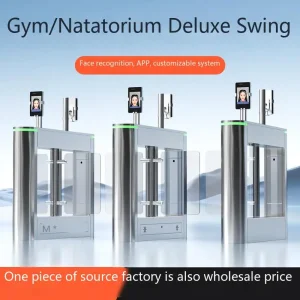
Buy Discount Office Building Entrance Attendance Security Access Control Turnstiles Gate Swing Barrier Speed Gate Manufacturers, Price
Request Quotation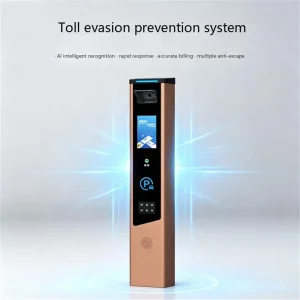
Cheap High definition license plate recognition integrated - AnRuitong II Manufacturer, Factories
Request Quotation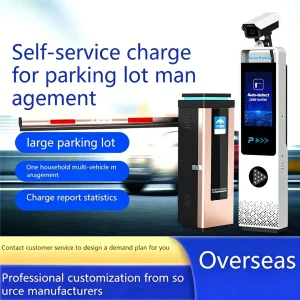
Buy Discount High-def license plate recognition machine Dolphin I model Exporters, In Sales
Request Quotation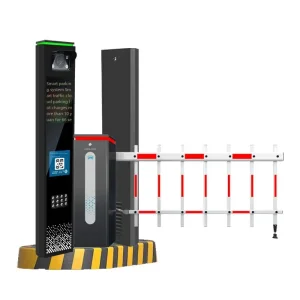
Cost-Effective Car Parking And Toll Access Control Automatic Articulated DC Parking Boom Barrier Gate With Long Range Rfid Reader Suppliers, Factory
Request Quotation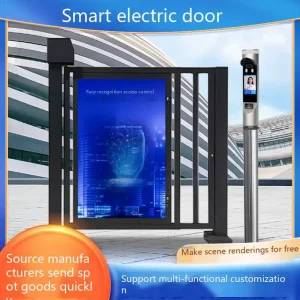
Buy Discount Intelligent pedestrian advertising gate Suppliers, Exporter
Request Quotation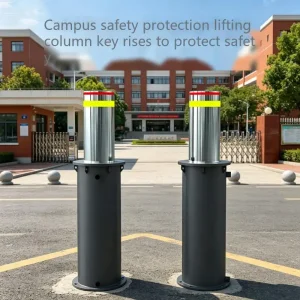
High-Quality Rising Bollard Instruction Manual In Sales, Price
Request Quotation
Buy Discount Intelligent Barrier Gate Model D03 Suppliers, Exporters
Request Quotation