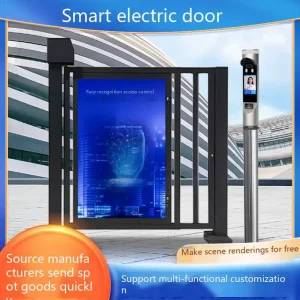
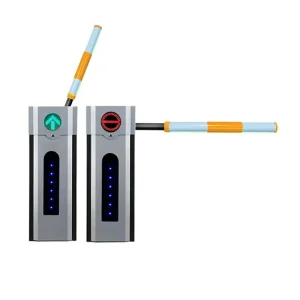
Precision Pedestrian Turnstile & Perimeter Hardware
Explore engineering-grade speed gates, swing barriers, and access control integrations deployed in international transit hubs, corporate lobbies, and secured facilities.
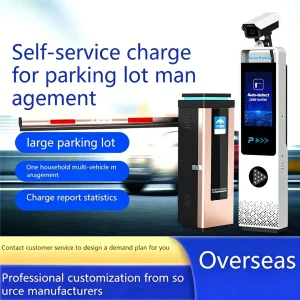
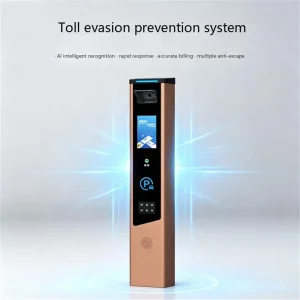
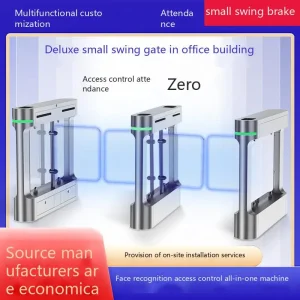
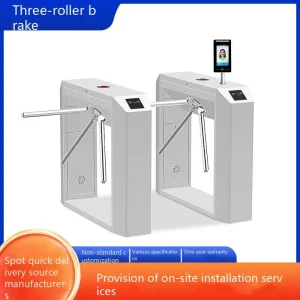
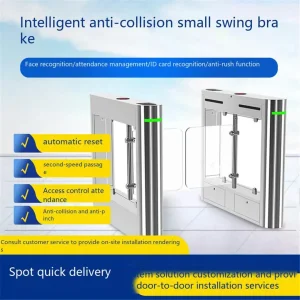
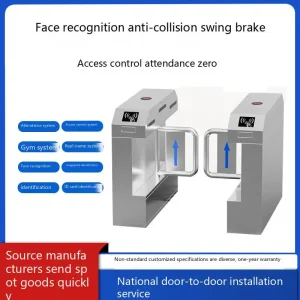

Global Pedestrian Access & Turnstile Industry Status
Strategic analysis of smart perimeter engineering, contactless physical security, and architectural entrance automation.
The global physical entrance security environment has undergone fundamental technical shifts. Pedestrian turnstile gates—once regarded as purely mechanical obstacles designed to meter single-file queues—have evolved into intelligent IoT edge nodes. Today, access control systems interface seamlessly with building management architectures (BMS), facial recognition biometrics, contactless credentials, and cloud-governed identity management layers. The rising density of mixed-use developments, hyperscale corporate campuses, and mass transit terminals has elevated the role of pedestrian speed gates and swing turnstiles from passive perimeter devices to frontline assets in high-throughput life safety and facility management.
From an international industrial perspective, demand is heavily polarized into two sectors: ultra-high throughput environments (metro stations, sports arenas, transport interchanges) demanding robust, high-torque mechanisms resistant to aggressive passenger forces, and Class-A commercial environments demanding slim-footprint, transparent glass, architectural speed gates that blend aesthetic transparency with uncompromising anti-tailgating algorithms. Achieving these operational standards at sustainable capital expenditures requires a thorough examination of manufacturing capabilities, drive-train engineering, and direct supply-chain dynamics.
Stringent Life Safety
Integration of fail-safe mechanisms that automatically drop arms or open glass barriers upon building fire alarm trigger or primary grid power disconnection.
Brushless DC & Servo Control
Shift from alternating current (AC) motors to closed-loop digital brushless DC (BLDC) and servo-driven actuators delivering silent acceleration and soft braking curves.
Intelligent Anti-Tailgating
Multi-array infrared matrix grids (12 to 24+ pairs of emitter-receiver sensors) capable of discerning luggage trailing, reverse intrusion, and fraudulent piggybacking.
Pedestrian Turnstile Gate Price Determinants & Cost Structures
Understanding the technical variables that impact unit cost, Total Cost of Ownership (TCO), and long-term maintenance budgets.
| Turnstile Category | Typical Mechanical Drive | Housing & Barrier Material | Safety Sensor Array | Indicative Ex-Factory Price (USD) |
|---|---|---|---|---|
| Tripod Turnstile (Semi-Auto) | Mechanical indexing head with hydraulic damping | AISI 304 Stainless Steel (1.5mm - 2.0mm) | Basic drop-arm solenoid release mechanism | $220 – $480 / unit |
| Motorized Tripod Turnstile | Brushless DC motor with mechanical lock | AISI 304 / Optional AISI 316 brushed finish | Drop-arm auto-reset with mechanical anti-reverse | $380 – $750 / unit |
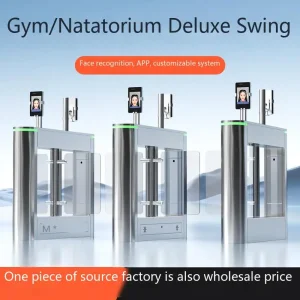
| Standard Optical Swing Gate | BLDC motor with planetary gearbox | AISI 304 housing + 10mm tempered glass | 6 to 12 pairs of active infrared safety sensors | $650 – $1,250 / lane |
| High-End Speed Gate (Slim Chassis) | High-performance DC Servo with encoder feedback | AISI 304/316 chassis, tempered or acrylic wings | 16 to 32 pairs of dynamic anti-tailgating sensors | $1,200 – $2,800 / lane |
| Full-Height Turnstile (Perimeter) | Mechanical lock head or motor-assisted rotor | Heavy-duty galvanized or powder-coated steel | Bi-directional anti-entrapment rotor dampening | $950 – $2,200 / unit |
When evaluating vendor pricing for physical turnstiles, system engineers and EPC estimators must dissect four key engineering tiers: chassis metallurgy (thickness grade, outdoor weather-proofing, salt-spray durability), motor transmission architecture (traditional clutch versus brushless planetary versus direct-drive servo), sensor grid density (which dictates anti-pinch and anti-tailgating accuracy), and credential integration modules (embedded biometric terminals, QR readers, RFID antennas, or mobile NFC antennas).
Why Tier-1 Integrators Source Turnstiles from Shenzhen, China
Leveraging direct hardware supply chains, rapid sheet-metal precision fabrication, and integrated electronic testing.
End-to-End Laser & CNC
Automated fiber-laser cutting, CNC press-brake bending, and robotic seamless welding yield uniform tolerances impossible with manual methods.
Complete Component Cluster
Shenzhen provides instantaneous proximity to specialized servo motor manufacturers, optical sensor labs, and logic controller board fabrication.
Rigorous Pre-Shipment Aging
Every pedestrian gate assembly undergoes a continuous 72-hour operational burn-in test cycle, eliminating early infant-mortality component failure.
Bespoke OEM / ODM Agility
Custom dimensions, architectural paint coatings, custom card reader cutouts, and proprietary firmware protocol adaptations on short lead times.
Mission-Critical Application Scenarios & Engineering Fit
How turnstile physical dimensions, passage widths, and barrier dynamics map directly to facility security requirements.
Corporate Headquarters & Financial Towers
Requires ultra-slim speed gates with architectural brushed finishes, whisper-quiet operation, and wide ADA wheelchair-accessible lanes (900mm width) utilizing transparent impact-resistant glass.
Mass Transit, Metro & Railway Stations
Features heavy-duty bi-directional flap barriers or swing barriers engineered for continuous, relentless commuter passage (up to 45-55 persons/minute) with high-speed token/ticket scanning.
Industrial Campuses & Heavy Fabrication Sites
Combines semi-automatic tripod turnstiles and full-height perimeter revolving gates to completely isolate industrial yards from unauthorized off-hours pedestrian penetration.
Emerging Technological Trends in Pedestrian Automation
The next generation of access control merges artificial intelligence, edge analytics, and contactless frictionless flow.
AI Computer Vision Anti-Piggybacking
Replacing traditional discrete infrared beam grids with overhead stereo 3D depth cameras and convolutional neural networks to detect tailgating and unauthorized baggage passage with 99.8% precision.
Biometric "On-the-Move" Verification
Frictionless multi-modal biometric authentication (combining facial recognition, palm vein scanning, and mobile BLE/UWB tokens) eliminating the need for pedestrians to break stride during transit.
Cloud Telemetry & Predictive Maintenance
Integrated microcontrollers stream motor vibration, current draw spikes, and cycle counts to maintenance dashboards, enabling preemptive gearbox and hinge servicing before unexpected gate failures.
Frequently Asked Questions: Sourcing & Engineering
Technical guidance for system integrators, quantity surveyors, and international distributors.
What is the difference between a Brushless DC (BLDC) motor and a Servo Motor in speed gate turnstiles?
How do factory-direct turnstile manufacturers handle emergency evacuation protocols?
Can custom access control readers (HID, Gallagher, facial recognition) be integrated pre-shipment?
What structural considerations are required for ADA compliant accessible turnstile lanes?
What international packaging and moisture standards are observed during oceanic transit?
Complete Access & Barrier Portfolio
Coordinate pedestrian access points with vehicle perimeter barriers, automatic bollards, and intelligent guidance systems.