
Priority Access & Perimeter Bollard Systems in Kuala Lumpur
Featured vehicle control models pre-engineered for rapid integration with Malaysian facility protocols, corporate towers, and security checkpoints.

Macro Dynamics of Vehicle Mitigation in the Federal Territory of Kuala Lumpur
Transforming urban transit security across Bukit Bintang, KLCC, Tun Razak Exchange (TRX), and Cyberjaya industrial corridors.
Monsoon & Flash Flood Resilience
Kuala Lumpur sits within a hyper-tropical basin experiencing torrential convective precipitation exceeding 2,500 mm annually. Conventional underground bollards commonly suffer solenoid motor burnouts, fluid cavitation, and corrosion due to subterranean water accumulation in storm-prone soil.
- Submersible IP68-sealed integrated hydraulic drive units
- Stainless steel SUS304 / SUS316 anti-hydrolysis alloy finishes
- Gravity-assisted or automated sump pumping integration logic
High-Density Hostile Vehicle Mitigation
The expansion of international commercial finance headquarters at TRX and government citadels in nearby Putrajaya mandates continuous HVM perimeter hardening against vehicular intrusion, unauthorized ramming, and uncontrolled delivery vehicle entry in tight urban footprints.
- ASTM F2656 M30 to M50 impact energy dissipation structure
- Sub-surface structural rebar cages rated to arrest 7.5-ton trucks
- Emergency Fast Operation (EFO) deployment under 1.5 seconds
Smart City & Data Center Corridors
With Malaysia solidifying its status as Southeast Asia's hyperscale computing epicenter across Greater KL, Cyberjaya, and Sedenak, mission-critical centers necessitate autonomous, auditable, and SCADA-compliant physical access control.
- Dry-contact integration with perimeter intrusion detection (PIDS)
- High-frequency operating cycles up to 3,000 movements per day
- Optical fiber feedback loops for real-time central SOC monitoring
Deep-Dive Technical Roadmap & Kinetic Energy Absorption
Understanding the physics of physical perimeter defense: comparing electro-hydraulic, electromechanical, and pneumatic drive mechanisms.
Hydraulic Power Units (HPU): Built-in vs. External Station
For Malaysian industrial and urban deployments, selection between integrated micro-hydraulic systems and external central HPUs dictates civil excavation footprint and serviceability:
- Self-Contained Micro-HPU: Eliminates long buried hydraulic lines, prevents system-wide contamination, and eases modular replacements within 40 minutes per lane.
- Centralized Dual-Pump HPUs: Ideal for synchronized banks of 6 to 12 bollards at military perimeters, embassies, and port checkpoints, ensuring uncompromised duty cycles even during prime-phase electrical fluctuations.
- Biodegradable Fluids: Utilization of non-hazardous, ISO VG 32 synthetic ester hydraulic fluids to safeguard groundwater resources during accidental conduit breaches.
Impact Force Dissipation & Foundation Kinematics
Crash testing relies on Newton's second law and inelastic collision formulas ($E_k = \frac{1}{2} m v^2$). Anrui rising bollards distribute massive point loads across heavily webbed steel sub-chambers embedded in compressive reinforced concrete:
- Cylinder Construction: Cold-drawn seamless carbon steel or SUS316 with wall thicknesses scaling from 6 mm (commercial) to 25 mm (anti-terrorist rating).
- Sub-surface Cage Matrix: Heavy grade deformed steel rebar framework acting as a unified anchor slab, transferring kinetic momentum directly to the surrounding sub-grade.
- Zero Penetration Performance: Engineered to stop an incoming vehicle with a dynamic penetration distance under 1 meter ($P1$ designation).
| Security Level | Impact Standard Equivalence | Vehicle Mass & Velocity | Kinetic Energy (kJ) | Typical Kuala Lumpur Deployment Location |
|---|---|---|---|---|
| Commercial Security | IWA 14-1 / ASTM Low-Speed | 2,500 kg @ 48 km/h | 222 kJ | Condominium Forecourts, Mont Kiara, Commercial Retail Hubs |
| Medium Hostile (K4/M30) | ASTM F2656-07 M30 / PAS 68 | 7,500 kg @ 48 km/h | 656 kJ | Bank Negara Malaysia Perimeters, TRX Transit Entry Lanes, Hospital Forecourts |
| High Anti-Ram (K8/M40) | ASTM F2656 M40 / DOS SD-STD-02.01 | 7,500 kg @ 65 km/h | 1,234 kJ | Consulates, Cyberjaya Hyperscale Data Centers, Sovereign Asset Facilities |
| Maximum Anti-Terror (K12/M50) | ASTM F2656 M50 / PAS 68 V/7500[N3]/80 | 7,500 kg @ 80 km/h | 1,852 kJ | Putrajaya Federal Ministries, Port Klang Logistics Core, Military Bases |
Malaysia Civil Works, Suruhanjaya Tenaga & BOMBA Integration
Executing turnkey bollard integration compliant with Dewan Bandaraya Kuala Lumpur (DBKL) infrastructure directives and national safety codes.
Jabatan Bomba Emergency Fail-Safe
Under uniform building by-laws enforce by BOMBA Malaysia, all automated vehicle blockades on designated fire paths must drop instantly upon alarm trip:
- Manual valve release & accumulator-driven zero-power descent
- Direct relay hook-up to building master fire alarm panels (MFAP)
- High-visibility multi-angle dual LED reflective warning crown
Suruhanjaya Tenaga (ST) Compliance
Electrical supply systems across Malaysia operate at 230V single phase / 400V 3-phase at 50Hz, subject to severe lightning surges across the central peninsula:
- Industrial-grade Class I + II type transient surge arrestors
- Tropical insulation and motor heat dissipation certified to 65°C
- Galvanic isolation preventing underground parasitic loop interference
Civil Foundation & Drainage Schemes
Civil engineering works in Kuala Lumpur require careful structural management of limestone karst topographies, expansive clays, and high groundwater tables:
- Engineered gravel drainage soakaway or sump connection points
- Standardized steel pit casing avoiding lateral displacement
- Rapid modular backfill specifications reducing lane closure downtime
Frequently Answered Questions for Malaysian Project Engineers
Everything procurement heads, MEP contractors, and facility consultants need to evaluate before ordering rising bollards for Kuala Lumpur sites.
What is the typical lead time and shipping route to Port Klang, Malaysia?
Factory production cycles in our Shenzhen manufacturing center range from 12 to 18 working days depending on quantity, impact grade, and finish customizations. Sea freight transit from Shenzhen/Shekou directly to Port Klang (North or West Port) takes approximately 4 to 6 days. Express air courier solutions are available for urgent micro-HPU replacement assemblies.
Can Anrui bollards integrate with Touch 'n Go RFID and local LPR algorithms?
Yes. Our controller mainboards feature configurable dry-contact relays, RS485 interfaces, and Wiegand protocol pass-throughs. They connect natively with Malaysian vehicle access equipment including high-definition License Plate Recognition (LPR) cameras trained on Malaysian font typography, UHF long-range passive readers, and commercial Touch 'n Go parking loops.
How do rising bollards handle localized flash floods in Kuala Lumpur?
All Anrui rising bollards built for Southeast Asian regional deployments feature IP68 submersible-rated drive modules sealed against prolonged hydrostatic water pressure. For installations in low-lying Klang Valley depressions, we specify pit evacuation pumps equipped with liquid-level float sensors or configure an external HPU arrangement installed well above street-level flood elevations.
What safety mechanisms prevent the bollard from raising underneath a passing vehicle?
System security is governed by redundant active safety loops: dual inductive ground loop detectors (presence and direction sensing), infrared anti-pinch photobeams, and current-sensing collision stall algorithms. If an obstruction or metal chassis is detected over the bollard surface, raising is instantaneously halted and overridden into downward descent.
How does direct factory quotation compare to local Malaysian middlemen pricing?
By engaging Anrui directly as the OEM/ODM manufacturing factory, EPC contractors and developers eliminate intermediary trade markup of 35% to 55%. We supply complete bill of materials (BOM), CAD civil excavation blueprints, wiring schematics, and factory acceptance test (FAT) inspection videos prior to international dispatch.
Integrated Intelligent Security Catalog serving Kuala Lumpur
Combining heavy vehicle mitigation, automated revenue barriers, smart space locks, and biometric speed turnstiles across regional facilities.
-
-
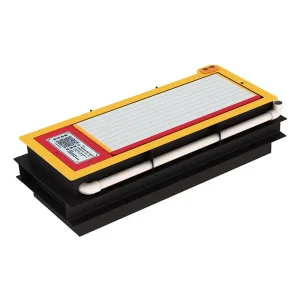
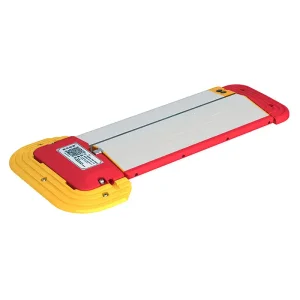
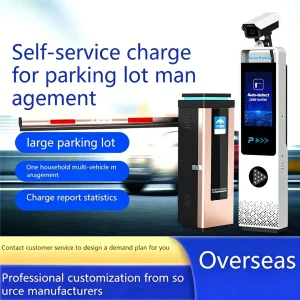
Kuala Lumpur Easy-Maintainable Urban Parking Hardware Products
-
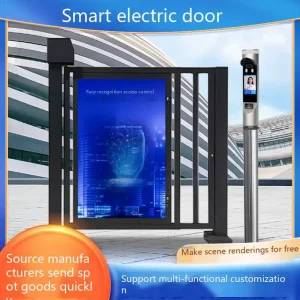
Kuala Lumpur Intelligent Commercial Pedestrian Advertising Gate
-
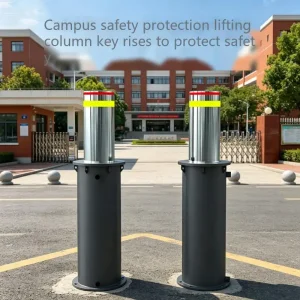
Heavy-Duty Automatic Rising Bollard Installation & Maintenance Suite
-
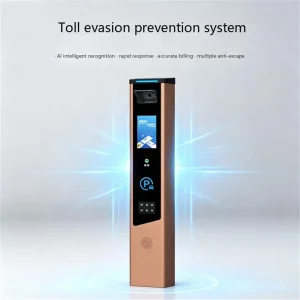
Kuala Lumpur High-Definition LPR System - AnRuitong II Model
-
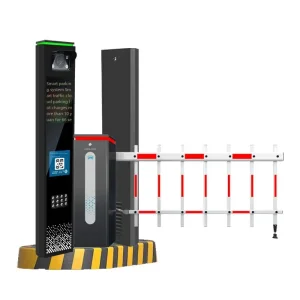
Kuala Lumpur Low-Ceiling Articulated DC Boom Barrier Gate Package
-
-
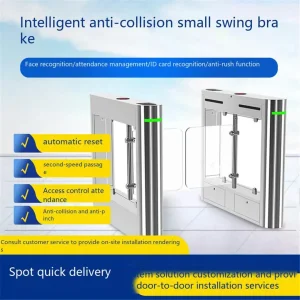
Kuala Lumpur OEM Pedestrian Security Swing Gate Pricelist & Supply