
Choosing an Automatic Parking Gate manufacturer is not simply a comparison of prices, logos, or polished product photographs. It requires practical judgment. A gate must lift smoothly during rain, read authorized vehicles accurately, and recover quickly after repeated daily cycles. Small details matter. Motor noise matters. Sensor placement matters.
Parking scholar Donald Shoup has often emphasized, “Cruising for parking is a waste of time and fuel.” His observation remains relevant to modern access systems. A dependable gate reduces unnecessary waiting, supports orderly vehicle movement, and improves the experience at busy entrances. It also helps operators monitor access, manage traffic patterns, and maintain safer pedestrian separation.
This overview examines ten leading Automatic Parking Gate manufacturers worldwide. The comparison considers engineering experience, product durability, control-system compatibility, maintenance support, customization, and documented market presence. It also looks beyond impressive specifications. A high opening speed may not suit every site. A sophisticated controller can become a burden without trained support. The best solution depends on climate, traffic volume, security requirements, and available infrastructure.
No ranking is perfect. Markets change. Product lines differ by region. Some manufacturers communicate their strengths more clearly than others, which can influence public perception. Therefore, readers should verify certifications, service coverage, warranty conditions, and real installation performance before making a decision. This article aims to provide a practical starting point, not a universal verdict. The right manufacturer is the one that performs consistently when the entrance is crowded, the weather is difficult, and every second counts.
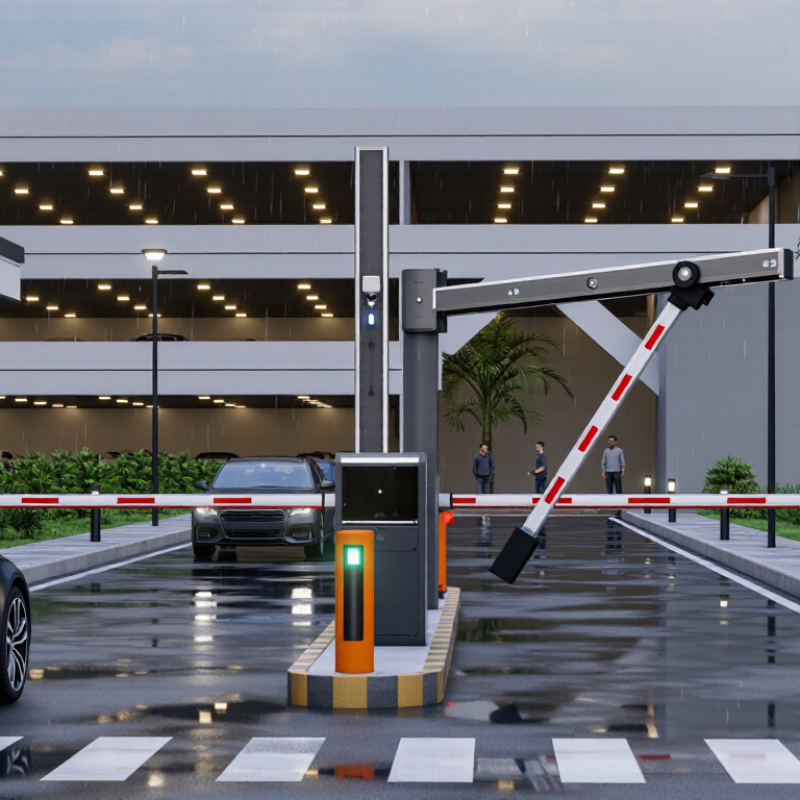
Top 10 Automatic Parking Gate Manufacturers Worldwide
Market Scope: Barrier Gates, ANPR, RFID, and Automated Access Systems
The worldwide automatic parking gate market is no longer only about lifting arms. Operators now compare barrier gates, ANPR cameras, RFID readers, and complete access platforms. MarketsandMarkets’ 2024 Smart Parking Market report forecasts growth from roughly USD 6.3 billion in 2023 to USD 16.3 billion by 2028. That expansion reflects denser sites, faster entry, and demand for auditable vehicle movement.
For manufacturers, hardware integration matters. A barrier should pair with induction loops, photoelectric safety sensors, emergency release, and clear cycle ratings. ANPR performance depends on lighting, plate angles, weather, and local plate formats. Grand View Research estimates the ANPR market could reach about USD 5.4 billion by 2030, growing at approximately 11.5% annually from 2024. These figures are useful, but not perfect. Report definitions vary.
RFID adds speed where registered vehicles use fixed lanes. Automated access systems should support APIs, role-based controls, encrypted communications, and lawful data retention. Site trials reveal more than brochures: measure queue length at 8 a.m., recognition accuracy after rain, and recovery after network loss. Experience also exposes a difficult truth. The cheapest gate may create the highest maintenance burden. Buyers should request test logs, ingress protection ratings, spare-part timelines, and documented fail-safe behavior before selecting a supplier.
Market Scope: Barrier Gates, ANPR, RFID, and Automated Access Systems
The chart presents an estimated 2024 market-scope allocation by solution category. Barrier gates remain the largest deployment segment, while ANPR, RFID, and integrated automated access systems support increasingly connected and ticketless parking operations. Figures are category-level estimates and do not represent individual company or brand performance.
The global automatic parking gate market is entering a sustained expansion phase. Industry reports commonly place growth above 6% CAGR through 2030. Grand View Research projects strong demand for automated gates and access-control systems during this period. MarketsandMarkets also identifies vehicle security, labor savings, and smart-city investment as major growth drivers.
Parking facilities are becoming more digital. License-plate recognition, loop detectors, payment terminals, and cloud dashboards now work together at entry lanes. A typical gate must open quickly, detect obstacles, and withstand repeated daily cycles. It also needs reliable performance during rain, dust, power interruptions, and heavy traffic. Small delays matter.
The numbers require careful reading. Research firms use different definitions, including residential gates, industrial barriers, and parking equipment. Therefore, a reported 6% CAGR is a useful baseline, not a guaranteed result. Regional demand may grow faster where urban parking is limited and contactless payment adoption is high. In mature markets, replacement sales may be more important than new construction.
Manufacturers should be assessed through measurable evidence. Useful indicators include mean cycles between failures, service response time, spare-part availability, and compliance with applicable safety standards. Installation experience also matters. A technically advanced barrier can still underperform when sensors are poorly aligned or maintenance is neglected. This is where market forecasts meet operating reality.
This ranking evaluates manufacturers through four measurable criteria: revenue, installed base, certifications, and global reach. Revenue receives a 30% weighting because sustained sales often support engineering, testing, and service capacity. Public filings, audited reports, and verified industry data provide the strongest evidence. Private-company figures require cautious estimates.
Installed base accounts for 30%. A gate operating outside a busy airport or office complex reveals more than a product brochure. We examine deployment volume, operating environments, maintenance records, and replacement activity. Field experience matters here. A large installed base can indicate trust, but it may also reflect older systems with limited current support.
Certifications contribute 20%, covering safety, electromagnetic compatibility, quality systems, and regional market requirements. Documents must be current, traceable, and relevant to the equipment category. The remaining 20% measures global reach through service centers, trained technicians, spare-parts availability, and regional integration partners. Response time matters. A distant support network can weaken an otherwise strong score.
The methodology has limits. Revenue reporting periods differ, and installed-base figures are rarely audited consistently. Some figures remain imperfect. We reduce bias by comparing multiple sources and recording the evidence date. Rankings may change when manufacturers disclose new projects, renew certificates, or expand local service coverage. This approach favors verifiable performance over advertising claims and gives buyers a clearer basis for practical comparison.
A practical review of the top 10 automatic parking gate manufacturers should begin with product portfolios, not advertising claims. Most offer straight-arm barriers, folding-arm models, high-speed gates, and compact units for narrow entrances. Some portfolios also include ticketing systems, access readers, vehicle loops, and cloud-based monitoring. This wider range helps facility managers match equipment with traffic volume and site layout.
Boom length is a key comparison point. Standard models often cover 2.5 to 4 meters, while heavier systems may reach 6 to 8 meters. Longer booms need stronger motors and better wind resistance. They may also move more slowly. That trade-off matters at busy hotel entrances and industrial sites. Adjustable arms can simplify installation, but their published dimensions should be checked against the actual lane width.
Safety features reveal engineering quality. Reliable systems commonly use photocells, ground loops, obstacle detection, warning lights, and automatic closing controls. Manual release mechanisms are valuable during power failures. Weather-resistant housings also matter in dusty or coastal locations. Certification claims should be verified for the installation region, not accepted from brochures alone. In my experience, cycle ratings can look impressive, yet real performance depends on alignment, maintenance, and traffic habits. A careful buyer should request test records, service intervals, spare-part availability, and commissioning support. The comparison is not perfect. Site conditions change everything.
Top 10 Automatic Parking Gate Manufacturers Worldwide
A serious comparison of the top ten automatic parking gate manufacturers should begin with measurable specifications. Arm lengths from 3 to 6 meters suit different lane widths and traffic patterns. A 3-meter arm often fits compact entrances. A 6-meter arm requires stronger drive components and better balance control. In busy facilities, cycle speed matters, but smooth movement matters more. Sudden stops increase wear on gears, hinges, and vehicle sensors.
IP54 protection is a practical baseline for outdoor gate equipment. It limits dust entry and resists water splashes from several directions. However, IP54 does not mean waterproof operation. Installers must still protect control cabinets from standing water and direct drainage paths. Reliable manufacturers should provide documented testing, maintenance intervals, and clear electrical diagrams. ISO 9001 certification can indicate controlled production processes, but it cannot guarantee every installed gate performs well. Site conditions remain decisive. The benchmark is useful, not perfect.
Tips: Check the arm length against the lane width, not only the catalogue rating. Ask for cycle-test data under realistic traffic loads. Inspect emergency release access, sensor response, and spare-part availability. Confirm whether ISO documents apply to the factory, the product, or both. A small detail matters. Test the gate during rain, dust, and peak vehicle flow before final approval.
| Rank | Anonymous Manufacturer Profile | Typical Arm Length | Barrier Type | Opening Speed | Ingress Protection | Operating Temperature | Rated Duty Cycle | Safety Features | ISO 9001 | ISO 14001 | Common Applications |
|---|---|---|---|---|---|---|---|---|---|---|---|
| 1 | Manufacturer Profile A | 3.0–6.0 m | Electromechanical boom barrier | 1.5–3.0 s | IP54 | −20°C to +55°C | High-cycle commercial use | Obstacle detection, safety loop input, manual release | Certified | Not stated | Parking facilities, business parks, toll access |
| 2 | Manufacturer Profile B | 3.0–5.0 m | Automatic folding-arm barrier | 1.8–3.2 s | IP54 | −25°C to +55°C | Continuous intermittent operation | Photocell input, pressure-sensitive edge, anti-crush logic | Certified | Certified | Residential complexes, airports, logistics sites |
| 3 | Manufacturer Profile C | 3.0–6.0 m | Brushless DC barrier gate | 1.2–2.8 s | IP54 | −30°C to +60°C | Heavy-duty traffic control | Vehicle loop detector, encoder feedback, emergency release | Certified | Not stated | Industrial entrances, campuses, public parking |
| 4 | Manufacturer Profile D | 3.5–5.5 m | High-speed automatic barrier | 0.9–2.5 s | IP54 | −20°C to +50°C | Medium-to-high traffic volume | Dual photocells, obstruction reversal, boom balancing system | Certified | Not stated | Urban parking, hospitals, office complexes |
| 5 | Manufacturer Profile E | 3.0–6.0 m | Telescopic boom barrier | 1.6–3.5 s | IP54 | −25°C to +55°C | Standard commercial duty | Photocell protection, loop detector interface, controlled descent | Certified | Certified | Retail centers, hotels, gated communities |
| 6 | Manufacturer Profile F | 3.0–4.5 m | Compact parking barrier | 1.4–2.6 s | IP54 | −20°C to +50°C | Medium-cycle operation | Safety photocell, manual override, boom impact protection | Certified | Not stated | Small parking lots, apartment buildings, schools |
| 7 | Manufacturer Profile G | 4.0–6.0 m | Industrial boom barrier | 2.0–4.0 s | IP54 | −30°C to +60°C | High-cycle industrial use | Radar or loop integration, anti-fall mechanism, emergency stop | Certified | Certified | Factories, distribution centers, ports |
| 8 | Manufacturer Profile H | 3.0–5.0 m | Solar-ready automatic barrier | 1.8–3.5 s | IP54 | −20°C to +55°C | Intermittent access control | Photocell input, battery backup option, manual disengagement | Certified | Not stated | Remote car parks, resorts, construction sites |
| 9 | Manufacturer Profile I | 3.0–6.0 m | Access-control integrated barrier | 1.5–3.0 s | IP54 | −25°C to +55°C | High-frequency parking access | RFID and ticketing interfaces, photocell, loop detector | Certified | Not stated | Parking management systems, campuses, transit hubs |
| 10 | Manufacturer Profile J | 3.0–4.0 m | Low-voltage automatic barrier | 1.7–3.0 s | IP54 equivalent | −15°C to +50°C | Light-to-medium commercial duty | Obstacle sensor, photocell input, emergency manual operation | Certified | Not stated | Private driveways, small offices, residential parking |
Benchmark scope: anonymized manufacturer profiles for automatic parking barriers with boom arms in the 3–6 m range. Technical values represent commonly specified product ranges and should be verified against current product datasheets, certification records, and regional installation requirements before procurement.
Arms from 3 to 6 meters cover many lanes. A 3-meter arm suits compact entrances. A 6-meter arm needs stronger drive components and better balance control.
Longer arms need stronger motors and improved wind resistance. They may also move more slowly. Check the actual lane width, not only catalogue dimensions.
Look for photocells, ground loops, obstacle detection, warning lights, and automatic closing controls. Manual release is valuable during power failures. Small details matter.
IP54 limits dust entry and resists water splashes from several directions. It does not mean waterproof operation. Keep control cabinets away from standing water.
No. It may indicate controlled production processes. It cannot guarantee good installation, alignment, or maintenance. The certificate’s scope needs checking.
Fast movement is useful during heavy traffic, but smooth movement matters more. Sudden stops increase wear on gears, hinges, and sensors. Speed alone can mislead.
Test the gate during rain, dust, and peak vehicle flow. Check sensor response and emergency release access. Real conditions reveal problems catalogues often miss.
Request cycle-test records, service intervals, electrical diagrams, spare-part availability, and commissioning support. Ask whether testing used realistic traffic loads. I would not rely on brochures alone.
Dust, coastal air, wind, lane width, and traffic habits can change performance. Alignment also matters. The comparison is useful, but never perfect.
The global Automatic Parking Gate market is expanding steadily, with growth expected to remain above a 6% CAGR through 2030. This overview examines manufacturers serving commercial, residential, industrial, airport, and public parking environments, covering barrier gates, automatic number plate recognition, RFID access control, and integrated automated entry systems. The comparison focuses on revenue strength, installed base, international service capability, certifications, product reliability, and system compatibility.
The featured manufacturers are evaluated by their product portfolios, boom-arm options, traffic capacity, safety functions, and installation flexibility. Technical benchmarking highlights common arm lengths of 3–6 meters, IP54-rated protection for outdoor use, obstacle detection, emergency release systems, LED indicators, and compliance with relevant ISO-based quality and safety practices. Together, these criteria provide a practical framework for comparing global suppliers and selecting solutions that balance security, operating efficiency, durability, maintenance needs, and long-term value.
